Box Girder Bridges: Pros and Cons
2026-05-13 13:56:29






Steel box girder bridge systems are a popular choice for building projects that require both complex structural design and efficient engineering. These hollow, box-shaped structural members are very good at distributing loads and resisting twisting, which makes them a popular choice for highway overpasses, urban interchanges, and long-span bridges. The initial cost is usually higher than other concrete options, but the benefits, such as faster building times and better performance in curved paths, usually make up for it. When procurement professionals, engineering contractors, and project managers know all of the pros and cons of these designs, they can make choices that meet the needs of the current project and the long-term goals for the infrastructure.
Understanding Steel Box Girder Bridges
Structural Fundamentals and Engineering Principles
The tight cross-sectional shape of box girder technology is what makes it unique. The enclosed form has torsional constants that are hundreds of times higher than open I-beam configurations. This makes it much better at fighting twisting forces that happen on curved road lines. High-quality structural steel, usually meeting the standards of ASTM A709 Grade 50W or a similar, has yield strengths higher than 345 MPa and is easy to weld and tough to break, even in temperatures below zero.
The way the load is distributed depends on how the steel box and deck system work together. The combined design moves traffic loads efficiently through the box section to the supporting piers, no matter if orthotropic steel decks with horizontal ribs or cast-in-place concrete slabs are used. In these systems, fatigue resistance is very important, especially at the welds that connect the ribs to the decks, where repeated loads can cause cracks to form. These risks are greatly reduced by using advanced manufacturing methods that include full-penetration welding and stress-relieving treatments.
Typical Applications Across Infrastructure Sectors
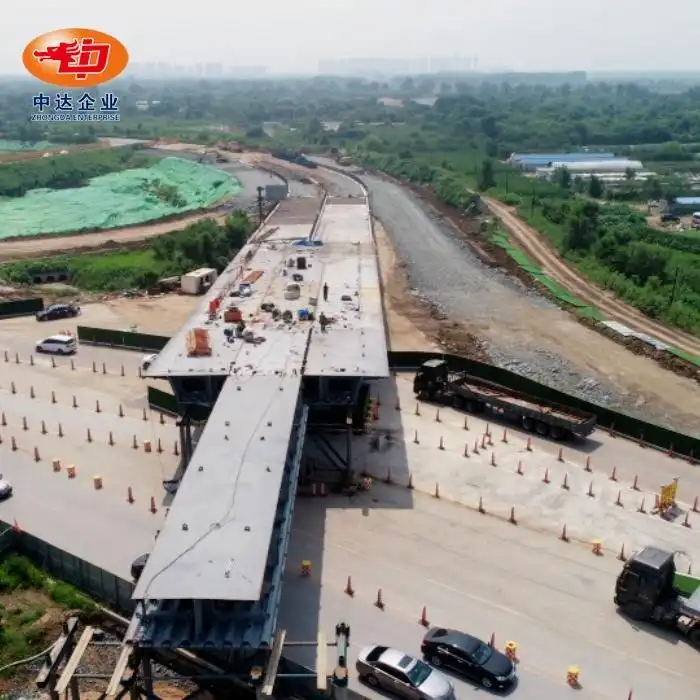
The rotational stability these structures offer is very helpful for highway flyovers with tight horizontal bends. The closed part gets rid of the need for complicated cross-bracing systems, which makes the building and putting it up processes easier. Urban viaducts that go through crowded cities use the shallow depth-to-span ratios that are possible with high-strength steel to keep vertical gaps below and reduce the effect on the view.
These methods also work really well for long-span uses. Single- or multi-cell designs are commonly used for bridges 100 to 300 meters long. Aerodynamic shaping lowers wind drag coefficients to reasonable levels. The smoothed-out shapes stop fluttering and running, two things that can happen during extreme weather and weaken structures. Weathering steel choices are useful for a variety of projects in coastal areas or industrial routes because they form protective oxide layers that greatly lower the need for coatings over the course of a project's life.


Advantages and Disadvantages of Steel Box Girder Bridges
Compelling Benefits for Modern Infrastructure
The strength-to-weight ratio changes the economy of projects in a big way. Steel buildings weigh about one-fifth as much as similar concrete ones, which immediately lowers the seismic mass and base needs. When you use smaller pile groups and shorter footings, you save money, especially when the ground is hard and you would need deep supports otherwise.
Another important benefit for steel box girder bridge is that construction speed. While erection and splicing are done on-site, modular manufacturing is done in controlled shop settings to ensure uniform quality. A 12-meter steel box girder section that weighs 50 tons can be put in place and fixed in just hours, while it takes weeks for concrete to cure. When compared to traditional methods, projects using Accelerated Bridge Construction methods report 20–30% shorter wait times. This means that traffic problems and community effects are kept to a minimum.
Geometric flexibility takes into account tricky site conditions that make it hard for some building systems to work. Box girder designs can include horizontal bends, cross-slopes that change, and supports that are tilted. The closed part keeps the same rotational stiffness no matter how curved it is, so it will behave in a predictable way even when loads are applied in different directions. This versatility is very helpful when putting new infrastructure through existing cities, where route choices are limited.
When put together, these benefits give engineering teams the confidence to take on difficult projects, knowing that the structure system can meet strict performance standards and tight deadlines.
Challenges Requiring Strategic Management
The cost of materials is an instant issue to think about. Changes in steel prices can have an effect on project costs, and right now, high-strength types are selling for more than normal. The lighter structure partly makes up for the higher cost of materials by saving money on the base, but in many cases, the original cost of buying materials is still higher than the cost of concrete alternatives. Using advanced value engineering while designing something helps find ways to make it better that match performance with cost-effectiveness.
Corrosion prevention needs to be done regularly for as long as the building is used. Even though the inside of the boxes are protected from direct rain, mist and water can still get in through the deck joints. Comprehensive dehumidification systems that keep the relative humidity below 40% stop interior corrosion in its tracks, but they make upkeep procedures more difficult. External surfaces that are exposed to sea settings or industrial pollutants need strong coating systems that include regular replacement cycles in studies of lifetime costs.
Because designs are so complicated, they need special engineering knowledge. To be good at orthotropic deck finishing, fatigue-sensitive link design, and aerodynamic analysis, you need to know more than the usual things bridge engineers know. Procurement teams need to make sure that fabricators not only know how to make things, but also have the scientific knowledge to work well with others during the design development stages. This specialized knowledge base is easy for well-known players in the industry to access, but it could limit suppliers in some area markets.
Comparative Analysis of Box Girder Bridges and Other Bridge Types
Performance Benchmarking Against Alternatives
Concrete box girders have about the same bending strength, but they can hold a lot more dead weight. The extra weight has an effect on the whole structure, requiring bigger bearings, heavy beams, and deeper foundations, which can extend the time and cost of the project. Concerns about long-term reliability arise from the fact that chloride can cause reinforcement rust in concrete. This is especially true in areas that freeze and thaw, where deicing salts speed up the breakdown process. In these tough environments, steel devices are more durable when they are properly secured.
Truss designs make good use of materials over very long distances, but they don't have the sleek looks that are typical of modern building projects like a steel box girder bridge. The complicated nature of truss node links adds a lot of features that are easily worn out and need to be inspected very carefully. Box girder systems combine structural action into fewer parts with continuous load lines. This makes it easier to do both analysis and quality control.
Cable-stayed bridges can span amazing distances, up to 400 meters. However, the grounding and tower systems add a lot of extra cost that is only necessary when the span needs really call for this type of structure. The steel box girder stiffening deck in cable-stayed designs has the same aerodynamic and torsional benefits we talked about earlier. It is a hybrid approach that uses different structural ideas.
Market Landscape and Fabrication Capabilities
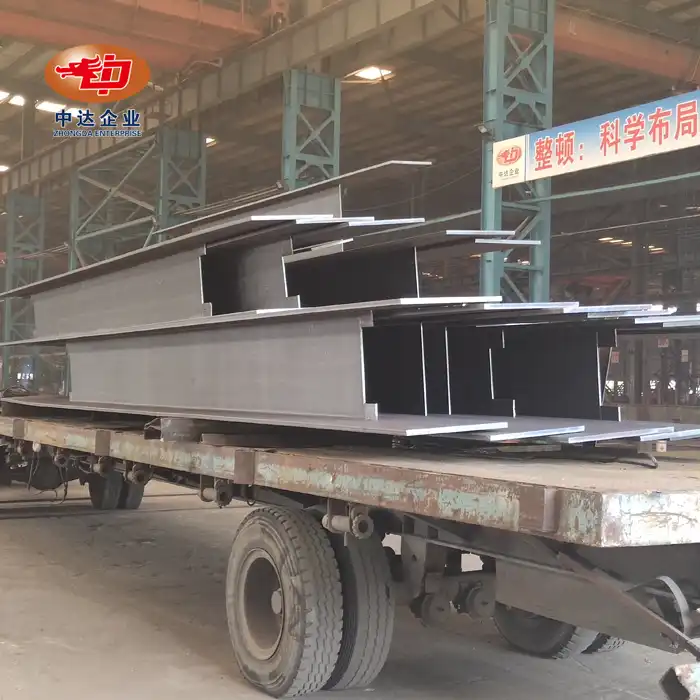
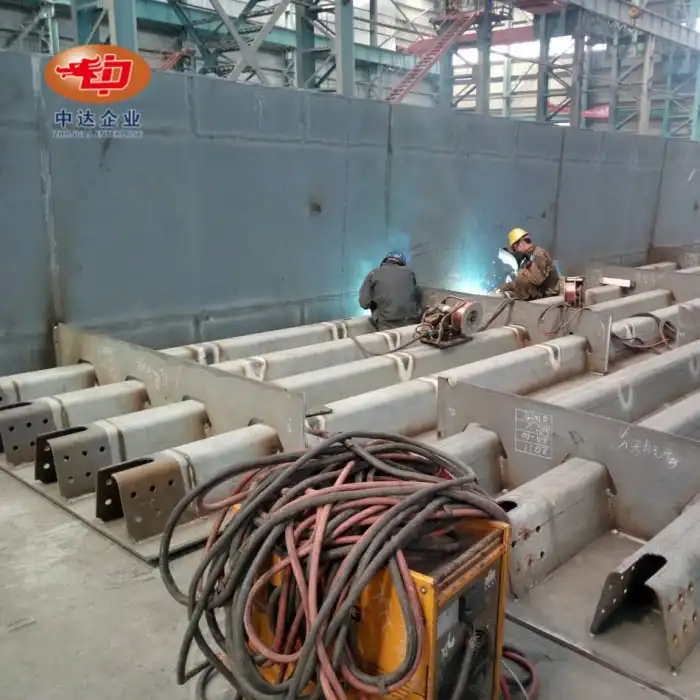
Some of the biggest makers have specialized warehouses with automatic welding stations, CNC plate processing centers, and climate-controlled assembly bays. Shenyang Zhongda is a good example of this type of capability because it can cut ultra-thick plates with accuracy to within 0.2 mm and has a yearly capacity of 60,000 tons. With this level of technical skill, 802 tons can be delivered every month in normal 12-meter pieces, and custom geometries can be made to fit the needs of each project.
Quality badges that prove compliance with international standards are becoming more and more important in global supply lines. As a minimum, you should have ISO 9001:2015 quality control systems, EN 1090 structural steel fabrication credentials, and AWS welding badges. Advanced makers add to these with project-specific skills that show they meet AASHTO LRFD requirements, Eurocode 3 rules, or local rules that apply to the target market.
Procurement and Fabrication Insights for B2B Buyers
Critical Evaluation Criteria for Supplier Selection
There is more to figuring out manufacturing ability than just looking at tonnage numbers. Ultra-thick plates—often 50 mm or more in box girder applications—need special cutting tools and controls for heat input to keep the material's properties from breaking down. Three-axis CNC drilling makes sure that the bolt holes in multi-segment structures are perfectly lined up, and advanced welding automation makes sure that important splice connections have consistent penetration and mechanical properties.
Quality assurance methods should be looked at in great depth when a supplier is being evaluated. Non-destructive testing methods should require phased-array ultrasound techniques to be used for a full volumetric inspection of all main butt welds. When connecting ribs to decks, where wear performance rests on precise geometry, macro etch testing confirms the fillet weld throat dimensions. Laser scanning to within ±2mm accuracy during trial assembly of neighboring pieces in the fabrication plant stops expensive fit-up problems during field erection.
Customization capabilities extend beyond dimensional variations to encompass material specifications and corrosion protection systems. Weathering steel formulas that are best for certain weather conditions, interior dehumidification features, and utility chases that are built in are all examples of value-added services that set premium manufacturers apart from commodity providers. Zhongda's BIM-driven prefabrication method and -60°C weathering steel anti-corrosion technology show that they have the innovative attitude that procurement professionals should look for when they need to buy important structure parts.
Production Timelines and Logistics Coordination
Knowing the order of production helps buyers make realistic plans for when their projects will be finished. Depending on the size and number of design changes, the engineering and finishing stages can last anywhere from 8 to 12 weeks. Next, the material is bought. During times of high demand, mill wait times for high-performance grades can reach 12 to 16 weeks. Fabrication and assembly take between 4 and 6 weeks per shipment batch. Final checking and surface cleaning take an extra 2 to 3 weeks before the shipping.
When planning logistics for a steel box girder bridge, you have to think about things like size limits and transportation rules. Parts that are longer than 30 meters or weigh a lot need special hauling tools and route studies to find out what the clearance limits are. Marine transport is helpful for coastal projects because it lets longer pieces be delivered, which cuts down on field splices and speeds up the construction processes. During the planning stages, the fabricator, freight forwarder, and installation provider should work together to avoid scheduling problems and cost overruns.
Making Informed Decisions: Is a Steel Box Girder Bridge Right for Your Project?
Project-Specific Evaluation Frameworks
The basic structural form is chosen based on the span needs and the shape of the site. For spans less than 60 meters, prestressed concrete may be cheaper, unless the complexity of the shape makes steel more flexible. Within the range of 100 to 300 meters is where steel box girder bridge systems work best, giving the best balance of strength and weight. Super-long spans of 300 to 2000 meters often use cable support systems with steel box sections that act as stiffening girders and are safe in the wind. They can withstand 12 levels of wind resistance.
The environment affects both the choice of materials and the methods used to protect them. As per ISO 12944, marine exposure ratings require different coating systems. For example, C5-M environments need special zinc-rich epoxy systems and regular upkeep. In industrial settings where sulfur compounds or chlorides are common, corrosion is sped up. This could be good for weathering steel if proper draining and air can be kept up. As a result of seismic design requirements, link details and ductility measures are affected. Areas with a lot of activity require specific ways to get rid of energy.
Budget limits include both the original cost of cash and the costs of running the business over its lifetime. Even though steel systems may be more expensive to build, they often have better net present value studies because they save money on foundations, can be built faster, and need less upkeep. A complex economic model that includes risk-adjusted cash flows and service life projections is needed to make sure that business choices are well-informed.
Strategic Partnership Considerations
When choosing an expert fabricator, it's not just about price; it's also about joint technical skills and a track record of getting projects done. Suppliers that offer full OEM and ODM services can help with design improvement by finding ways to make things easier to build and lower the cost of installation. The 60 important projects that Zhongda has worked on, ranging from the 18,000-ton Shenyang Dongta Cross-Hunhe River Bridge to foreign mining infrastructure, show that they have a wide range of skills that make complicated projects less risky.
Another thing that sets us apart is that we offer technical help throughout the whole project lifecycle. Advanced 3D modeling and structure analysis tools let you quickly compare different design options and make changes that fit the needs of the spot. When a client wants to integrate custom parts or systems, the manufacturing method and quality standards need to be flexible enough to meet non-standard needs. Global certification portfolios, such as FHWA-NHI-07-096 compliance for U.S. markets, get rid of legal issues that can stop international projects in their tracks.
Conclusion
steel box girder bridge technology has a lot of benefits for building projects that need to be structurally efficient, built quickly, and last a long time. The high strength-to-weight ratio, torsional stiffness, and geometric freedom of these systems make them the best choice for highway interchanges, long-span crossings, and urban viaducts where performance needs are higher than those of traditional options. Although the prices of materials and how to prevent corrosion should be carefully considered, the investment is usually worth it in the long run because of the foundation savings, shortened schedules, and lower upkeep needs.
Strategic relationships with suppliers that combine excellent manufacturing with cooperative engineering support are essential for projects to succeed. Procurement pros who put an emphasis on fabrication skills, quality licenses, and track records of on-time delivery put their companies in a good position to get the most out of steel box girder technology while lowering the risks of implementation.
FAQ
What distinguishes box girder bridges from conventional beam designs?
When it comes to torsional stiffness, the closed cross-sectional shape is hundreds of times better than open I-beam patterns. This basic structural benefit gets rid of the need for complicated bracing systems and makes it possible for better performance in curved alignments where eccentric loading would normally cause too much twisted deformations.
How do fabricators address fatigue concerns in orthotropic decks?
Full-penetration welding is used at key rib-to-deck joints in modern production methods, which are checked by strict non-destructive testing. Increasing the width of the deck plate lowers the ranges of local loads, and stress-relieving heat treatments lower the leftover stresses that cause cracks to start.
What maintenance protocols preserve long-term structural integrity?
Interior dehumidification systems that keep the relative humidity below 40% can stop rusting caused by condensation. Permanent lights and ventilation make regular checks easier, and covered paths make it easy to get to important parts. Periods for renewing external coatings are set by the manufacturer and are based on how much contact the coating will get from the surroundings.
Partner With Zhongda for Your Next Steel Box Girder Bridge Project
When you invest in infrastructure, you need partners who can combine excellent manufacturing with cutting-edge planning. Zhongda Steel can do both with its 60,000-ton-per-year capacity, ISO 9001/14001/OHSAS 45001 standards, and EN 1090 compliance. Our steel box girder bridge options have PPWS main wires that can withstand 1,770 MPa of tension, can span up to 2,000 meters, can withstand 12 levels of wind resistance, and have advanced anti-corrosion systems that make sure they work well for decades.
We know the buying goals that are important to you because China Railway, CSCEC, and foreign clients in the arctic, mining, and industrial sectors trust us. Our 120,000 m² building has CNC precise cutting (±0.2mm tolerance) and BIM-driven prefabrication, which lets us deliver 802 tons of goods every month while still being able to adapt to the needs of each individual project. Zhongda has the technical depth and production quality that your project needs, whether you're looking for parts for highway interchanges, long-span crossings, or complicated urban viaducts.
Email our engineering team at Ava@zd-steels.com to talk about how our ability to build steel box girder bridge manufacturing capabilities can speed up your next building project and meet the strictest performance requirements.
References
American Association of State Highway and Transportation Officials (AASHTO). LRFD Bridge Design Specifications, 9th Edition, Washington, D.C., 2020.
Chen, W.F. and Duan, L. Bridge Engineering Handbook: Superstructure Design, 2nd Edition, CRC Press, Boca Raton, 2014.
European Committee for Standardization. Eurocode 3: Design of Steel Structures - Part 2: Steel Bridges, EN 1993-2, Brussels, 2006.
Wolchuk, R. "Steel Orthotropic Deck Bridges: Recent Developments and Future Trends," Journal of Bridge Engineering, Vol. 8, No. 6, 2003, pp. 323-330.
Connor, R.J. and Fisher, J.W. Consistent Approach to Calculating Stresses for Fatigue Design of Welded Rib-to-Web Connections in Steel Orthotropic Bridge Decks, Federal Highway Administration Report FHWA-HRT-06-019, 2006.
Troitsky, M.S. Orthotropic Bridges: Theory and Design, 2nd Edition, James F. Lincoln Arc Welding Foundation, Cleveland, 1987.
YOU MAY LIKE
(1)_副本_1760321095013_1789529045876.jpg "structure bracing")