Cross Column Sections Explained for Structural Engineering
2026-05-16 14:12:46






When we talk about structural stability in modern building, cross column sections are what hold up load-bearing frames in a wide range of fields, from heavy infrastructure to business real estate. These designed parts, which are also called cruciform columns or cross-shaped steel members, are made by connecting together several steel plates or sections to make a cross outline that is symmetrical. This special shape gives the structure the same level of stiffness in both horizontal directions. This makes cross column sections essential for projects that need to be resistant to biaxial bends, like high-rise towers, industrial plants, and buildings that can withstand earthquakes.
What Are Cross Column Sections in Structural Engineering?
Defining Cross Column Geometry and Function
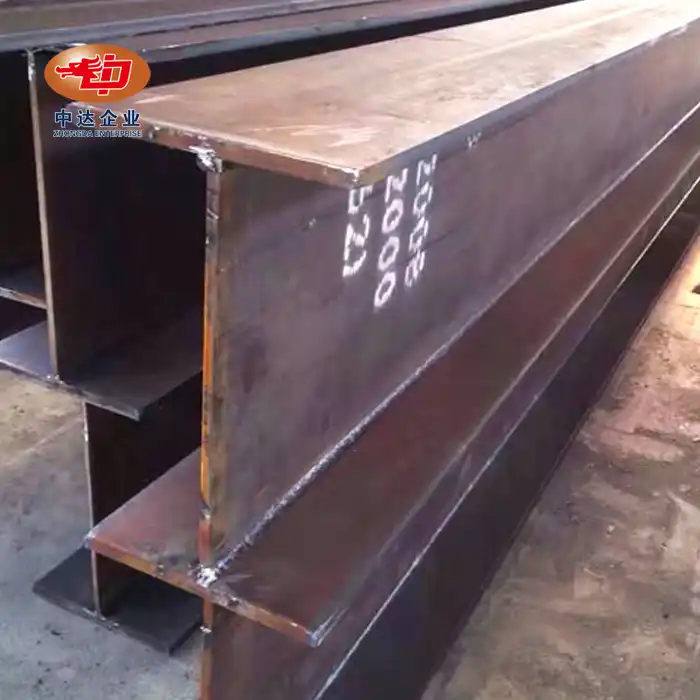
Cross column sections are a special kind of structure support that is made to spread loads evenly while keeping symmetry along more than one axis. Standard H-beams and I-beams have a strong and a weak line. The cross-shaped design, on the other hand, gives isotropic stiffness. This means that the column can withstand both twisting and torque forces equally, no matter which way the load is coming from. These columns are mostly made of high-strength low-alloy steel like Q355B. The flanges and webs are joined together with precision welding, which makes a single structure that can hold a lot of weight.
Cross column sections can be used for a wide range of purposes. They are used to make corner and exterior columns in high-rise buildings, where wind loads and earthquake forces act from all directions. These columns are used in factories to support equipment platforms and conveyor systems, which need to be able to connect beams in more than one way. Cross-shaped parts are used in government building projects like airports and transit hubs to make the architecture more open without lowering safety.


Material Composition and Structural Advantages
Zhongda Steel makes cross column sections out of Q355B low-alloy steel, which was chosen because it has a yield strength of over 345 MPa and is easy to weld. The welded double H-shaped unit has flange widths that range from 100 to 300 mm and web thicknesses that range from 6 to 25 mm, so it can be changed to fit different load needs. These columns meet international standards for structural steelwork because they are in line with EN 10025-4. This gives buying managers and engineering teams in Europe, North America, and Asia peace of mind.
It has better horizontal stiffness because of its physical shape—about 40% more than regular column shapes. This change directly leads to less material being used and faster fitting times. When compared to box columns, cross-shaped sections save about 10% of the material and make installation about 30% faster. The open-section design also makes it easy to connect beams to columns in four directions, so you don't need complicated stiffener plates that add to the cost of the project and the time it takes to build.
Types and Design Approaches of Cross Column Sections
Traditional Profiles and Modern Innovations
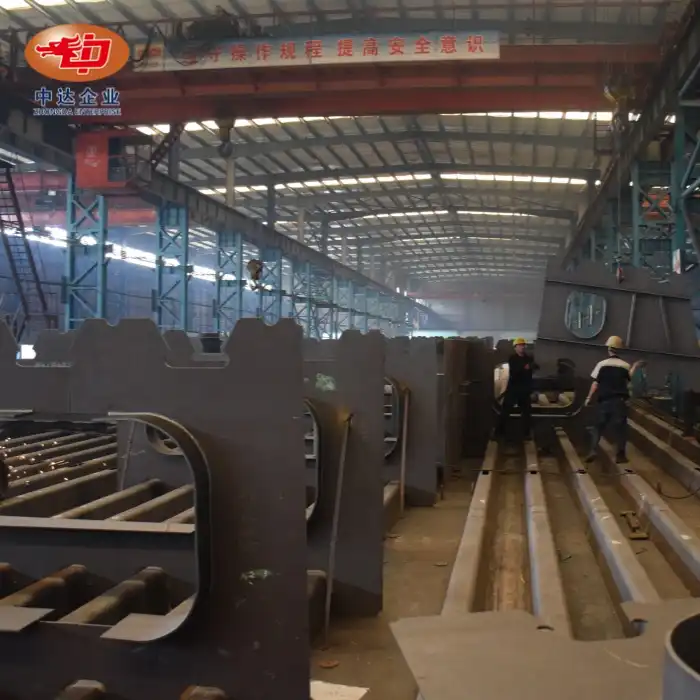
Cross column designs have changed a lot over the years, from the first rolled pieces to the advanced manufactured units used today. Traditionally, methods relied on hot-rolled profiles that were limited by the mill's abilities, which made it hard to change the size or shape of the profiles. Modern production methods at Zhongda's 120,000 m² factory complex allow for precision-welded parts that are made to fit the needs of each project.
The double H-shaped arrangement is one of the most effective current patterns. Engineers get the best strength-to-weight ratios and keep the symmetry qualities needed for multi-directional loading by connecting two T-sections to a center web. Finite element analysis is used to carefully measure dimensions like flange width, web thickness, and total height to make sure there is enough moment capacity and shear resistance.
More advanced types have honeycomb beam hole designs that lower their own weight by about 20% without lowering their ability to support weight. The placement of these holes is planned so that they don't go through areas of high stress. This way, the column can keep its structural integrity while saving a lot of weight. This new idea works especially well in areas prone to earthquakes because less mass means lower inertial forces when the ground moves.
Real-World Applications Across Industries
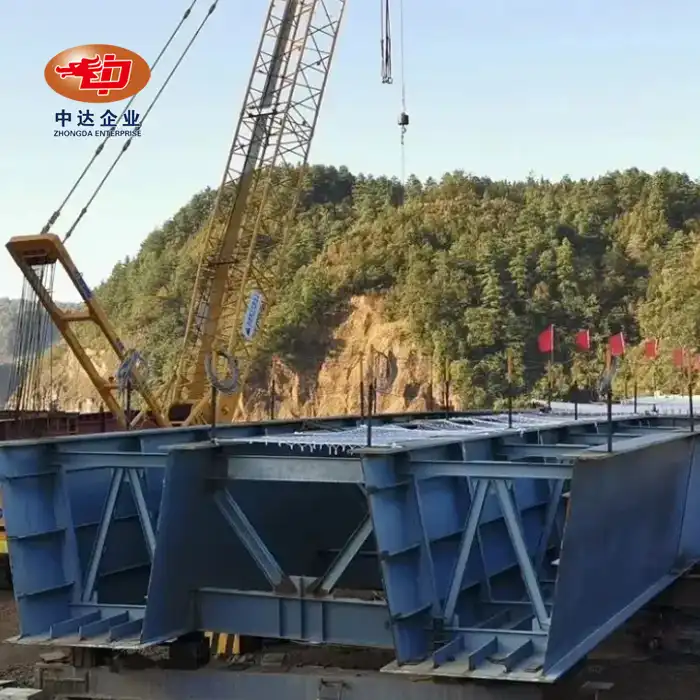
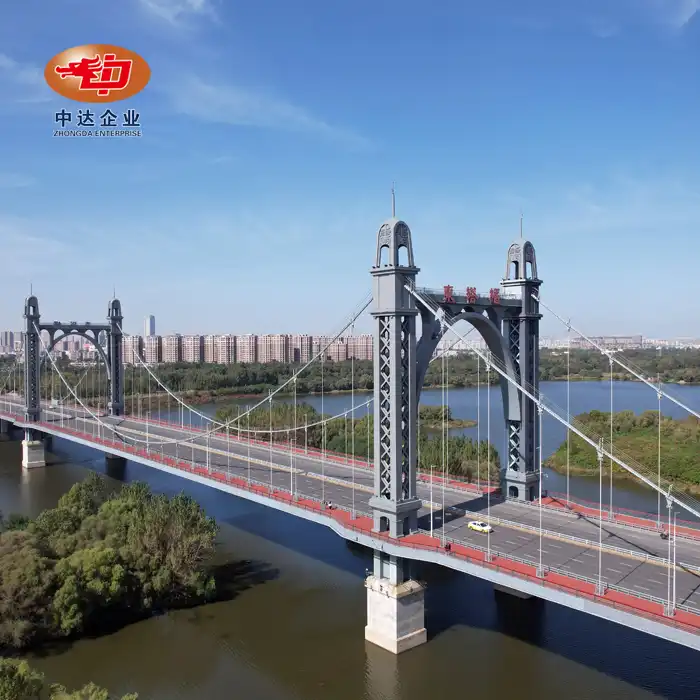
In heavy civil engineering, cross-shaped sections can be used in many different ways, as shown by the 18,000-ton Shenyang Dongta Cross-Hunhe River Bridge. The columns' high rotational stiffness and ability to support loads in multiple directions made them perfect for holding complicated bridge shapes that were subject to shocks from traffic and forces from the environment.
Similar benefits can be seen in industrial uses. These columns are used to support production lines in factories for major state-owned companies like China Railway and CSCEC. These lines are loaded with dynamic loads coming from different directions by overhead cranes and equipment platforms. The uniform shape makes it easier to detail connections, which cuts down on manufacturing time and speeds up project delivery.
These structural solutions are widely used around the world, as shown by the fact that they have been used to hold mining equipment at crushing sites in Australia. The columns are compliant with international standards like EN 1090, AWS D1.1, and JIS G3192, which makes it easier for them to work with a variety of legal settings. This gives EPC workers who are in charge of cross-border projects an advantage in the market.
How to Choose the Right Cross Column Section for Your Project?
Assessing Load Requirements and Environmental Conditions
A full load study is the first step in choosing the best column parts. Axial compression forces, biaxial bending moments, and possible rotational loads must all be looked at by engineers. When beams join from more than one way, like in building frames or equipment support towers, the cross-shaped design works best. It doesn't have a weak-axis weakness like standard wide-flange sections do because it has the same moment of motion around both main axes.
Concerns about the environment are just as important. Zhongda's -60°C Weathering Steel Anti-corrosion Technology is useful for projects in difficult areas because it keeps structures working well in Arctic conditions, as shown by Russian bridges. Marine areas and industrial plants need better rust protection, which is usually achieved by hot-dip galvanizing or applying high-build epoxy zinc-rich primers to the inside corners where water gathers.
Scale and flexibility play a role in design choices. Large buildings like warehouses and port hubs need beams that can support long-span roof systems while keeping the inside as clear as possible. Cross sections make the sides 40% stiffer, which lets the columns be farther apart. This makes the most of the floor space, which is important for transport workers and people building cold-chain facilities.
Comparing Market Solutions and Long-Term Value
Procurement experts have to weigh the original prices of materials against how well they perform over their entire life. Cross column sections usually cost more than regular H-beams because they require more work to be made, but they are worth it because they don't need as much of a base and are easier to join. By optimizing the shape, material savings compared to box columns often more than make up for higher manufacturing costs in the first part of a project.
Delivery times affect when projects get done. Zhongda Steel keeps standard cross column profiles in stock and can deliver them within 15 days. Custom designs with specific flange sizes or honeycomb patterns ship within 25 days. This flexibility lowers the project risks that come with delayed supplies of structural steel, which is a common worry for general builders who have to work with short building windows.
Customization options add even more value. Our BIM-driven prefabrication method lets engineering teams use detailed 3D models early in the planning process, which helps them find problems before the fabrication process starts. This digital process, which is backed by ISO 9001/14001/45001 certification, makes sure that measurements are accurate to within ±0.2mm, which is very important for premade parts that need to be put together in the field without a lot of site changes.
Common Challenges and How to Overcome Them in Cross Column Selection
Avoiding Design and Material Selection Pitfalls
It is still common for engineers to get the load needs wrong, especially when they don't take into account side effects like P-delta moments in thin columns. The large gyration radius of cross sections lowers slenderness ratios, but it is still important to do the right analysis using advanced software tools. During the planning phase, Zhongda's technical support team gives advice, checking ideas about load and suggesting the right section sizes based on decades of project experience.
Another problem that only happens with manufactured cross columns is welding warping. To get full-penetration welds at T-joints, a lot of heat has to be applied, which can cause the joint to bow or twist. In our production process, we use both simultaneous welding and pre-cambering tools to protect against heat stresses and keep physical errors within the limits set by the industry. Ultrasonic screening and other non-destructive tests make sure that the weld is solid, and all key parts are scanned to find any internal breaks.
Getting bigger pieces is harder because of the logistics of transportation. When compared to flat-stacking H-beams, the cross-shaped profile's width in two directions limits the amount of goods that can be shipped. Split-fabrication methods are useful for projects that need columns that are wider than 3 meters. In these methods, pieces are cut along their length and then put together on-site using bolted patch plates. This method takes into account rules for road travel while keeping the structure the same.
Best Practices for Risk Management
Roughly writing down requirements stops mistakes that cost a lot of money. There should be material grade certifications, weld process standards, and measurement tolerances that are in line with the needs of the project on detailed shop plans. To keep disagreements from happening during shipping checks, purchase contracts must clearly spell out the standards for size accuracy, surface finish, and finishing systems.
When structure engineers, welders, and construction workers work together, the job goes more smoothly. Having regular planning meetings makes it easier to find problems early on, like when cross column flanges and architectural finishes clash. Full-chain technical integration at Zhongda makes sure that everyone works from the same set of information, from design advice to final delivery. This cuts down on rework and schedule delays.
Validation with finite element modeling gives users trust in complicated apps. Computer simulations make sure that stress levels stay within safe limits when beams support odd load patterns or work in areas prone to earthquakes. Our method is based on research and development, and it uses advanced analysis tools to find the best cross-sectional measurements, combining the need for strength with the cost of materials.
Future Trends and Innovations in Cross Column Sections for Structural Engineering
Emerging Materials and Smart Structural Technologies
As we move toward high-performance materials, column design will likely get a lot better. Hybrid systems that use steel cross sections and fiber-reinforced polymer wraps make them more resistant to rust while still being flexible, which is very important for earthquake uses. Further weight decreases may be possible with research into ultra-high-strength steels above the Q690 grade, but the difficulties of welding must be carefully considered.
Lifecycle management is changing because of smart structure technologies. IoT sensors built into columns measure stress, strain, and temperature in real time, giving early warnings of over-stress or the start of a fatigue crack. This information lets building managers plan ahead for upkeep, which extends the life of equipment and lowers their long-term costs of ownership. When you connect it to building control systems, you get full digital twins that make operations more efficient in both business and industrial settings.
Innovations in manufacturing methods are driven by concerns about sustainability. Zhongda can make 60,000 tons of steel a year, and its CNC cutting and automatic welding systems use little energy and make little trash. Our dedication to lowering carbon loads is shown by our obedience to ISO 14001 environmental standards. This is becoming an increasingly important requirement for government projects and business real estate companies seeking green building approvals.
Impact on Procurement and Sourcing Strategies
The way buying teams assess sellers has changed since digitalization. Qualification processes can be completed more quickly with the help of online platforms that offer thorough product specs, compliance paperwork, and project case studies. Zhongda's clear display of standards like CE marking and EN 1090 compliance makes it easier for foreign buyers to do their research. This cuts the time it takes to sign a contract by weeks compared to traditional methods of buying.
After recent problems, the global supply chain's robustness has become very important. In Northeast China, Zhongda has the ability to make things on its own, which lets it serve Asian markets quickly while still being able to sell for projects in North America and Europe. Our 70% client renewal rate shows that we are reliable, which is very important for EPC workers who are handling multiple tasks at once in different places.
The move away from rigid standards and toward performance-based specs gives providers a chance to come up with new solutions. When compared to standard profiles, cross column sections with honeycomb patterns or improved flange shapes may be a better deal, but only if the purchase papers allow for engineering options. More forward-thinking clients know that this level of freedom speeds up innovation while still upholding safety and quality standards.
Conclusion
Cross column sections are now necessary structural parts for projects that need to fight loads in more than one way and make good use of materials. From tall buildings to supports for industrial equipment, these uniform shapes offer clear benefits in terms of horizontal stiffness, ease of connection, and speed of installation. This level of technical excellence is shown by Zhongda Steel's Q355B low-alloy cross column sections, which are made with great care, are subject to strict quality control, and can be customized to meet the needs of any project. These structure solutions will continue to be important for safe and effective building around the world, even as the industry adopts smart technologies and environmentally friendly methods.
FAQ
What makes cross column sections different from standard H-beams?
Because they have a uniform cross-shaped structure, cross column sections are stiff in both main directions, but H-beams have a strong axis and a weak axis. This isotropic behavior makes cross columns perfect for holding loads that come from different directions, like in building columns inside where beams meet from four sides. The arrangement also makes it easier to detail the connections because stiffener plates are not needed, which are usually needed for weak-axis H-beam connections.
How do I determine the right cross section size for my project?
The choice is based on axial loads, bending moments from different directions, and slenderness ratios that are set by the height of the column and the end supports. The right size is guaranteed by talking to structure experts and manufacturers like Zhongda Steel. Our expert team looks at the load conditions, weather factors, and code requirements to figure out the best flange lengths and web thicknesses that meet strength standards while also saving money on materials.
Can cross column sections be customized for unique applications?
Of course. Zhongda provides full OEM and ODM services, such as changing the material grade, designing honeycomb beam holes to reduce weight, and applying special finishes to make things last longer. Integration of BIM allows for precise customizing that meets the needs of both architecture and industrial planning. Custom pieces are made to fit the unique link patterns and load patterns that come up in industry or building projects.
Partner with Zhongda Steel for Superior Cross Column Solutions
Zhongda Steel Structure Engineering Co., Ltd. is a reliable company that makes cross columns for business builders, building workers, and industrial facility developers all over the world. The Q355B low-alloy cross column sections we offer have 40% more horizontal stiffness, 20% less weight thanks to new honeycomb designs, and meet foreign standards such as EN 10025-4 and EN 1090. We cut project wait times by up to 30% compared to the average in the industry. This is possible because we have ISO certifications and 20 years of experience in manufacturing. Email our engineering team at Ava@zd-steels.com to talk about your structure needs and get thorough technical plans that are made just for you. Discover the accuracy and dependability that have made us the first choice for more than 60 important projects on five countries.
References
American Institute of Steel Construction. (2017). Steel Construction Manual, 15th Edition. Chicago: AISC.
Salmon, C.G., Johnson, J.E., & Malhas, F.A. (2009). Steel Structures: Design and Behavior, 5th Edition. Upper Saddle River: Pearson Education.
European Committee for Standardization. (2005). EN 1993-1-1: Eurocode 3 - Design of Steel Structures - Part 1-1: General Rules and Rules for Buildings. Brussels: CEN.
Bruneau, M., Uang, C.M., & Sabelli, R. (2011). Ductile Design of Steel Structures, 2nd Edition. New York: McGraw-Hill Education.
Galambos, T.V., & Surovek, A.E. (2008). Structural Stability of Steel: Concepts and Applications for Structural Engineers. Hoboken: John Wiley & Sons.
Chen, W.F., & Lui, E.M. (2005). Handbook of Structural Engineering, 2nd Edition. Boca Raton: CRC Press.
YOU MAY LIKE
(1)_副本_1760321095013_1789529045876.jpg "structure bracing")
_副本_1754115287719.jpg "Galvanized Steel Column")
_副本_1754121416739.jpg "Prefabricated Steel Structure Stadium")