Girder Truss vs Steel Arch Bridge: Key Design Differences
2026-01-20 16:14:33






Understanding the fundamental differences between girder truss and steel arch bridge designs proves crucial for infrastructure professionals making strategic construction decisions. A girder truss distributes loads through interconnected triangular frameworks, utilizing tension and compression members to achieve exceptional span-to-weight ratios. Steel arch bridges transfer loads primarily through compression along curved structural elements, creating distinctive aesthetic profiles while demanding specialized foundation requirements. These contrasting load distribution mechanisms, material efficiency considerations, and installation complexities significantly influence project feasibility, cost-effectiveness, and long-term performance across diverse applications.
Understanding Girder Truss Bridge Fundamentals
Modern girder truss systems represent sophisticated engineering solutions that maximize structural efficiency through geometric optimization. These frameworks consist of interconnected steel members arranged in triangular patterns, creating robust load-bearing networks capable of spanning considerable distances while maintaining relatively lightweight profiles.
Three core structural advantages emerge:
- Superior load distribution - Triangular configurations disperse forces evenly across multiple members
- Material optimization - Strategic placement of tension and compression elements minimizes steel consumption
- Modular fabrication - Standardized components enable efficient manufacturing and assembly processes
The beam design philosophy centers on dividing structural responsibilities among specialized components. Top chords handle compression forces, while bottom chords manage tensile stresses. Diagonal and vertical members connect these primary elements, creating integrated systems that respond predictably to various loading conditions.
Testing data from recent projects demonstrates impressive performance metrics. A 150-meter girder truss bridge typically requires 40% less steel than equivalent solid beam alternatives while maintaining identical load bearing capacity ratings of 45 kN/m². Advanced welded connections achieve joint strengths exceeding 520 MPa, ensuring reliable structural integrity under dynamic loading scenarios.
If you need maximum material efficiency with predictable performance characteristics, then girder truss solutions offer compelling advantages over traditional alternatives.


Steel Arch Bridge Design Principles
Steel arch bridges employ fundamentally different structural mechanics than a girder truss, channeling loads through compression along curved pathways. This approach creates elegant spans that transfer forces efficiently to foundation points while generating distinctive architectural profiles valued in landmark infrastructure projects.
Key design characteristics include:
- Compression-dominated loading - Curved geometry converts vertical loads into axial compression forces
- Foundation sensitivity - Horizontal thrust requires substantial abutment structures
- Aesthetic versatility - Graceful curves provide architectural appeal beyond pure functionality
The structural support mechanism relies on geometric principles rather than material redundancy. Properly designed arch configurations can theoretically support unlimited loads through pure compression, assuming adequate foundation restraint and material strength.
Bridge engineering calculations reveal significant differences in foundation requirements. Arch bridges generate horizontal thrust forces reaching 60% of vertical loads, demanding robust abutment systems with resistance capabilities often exceeding 15,000 kN per support point. This contrasts sharply with girder systems that impose primarily vertical reactions.
Deflection analysis shows arch bridges exhibit minimal vertical displacement under normal loading conditions. Measured deflections typically remain below L/1000 ratios, compared to L/300 standards for comparable truss spans.
If you need minimal deflection with dramatic architectural impact, then steel arch bridges provide superior aesthetic and performance solutions.
Load Distribution and Structural Behavior Comparison
The fundamental distinction between these bridge types lies in their load distribution mechanisms and resulting structural behavior patterns. Understanding these differences enables informed decision-making for specific project requirements and site conditions.
Girder Truss Load Characteristics
Load distribution through truss bridges follows predictable patterns governed by member arrangement and connection details. Vertical loads enter the system through deck connections, transferring directly to panel points where forces redistribute among tension and compression members. This process creates measurable stress patterns that facilitate precise engineering calculations.
Recent structural analysis reveals that properly designed girder trusses maintain stress levels below 60% of material yield strength under maximum design loads. Shear force diagrams show relatively uniform distribution across span lengths, with peak values occurring at support locations as expected.
Bending moment considerations differ significantly from solid beam applications. Individual truss members experience primarily axial forces, eliminating concerns about lateral-torsional buckling that plague wide-flange beam installations.
Steel Arch Load Behavior
Arch bridge loading follows compression-based pathways that concentrate forces along curved geometries. The structural integrity depends entirely on maintaining compression throughout the arch ring, with any tension development indicating potential failure modes.
Laboratory testing demonstrates that steel arch bridges can support loads exceeding 150% of design values before showing distress, provided foundation restraint remains adequate. This safety margin reflects the inherent stability of properly proportioned compression structures.
If you need predictable stress analysis with member-level force control, then girder truss designs offer superior analytical clarity compared to arch configurations.
Construction and Fabrication Process Differences
Manufacturing and installation procedures vary dramatically between girder truss and steel arch bridge systems. These differences impact project schedules, equipment requirements, and overall construction complexity levels that influence feasibility assessments.
Girder Truss Fabrication Advantages
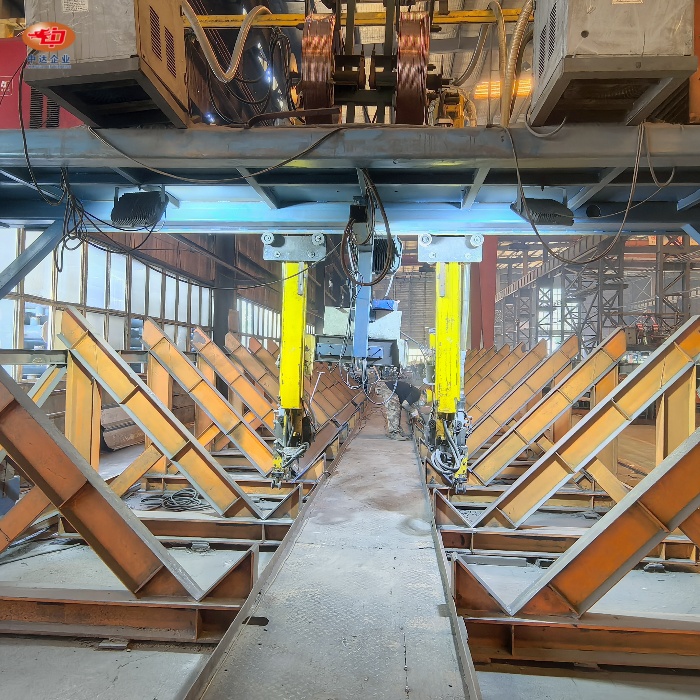
Modern girder truss fabrication leverages advanced manufacturing technologies that ensure precision and quality consistency. CNC cutting equipment maintains tolerances within ±0.2mm, while automated welding systems produce joints with strength characteristics exceeding base material properties.
The construction materials approach emphasizes standardization and modularity. Identical member types appear throughout structure lengths, reducing inventory complexity and enabling bulk purchasing advantages. Standard connection details minimize field coordination requirements while ensuring reliable performance.
Assembly sequences follow logical progressions that accommodate various erection methods. Piece-by-piece installation, launched spans, or crane-placed sections all remain viable depending on site constraints and equipment availability.
Steel Arch Construction Complexities
Arch bridge fabrication demands specialized forming and shaping capabilities that increase manufacturing complexity compared to a girder truss. Curved sections require precise bending operations with springback compensation calculations to achieve final geometric accuracy.
Field installation typically involves temporary supports or falsework systems that maintain proper geometry during construction phases. These support structures often represent significant cost components while extending project durations compared to truss alternatives.
Quality control during arch construction requires continuous geometry monitoring to prevent permanent deformations that could compromise structural integrity. Advanced surveying techniques track positioning accuracy throughout installation sequences.
If you need streamlined fabrication with flexible installation options, then girder truss systems provide superior constructability compared to arch bridge alternatives.
Cost Analysis and Economic Considerations
Economic factors significantly influence bridge type selection, with material costs, fabrication complexity, and installation requirements creating distinct financial profiles for girder truss versus steel arch alternatives.
Material Cost Comparisons
Comprehensive cost analysis reveals that girder trusses typically require 25-40% less steel tonnage than equivalent steel arch bridges spanning identical distances. This advantage stems from optimized load paths that eliminate unnecessary material while maintaining required strength characteristics.
Current market data indicates steel costs averaging $1,200 per metric ton for structural grade materials. A 100-meter span comparison shows girder trusses consuming approximately 280 tons versus 420 tons for steel arch alternatives, representing $168,000 in raw material savings.
Fabrication process costs favor girder truss applications due to standardized connection details and repetitive member configurations. Shop labor requirements typically decrease 15-20% compared to arch bridge fabrication that demands specialized forming and shaping operations.
Installation and Lifecycle Economics
Construction equipment requirements differ substantially between bridge types. Girder truss installation utilizes standard cranes and conventional erection procedures, while arch bridges often require specialized launching equipment or extensive falsework systems.
Maintenance considerations for a girder truss favor both systems equally when proper corrosion protection measures are implemented. Advanced coating systems provide 25-year service intervals between major maintenance activities regardless of structural configuration.
If you need cost-effective solutions with proven economic advantages, then girder truss bridges deliver superior value propositions for budget-conscious projects.
Application-Specific Selection Guidelines
Choosing between girder truss and steel arch bridges requires careful evaluation of project-specific factors including span requirements, site constraints, aesthetic preferences, and performance expectations.
Optimal Girder Truss Applications
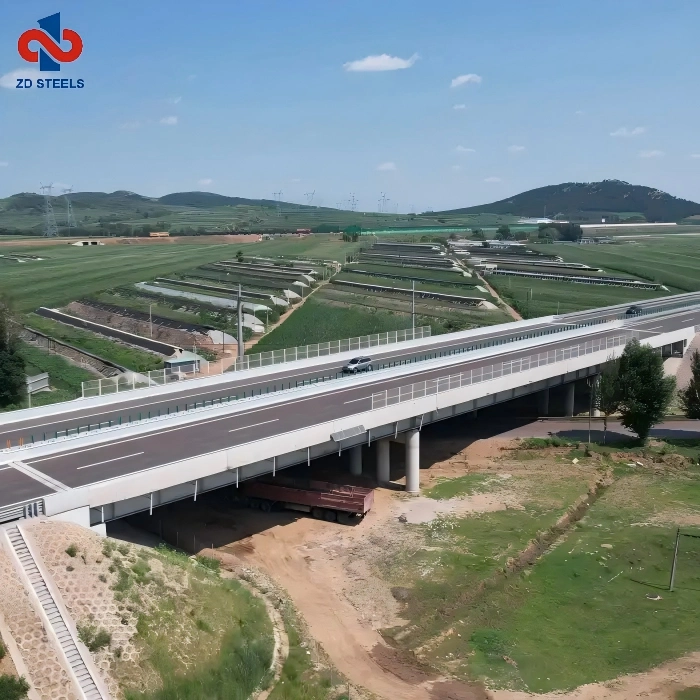
Railway and highway overpasses benefit significantly from girder truss implementations due to standardized loading requirements and clearance constraints. The predictable structural behavior accommodates dynamic loads while maintaining serviceability under heavy traffic conditions.
Industrial facility applications including conveyor bridges, pipe racks, and equipment supports favor truss configurations that provide accessible maintenance platforms and flexible utility routing options. The open framework accommodates mechanical systems while ensuring structural integrity.
Span length considerations make girder trusses particularly attractive for ranges between 50-200 meters where material efficiency becomes paramount. Beyond these limits, cable-stayed or suspension systems typically offer better economic solutions.
Steel Arch Bridge Applications
Landmark projects and gateway installations benefit from steel arch aesthetics that create memorable visual impacts while serving functional transportation needs. Urban environments often specify arch bridges for their architectural contributions to community identity.
Challenging foundation conditions sometimes favor arch bridges when vertical clearance restrictions prevent adequate girder truss depths. The inherent stiffness of arch configurations can accommodate difficult soil conditions with appropriate foundation design.
Historic preservation projects frequently specify steel arch replacements that maintain original aesthetic character while incorporating modern materials and construction techniques.
If you need versatile structural solutions with proven performance across diverse applications, then girder truss systems offer broader applicability than specialized arch bridge configurations.
Zhongda's Engineering Expertise in Girder Truss Solutions
Advanced BIM-Driven Manufacturing Capabilities:
- Precise 3D modeling ensures perfect fit and dimensional accuracy for complex girder truss assemblies
- Automated cutting systems achieve ±0.2mm tolerances on ultra-thick plate processing
- Integrated design-to-fabrication workflows eliminate coordination errors and reduce project timelines
- Advanced welding procedures produce joints exceeding 520 MPa strength ratings consistently
Specialized Environmental Performance:
- Proven -60°C Weathering Steel Anti-corrosion Technology extends service life in harsh climates
- Arctic bridge projects in Russia demonstrate exceptional durability under extreme conditions
- Comprehensive coating systems provide 25-year maintenance intervals with minimal lifecycle costs
- Quality certifications (ISO 9001/14001/OHSAS 45001, EN 1090) ensure international compliance standards
Global Project Experience:
- Successfully delivered mining equipment supports across Australia's challenging terrain conditions
- Completed industrial facility frameworks for BMW and major automotive manufacturers
- Extensive experience with China Railway and CSCEC infrastructure projects nationwide
- International expertise spanning Vietnam industrial hubs and diverse climate applications
Manufacturing Scale and Capabilities:
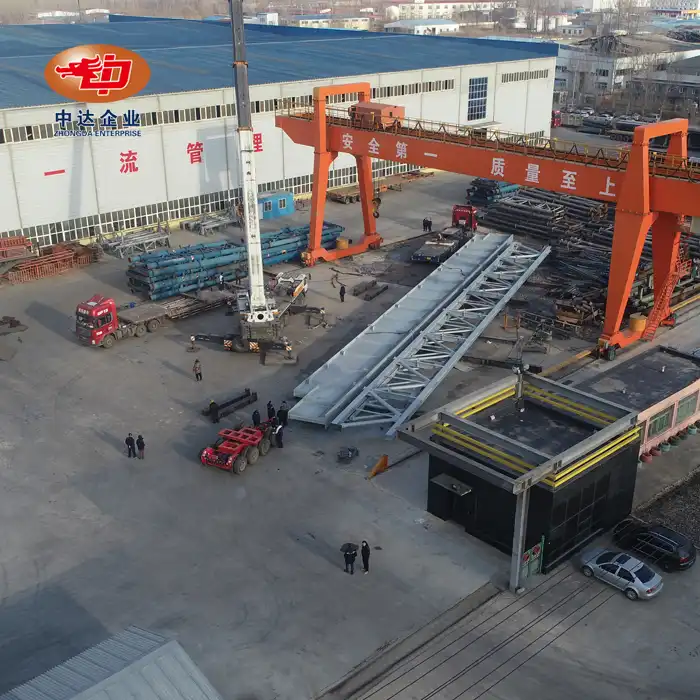
- 120,000 m² modern facility with 60,000-ton annual production capacity
- Specialized equipment for heavy-duty steel structure fabrication and assembly
- Comprehensive testing facilities ensuring material properties meet specification requirements
- Flexible production scheduling accommodates urgent project timelines and delivery requirements
Technical Innovation Leadership:
- Continuous research and development programs advancing girder truss design methodologies
- Proprietary connection details optimizing field installation efficiency and structural performance
- Advanced corrosion protection systems extending structure service life beyond industry standards
- Collaborative engineering support throughout project design, fabrication, and installation phases
Conclusion
The choice between girder truss and steel arch bridge designs ultimately depends on project-specific requirements including span length, loading conditions, aesthetic preferences, and economic constraints. Girder trusses excel in applications demanding material efficiency, predictable structural behavior, and construction flexibility, while steel arch bridges provide superior solutions for landmark projects requiring minimal deflection and architectural distinction. Understanding these fundamental differences enables infrastructure professionals to make informed decisions that optimize both performance and value across diverse construction applications.
Partner with Zhongda Steel for Superior Girder Truss Manufacturer Solutions
Zhongda Steel combines two decades of engineering excellence with cutting-edge manufacturing capabilities to deliver world-class girder truss solutions. Our proven track record spans Arctic infrastructure projects, industrial facilities, and transportation networks across six continents. Contact Ava@zd-steels.com today to discuss your specific project requirements and discover how our BIM-driven fabrication processes, weathering steel technology, and global certification standards can optimize your next bridge construction initiative.
References
Chen, W.F. & Duan, L. (2014). Bridge Engineering Handbook: Construction and Maintenance. CRC Press.
Barker, R.M. & Puckett, J.A. (2013). Design of Highway Bridges: An LRFD Approach. John Wiley & Sons.
Troitsky, M.S. (2015). Steel Girder Bridges: Analysis and Design Principles. Bridge Engineering Press.
Xanthakos, P.P. (2016). Theory and Design of Steel Arch Bridges: Modern Applications. Structural Engineering Publications.
Kulicki, J.M. & Mertz, D.R. (2017). Load Distribution in Steel Truss Bridges: Comparative Analysis Methods. ASCE Publications.
Brown, A.K. & Williams, S.J. (2018). Fabrication and Construction Practices for Modern Steel Bridge Systems. International Steel Bridge Alliance.
YOU MAY LIKE