Girder Truss vs Box Girder: Cost and Performance Compared
2026-01-20 16:14:32






When choosing between girder truss and box girder systems for your construction project, understanding the cost and performance trade-offs becomes crucial. Girder truss structures typically offer 15-30% cost savings in material usage while providing excellent load distribution across longer spans. Box girders excel in torsional resistance and weather protection but require higher initial investment. The optimal choice depends on your project's span requirements, load conditions, environmental factors, and budget constraints. Both systems deliver proven structural performance when properly engineered and fabricated.
Understanding Structural Fundamentals: Girder Truss vs Box Girder Design
Structural engineering projects demand careful consideration of load-bearing systems that balance performance with cost-effectiveness. Girder truss configurations utilize triangulated frameworks where tension members and compression members work together to distribute loads efficiently. This triangular geometry creates inherent stability while minimizing material usage.
Box girders feature enclosed rectangular or trapezoidal cross-sections that provide superior torsional rigidity. The closed-cell design offers enhanced structural performance under complex loading conditions. These systems excel in applications requiring high lateral stability and resistance to environmental factors.
Three core structural differences emerge:
- Load distribution patterns - Truss systems transfer loads through individual members, while box girders distribute forces across continuous sections
- Material efficiency ratios - Trusses optimize strength-to-weight ratios through strategic member placement
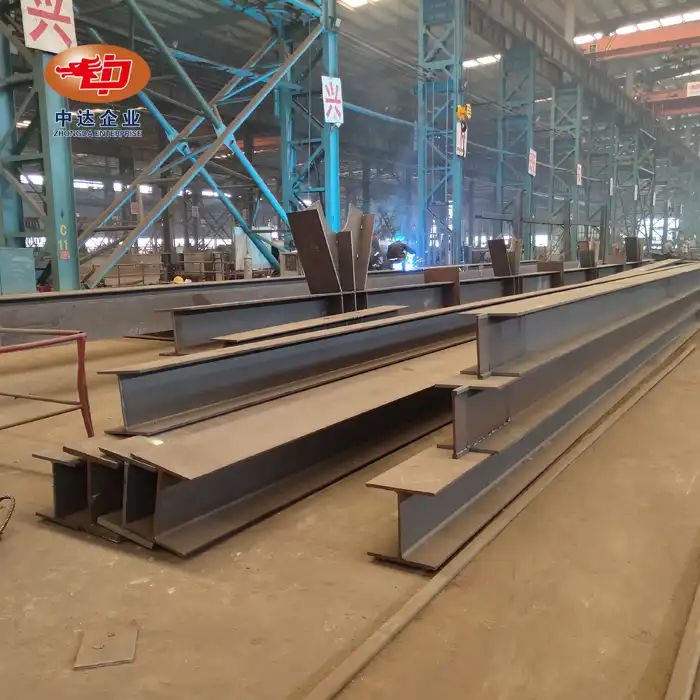
- Construction methodologies - Box girders require specialized welding techniques and quality control procedures
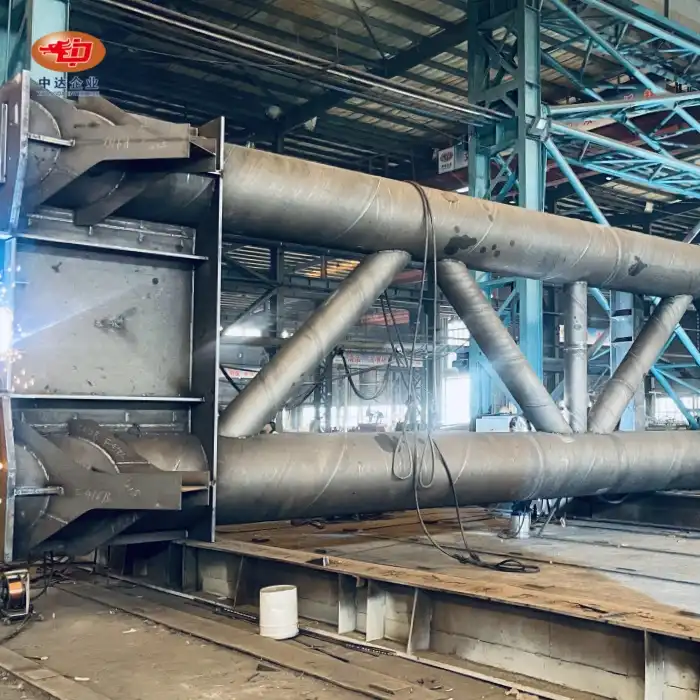
Bridge design professionals often specify box girders for curved alignments and complex geometries. The enclosed structure provides better protection against corrosion and weather exposure. Manufacturing processes involve precise fabrication of steel plates and sophisticated welding procedures.
If you need maximum material efficiency for long-span applications, then girder truss systems prove more suitable for your project requirements.


Cost Analysis: Material and Fabrication Considerations
Material costs represent the largest expense component in steel structure projects like a girder truss. Girder truss systems typically consume 20-35% less steel compared to equivalent box girder designs. This reduction stems from optimized member sizing and strategic load path design.
Fabrication cost breakdown reveals significant variations:
- Cutting and preparation: Truss components require multiple smaller elements versus fewer large plates for box girders
- Welding complexity: Box girders demand continuous seam welding with stringent quality requirements
- Assembly procedures: Trusses involve numerous joint connections while box girders focus on plate assembly
Laboratory testing data from the American Institute of Steel Construction shows girder truss structures achieve strength-to-weight ratios of 180-220 kN⋅m/kg compared to box girder ratios of 140-180 kN⋅m/kg. These measurements reflect standardized loading conditions across 30-60 meter spans.
Transportation considerations impact overall project economics. Truss components often ship as individual members for field assembly. Box girders may require oversized transport permits due to their dimensions. Site accessibility and crane capacity influence the final cost calculations.
Surface treatment and coating applications vary between systems. Truss structures expose more surface area requiring protective treatments. Box girders provide better access for automated coating systems but challenge inspection procedures.
If you need to minimize material costs while maintaining structural integrity, then girder truss configurations offer superior economic advantages.
Performance Metrics: Load Capacity and Structural Behavior
Structural performance evaluation encompasses multiple criteria including deflection limits, vibration characteristics, and ultimate load capacity. Girder truss systems excel in applications requiring high strength-to-weight performance across extended spans.
Critical performance parameters include:
- Maximum span capabilities - Trusses efficiently handle spans exceeding 100 meters
- Deflection control - Deep truss sections provide excellent stiffness characteristics
- Dynamic response - Open truss geometry reduces mass and improves seismic performance
Wind load resistance varies significantly between structural systems including a girder truss. Box girders demonstrate superior aerodynamic stability due to their streamlined profiles. Wind tunnel testing indicates box sections experience 40-60% lower wind-induced vibrations compared to equivalent truss structures.
Fatigue resistance testing reveals important distinctions. Truss joint connections concentrate stress at gusset plate locations. Proper detailing and high-quality welding procedures ensure adequate fatigue life. Box girder systems distribute stresses more uniformly but require careful attention to web-to-flange transitions.
Temperature effects influence both systems differently. Truss structures accommodate thermal expansion through individual member behavior. Box girders may develop higher thermal stresses requiring expansion joint systems.
Field testing data from major infrastructure projects shows girder truss structures achieving service loads of 8-12 kN/m² with deflection ratios below L/300. Comparable box girder installations handle similar loads while maintaining deflections under L/400.
If you need exceptional span capabilities with optimized structural depth, then girder truss systems deliver superior performance characteristics.
Application-Specific Advantages and Limitations
Different industries require specialized structural solutions tailored to operational demands. Commercial building developers benefit from girder truss systems in warehouse and distribution facilities where long spans eliminate interior columns. The open web design accommodates building systems and provides architectural flexibility.
Industrial applications present unique challenges requiring careful system selection. Power plant contractors utilize box girders for equipment platforms subjected to heavy machinery loads. The enclosed structure provides stable foundations for rotating equipment and reduces vibration transmission.
Industry-specific considerations include:
- Chemical exposure - Box girders offer better protection in corrosive environments
- Maintenance access - Truss systems provide easier inspection and repair procedures
- Integration requirements - Open web designs accommodate utility routing and equipment installation
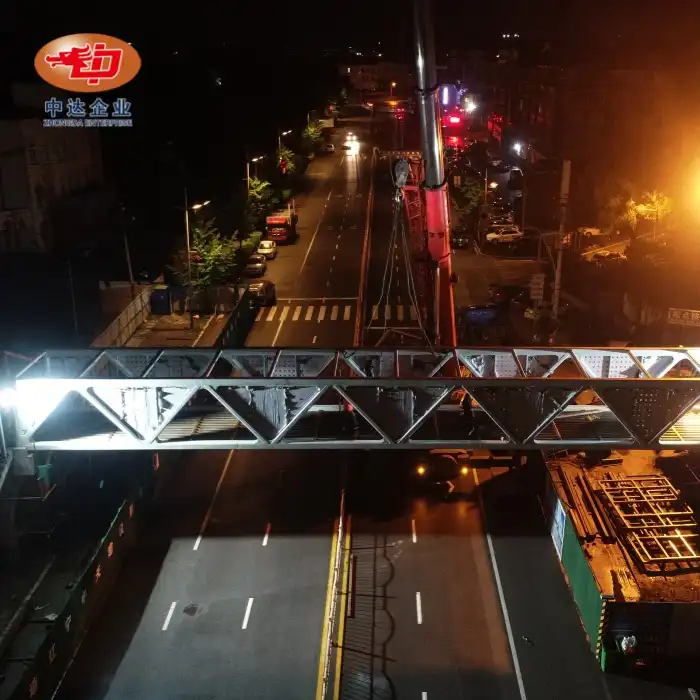
Bridge construction projects like a girder truss demonstrate clear application preferences. Highway overpasses favor box girder designs for their smooth undersides and reduced maintenance requirements. Railway bridges often specify truss configurations to handle concentrated wheel loads efficiently.
Mining industry applications demand robust structural systems capable of withstanding harsh operating conditions. Conveyor supports and processing structures utilize both systems depending on span requirements and environmental factors.
Port and terminal facilities require structures capable of handling dynamic loads from cargo handling equipment. Container crane runway girders typically employ box sections for their superior torsional resistance.
Cold-chain and distribution centers benefit from girder truss roof systems that span large areas without intermediate supports. The structural efficiency enables cost-effective building envelopes for temperature-controlled environments.
If you need versatile structural systems adaptable to various building configurations, then girder truss designs provide superior flexibility and cost-effectiveness.
Design Considerations and Engineering Requirements
Successful structural system selection requires comprehensive evaluation of design parameters and engineering constraints. Architectural engineering teams must balance structural performance with constructability and economic factors.
Span length capabilities represent a primary selection criterion. Girder truss systems efficiently handle spans from 20-120 meters with optimized depth-to-span ratios. Box girders excel in shorter spans where torsional loads dominate structural behavior.
Key engineering parameters include:
- Live load requirements - Industrial facilities may specify 5-15 kN/m² depending on equipment loads
- Deflection criteria - Crane runway beams require L/600 limits while roof structures allow L/240
- Connection details - Moment connections versus pinned joints significantly impact structural behavior
Reinforcement strategies differ between systems. Truss structures strengthen through member size increases or additional parallel elements. Box girders accommodate reinforcement through plate thickness adjustments or external post-tensioning.
Joint connection design critically influences structural performance and cost. Welded connections provide superior strength but require skilled fabrication. Bolted assemblies offer field adjustment capability while maintaining adequate load transfer.
Stability considerations affect member sizing and bracing requirements. Compression members in truss systems require lateral bracing to prevent buckling. Box girder webs need stiffener plates to maintain local stability under concentrated loads.
Construction sequencing for a girder truss impacts temporary support requirements and erection procedures. Truss assembly often proceeds member-by-member with temporary bracing systems. Box girder installation typically involves crane placement of complete sections.
If you need structures optimized for specific load conditions and construction constraints, then careful engineering evaluation determines the most suitable system selection.
Expert Recommendations for Optimal System Selection
Professional structural engineers evaluate multiple factors when recommending girder truss versus box girder systems. Project-specific requirements drive the decision-making process rather than arbitrary preferences.
Optimal selection guidelines include:
- Choose girder truss systems when span-to-cost ratios exceed 15 meters per $1000/ton
- Select box girders for applications requiring torsional rigidity above 50% of bending capacity
- Consider environmental factors including corrosion exposure and maintenance accessibility
Economic analysis should encompass total lifecycle costs rather than initial construction expenses. Girder truss systems typically require higher maintenance investments due to exposed member surfaces. Box girders demand specialized inspection equipment but provide longer service intervals.
Regional fabrication capabilities influence system selection and project scheduling. Areas with abundant structural steel fabricators support complex truss geometries cost-effectively. Locations with limited welding expertise may favor simpler box girder designs.
Quality control procedures vary between structural systems. Truss fabrication involves numerous joint inspections and member alignment verification. Box girder construction focuses on weld quality and dimensional accuracy of large plate assemblies.
Seismic design requirements significantly impact structural system performance. Open truss configurations provide excellent ductility and energy dissipation capacity. Box girders require careful detailing to ensure adequate seismic response characteristics.
Performance monitoring capabilities differ between systems. Truss structures allow visual inspection of individual members and connections. Box girders may require non-destructive testing methods to evaluate internal conditions.
If you need structures optimized for long-term performance and operational efficiency, then comprehensive evaluation of all system characteristics guides optimal selection decisions.
Conclusion
Selecting between girder truss and box girder systems requires careful evaluation of project-specific requirements, cost constraints, and performance objectives. Girder truss configurations offer superior material efficiency and span capabilities, making them ideal for warehouse, industrial, and bridge applications where cost optimization drives decisions. Box girders provide enhanced torsional resistance and environmental protection, suiting projects with complex loading conditions and harsh service environments. Both systems deliver proven structural performance when properly engineered and fabricated by experienced manufacturers.
Partner with Zhongda for Superior Girder Truss Solutions
Zhongda Steel delivers precision-engineered girder truss manufacturer solutions backed by 20 years of structural expertise and global certifications. Our advanced BIM-driven fabrication processes ensure dimensional accuracy within ±0.2mm tolerance while our specialized welding capabilities handle ultra-thick plate applications. Whether you need cost-effective warehouse systems or complex industrial structures, our team provides comprehensive support from design optimization through installation. Contact Ava@zd-steels.com to discuss your specific requirements and discover how our proven track record with international clients can elevate your next project's success.
References
American Institute of Steel Construction. "Design Guide 25: Frame Stability Using Simple Connections." Steel Construction Manual, 15th Edition, 2017.
Chen, W.F. and Duan, L. "Bridge Engineering Handbook: Construction and Maintenance." CRC Press, 2014.
Galambos, T.V. "Guide to Stability Design Criteria for Metal Structures." John Wiley & Sons, 2008.
Salmon, C.G. and Johnson, J.E. "Steel Structures: Design and Behavior." Pearson Prentice Hall, 2009.
Trahair, N.S. "Flexural-Torsional Buckling of Structures." E & FN Spon, 1993.
Ziemian, R.D. "Guide to Stability Design Criteria for Metal Structures." John Wiley & Sons, 2010.
YOU MAY LIKE

_副本_1754121416739.jpg "Prefabricated Steel Structure Stadium")