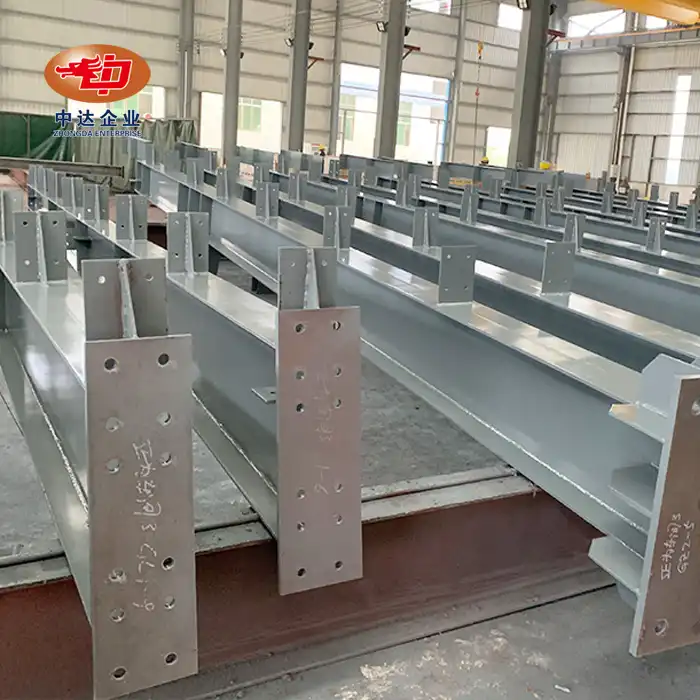
How to Order Custom Steel Box Girders for Large Infrastructure Projects?
2026-06-03 16:16:28






Ordering custom steel box girders involves a systematic procurement process that begins with defining precise technical specifications—including load requirements, span lengths, and environmental conditions—followed by vetting qualified manufacturers, evaluating quotations, overseeing fabrication quality, and coordinating delivery logistics. This structured approach ensures that box-section structural components meet engineering standards, arrive on schedule, and perform reliably throughout the project's operational life. Understanding each stage helps procurement professionals mitigate risk while securing cost-effective solutions tailored to complex infrastructure demands.
Understanding Steel Box Girders and Their Applications
When planning big pieces of infrastructure, picking the right building system can make or break the project and its performance in the long run. steel box girders are now the standard for a wide range of uses, from highway interchanges in cities to long-span rail viaducts.
What Makes Box-Section Design Superior?
When compared to open-section options like I-beams, the fully welded closed-cell design provides better rotational stiffness. This enclosed shape spreads stress more evenly and stops bending forces, which are very important in curvy alignments or situations with uneven loads. Zhongda's engineering team uses high-strength Q345D steel (yield strength ≥345MPa) for main parts and Q420D for joints that are under a lot of stress. This makes sure that the material works at its best where structural demands get tougher. This mix gives it both strength and flexibility, which is important for handling dynamic loads like those caused by heavy traffic or earthquakes.
Where Are These Structural Components Used?
Bridge building is the most common use, especially for spans longer than 50 meters, where regular concrete would be too heavy. The better strength-to-weight ratio means that base loads are up to 30% lower for highway flyovers than for concrete options. Rail transit projects take advantage of the system's ability to fit covered electric catenary lines inside. Industrial buildings, like port platforms and mine conveyor supports, use these systems because they are flexible and can be built ahead of time, which cuts down on the time needed to build them on-site by a large amount.
The 18,000-ton Shenyang Dongta Cross-Hunhe River Bridge is a good example of how well we can complete difficult bridge projects. Variable cross-section designs with heights ranging from 1.25 meters to 8 meters can handle changing loads along spans of up to 420 meters, showing unmatched customization potential for tough infrastructure needs.


Step-by-Step Process to Order Custom Steel Box Girders
Clear communication and organized performance are key to a successful purchase. You can keep track of technical specs, funds, and deadlines throughout the lifecycle of your project by breaking the steel box girder buying process into doable steps.
Define Your Project Requirements Precisely
Start by writing down all of the detailed details. When figuring out loads, you have to take into account things like dead loads, live traffic loads, dynamic effect factors, and natural forces like wind and earthquakes. span lengths affect the design of splice connections and set the size of manufacturing segments, which are usually 12 to 30 meters long to make them easier to move. Anticorrosion tactics are based on the environment; sites near the coast need more security than what is required in an industrial zone. Our BIM-based design integration lets clients see how structures will be put together and find problems before they are built, which saves them the cost of making expensive changes in the field.
Source Qualified Manufacturers With Proven Credentials
Screening suppliers helps keep projects on schedule and prevents quality problems. Check certifications like ISO 9001 for managing quality, EN 1090 for making structures out of steel, and AWS D1.5 for welding standards on bridges. Check out Zhongda's production ability. With a 120,000 m² building and a yearly output of 60,000 tons, it can handle multiple big projects at the same time without any problems. Look at examples of past projects, especially ones that are similar to the amount of difficulty and problems you face. Request inspection records from a third party that show the product meets the material requirements and fits within the allowed dimensions (±0.2mm precision cutting at our site ensures accurate fit-up during assembly).
Compare Quotations Beyond Base Pricing
A good cost study takes many things into account. The cost of fabrication depends on the type of steel used, the complexity of the cross-section, and the amount of checking that is needed. Delivery fees are based on the distance, the size of the segments, and any special treatment needed for large loads. Lead times are based on how busy the shop is and how the supply chain works for special products. When compared to providers with separate operations, Zhongda's vertically combined operations—from cutting plates to applying the final coating—shorten lead times by 20 to 30 percent. Payment terms, guarantee coverage, and expert support packages add value above and beyond the price, especially for projects that have more than one delivery phase.
Oversee Quality Control During Fabrication
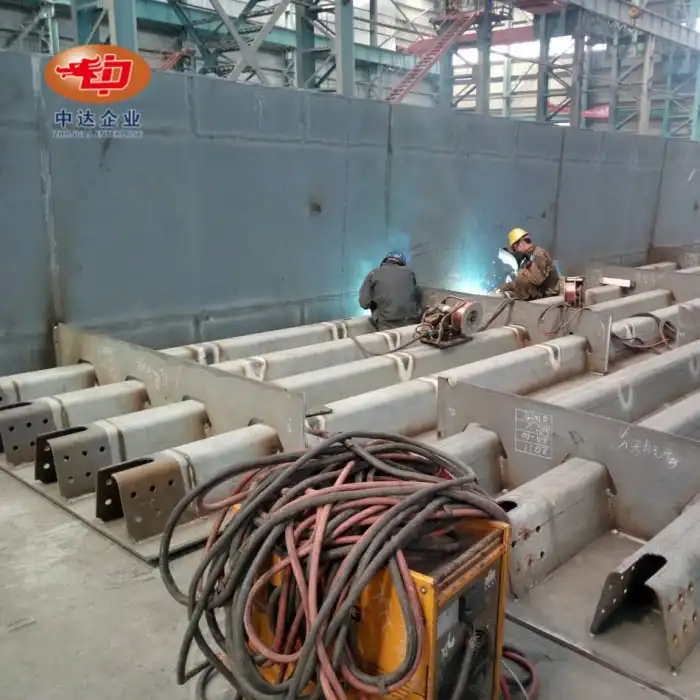
Regular checks during production find flaws early on, before they need expensive fixes in the field. Check the welds carefully, especially the full-penetration groove welds at the links between the ring and the web. Check the certificates for steel materials by looking at mill test records that prove the material's chemical make-up and mechanical qualities. Dimensional checks make sure that pieces line up when they are being put together in the field, which stops forced fit-up that causes leftover strains. Our automatic welding lines make sure the quality is always the same, and CNC ultra-thick plate cutting gives us the accuracy we need for smooth segment matching. For high-stakes projects, independent third-party inspection services can add another layer of security.
Coordinate Delivery and Installation Support
Logistics planning keeps the job place from being late. For transportation routes, licenses are needed for loads that are too big, bridge capacity assessments are needed along haul routes, and crane access is needed for dumping. To keep our packaging from deforming during shipping, we use strengthened crates and smart load distribution. Having expert support on-site during the installation process helps fix alignment problems and makes sure that the connections are properly torqued. After-sales services, such as advice on how to do regular inspections and upkeep suggestions, make structures last longer. Our transportation choices are flexible enough to work with rapid bridge rebuilding (ABC) or phased construction plans, so parts get to the right place at the right time.
Evaluating Steel Box Girder Options for Your Project
Not every type of structure system works well in every situation. When you understand performance trade-offs, you can get the best value for both building prices and lifetime value for the steel box girder problems you face.
Comparing Structural Systems for Performance
Compared to concrete options, steel box systems have a 40% to 50% lower self-weight. This makes the base much cheaper in places with soft earth or deep water for bridge piers. When compared to steel I-beams, the closed-section shape makes the structure 10 times stiffer in the rotational direction, which means that complex cross-bracing is not needed for bent alignments. Cellular and multi-cell designs spread out heavy loads from cable-stay anchorages or equipment that is stacked close together. Our perforated steel web choice cuts weight by 20% while keeping bending strength. This is useful in seismic areas where less mass equals less earthquake force.
When Custom Solutions Deliver Maximum Value
Standardized designs work well for everyday tasks, but custom engineering opens up possibilities in more complicated situations. When bending moments change along the span, variable-depth setups make the best use of material by focusing resources on areas with a lot of stress. Higher shear forces can be handled by parts that are hunched close to the pier supports without the need for more web stiffeners. End diaphragms that are skewed can adapt to pier arrangements that aren't straight, which is common in busy urban interchanges. Zhongda's engineering team works together to create custom solutions that balance the efficiency of structures with the ease of construction. During value-engineering reviews, they often find new ideas that save the company a lot of money.
Balancing Technical and Economic Factors
Lifecycle cost analysis shows that the extra money spent on better rust protection during manufacturing is recouped by not having to paint as often. Our two-coat methods, which use either galvanizing or multi-layer sprays, last for 30 years without needing any repairs. This saves tens of thousands of dollars in costs for controlling traffic and keeping workers from getting on the road while the paint is being applied. Prefabrication cuts on-site work by 50%, which speeds up projects and lowers the fines for traffic delays. When looked at over the whole lifetime of a project, these factors make custom box systems competitive with options that cost less up front.
Procurement Tips and Avoiding Common Pitfalls
Managing complicated orders for steel box girders can be hard for even buying teams that have done it before. Knowing about common failure types helps you take steps to protect the results of your projects.
Identifying Critical Quality Defects Early
Flaws in the welding process are the most serious type of fault. If box corner joints don't fuse, stress cracks can start in places that are loaded and unloaded over and over again. When there are holes in thick-section welds, the load-carrying ability drops below what was expected by design. Dimensional errors, especially webs that aren't straight or flanges that twist, can make it hard to assemble, and they need to be fixed in the field, which takes time and affects plans. Corrosion protection fails happen when the surface isn't properly prepared before covering; mill scale or flash rust under primers causes coatings to fail too soon. Our strict quality standards include acoustic testing of important welds, laser scanning to check dimensions, and climate-controlled treatment facilities to make sure the surface is in the right state.
Leveraging Post-Installation Support
When a job is mostly done, relationships with producers shouldn't end. Knowledgeable providers teach maintenance staff how to do inspections, which helps them spot early danger signs like paint wear or connection looseness. Having access to as-built production plans makes it easier to make changes or earthquake upgrades in the future. Replacement parts—archived material that matches the original specifications—make fixes easier after a car accident or when the structure needs to be strengthened in a way that wasn't planned for. Zhongda keeps detailed project paperwork and gives expert advice for as long as the building is in use. This shows that our dedication goes beyond just making sales.
Managing Costs and Lead Times Realistically
When people have unrealistic standards about when things need to be done, they end up spending more money on speeding or sacrificing quality. Standard wait times for custom manufacturing are 16 to 24 weeks from the time the shop plans are accepted. This can change depending on the complexity of the job and the mill delivery times for specialty steel grades. Long-term material purchases can be put on hold until all the details of the plan are finalized. This is called strategic buying. Buying things during slower times for makers gives you more negotiating power; working together to set up a schedule is good for everyone. Transportation delays (weather allowing) and construction weather windows can be planned for. This way, activities in the field don't get rushed, which raises the risk of an accident.
Why Choose Zhongda for Your Custom Steel Box Girder Needs?
When choosing a factory partner, you need to look at both their professional skills and how reliable their organization is. Our history shows that we consistently deliver on the toughest steel box girder projects in the business.
Certifications and Global Project Experience
Zhongda has been in business since 2004 and has many qualifications, such as ISO 9001/14001/45001, Class I Steel Structure Professional Contracting Qualification, EN 1090, AWS, and JIS standards. Our engineering team is very good at doing complicated math for long-span structures, wind tunnel optimization, and wear analysis, all of which are very important for bridge uses. Using our -60°C weathering steel technology, we built an Arctic bridge in Russia. We also worked on mining infrastructure in Australia and industrial parks all over Vietnam. Working with China Railway, CSCEC, BMW, and many other global EPC firms has helped us learn more about how to build in a variety of legal settings and ways.
Integrated Capabilities From Design Through Delivery
Vertical integration makes it possible for design, production, and transportation to work together more smoothly. We can do a lot of things in-house, like using advanced finite element analysis to improve structures, CNC cutting of very thick plates up to 150 mm, automatic multi-pass welding for uniform quality, and climate-controlled coating facilities that use high-tech safety systems. The 60,000-ton annual capacity can handle several big projects at the same time, and it can also handle rush orders to support faster building plans. Our 70% client renewal rate shows that our clients are happy with both the quality of our work and the way we work together to solve problems throughout the lifecycle of a project.
Dedicated Support Throughout Project Lifecycle
Starting with the first question and continuing for decades, Zhongda offers full support. Before a bid is made, engineering support helps to improve technical specs and find ways to cut costs. During fabrication, clients are kept up to date on work and are always welcome to come visit the plant. Transportation planning, help with permits, and on-site expert reps during key building phases are all part of delivery coordination. After the work is done, we train people who will be doing inspections and are still available to talk about maintenance plans or future changes. This all-around method, which isn't common among transactional providers, makes sure that your infrastructure investment works the way it was meant to.
Conclusion
To buy custom steel box girders successfully, you need to carefully plan, check out potential suppliers, and work together throughout the whole process of manufacturing and shipping. Procurement pros get structures that meet strict performance standards while keeping costs and plans under control by clearly outlining requirements, carefully comparing options, and working with experienced makers. The closed-cell structure provides unmatched rotational strength for bent lines and long spans. Additionally, current manufacturing methods allow for quick prepared assembly, which greatly reduces the amount of work that needs to be done in the field. Spending time choosing suppliers and keeping an eye on quality stops delays and poor performance that cost a lot of money and makes sure your infrastructure works well for decades. The planned method described sets up your project for technical success and good lifetime economics.
FAQ
What lead times should we expect for custom fabrication?
Depending on how complicated the job is and how much steel is available, standard production times are 16 to 24 weeks after the shop plan is approved. Projects that need special grades or a lot of non-destructive tests may take longer than planned. When critical-path components get priority handling, expedited plans are possible, but this may have an effect on costs. Getting makers involved early on in the planning process helps shorten the overall timeline for steel box girders.
How do environmental conditions affect pricing?
Extreme temperature ranges, marine salt spray, or chemical atmospheres in factories are all examples of harsh environments that need better rust protection systems, which raise the cost of coatings by 15 to 25 percent. In seismic zones, you might need higher-grade steels and more link ability, which can change the cost of materials. Impact-tested steel types that stay tough at low temperatures are needed for works in the Arctic. Talking about the site factors early on lets you make a good budget.
Can designs adapt mid-project if requirements change?
How flexible something is depends on how it was made. Before the cutting starts, changes to the plan are made that fit in well and don't cost much to build. When changes are made after cutting or partial welding, the damaged parts have to be thrown away, which adds a lot to the costs and delays. Planning everything ahead of time helps keep changes to a minimum during the job. However, trustworthy makers keep lines of communication open so that they can deal with unexpected situations in the field together.
Partner With a Trusted Steel Box Girder Manufacturer
Zhongda blends 20 years of specialized knowledge with the latest manufacturing technology to provide structural solutions that go above and beyond the strictest infrastructure standards. Our wide range of customization options, including varying cross-sections that make the best use of material and modern anti-corrosion systems that guarantee decades of low-maintenance service, can be used to solve any problems your project may have. Contact our engineering team at Ava@zd-steels.com to talk about your needs and find out how our steel box girder seller services can help you get things done faster without sacrificing quality. We would be happy to use our skills to help you with your next big building project.
References
American Association of State Highway and Transportation Officials. (2020). AASHTO LRFD Bridge Design Specifications, 9th Edition. Washington, DC: AASHTO.
Chen, W.F., & Duan, L. (2014). Bridge Engineering Handbook: Construction and Maintenance, Second Edition. Boca Raton: CRC Press.
European Committee for Standardization. (2006). Eurocode 3: Design of Steel Structures - Part 2: Steel Bridges. Brussels: CEN.
Troitsky, M.S. (1987). Orthotropic Bridges: Theory and Design. Cleveland: The James F. Lincoln Arc Welding Foundation.
Xanthakos, P.P. (1994). Theory and Design of Bridges. New York: John Wiley & Sons.
Zhao, X.L., & Zhang, L. (2017). State-of-the-Art Review on FRP Strengthened Steel Structures in Bridge Applications. Engineering Structures, 138, 1-13.
YOU MAY LIKE
_副本_1755575879773.jpg "temporary steel structures")
_副本_1756187900835.jpg "steel column")
_副本_1754364944578.jpg "Box Girder Beam Bridge")
_1746242570299.webp "Large-Diameter Tunnel Boring Machine")