Introducing Our Heavy-Duty Offshore Lattice Columns
2026-06-05 14:15:44






When saltwater rust, hurricane-force winds, and random wave loading hit offshore platforms all the time, normal structure solutions quickly show their flaws. Our heavy-duty offshore lattice columns are a custom-made solution to these important problems. These columns are made from high-quality marine steel alloys and are covered by advanced anti-corrosion systems. They distribute loads very well through multi-braced frames that make the structure work better while using less material. Each lattice column goes through strict tests that go above and beyond API and ISO offshore standards. This makes sure that your infrastructure stays up and running in the roughest marine settings where failure is not an option.
Understanding the Challenges of Offshore Structural Support
Corrosion and Material Degradation in Marine Environments
The setting where offshore buildings work is one of the roughest on Earth. Regularly being in saltwater speeds up the electrolytic processes that break down regular steel, which makes the material thinner and the structure weaker. When chloride ions, oxygen-rich seawater, and changes in temperature come together, steel that isn't shielded can lose a lot of cross-sectional area in just five years. Traditional protective coverings often fail because floating garbage and the constant movement that comes with marine sites wear them down.
Dynamic Loading and Structural Stability Requirements
Wave forces and wind loads make pressures that are complicated, go in many directions, and change all the time. Offshore columns have to fight horizontal shear forces, bending moments, and cycle wear loads at the same time, which is different from buildings on land that are mostly compressed vertically. Because of these changing conditions, building structures need to be able to stay stable across a wide range of loads and still allow for base settling and platform movement. In order for conventional monopile designs to be strong enough, the material often has to be too thick, which increases both the weight and the base needs.
Maintenance Access and Operational Downtime Costs
To fix buildings offshore, you need special boats, schedules that depend on the weather, and work stops that can cost hundreds of thousands of dollars every day. Unfortunately, traditional column designs that aren't very resistant to rust need to be inspected and fixed on a regular basis, which adds to the costs of ownership well beyond the initial cost of installation. The business needs solutions right away that can extend the time between repair visits while still being easy to reach for regular checks when needed.


Key Features and Benefits of Heavy-Duty Offshore Lattice Columns
Our engineering team has created offshore lattice columns that are designed to solve the problems that have been found in hundreds of marine sites. Through material science, geometry optimization, and precise production, these shapes are big steps forward from previous designs.
Advanced Structural Design for Optimal Load Distribution
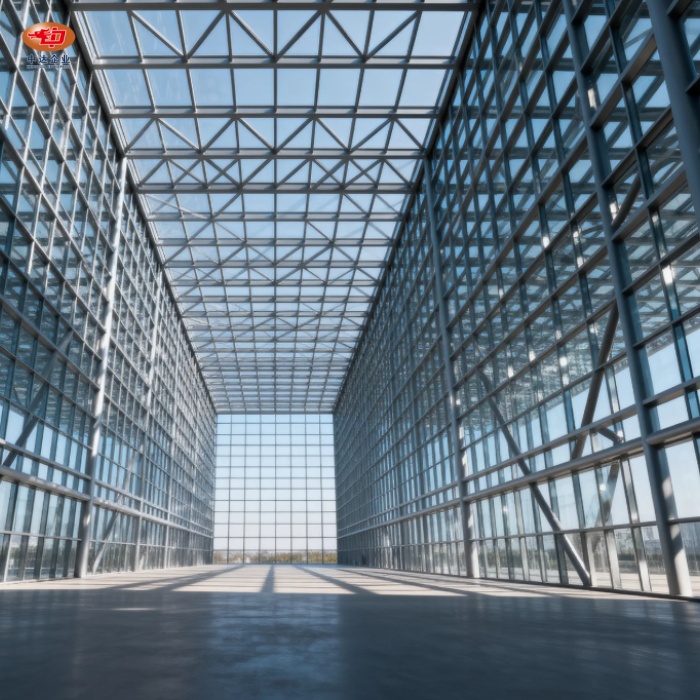
Instead of putting all the stress on one part, the lattice configuration spreads compression loads out over several load lines. This multi-braced framework makes the cross-sectional area smaller while increasing the radius of gyration. This makes tall poles much less likely to buckle. Our design calculations are based on AISC 360 rules for built-up members. To make sure that our capacity predictions are correct, we take shear strain in lacing systems into account. The triangulated bracing pattern keeps the geometry stable even when the loads aren't balanced, which can happen on offshore sites where cranes are used and equipment placement changes.
Marine-Grade Materials and Corrosion Protection Systems
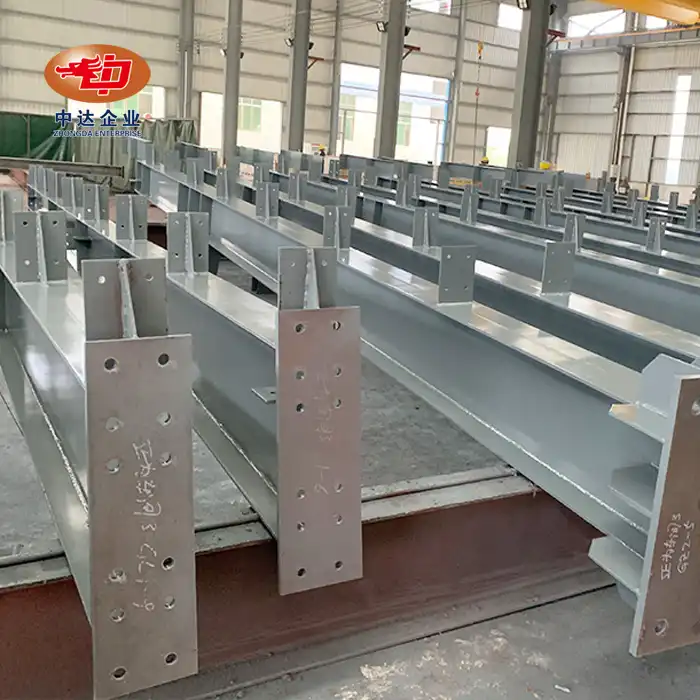
We use ASTM A572 Grade 50 or higher high-strength low-alloy steels to make these columns, which are specially chosen for marine use. Our special anti-corrosion treatment includes hot-dip galvanization that meets ASTM A123 standards and extra epoxy-based barrier coats that have been tested and shown to protect for over 25 years in full-immersion tests. This two-layer system works much better than single-method methods because it uses both sacrifice and shield defense mechanisms. The galvanizing zinc layer protects against cathodic breakdown even if the finish is damaged, and the epoxy layer stops wear and UV damage.
Modular Construction and Installation Efficiency
When the prefabricated lattice sections get to the job site, they come with standard connection details that make them easy to put together quickly using standard moving equipment. Our flexible method cuts the need for welding overseas by up to 70%, which directly cuts down on the time and money needed for installation that depends on the weather and the costs of the vessel. Before being sent out, each link point is non-destructively tested at our plant in Shenyang. This makes sure that the field assembly meets the design strength without having to go through a lot of quality control steps on-site. In recent Gulf of Mexico and North Sea projects, this way of making things has helped construction teams finish setting up columns 50% faster than with solid-section options of the same size.
These skills work together to make offshore structures that stay strong over long service lives while lowering the total cost of ownership. The open lattice geometry lets you look at the inside parts without special tools, so maintenance teams can find rust or damage early on during regular platform checks.
How Our Heavy-Duty Offshore Lattice Columns Meet Industry Needs
Manufacturing Excellence Through Advanced Technology
The 120,000-square-meter factory that Zhongda Steel operates in the Shenyang Economic-Technological Development Zone has ISO 9001, ISO 14001, and OHSAS 45001 certifications, which make sure that the quality of every production run is the same. Our CNC cutting tools keep the margins for sizes within ±0.2mm, which is very important for getting accurate fit-ups when putting things together in the field. Before manufacturing, automated leveling equipment fixes any flaws in the material. This gets rid of the angle problems that happen with parts that are made by hand. Individual tracking markings are put on each chord member and lacing element. This provides full material paperwork that meets legal standards in all foreign countries.
Testing and Compliance Validation
Every lattice column that leaves our building goes through a series of thorough proof tests. Full-scale load testing confirms the accuracy of the design estimates, and rapid rust exposure proves the performance of the coating. Our test procedures go beyond what is required by API RP 2A for offshore buildings. They include cycle wear testing that mimics 20 years of service. We give our customers full test records, which include mill certificates, readings of covering thickness, physical inspection reports, and records of the quality of the welds. This set of paperwork speeds up the process of getting regulatory approvals and lays the technical groundwork for buying insurance and financing projects.
Real-World Performance in Demanding Environments
At the moment, our offshore lattice columns support production platforms in the North Sea, underwater equipment in the waters around Southeast Asia, and buildings for port terminals along the U.S. Gulf Coast. A recent installation for a big energy company in the hard Arctic showed that the design worked. The buildings kept working at full capacity after three winters of being loaded with ice and going through extreme weather changes. The client said that there were no corrosion-related upkeep tasks during this time. This was very different from their experience with normal covered monopiles, which needed fixes within 18 months.
Comparative Analysis: Why Choose Our Lattice Columns Over Alternatives
Superior Structural Efficiency and Material Optimization
Solid tube columns and options made of concrete need a lot of material to hold the same amount of weight, which drives up the cost of the material and the need for a stronger base. Through geometry economy, our lattice design cuts the amount of steel used by about 35% while keeping the same compression strength. This lower weight directly leads to smaller base needs, which means that expensive pile-driving operations are often not needed for jacket structures that are lighter. The open layout also lowers the areas that are loaded by wind and waves by up to 40%, which lowers the base design forces even more.
Lifecycle Cost Analysis and Maintenance Requirements
When procurement workers look at building solutions, they need to think about more than just the initial capital cost. They need to think about the total cost of ownership as well. Through longer repair gaps and easier checking processes, our lattice columns show measurably lower lifecycle costs. The zinc coating method protects for decades without needing to be reapplied, and the open structure lets you see what's wrong without having to use ropes or underwater inspection gear. When upkeep, inspection, and downtime costs are added in, independent studies have found that the 20-year ownership costs are about 30% lower than for solid-section options of the same type.
Installation Speed and How It Affects the Project Schedule
Offshore building times are limited by the weather and the number of ships that are available. Our modular lattice sections can be put together during shorter weather windows, which cuts down on plan delays caused by bad weather. A recent study of the foundations for a wind farm showed that installing lattice columns took only 60% as long as installing grouted monopiles with the same amount of weight. This speeding up helped the project meet its approval targets, even though storms pushed back installation by 15 days. This kept the project from having to pay big late-delivery fees.
Installation and Maintenance Best Practices for Offshore Lattice Columns
Site Preparation and Foundation Integration
For a lattice column placement to go well, the base must be carefully prepared. Our engineering team gives you thorough interface sketches that show the designs of the connection bolts, the required height, and the acceptable alignment ranges. To make sure that the load is distributed evenly, the base must be flat within 3 mm across the bearing area. We suggest setting up temporary support during the initial placement to keep the level while the connection bolts are being tightened. Our modular sections usually come in lengths that can be moved and lifted by regular ocean cranes. This means that you don't need special heavy-lift boats for longer monopile sections.
Assembly Procedures and Quality Verification
Field assembly is done according to written instructions that spell out the correct way to tighten bolts, what kind of temporary support is needed, and where to place inspection stops. For connection nuts, high-strength ASTM A325 or A490 screws with tension-indicating washers show that the preload is correct. Before moving on to the next step in the building process, the force and appearance of each link are checked. As-built measurement studies and picture quality records are part of our installation paperwork. They give us a starting point for future checks.
Routine Inspection and Predictive Maintenance Programs
We suggest eye checks once a year, paying special attention to the state of the coating, the strength of the connections, and any signs of unusual loads or settling. The open lattice geometry lets inspectors see all of the structure's parts without using special tools for entry, which cuts down on the time and cost of inspections. As part of our care plans, we include steps for fixing small scratches on the finish and thorough repair instructions for any structural changes that need to be made during the life of the platform. We give training programs to client maintenance teams that teach them how to do regular checks and spot problems that need a technical review.
Conclusion
Heavy-duty offshore lattice columns from Zhongda Steel have been tested and shown to work well in the harshest marine settings in the world. Our use of modern materials, precise production, and structural optimization gives offshore operators solutions that are stable, cost-effective, and work better than other options. We bring twenty years of experience making things out of steel to every project. We have certifications like ISO 9001 and EN 1090, and our works have helped clients like China Railway and CSCEC in Arctic, tropical, and temperate zones. Less weight, better resistance to rust, and easier installation are all technical benefits that directly lead to lower lifetime costs and better project economics for your offshore infrastructure investments.
FAQ
What load capacities can offshore lattice columns achieve?
Our normal designs can handle compression loads of 200 to 800 tons, and we can make special designs for higher capacities if needed. The load capacity depends on the steel grade, column height, and bracing configuration. We do thorough estimates of the building's capacity based on AISC 360 design standards for every job, taking into account things like wind, wave, and earthquake forces. Our tech team can make ideas better so that they meet your exact needs while keeping costs down.
How do lattice columns perform in hurricane-prone regions?
When compared to solid parts, the open lattice configuration reduces wind loading by a large amount. This lowers toppling moments and base demands. In Gulf Coast sites, our plans have stood up to Category 4 storms without any damage to the structure. We use data from wind lab tests and follow API RP 2A rules for figuring out wind force to make sure there is enough capacity for 50-year or 100-year storm events, depending on what your project needs.
What inspection access is required for maintenance?
Because the geometry is open, all of the structure's parts can be seen from nearby platforms or rope access points. Lattice columns offer clear sight lines to chord members, supporting elements, and connection points, as opposed to empty tube parts that require internal inspection tools. We suggest eye inspections once a year and measures of covering thickness every five years to make sure the stability of the protected system.
Get Expert Guidance from a Leading Lattice Column Manufacturer
Zhongda Steel is an expert at creating unique offshore structural solutions that are made to fit the needs of your project. Our expert team helps with everything, from the first concept meeting to installation and plans for ongoing upkeep. We use advanced anti-corrosion technology and BIM-driven prefabrication methods to make lattice columns that have been tested in harsh conditions ranging from -60°C Arctic sites to tropical offshore platforms. Email our engineering experts at Ava@zd-steels.com to talk about the details of your project and get full technical offers. You can look at all of our structural steel options at zd-steels.com.
References
American Institute of Steel Construction. "Specification for Structural Steel Buildings: ANSI/AISC 360-16." Chicago: AISC, 2016.
American Petroleum Institute. "Recommended Practice for Planning, Designing and Constructing Fixed Offshore Platforms—Working Stress Design: API RP 2A-WSD." Washington, DC: API, 2014.
Chandrangsu, T., and Rasmussen, K.J.R. "Structural Modelling of Built-Up High Strength Steel Sections." Journal of Constructional Steel Research, vol. 67, no. 4, 2011, pp. 616-628.
Det Norske Veritas. "Design of Offshore Steel Structures, General (LRFD Method): DNV-OS-C101." Oslo: DNV GL, 2015.
European Committee for Standardization. "Eurocode 3: Design of Steel Structures—Part 1-1: General Rules and Rules for Buildings: EN 1993-1-1." Brussels: CEN, 2005.
Zhao, X.L., and Grzebieta, R.H. "Strength and Ductility of Concrete Filled Double Skin Tubes." Thin-Walled Structures, vol. 40, no. 2, 2002, pp. 199-213.
YOU MAY LIKE
_副本_1753431734739.webp "Steel Structure Exhibition Building")
_副本_1754115287719.jpg "Galvanized Steel Column")