
Custom Cross Column Fabrication for Industrial Construction
2026-06-05 14:15:37






Using custom cross column manufacturing is a unique way to make solid steel parts that meet the specific needs of modern industrial building. Instead of off-the-shelf options, custom-fabricated cross-section columns combine technical precision with material freedom to make structural parts that are exactly what you need for your load requirements, size limits, and weather conditions. In business buildings, industrial facilities, and infrastructure projects where normal solutions aren't enough or are too expensive, these manufactured elements are used as important load-bearing parts.
Understanding Cross Columns in Industrial Construction
What Defines a Custom Cross-Section Column?
The cross-section column is a unique structural feature that was designed to distribute loads very well along multiple directions. We at Zhongda Steel make these columns out of Q355B low-alloy steel welded in a double H shape. This gives them a cruciform shape that gives them equal stiffness in both main directions. The shape has flange widths that are usually between 100 and 300 mm and web thicknesses that are between 6 and 25 mm. These sizes are carefully chosen to meet specific engineering calculations.
This building design solves one of the most important problems in modern construction: making beams that don't bend in two directions without using too much material. Traditional H-beams have strong and weak axes, which means they can't be used in corners or places where loads are coming from different directions. Our unique cross-section design gets rid of this problem by using uniform shape that keeps the moment of inertia the same no matter which way the load is applied.


Material Specifications and Engineering Standards
Choosing the right materials is the first step in making sure that a structure works well. The main type of steel we use is Q355B low-alloy steel, which has a minimum yield strength of 355 MPa and is very easy to weld and shape. This grade meets EN 10025-4 standards, which means that the mechanical qualities will be the same from one production batch to the next. There are measured amounts of carbon, manganese, and microalloying elements in the steel's chemical makeup that make it stronger and tougher.
Our columns meet the requirements for CE approval and are in line with foreign norms like JIS, EN 1090, and AWS D1.1. These certificates show that our methods for making things, our welding techniques, and our quality control measures meet the highest standards for solid steel components around the world. Following these rules makes it possible to easily join EPC jobs in North America, Europe, and the Asia-Pacific area.
Load Distribution Mechanics in Complex Structures
When compared to regular H-beam columns of the same weight, the cross-section column has 40% more lateral stiffness. This better performance comes from the way the material is arranged geometrically around the neutral line. The improved section modulus of the column's four ends keeps them from bending when they are hit by side loads, like wind pressure on high-rise surfaces or earthquake forces during ground motion. Engineers like this design because it keeps the material flexible enough for final limit states while reducing deformation under service loads.
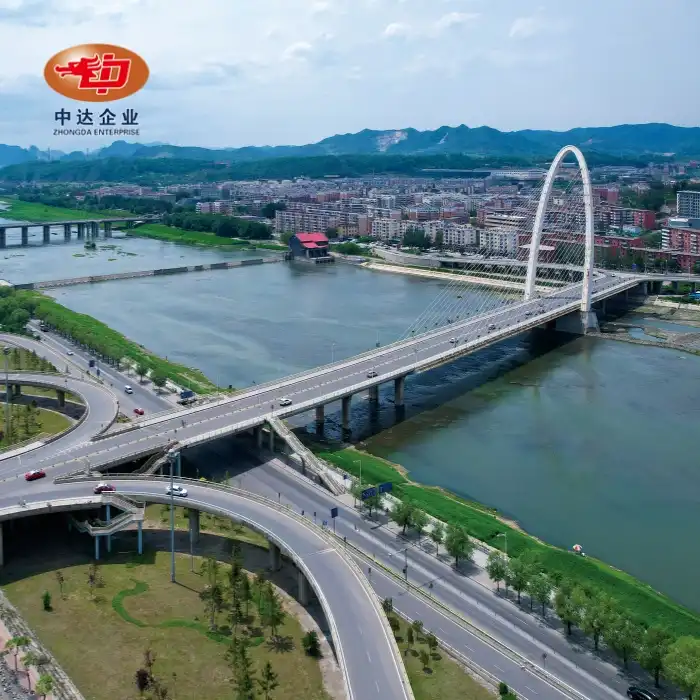
We've provided these cross columns for projects that needed excellent structural performance, like the 18,000-ton Shenyang Dongta Cross-Hunhe River Bridge, which needed members that could handle a wide range of load combinations. As shown in the project, properly designed cross-section beams allow for longer lengths and fewer members than traditional frame systems.
Challenges in Traditional Cross Column Fabrication and How Custom Solutions Address Them
Common Fabrication Limitations
Standard ways of making things often have problems with being rigid in terms of dimensions, which pushes engineers to make too many specifications for structure parts. When the available sizes don't match the estimated needs, planners have to choose the next largest part, which wastes materials and adds weight that isn't needed. This difference is especially annoying in repair projects or designs that have to follow strict building guidelines for column sizes.
Another ongoing problem is the buildup of tolerance. Fabricators make small mistakes all the time as they cut, join, and put together parts. When traditional shops don't have modern positioning equipment, they might make columns that twist more than 2 mm per meter or have flange-to-web angles that aren't within acceptable ranges. These geometry flaws make site building harder and may need expensive changes to the field.
How Precision Manufacturing Resolves These Issues?
Through combined digital processes and accurate tools, our manufacturing method gets rid of these problems. The first step is BIM-based design teamwork, where our engineering team works directly with structural experts to find the best sizes for members before the manufacturing process starts. This investment up front keeps projects from having to do extra work and wait longer than planned when they use standard libraries.
With CNC cutting technology, the material is prepared so that the plate edges and joining features are accurate to within 0.2 mm. Automated welding cells with seam tracking make sure that the same amount of heat and entry depth are applied along the whole length of the joint. When tack welding and putting things together, robotic placing takes away the chance of human mistake, and laser measurement systems check the accuracy of the geometry at every stage of production. Our 120,000 m² building has special assembly jigs that keep parts in exact line while they are being welded. This keeps the parts from warping, which can happen when they move under heat stress.
Real-World Performance Comparison
A company that makes mining equipment came to us because the box beams in their crushing station supports kept breaking. The rough working conditions, including constant shaking, buildup of dust, and changes in temperature, led to stress cracks at welded joints. We suggested special cross-section columns with honeycomb beam holes that made the columns 20% lighter while keeping their structural strength. The lighter structure reduced the dynamic loads on the supports, and the open cross-section shape stopped the buildup of moisture that damaged the old box columns. The client said that construction was 30% faster than their average because the columns' four-way connection made it easier to join beams.
Key Processes and Quality Standards in Custom Cross Column Fabrication
Engineering Workflow and Design Collaboration
For custom manufacturing to work, structure engineers, production experts, and project managers need to work together closely. At the start of every job, we carefully go over the structure plans, load schedules, and link needs. Before production starts, our team looks for possible problems with construction, like how to get to internal parts to be welded or what lifting points are needed, and comes up with ways to fix them. Our 70% client renewal rate is due in part to this proactive approach. Customers like how we anticipate problems instead of responding to them during building.
Getting the materials comes after technical approval. We have long-term partnerships with licensed steel mills that give us mill test certificates that link each heat of steel to its chemical analysis and mechanical test results. This line of paperwork is necessary for projects that need to be inspected by a third party or get permission from the right authorities.
Precision Fabrication Stages
A carefully planned series of steps makes the physical change from a raw plate to a finished cross column. CNC plasma or oxy-fuel cutting tools shape flange and web plates to exact sizes, and the edges are prepared by beveling them according to the rules for the welding process. Automated shot blasting gets rid of mill scale and other impurities on the surface, making it ready for good welds and paint bonding.
The most important process is welding. Our certified welders join flanges to webs using full-penetration groove welds, following the qualified welding process standards that were created after a lot of testing. We use a balanced welding process that spreads heat evenly across the cross-section of the column, which reduces angular warping. Monitoring the temperature between passes makes sure that heat cycles stay within metallurgy limits that keep the hardness of the base metal.
Post-weld heat treatment, which is required for parts that are thicker than a certain level, removes leftover stresses that could cause cracks to form later. Our building has stress-relieving heaters that can fit people up to 18 meters long, so we can provide this important treatment without having to wait for it to be sent out.
Quality Verification and Testing Protocols
The most important part of our quality assurance method is non-destructive testing. Ultrasonic testing can look at all flange-to-web welds and find internal flaws like slag spots, poor fusion, or cavities that can't be seen with the naked eye. The guidelines for acceptance are based on ISO 5817 Level B, which only allows small flaws that don't affect the structure's strength. Magnetic particle inspection checks the sides of welds for cracks that could start because of heat stress or hydrogen embrittlement.
Laser scanning technology is used for dimension checking to get a full picture of the shape of final columns. We check that the as-built dimensions are within the allowed ranges by comparing scan data to 3D models. There are several uses for this digital record: it provides objective quality data, makes it easier to work together with steel erectors to plan lift sequences, and creates an as-built log for facility management.
Our ISO 9001, 14001, and 45001 standards show that we handle quality in a way that goes beyond individual checks. We keep written rules for testing, tracking, correcting actions, and ongoing improvement. These rules make sure that the result stays the same no matter how much is made or who works there.
How to Choose the Right Custom Cross Column Fabrication Partner?
Technical Capability Assessment
To judge a fabricator's professional skills, you have to look at both their tools and their workers' knowledge. Precision and efficiency are shown by high-tech tools like CNC cutting tables with multiple torch heads or robotic welding cells with adjustable seam tracking. Without trained workers who understand structural engineering principles and best practices for manufacturing, equipment alone is not enough.
Find out what kind of tech help a possible partner can offer. Can they use finite element analysis to make sure the plans of the connections are correct? Do they hire professional engineers who are licensed to work in the area? Zhongda has a professional team with a lot of knowledge that helps clients improve their ideas so they can be made without lowering the quality of the structure.
Compliance and Certification Verification
Fabricators who can work with different legal systems are needed for international projects. Our CE certification shows that we follow the rules for building products in Europe, and our EN 1090 execution class shows that we meet the quality and manufacturing standards. Our welders' AWS license shows that they meet the standards of the American Welding Society, which is necessary for projects that need to follow US building codes.
In addition to credentials, you should look at how well a maker can test. Do they do technical testing in-house, or do samples need to be sent to outside labs? Tensile testers, hardness testers, and metallographic labs are all in our building. This lets us quickly check the quality of our work without having to wait for answers from a third party.
Experience in Similar Applications
When the safety of a structure rests on the quality of the manufacturing, track record is very important. Look at case studies that show how the company has worked on projects with similar scopes, loads, and weather exposures. Industrial plants for China Railway and CSCEC are in our collection, as well as Arctic bridges in Russia that have to work in -60°C temperatures and mining equipment supports in Australia that have to deal with constant shaking and rough dust.
International Procurement Considerations
Cross-border buying makes transportation more complicated and needs careful planning. When cross columns are shipped by ocean freight or local truck, the packaging must protect them without adding too much weight. We use steel cradles, protected wrapping, and blocks to keep things from getting damaged and to make loading and lifting go more quickly.
For customs processing, it's important that the paperwork is correct. For there to be no delays at ports of entry, commercial bills, packing lists, certificates of origin, and mill test results must all match up perfectly with shipping documents. Our export team handles all of this paperwork with ease, and they've already sent structure parts to more than 20 countries.
Talking to each other is the key to making foreign relationships work. Language and time zone gaps can make it hard to solve problems unless both sides are willing to have clear, attentive conversation. We give each job its own devoted project manager who can speak in English and is available during normal business hours in North America for urgent planning.
Future Trends and Innovations in Cross Column Fabrication for Industrial Construction
Automation Technologies Transforming Production
The costs of steel production are changing because of robotics and AI. Automated systems that used to need a lot of code for each shape now use machine learning methods to find the best cutting lines, welding routines, and ways to move materials with little help from a person. Because robots don't get tired or distracted while doing the same thing over and over, these systems cut down on production time while improving regularity.
AI-assisted design tools look at structure models to find problems with manufacturing before shop plans get to the production floors. The software checks for weld access issues, offers the best piece sizes based on shipping limitations, and warns of possible tolerance stack-up problems. This front-end intelligence stops expensive changes from being made and speeds up project plans for the cross column industry.
Sustainable Manufacturing Practices
Being responsible for the environment drives innovation all along the steel supply chain. Using recovered scrap in an electric arc furnace to make steel uses a lot less energy than using a blast furnace, which lowers the amount of carbon that is built into structure parts. We get our supplies from mills that are investing in these better ways of making things, which helps the building industry move toward carbon neutrality.
Our honeycomb beam hole customization choice is a great example of environmentally friendly design. It cuts the weight by 20%, which directly leads to lower shipping emissions, fewer base needs, and less material use. These saves add up when looked at across many big projects with hundreds of sections.
In addition to standard paint systems, coating technologies have grown to include water-based options and powder coats that don't release volatile organic compounds. Our -60°C weathering steel anti-corrosion technology makes things last longer in tough settings, which lowers the environmental impact of replacing things too soon.
Industry 4.0 Integration
New ideas in smart production make it possible to see more clearly than ever before how things are being made. IoT devices built into production tools send real-time information about how the machines are being used, quality measures, and stock amounts. Stakeholders in the project can see on screens which columns have finished being built, passed inspection, and are now in the shipping queue. This openness helps general contractors organize getting the site ready with getting the materials there, which cuts down on storing costs and timeline changes.
Predictive maintenance programs look at data about how well machines are working to figure out when they need service before they break down. This cautious method keeps production going and stops the delays that happen when important equipment breaks down suddenly during busy production times.
Digital twin technology makes virtual copies of manufacturing processes. This lets engineers test different production situations and improve systems without stopping the real processes. We can use risk-free virtual settings to see how changes to the design affect the time it takes to make something, find problems before they happen, and train people on new processes.
Conclusion
Precision engineering, advanced production, and strict quality control are used in custom cross column fabrication to meet the complex structural needs of modern industrial building. The scientific benefits—40% more horizontal stiffness, 20% less weight thanks to honeycomb designs, and 10% less material used than other systems—lead to real benefits for the project in terms of cost, schedule, and performance. If you choose a manufacturing partner with a lot of experience, proven technical skills, international certifications, and a dedication to new ideas, you can be sure that the structure parts you use will meet the highest standards and help the project get completed quickly. As robotics and environmental concerns change the building industry, custom manufacturing puts projects at the cutting edge of technology.
FAQ
How does custom fabrication cost compare to standard structural sections?
It usually costs more to build custom cross-section columns than it does to choose standard wide-flange shapes from mill catalogs. Compared to rolled pieces, the cost goes up because of the work that goes into making them, especially the precise welding of the flange-to-web joins. But the costs of a project often favor unique options. 10% less material is used than with box columns, installation is 30% faster, and changes don't have to be made in the field as often. These benefits often make up for the higher cost of production. When 50 or more similar columns are needed for a project, economies of scale kick in and make custom manufacturing cost-competitive with standard options. This is especially true when foundation costs are taken into account because smaller members mean less foundation work.
What lead times should we expect for custom column orders?
It depends on how complicated the project is and how far along it is in the production queue. Standard cross-section setups with sizes in our normal range are shipped within 15 days of receiving the order. Custom designs that need engineering formulas, link detail development, or non-standard material grades add about 25 days to the lead time. For building plans to stay on track, large orders over 500 tons may need to be delivered in stages. We suggest that you involve our team in the early stages of design development so that you can set reasonable deadlines for procurement that work with the site's readiness.
Can cross-section columns be used in seismic zones?
When properly designed, cross-section beams are great for earthquake use because they have a symmetrical shape and a high level of rotational stiffness. The design ensures steady hysteretic behavior under repeated loads, which is necessary for releasing energy during shocks. It's important to think about how to connect things—beam-to-column links need to be able to handle movement without losing power. Our engineering team works with structural engineers of record to come up with link details that meet the earthquake requirements of each state, such as AISC 341 in the US or similar foreign standards.
Partner with Zhongda for Superior Cross Column Solutions
Shenyang Zhongda Steel Structure Engineering Co., Ltd. can help you with your next industrial building project by making unique cross column solutions that are better than what is required by international standards. With an annual production capacity of 60,000 tons, BIM-driven design integration, and ±0.2mm cutting precision, we can make sure that structural parts come on time and are easy to install. Our engineering team works together to make sure that plans are the best they can be in terms of performance and ease of fabrication, whether you're building business high-rises, industrial facilities, or infrastructure projects. Get in touch with our experts at Ava@zd-steels.com to talk about your needs and find out why top EPC companies trust Zhongda as their cross column provider.
References
American Institute of Steel Construction. (2022). Steel Construction Manual, 16th Edition. Chicago: AISC.
Chen, W.F., & Lui, E.M. (2019). Handbook of Structural Engineering, 3rd Edition. Boca Raton: CRC Press.
European Committee for Standardization. (2020). EN 1090-2: Technical Requirements for Steel Structures. Brussels: CEN.
Geschwindner, L.F. (2021). Unified Design of Steel Structures, 3rd Edition. Hoboken: John Wiley & Sons.
Salmon, C.G., Johnson, J.E., & Malhas, F.A. (2018). Steel Structures: Design and Behavior, 6th Edition. Upper Saddle River: Pearson Education.
Trahair, N.S., Bradford, M.A., & Nethercot, D.A. (2017). The Behavior and Design of Steel Structures to EC3, 5th Edition. Boca Raton: CRC Press.
YOU MAY LIKE
_副本_1757053936097.jpg "building structure")
_副本_1762409954420_1788229249106.jpg "steel column design")
_副本_1754117267235.jpg "Hdg Steel Plate")
_1746242570299.webp "Large-Diameter Tunnel Boring Machine")