Cross Column vs H-Beam Column: Key Differences Explained
2026-06-05 14:15:30






When choosing structural steel for big building projects, you need to pay close attention to the debate between cross columns and H-beam columns. Cross columns have isotropic stiffness, which means they resist twisting forces evenly in all directions. They have a unique cruciform shape that is made by connecting two H-sections that are perpendicular to each other. With their well-known I-shaped form, H-beam columns are great at supporting loads in only one way and are still the standard choice for many industrial uses. Engineers and procurement managers need to know about these differences in order to deal with the complicated world of structure design, which is where project performance, price limits, and installation timelines all come together.
Understanding Cross Columns and H-Beam Columns
What Defines a Cross Column?
A cross column, sometimes called a cruciform column, has four sides that are set up perpendicular to two webs that cross each other. This makes a cross-shaped outline that is symmetrical. High-strength materials like Q355B low-alloy steel are welded together to make T-sections or double H-shaped structures. Our cross columns at Zhongda Steel have bases that are 100–300 mm wide and webs that are 6–25 mm wide. This makes sure that they work well as structures. This design is 40% stiffer and more torsionally rigid than regular beams, which makes it perfect for high-rise buildings, supporting heavy machinery, and building infrastructure that can withstand earthquakes. Because of the uniformity, there are no weak points, so engineers can make buildings that can handle loads coming from different directions without adding more support.
H-Beam Column Fundamentals
The cross-section of an H-beam column is in the shape of a "I," with parallel plates linked by a center web. Their making process is simpler; they usually use hot-rolling or welding, which makes output easier. Because they are cheap and easy to link, these columns are the standard in traditional building. But because their strong and weak axes are different, they need to be carefully oriented when they are installed. H-beams work very well when they are compressed along a single axis and bent in a single direction. However, when they are loaded from multiple directions, they may need stiffener plates, which adds to the time and material needed to make the structure.


Material and Manufacturing Processes
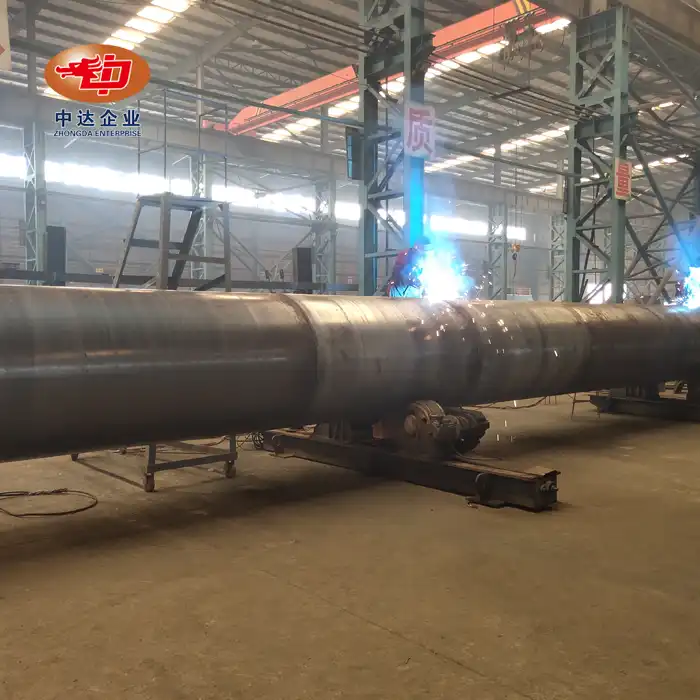
Both types of columns are made of structural-grade steel, which is usually steel that meets ASTM A992 or EN 10025 standards. Cross columns need precise welding—full joint penetration (CJP) welds make sure that the structure stays solid when it's stressed. Zhongda Steel's 120,000 m² factory uses automatic welding and CNC cutting technology to keep the limits on sizes within ±0.2mm. Ultrasonic testing (UT) and magnetic particle inspection (MPI) are used in our production process to find flaws inside the product and make sure it meets ISO 5817 Level B standards. Standardized rolling methods are good for H-beams, but custom welded parts need the same quality control steps to stop lamellar tears and joint flaws.
Key Structural and Functional Differences Between Cross Columns and H-Beam Columns
Cross-Sectional Geometry and Load Distribution
The basic way these columns behave structurally is determined by the geometric difference between them. cross columns spread loads evenly across four sides, which gets rid of the weak-axis weakness that comes with H-beams. This two-way strength is very important in corner columns of buildings, where wind loads and earthquake forces come from many directions at the same time. H-beams focus material along two ends, which makes them most efficient for known, one-way loads but means that rotation planning has to be done during the design stages. A study in the Journal of Constructional Steel Research showed that cruciform sections, when compared to H-beam frames, cut down on horizontal drift by up to 35% in mid-rise buildings.
Stiffness and Flexibility Performance
Cross columns have higher rotational stiffness because their physical shape is closed. This means they can fight bending forces that would weaken the structure. This trait is very important in places like factories where equipment vibrates a lot or along the coast where hurricane-force winds blow all the time. When you increase the radius of gyration in cross columns, the slenderness ratios go down. This lets you use higher axial load levels without making the columns bigger. H-beams have good flexural stiffness along their strong axis, but they might need cross-bracing when they are subject to torsional or biaxial moments. This makes structural frames more complicated and delays the building process.
Installation Characteristics and Connection Methods
The ease of installation varies a lot between these column types. H-beams can have standard fixed or welded links on two faces that face each other. This makes the joint between the beam and column easier to use in linear frame plans. Cross columns allow links from four directions without the need for special stiffeners, which lowers the amount of work that needs to be done on-site. When compared to standard box columns, Zhongda Steel's honeycomb beam hole design cuts cross column self-weight by an additional 20%. This speeds up installation by 30%. However, shipping operations work better with H-beams because their flat shape makes stacking easier, while cross columns' width in two directions might mean that large members need to be split-fabricated and put together on-site.
Selecting the Right Column Type Based on Project Requirements
Matching Structural Needs to Column Capabilities
The best column choice depends on the needs of the project. High-rise business towers taller than 300 meters profit from cross column support in outer frames, where their biaxial stiffness dampens wind-induced sway. Because they are more efficient on the strong line, H-beams may be cheaper for industrial buildings with steady gravity loads. In seismic zones, flexible systems are needed. For example, cross columns in special moment frames (SMF) show balanced hysteresis loops during earthquakes, which are a good way to get rid of energy. When engineers figure out load routes, they should think about whether the design situation is dominated by lateral forces, twisting, or concentrated equipment loads.
Environmental and Site Constraints
Material choices and finishes are affected by harsh conditions. In naval settings, high-build epoxy bases or hot-dip galvanizing are needed because the inner corners of cross columns trap water. Our Arctic bridge projects in Russia show that Zhongda Steel's -60°C weathered steel technology can handle harsh climes. The simpler shape of H-beams makes rust protection easier, but in urban fire-rated buildings, they may need stronger fireproofing. Access to the site is also important. H-beams are better for remote mining facilities because they are easier to move, while cross columns are better for urban projects with short plans because they are easier to place and take less time to connect.
Lifecycle Cost Analysis
Lifecycle fees go beyond the cost of the original purchase. Cross columns save 10% of the material needed for box columns because they distribute weight more evenly. However, the cost of welding increases slightly. H-beams have lower initial costs, but they may need more upkeep if the joints need to be inspected and fixed on a regular basis. Zhongda Steel's BIM-driven prefabrication cuts down on changes that need to be made in the field, which lowers the overall cost of the project by 15 to 20 percent. When considering column systems, procurement managers should look at the total cost of ownership, which includes shipping, installation work, and how long the system will last.
Case Studies: Cross Column and H-Beam Column in Real-World B2B Projects
Cold-Chain Logistics Hub: Cross Column Advantages
A European e-commerce transportation company needed a 50,000 m² cold-chain distribution center that had to meet strict temperature control requirements and be built quickly. The client chose cross columns for internal supports because a structural study showed that their higher horizontal stiffness would keep the structure from bending when heavy loads are put on it. Zhongda Steel provided Q355B cross columns with unique honeycomb openings, which cut the structure's weight by 18% and made it possible to start working 25 days early. The uniform connection points let conveyor systems work from all four directions without the need for extra steel parts, which saved a lot of money on materials. Post-occupancy tracking showed that there were no structural problems during the first year that the building was used, which supported the choice of column for settings with changing loads in multiple directions.
Industrial Manufacturing Plant: H-Beam Selection
A company in North America that makes car parts needed structural steel for a one-story assembly plant with stable roof loads and low side forces. H-beam columns worked out the best because they were easy to line with roof beams along their strong axis, which meant fewer connection plates were needed, and standard sizes made buying them faster. The builder bought ASTM A992 H-beams from within the United States, which saved them time compared to making handmade cross columns. Seismic codes were met with welded moment connections at the beam-column joints, and budget goals were met. This project shows that simple load lines and standard designs work best with H-beams, especially when time constraints mean that easily available materials are more important than specific structural performance.
Procurement Considerations for Cross Columns vs H-Beam Columns
Supplier Evaluation and Quality Assurance
Verifying a supplier's certifications is the first step in reliable buying. Make sure that the makers have both ISO 9001 quality management credentials and EN 1090 structure steelwork credentials. Zhongda Steel stays in line with ISO 9001, 14001, and 45001 standards, and all of their cross columns are marked with CE and meet EN 10025-4 standards. Ask a third party to check the mechanical qualities, such as yield strength, tensile strength, and Charpy V-notch impact tests at certain temperatures. For important infrastructure, you should require that all welds go through 100% non-destructive testing (NDT) using ultrasound or x-rays. For projects that need to follow ASME or AWS rules, suppliers should give mill test certificates (MTCs) that show where the materials came from and what chemicals they contain.
Lead Times and Logistics Management
Most providers can ship standard H-beams within 10 to 15 days because they keep them in stock at the rolling mill. Custom cross columns, on the other hand, need 25 to 30 days to be made and tested. Zhongda Steel closes this gap by planning production in advance. Standard cross column sizes ship within 15 days, thanks to our 60,000-ton annual capacity. The costs of shipping are very different: H-beams fit easily into shipping crates, but cross columns need special cradles or trailer trucks because of their shape. International exports gain from combination techniques; putting cross columns together with other structure parts makes the best use of containers. To avoid expensive delays on the job site when important columns come late, procurement teams should arrange supply plans with construction processes.
Cost Management Without Compromising Quality
Strategic sourcing is needed to find a balance between budget limits and structure soundness. Ask for specific quotes that break down the prices of materials, assembly, finishing, and shipping. Cross columns have higher unit prices because they save money on installation. Zhongda Steel's customers say that cross columns can be put up 30% faster than box columns, which saves money on crane hire and labor costs. When you order more than one job at the same time, you can get a discount, and OEM partnerships let return buyers get better prices. Don't just choose sellers based on their lowest bids; poor weld quality or steel types that aren't up to par can cause expensive repairs or even structure fails. Instead, look at the total cost of delivery, which includes quality control, professional help, and service after the sale.
How Zhongda Steel Supports Global Procurement
Zhongda Steel streamlines cross column sourcing through comprehensive support services. Our BIM integration features make working with design teams easy, and they make sure that the columns that are built exactly match the digital models. Through our project management tool, clients can get real-time reports on the production, which keeps things open throughout the fabrication stages. Our dedication to on-time delivery is reflected in the fact that 70% of our clients stay with us. Using Northeast China's biggest steel workshop and strategic port access cuts lead times by 20–30% compared to industry standards. We offer expert advice in multiple languages and help procurement managers create specifications, find the best prices, and make sure that regulations are followed. This turns complicated business-to-business deals into relationships where everyone works together.
Conclusion
Whether to use cross columns or H-beam columns depends on the needs of the project, the surroundings, and the ease of purchase. Cross columns have the best biaxial strength and rotational stiffness, making them perfect for high-rise buildings, earthquake zones, and situations where loads are applied in more than one direction. H-beam columns are a cost-effective way to support standard buildings with known load paths and faster lead times for purchase. For selection to go well, load patterns, lifecycle costs, and installation efficiency must all be carefully looked at. Working with authorized makers guarantees quality, compliance, and on-time delivery, all of which have a direct effect on the success of the project and the structure's long-term performance.
FAQ
What are the primary advantages of cross columns over H-beams?
cross columns give the structure the same stiffness in all directions, which gets rid of the weak-axis problems that come with H-beams. Their 40% higher horizontal stiffness makes tall buildings less likely to move, and their four-directional connection capability makes it easier to join beams without using stiffener plates. The honeycomb design choice cuts weight by 20%, which speeds up installation while keeping the load capacity the same.
Which international standards govern cross column manufacturing?
For structural steelwork completion, cross columns must meet EN 1090 standards. For material specs, they must meet EN 10025-4 standards. For weld quality, they must meet AWS D1.1 or ISO 5817 standards. Zhongda Steel's goods are approved by CE, which means they can be sold in markets in Europe, the United States, and Asia. Our strict testing methods are in line with JIS and ASTM A992 standards.
Do cross columns cost more than H-beam columns?
Due to the difficulty of welding, cross column fabrication costs usually top H-beams by 15-20%. However, construction saves of 30% and 10% in material economy compared to box columns often make up for the starting costs. The total cost of the job depends on how it is transported, how the site is maintained, and how well cross columns make connections.
Partner with Zhongda Steel for Expert Cross Column Solutions
Zhongda Steel makes cross columns that are among the best in the world. Our Q355B low-alloy steel beams are CE approved and meet EN 10025-4 standards. They are used in high-rise buildings, as industry supports, and for infrastructure projects on six continents. With an annual capacity of 60,000 tons and ISO 9001, 14001, and 45001 certifications, we promise precise manufacturing, strict quality control, and standard-size shipping within 15 days. Our expert team helps with BIM integration, creates unique honeycomb designs, and provides full after-sales service to make sure your project is structurally sound and stays within your budget. Please email Ava at ava@zd-steels.com right away to talk about your cross column provider needs and get affordable solutions that are made to fit your industry's needs.
References
Chen, W.F., and Lui, E.M. Handbook of Structural Engineering, Second Edition. CRC Press, 2005.
Galambos, T.V., and Surovek, A.E. Structural Stability of Steel: Concepts and Applications for Structural Engineers. John Wiley & Sons, 2008.
Nethercot, D.A. Designer's Guide to EN 1993-1-1: Eurocode 3: Design of Steel Structures. Thomas Telford Publishing, 2001.
American Institute of Steel Construction. Steel Construction Manual, 15th Edition. AISC, 2017.
Beedle, L.S., and Tall, L. Basic Column Strength. Journal of the Structural Division, ASCE, Vol. 86, No. ST7, 1960.
Bruneau, M., Uang, C.M., and Sabelli, R. Ductile Design of Steel Structures, Second Edition. McGraw-Hill Education, 2011.
_副本_1755847812558.jpg "building steel structure")

_副本_1762409954420_1788229249106.jpg "steel column design")