Safety Standards for Power Plant Steel Structure Construction
2026-07-22 17:25:24






Safety standards are the basis for making a power plant steel structure, which safeguards both people and important infrastructure investments. Organizations like ISO, ASTM, OSHA, and EN came up with these rules. They cover risks like structural fails, corrosion, fire exposure, and earthquakes. Following recognized safety frameworks is a must for all energy sector projects, including business, industrial, and green power ones. It protects operating continuity and lowers legal risk.
Understanding Safety Standards in Power Plant Steel Structure Construction
Safety standards for building energy infrastructure are big plans that were made after many years of engineering study and accident analysis. These rules say what materials can be used, how they can be made, how they can be installed, and how they should be maintained over time.
Regulatory Bodies and Their Influence
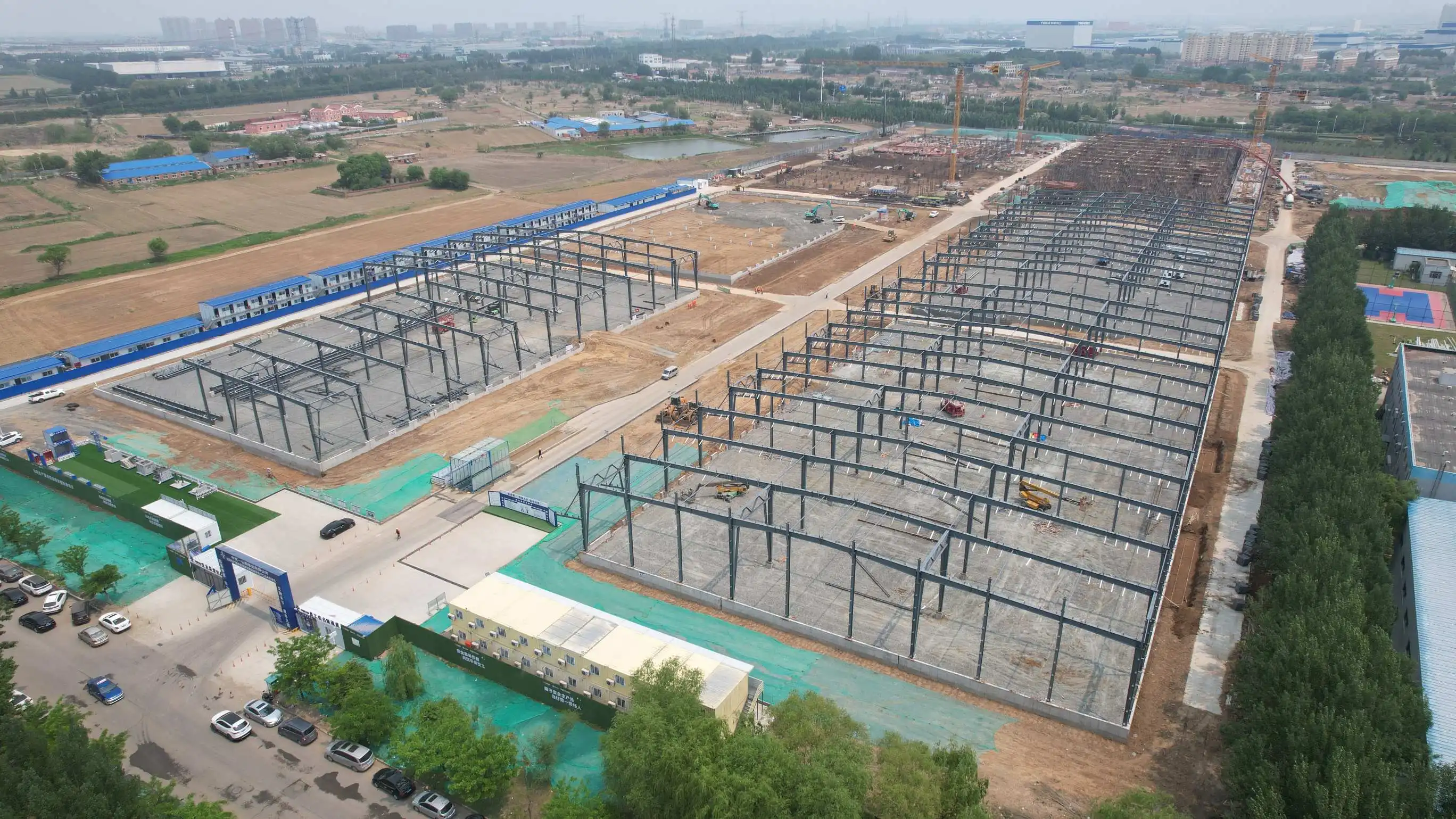
Different but related safety rules are kept by international standards groups. ISO 9001 certification makes sure that quality management systems keep track of every step of the building process, and ISO 14001 certification looks at how construction affects the environment. In the US, OSHA rules require specific safety measures on the job site, such as fall protection systems and processes for entering confined spaces, for workers putting together turbine hall frames or boiler suspension structures.
The American Institute of Steel Construction (AISC 360) has detailed rules for building with structural steel, with a focus on how well the connections work and how much weight they can hold. European EN 1090 standards control the quality of the work and require that welding processes and the traceability of materials be checked by a third party. Knowing about these overlapping countries helps procurement teams choose makers who have real certifications instead of just making claims. We have seen projects get held up for months because regulatory audits found non-compliant welds in main columns. This shows how important it is to have confirmed compliance from the start of a project.
Risk Mitigation Through Standardized Protocols
When energy plants' structures fail, terrible things happen, like damage to turbines, stops in production, and safety issues that affect the communities nearby. These risks are lessened by safety standards that require checks at key points. Mill Test Certificates prove that steel types like Q355B or ASTM A572 Gr.50 meet certain chemical makeup requirements. This keeps the steel from breaking easily in cold places.
Non-destructive testing methods find flaws that can't be seen with the naked eye. Ultrasonic testing finds flaws in the weld on the inside, and magnetic particle checking finds cracks on the outside of connections that are under a lot of stress. Even though these steps take a lot of time, they keep failures from happening that would cost a lot more during the operating stages. Procurement workers should make sure that providers have Inspection and Test Plans that cover the whole process, from receiving the raw materials to putting them together at the end, so that no stage of production skips quality gates.
Core Principles of Safety-Compliant Power Plant Steel Structure Design
Engineering precision that takes into account harsh operating conditions is needed to make strong frames for energy creation facilities. In contrast to business stores, these buildings can handle dynamic loads like spinning engines, thermal expansion cycles, and vibration forces that constantly test the limits of materials.
Load Analysis and Structural Integrity
Selecting the right load is the most important part of safe design, and for a power plant steel structure, this task is especially complex due to the combination of heavy equipment, thermal expansion, and dynamic forces. The self-weight of the main beams, secondary framing, and permanently placed equipment like transformers or control screens are all examples of dead loads. Live loads change depending on the job. For example, maintenance platforms have to hold heavy repair equipment, while boiler support frames have to handle weights that are hung over thousands of tons.
Material Selection and Performance Specifications
Choosing the right steel type has a direct effect on safety margins and long-term resilience. High-strength low-alloy steels, such as Q355, have yield strengths higher than 355 MPa. This means that they can make parts that are lighter, which lowers the cost of the base without lowering the load capacity. Weldability is ensured by carbon equivalent values below 0.45%, which stops heat-affected zone breaking during multiple pass welds on thick plates.
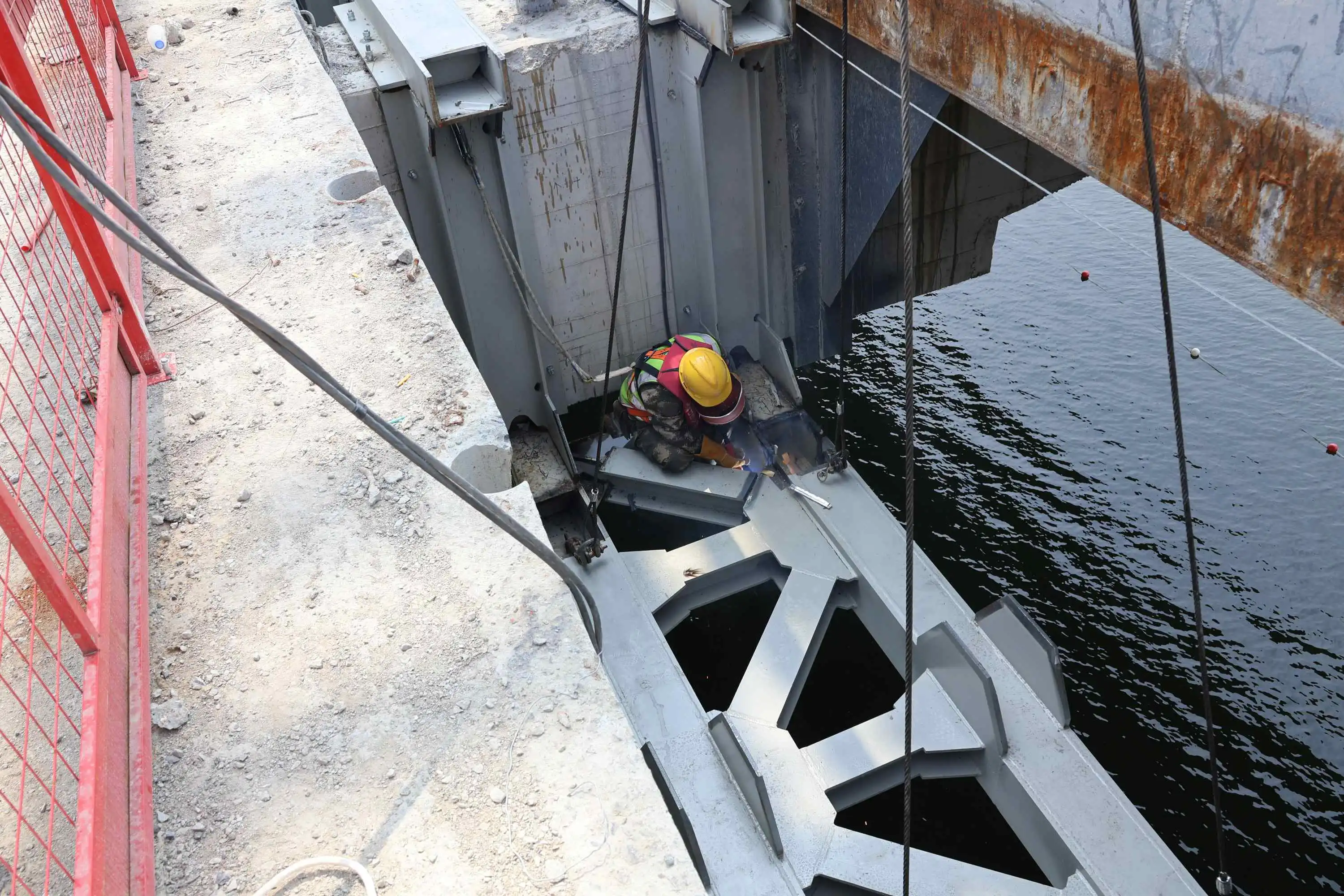
The mechanical qualities must match the needs of the product. Impact hardness is important in cold places where brittle fractures are more likely to happen. Charpy V-notch tests at -20°C confirms that the material is flexible. The elongation percentage shows the amount of flexibility that can handle sudden loads without breaking. Instead of using general guidelines, our engineering team sets these parameters based on the conditions of the site, the operational temperature ranges, and the ease of entry for upkeep.
Structural System Configuration
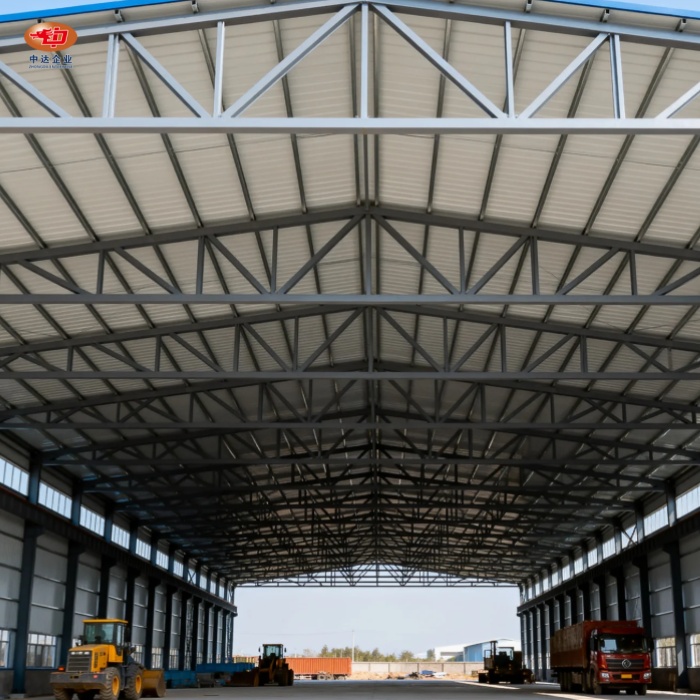
Frame structures with H-beam columns and I-beam rafters work well in turbine rooms that need to have a lot of space for installing equipment. The sizes of the columns in the grid are a mix between cost-effectiveness and crane coverage. Closer spacing costs more in materials but makes overhead lifting easier. Truss systems are a good way to span boiler areas where middle supports would get in the way of pipe and ductwork networks. It is important for node setups to spread forces out evenly so that stress builds up and doesn't cause wear cracks.
Grid structures are the best way to support circular cooling towers and coal storage domes because they spread the weight across members that are linked to each other. Rise-to-span ratios show how well a structure works; grids that are shorter need heavier parts, and grids that are steeper make covering features more difficult. These design choices affect how complicated the fabrication is and how the structure is put together. This shows why early teamwork between designers, fabricators, and building teams saves money by avoiding costly redesigns.
Construction Safety Standards and Best Practices
When engineered designs are turned into real structures, risks arise that must be consistently addressed by standards and training routines. Site safety management keeps workers safe and upholds quality standards that prove the assumptions made in the design.
Personnel Protection and Hazard Management
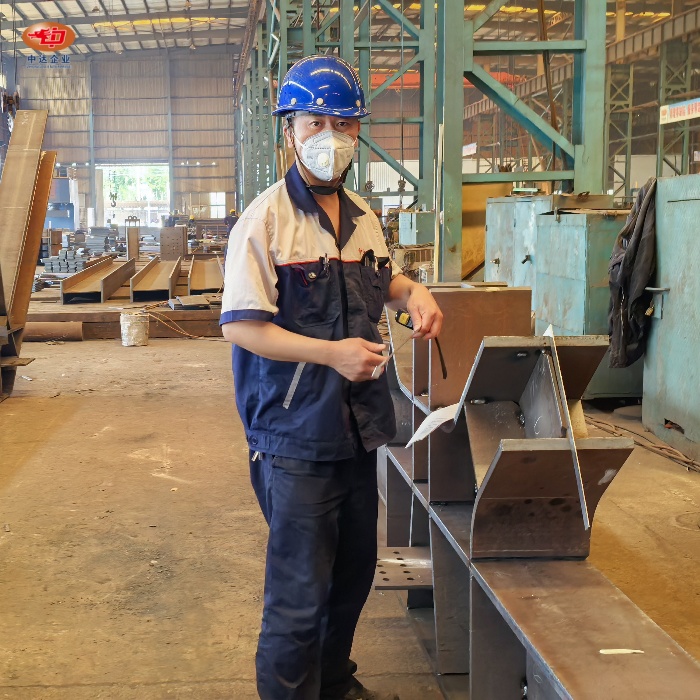
Personal safety equipment (PPE) rules include more than just steel-toed boots and hard hats. High-visibility vests with retroreflective stripes keep crane operators from losing their balance, and full-body belts with shock-absorbing lanyards keep workers fixing purlins at height safe. When putting on protective coats or working near places with limited air flow, you must wear respiratory protection.
Hazard studies find risks before they happen, and this proactive approach is especially vital for a power plant steel structure, where heavy lifts, confined spaces, and energized equipment create a high-risk environment. Job Safety Analysis breaks down jobs into steps and looks at risks of falling, getting hit by moving objects, and getting pinched while putting together connections. Toolbox talks raise people's awareness by talking about things that are unique to each site, like power lines that are close to crane working areas or unsteady ground that makes it hard for mobile equipment to move.
Quality Assurance Through Inspection Protocols
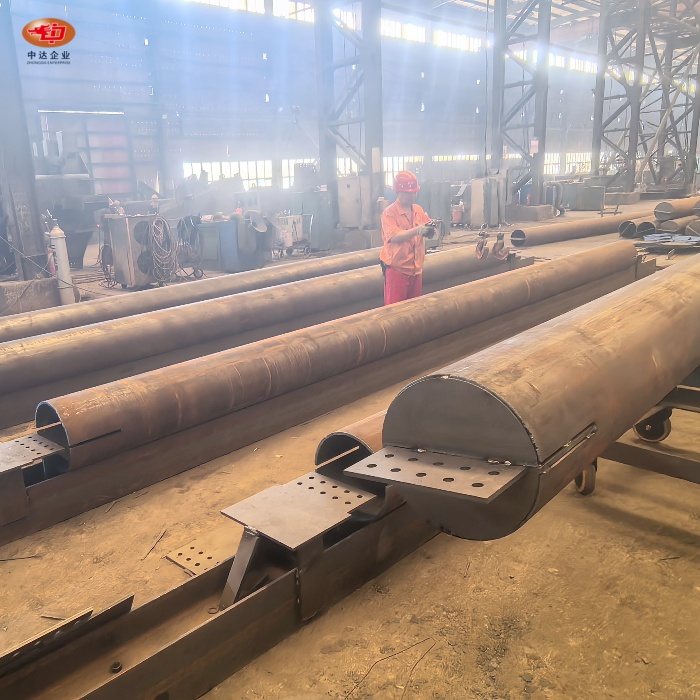
At inspection stages, engineers make sure that the parts that were made match the engineering specs before they are installed and any differences are locked in. Using total stations to check the dimensions makes sure that the bolt holes are lined up within ±2mm of each other, which is important for installing friction-grip bolts that don't come loose from shaking. Inspections of the surface preparation make sure that the blast cleaning meets the Sa 2.5 cleanliness standards before protection coats are put on. This stops early corrosion that weakens the structure.
Non-destructive testing keeps an eye on the quality of the weld without being seen. Radiographic testing shows that the full-penetration welds that connect the main columns to the base plates have internal gaps and slag inclusions. Magnetic particle testing shows cracks that break the surface of fillet welds that connect brace sections. These methods find flaws when fixing them means grinding and rewelding instead of replacing expensive parts after the structure is up.
Coordination and Communication Practices
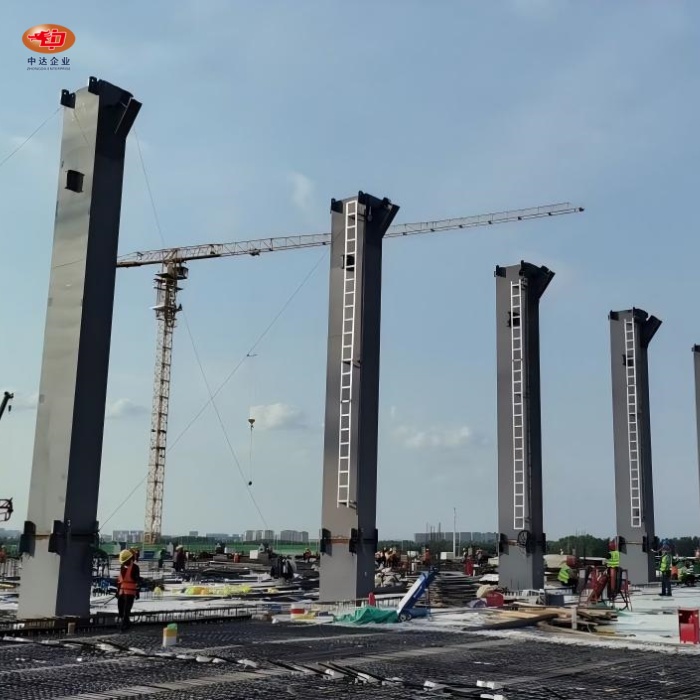
Safe steel erection rests on crane operators, riggers, bolting teams, and welders working together on high platforms at the same time. At daily coordination meetings, lift plans, weather limits, and changes to the order of tasks that touch more than one trade are talked over. Protocols for radio contact set clear terms like "load coming up," "swing left," and "hold position" to avoid confusion during important picks.
When suppliers and contractors work together in an open and honest way, they avoid disagreements that lead to safety cuts when time is tight. When delays happen in production, honest communication lets building teams reschedule tasks instead of rushing to catch up and skipping inspection steps. This willingness to work together, which comes from building long-term relationships instead of short-term contracts, is what sets off-time projects that are safe and on schedule from ones that are full of problems and extra work.
Maintenance and Safety Compliance Post-Construction
Safety in structures goes beyond the end of building and into decades of use. Proactive maintenance protects the integrity of the design while adjusting to changing practical needs and legal requirements.
Inspection Technologies and Monitoring Systems
Traditional visual checks miss rust and stress cracks that start below the surface and can't be seen with the naked eye. Ultrasonic thickness gauging can find sections that are losing material because of internal rusting in open parts of structures that are exposed to condensation. Drone-mounted cameras can take high-resolution pictures of coating decay patterns on roof beams and stack exteriors without the need for scaffolds.
Documentation and Compliance Verification
Maintenance records are useful for both keeping track of operations and showing that you're following the rules. Keeping detailed records of coating fixes, bolt retorquing, and connection reinforcements shows that you did your job during safety checks. Photographic proof with GPS coordinates that shows when and how much repair was done protects asset owners during probes into incidents.
Periodic structure evaluations compare current building codes to existing facilities to find problems that need to be fixed, and for a power plant steel structure, these assessments are particularly critical due to the high-consequence nature of any failure. When balancing capital allocation, procurement managers like it when sellers offer lifecycle support by giving advice on cost-effective changes that keep compliance without needless overdesign.
Modernization and Lifecycle Extension
Adding modern safety technologies to old buildings increases their value and makes them more reliable for use. Seismic repair adds energy-dissipating bracing to frames that were built using old seismic rules. This protects investments in places where danger maps have been updated. Modern coating systems used for corrosion protection upgrades work better than the original specs, which cuts down on upkeep times and lifetime costs.
When adding equipment to increase capacity, structural studies are needed to make sure there is enough backup capacity or to find out what reinforcements are needed. By swapping rivets with high-strength nuts, connection improvements make parts that are dynamically loaded more resistant to fatigue. When these improvements are made during planned downtime, they don't stop output and keep safety margins that protect people and machinery.
Overcoming Engineering Challenges with Safety-Focused Solutions
Facilities that make electricity have their own problems that can't be solved with general structure methods. Through new ways of using materials and working together to solve problems, specialized knowledge can turn these problems into competitive benefits.
Corrosion Resistance in Aggressive Environments
Coastal power plants are constantly hit by salt spray, which speeds up rusting more than it does at inland plants. Marine-grade C5-M coating systems have zinc-rich bases, micaceous iron oxide barriers, and polyurethane topcoats that make a dry film thickness of 250 to 320 microns. According to ISO 1461, hot-dip galvanizing is a temporary way to protect secondary frame when coating upkeep is not possible.
Seismic and Dynamic Load Management
Standard static analysis doesn't take into account the constant vibration forces that turbine-generator sets create. Dynamic finite element modeling mimics how things work, finding resonance frequencies that need tuned mass dampers or changes to the stiffness. High-strength friction-grip bolts in key links keep joints from coming loose, which lowers their performance. This keeps the structure strong even after decades of repeated loading.
Seismic planning gets more complicated in a physical way in high-risk areas. Moment-resisting frames with smaller beam sections focus plastic hinges in areas that can be replaced. This keeps main columns from getting damaged beyond repair during design-level earthquakes. Base isolation systems keep buildings from moving with the ground, which makes it easier for fragile equipment links to handle earthquakes.
Turnkey Solutions and Integrated Project Delivery
Splitting up the buying process into different steps, like giving design, manufacturing, and installation to different groups, makes it harder to coordinate, which can lead to safety issues. Integrated delivery models combine duties, setting people's goals on the success of the project rather than avoiding contractual responsibility. When interface problems happen, single-source responsibility stops people from pointing fingers, which speeds up the resolution process and keeps the plan moving forward.
We offer a wide range of services, from initial feasibility studies to help during commissioning, making sure that the design purpose is carried out correctly at all stages of the project. Our more than 100 professional engineers work with clients from the early stages of idea development to making sure that the structure is built in the most efficient way possible.
Conclusion
Safety standards for building power plant steel structures protect people, property, and the ability to keep running throughout the life of the facility. Following the rules set by ISO, ASTM, OSHA, and EN protects the structure from damage even when it is under a lot of stress or exposed to harsh conditions. The choice of materials, the quality of the construction, the thoroughness of the inspections, and the care taken with upkeep all affect whether a project meets its design life standards or fails before its time. Because energy infrastructure is so complicated, people need to work together to make sure that risks are minimized through scientific knowledge and quick communication.
FAQ
What certifications verify safety compliance for power plant steel structures?
Reputable producers have ISO 9001 certification for quality management, ISO 14001 certification for environmental compliance, and OHSAS 45001 certification for health and safety at work. Third-party checks of welding processes, material tracking, and dimensional tolerances are used to confirm the quality of structural steel manufacturing that is part of EN 1090 certification. Instead of taking copied certificates, check these credentials directly with the organizations that issued them. Compliance ensures that safety rules are followed during fabrication and protects power plant steel structures.
How does steel grade selection impact structural safety?
Different grades of steel have different mechanical qualities that are important for strength and longevity. High-strength choices, like Q355B or ASTM A572 Gr.50, have yield strengths higher than 355 MPa, so they can handle big loads on lighter parts. Weldability is controlled by the chemical makeup; carbon equivalent values below 0.45% stop cracks during manufacturing. Impact toughness standards make sure that materials can be bent easily in cold places, so they don't break easily and lose their structural integrity when they're under a lot of stress.
What inspection methods validate weld quality?
Techniques for non-destructive testing look at joints without breaking any parts. Ultrasonic testing can find problems inside important full-penetration welds, such as cracks and incomplete fusion. Radiographic testing leaves lasting film records that must be kept for regulatory purposes. A magnetic particle analysis shows cracks on the surface of the fillet welds that connect the bracing sections. When used according to the Inspection and Test Plans for each project, these methods find flaws during manufacturing, when fixing them is cheaper than fixing them in the field.
Partner with Zhongda for Compliant Power Plant Steel Structure Solutions
With ISO 9001/14001/OHSAS 45001 and EN 1090 certifications, Zhongda Steel is known for making the best power plant steel structures. Using BIM-driven prefabrication and ultra-thick plate cutting with ±0.2mm accuracy, our 120,000 m² factory makes 60,000 tons of steel every year. We are a reliable provider of power plant steel structures to China Railway, CSCEC, and BMW. Our complete solutions include design optimization, advanced anti-corrosion treatments, and full quality documentation. Email our engineering team at Ava@zd-steels.com to talk about your project needs and find out how our 20 years of experience around the world have helped us turn difficult problems into reliable infrastructure that supports energy production around the world.
References
American Institute of Steel Construction. (2016). Specification for Structural Steel Buildings (ANSI/AISC 360-16). Chicago: AISC.
International Organization for Standardization. (2015). ISO 9001:2015 Quality Management Systems – Requirements. Geneva: ISO.
Occupational Safety and Health Administration. (2020). OSHA Safety and Health Standards for Construction (29 CFR 1926). Washington, D.C.: U.S. Department of Labor.
European Committee for Standardization. (2018). EN 1090-2:2018 Execution of Steel Structures and Aluminium Structures – Technical Requirements for Steel Structures. Brussels: CEN.
American Welding Society. (2020). AWS D1.1/D1.1M:2020 Structural Welding Code – Steel. Miami: AWS.
Salmon, Charles G., Johnson, John E., and Malhas, Faris A. (2009). Steel Structures: Design and Behavior – Emphasizing Load and Resistance Factor Design. Upper Saddle River: Pearson Education.
YOU MAY LIKE