What are Box Girder Bridges and What are the Advantages of Using Them?
2026-05-14 13:53:47






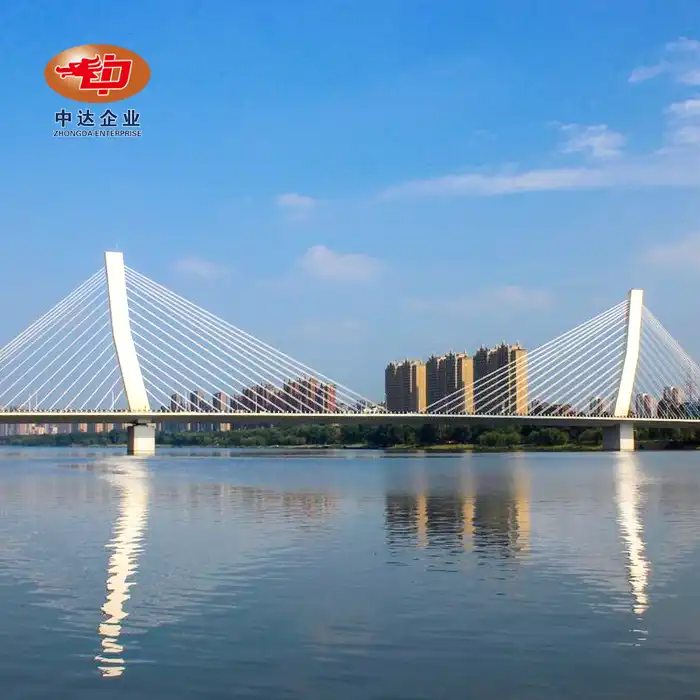
When engineers and procurement workers plan big infrastructure projects like highway interchanges, river crossings, or rail transit routes, they have to ask themselves: which bridge design gives the best combination of structural performance, durability, and cost-effectiveness? More and more, box girder bridges seem to be the answer. The empty, box-shaped cross-sections of these buildings make them very strong and able to hold a lot of weight. The steel box girder bridge is one of the most advanced options on the market today. It is built to be both light and strong, which makes it perfect for spans between 100 and 300 meters, and for cable-stayed uses, it can even go over 400 meters in length.
Introduction to Steel Box Girder Bridges
Box girder bridges are a complex type of structure because their cross-sections are closed and hollow. In contrast to standard I-beam designs, these bridges surround the inside areas with welded steel plates or shaped concrete. This makes a box shape that is better at resisting bending forces than open shapes. Since it became popular in the middle of the 20th century, this basic plan has changed the way infrastructure works today.
Historical Development and Modern Innovation
Box girder technology has changed over time because engineers need longer lengths and more traffic. In the 1950s, early concrete box girders were used in European projects. However, the use of high-strength steel metals changed everything. Modern buildings use high-tech materials like ASTM A709 Grade 50W weathering steel and Q420qD low-alloy choices, which have yield strengths higher than 345 MPa and are easy to weld. CNC precise cutting with ±0.2mm standards and BIM-driven prefabrication are two manufacturing innovations that have cut the time needed for on-site assembly by 20–30% compared to older methods.
Structural Fundamentals and Core Components
A common steel box girder has top and bottom flanges that are joined by vertical web plates to make a closed section that is either rectangular or trapezoidal. The top lip usually holds up an orthotropic deck system, which is a plate with horizontal ribs that make it stiff, or it joins with a composite concrete deck. The section's torsional constant (J) shows that this shape makes it very stiff against twisting, sometimes several hundred percent stiffer than I-sections. Protected paths for utility lines and inspection access are provided by the enclosed area, which keeps the environment out.
Global Applications Across Infrastructure Sectors
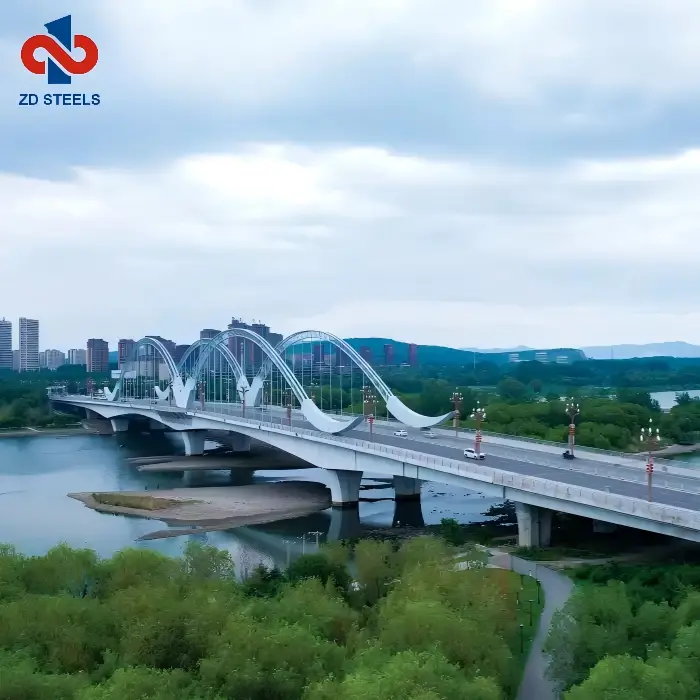
All over the world, these buildings are used for different things. They are used on curved roads and raised expressways in cities because the torsional resistance keeps the deck from twisting when trucks carry odd-shaped loads. Long-span cable-stayed bridges, like those that cross wide rivers or deep valleys, depend on their smooth, aerodynamic shapes to keep movements from the wind to a minimum. Railway tracks are useful because they can handle big axle loads and tight alignment errors. This technology is also used in ports and mine access roads, where harsh environments need buildings that don't rust and don't need much upkeep.
Design Principles and Structural Advantages of Steel Box Girder Bridges
The best engineering in box girder design comes from carefully following international standards, choosing the right materials, and making the shapes as efficient as possible. When you understand these principles, you can see why smart project managers choose this type of bridge for tough jobs.
Engineering Standards and Material Selection
Following the rules set out in AASHTO LRFD Bridge Design Specifications, Eurocode 3, and FHWA-NHI-07-096 for steel box girder bridge makes sure that structures are safe and the same all over the world. Material standards favor high-performance steels that are better at resisting rust in the atmosphere. Steel that weathers makes a protective oxide patina that means it doesn't need to be painted over and over again in many places. Advanced grades are also tougher at low temperatures, which is important for projects in northern regions where the risk of weak fractures is higher. Zhongda uses its own -60°C Weathering Steel Anti-corrosion Technology, which lets the steel work reliably in Arctic conditions, as shown by Russian bridge installations.
Superior Load Distribution and Torsional Stability
The closed-section shape spreads the loads out over a number of different routes. When traffic moves unevenly across the deck, which often happens on curved lines, the force is resisted by the box section without the need for a lot of cross-bracing. Because of its natural safety, the structure is lighter because it doesn't need any extra parts. This directly lowers the cost of the base and the seismic mass. The high torsional stiffness also keeps the deck from warping while it's being built, which makes it easier to line up the segments during the raising processes.
Advantages Driving B2B Procurement Decisions
When infrastructure planners and EPC companies look at bridge options, they focus on a few key benefits:
- High Load Capacity with Reduced Self-Weight: Steel box girder bridges can have span-to-depth ratios of 25:1 or more, while many concrete types can only get 15:1. This efficiency equals about one-fifth of the dead load of similar concrete buildings, which means that a lot less foundation is needed. Less weight is especially helpful for projects in areas that are prone to earthquakes because it lowers the forces that come from earthquakes.
- Corrosion Resistance and Lifecycle Cost Optimization: Using the right finishing systems, like zinc-rich epoxy bases and polyurethane topcoats, can make upkeep gaps 15 to 25 years longer. Inside dehumidification systems keep the relative humidity below 40%, which stops rusting from happening behind the scenes. Zhongda uses S-type wire wrapping tape and advanced dehumidification routines in sealed rooms to make sure that the machines will last for 50 years or more with little maintenance.
- Design Flexibility for Complex Geometries: Horizontal curves, changing cross-sections, and curved lines don't cause many problems. CNC fabrication lets plates be precisely shaped to fit complex geometries, and modular section building can work with the limitations of the site. This flexibility is very important for urban retrofits and situations where the right-of-way is limited.
- Accelerated Construction and Traffic Management: Since whole box pieces are prefabricated, they can be put together quickly using cranes or self-propelled modular carriers. For highway work, roads often have to be closed overnight or on the weekends. A precast steel segment can be transported and put up in 48 to 72 hours, which keeps the economy running smoothly. Zhongda can deliver 802 tons of 12-meter pieces every month, which helps them meet tight building plans for big projects.
- Environmental Sustainability and Material Circularity: Steel can be recycled over and over again without losing any of its function. When a job is over, the structures are taken apart into parts that can be recycled into new high-quality goods. This circle economy alignment meets the stricter environmental purchasing requirements set by government agencies and international companies.
These benefits help building companies, government workers, and private developers who are in charge of multimillion-dollar infrastructure projects with their operating and financial needs.
Construction Process and Maintenance of Steel Box Girder Bridges
Strategic lifecycle management and efficient manufacturing for steel box girder bridge are what set apart projects that don't have delays and cost overruns from those that do. Digital technologies and traditional craftsmanship are used together in modern production processes to make precision-engineered parts that are ready to be put together without any problems.
Advanced Fabrication and Quality Assurance
Building Information Modeling (BIM) software is used to make detailed 3D models, which are then used to make exact cutting patterns and join sequences. Automated CNC plasma or oxy-fuel cutting tools can handle steel plates that are up to 100 mm thick and keep their dimensions within ±0.2 mm. Robotic welding cells do repeated welds that go through evenly and with little distortion, while AWS-certified professionals solder important links by hand.
Quality control rules say that all butt welds must be tested with ultrasonic waves (UT) and all fillet welds at orthotropic deck ribs must be inspected with magnetic particles. These non-destructive testing methods find flaws below the surface that can't be seen with the naked eye. Dimensional verification uses laser scans to collect millions of data points to make sure that the segment's slope, sweep, and twist stay within the allowed ranges. Zhongda's ISO 9001:2015 and EN 1090 certifications show that they strictly follow these high standards, and each part comes with tracking paperwork.
Systematic Construction Workflow
Putting up a site usually happens in a few planned steps. When the substructure is finished, the bearing heights and orientation settings are set. Trucks or barges bring the segments to where they need to be, where they are placed near cranes for easy handling. Heavy-lift cranes, like Zhongda's 50-ton systems, can put pieces on temporary supports or directly on permanent bearings.
Segments are joined with longitudinal post-tensioning or bolted splice connections. Field welding completes the consistency at the deck and web interfaces. After the steel is put up, the composite deck is poured. Shear studs move the loads between the steel and concrete parts. Entry into a confined area for tasks like welding and inspections inside is regulated by strict safety rules that include ventilation systems and constant tracking of the air quality.
Proactive Maintenance and Inspection Technologies
Scheduled checks and condition-based actions are both parts of lifecycle management. Inspecting the coating, drains, and bearing movements visually every two years is a good way to keep track of their state. Every 5 to 10 years, handheld ultrasonic thickness gauges and crack detection dyes are used for hands-on checks of details that are likely to wear out quickly.
New tools make it easier to find things. High-resolution cameras on drones take pictures of features on the bottom that used to need expensive platforms to get to. Installed permanently inside box chambers, acoustic emission sensors track the movement of active cracks in real time, letting maintenance teams know about new problems before they cause damage that can be seen.
Some common upkeep tasks are spot coating fixes, replacing elastomeric bearings, and cleaning the draining system. When compared to exposed superstructures, the protected inner environment makes these jobs easier, which cuts down on the time that lanes have to be closed and the costs of managing traffic. Structures that are well taken care of often last longer than 75 years, which proves the long-term value argument for big asset owners.
Comparative Analysis: Steel Box Girder Bridges vs Other Bridge Types
To choose the right strategic bridge type, you need to compare different options objectively against performance standards that are specific to the project. To find the best options, decision-makers look at how efficient the structure is, how much it costs, and how it works.
Structural Efficiency and Span Capabilities
For widths less than 70 meters, steel I-girder bridges are a cheap option compared to a steel box girder bridge. They use simple rolled pieces or welded plate girders. They aren't very rigid in the torso direction, so they need side bracing systems and can only be used in straight or slightly curved positions. Concrete box girders last a long time and don't need to be painted very often, but because they are so heavy, they can only be used for 150 meters at a time without post-tensioning or modular construction.
Steel box girder bridges are the most common type of span between 100 and 300 meters because they are strong for their weight and don't bend easily. Zhongda's designs can handle very long spans of up to 2000 meters when combined with cable-stayed or suspension systems. The main wires are made of PPWS material and have a thickness of 5.2 mm and a tensile strength of 1770 MPa. These arrangements can withstand level-12 wind forces thanks to improved aerodynamic cross-sections that have been proven by testing in a wind lab.
Economic Considerations and Total Cost of Ownership
When it comes to initial material costs, concrete and steel I-girders are better choices than boxes because they require more complicated welding and fitting processes. Lifecycle analysis shows a different point of view: lower substructure costs due to a lighter superstructure, shorter construction times that cause less traffic problems, and longer maintenance intervals all lead to better net present value calculations over 50-year study periods.
Conditions in the job market affect how competitive an area is. Economies that can make a lot of steel products and have trained welders, like Northeast China, where Zhongda has a 120,000 m² plant, can offer reasonable prices because their production sizes are efficient. When modular building methods are used, projects have 20–30% shorter installation times in the field. This cuts down on the secondary costs that come with having to stay on site for longer periods of time.
Durability and Environmental Performance
Corrosion is a big problem in marine settings. Chloride can't get into concrete box girders very well, but reinforcing corrosion can still happen if the cover depth isn't enough. A lot of the surface area of steel I-girders is exposed to salt water and chemicals used to melt ice. Steel box girder bridges keep surfaces from being open to the elements, and dehumidification systems inside buildings keep hidden damage from happening.
Carbon impact estimates are becoming more and more important in deciding what to buy. Steel production still uses more energy per ton than cement production, but lighter structures contain less carbon overall. Being able to be recycled at the end of its useful life has benefits for the circular economy that concrete removal trash can't match. Eco-friendly choices are based on detailed reviews of each project using the ISO 14040 lifecycle approach.
Guidance for Infrastructure Decision-Makers
Procurement teams should look at a number of factors that are unique to each job. When the span needs to be more than 100 meters or there needs to be a horizontal curve, steel box girder bridges are the best choice. Prefabrication has benefits for building plans that move quickly. Projects in places where steel manufacturing is already well-established can get good prices and dependable supply lines. Working with makers with a lot of experience, like those who have completed more than 60 major projects and kept 70% of their clients, lowers the risk of not meeting deadlines by providing proven technical knowledge and organized project management skills.
Conclusion
Box girder bridges, especially those with advanced steel configurations, are tried-and-true ways to meet the needs of modern infrastructure for fast building, high structural economy, and long-term value. For highway interchanges, long-span river bridges, and rail transit elevated buildings, they are the best choice because they are very strong for their weight and can be shaped to fit complex shapes. Strict design methods that follow international standards make sure that buildings are safe and last a long time. Modular prefabrication speeds up project delivery times, which is important for keeping traffic as low as possible.
Successful project execution requires partnering with technically advanced makers who can provide both quality fabrication and collaborative engineering support. When looking for a reliable steel box girder bridge provider, businesses should focus on companies that have a lot of certifications, a history of successful projects, and a dedication to long-term relationship value that goes beyond just delivering products.
FAQ
What is the typical service life of a steel box girder bridge?
Structures that are well-built and well-kept usually last between 75 and 100 years. Important factors include the quality of the original coating system, controlling the air inside by removing moisture, and following the rules for regular inspections. In many places, weathering steel choices get rid of the need to paint, which means that upkeep intervals are much longer than with regular painted finishes.
How do steel box girders compare economically to concrete alternatives?
When it comes to initial material prices, concrete usually wins, but a full lifecycle study shows that steel is better. The total cost of ownership is often higher over 50-year periods because the base costs are lower because the building is lighter, construction can be done faster, and less upkeep is needed. Local labor rates, material supply, and site limitations should all be taken into account in project-specific research.
What factors determine maintenance requirements and intervals?
The regularity of upkeep is affected by the climate. For example, places near water and deicing salts need to be inspected more often than dry inland areas. The performance of an interior dehumidification device has a big impact on the rates of hidden rusting. Details that are easily forgotten on busy roads need to be watched more closely. Visual inspections should be done every two years, and thorough hands-on evaluations should be done every five to ten years, depending on what was seen and how important the structure is.
Partner with Zhongda for Your Next Infrastructure Project
Zhongda is ready to help you realize your building goals with steel box girder bridge options that are the best in the business and are built to last. We have been making widely certified steel box girder bridges since 2004. Each year, we can carefully build 60,000 tons of bridges, and our skill has been shown in more than 60 famous projects around the world. We can give your project the technical quality it needs with our BIM-driven prefabrication, -60°C weathering steel technology, and ±0.2mm ultra-thick plate cutting.
Whether we're building highway interchanges, rail corridors, or specialized industry access structures, our team can help with everything, from optimizing the initial plan to completing the installation and beyond. Contact our engineering experts at Ava@zd-steels.com right away to talk about your specific needs, look into unique solutions, and learn how Zhongda's dedication to quality and teamwork can help you reach your project goals quickly and reliably.
References
Chen, B. and Wang, T. (2019). Design and Construction of Steel Box Girder Bridges. Structural Engineering Press.
American Association of State Highway and Transportation Officials. (2020). AASHTO LRFD Bridge Design Specifications, 9th Edition. Washington, DC: AASHTO.
European Committee for Standardization. (2006). Eurocode 3: Design of Steel Structures – Part 2: Steel Bridges. Brussels: CEN.
Troitsky, M.S. (2017). Orthotropic Bridges: Theory and Design, 2nd Edition. Lincoln Arc Welding Foundation.
Federal Highway Administration. (2015). Steel Bridge Design Handbook: Box Girder Systems. Publication No. FHWA-HIF-16-002.
Wolchuk, R. and Mayrbaurl, R.M. (2018). Proposed Design Specifications for Steel Box Girder Bridges. National Cooperative Highway Research Program Report 725.
YOU MAY LIKE
_副本_1760170327027.jpg "steel structural details")