What is the Difference Between Girder and Box Girder?
2026-05-13 13:56:33






When planning big building projects, it's important to know how the elements of the system work together. There is a big difference between a standard girder and a box girder in how they are built and how they cross-section. On the other hand, a normal girder has an open I-beam or truss shape, while a steel box girder has a closed, hollow rectangular or trapezoidal cross-section. Box girders are the best choice for long-span bridges, highway interchanges, and other hard infrastructure projects where regular beams just can't do the job because their closed-cell geometry provides better torsional stiffness and load distribution.
Introduction to Girders and Box Girders
Understanding Traditional Girder Configurations
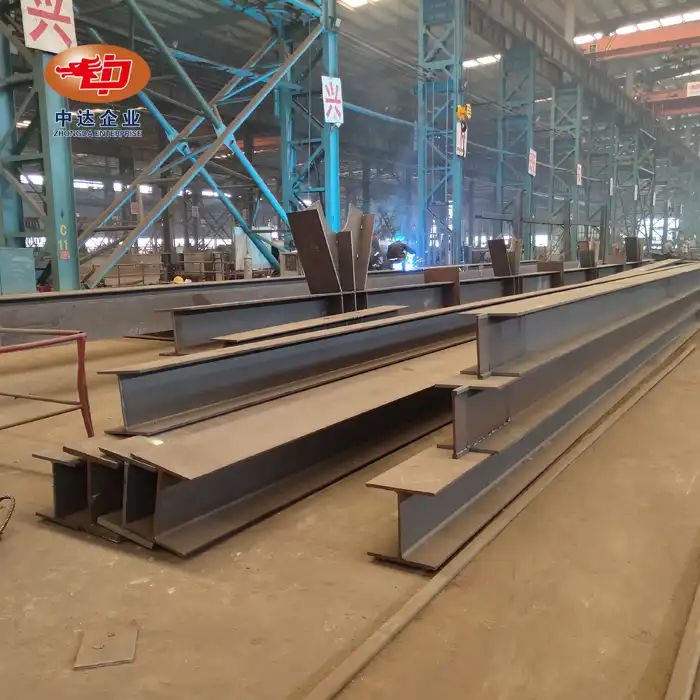
Traditional girders are used as the main support in a huge number of construction projects, including office buildings, factories, and transportation systems. I-beams are the most popular type of open-section girder. They have a vertical web that connects the top and bottom ends to make a "I" shape. These parts work great for making frames and short-span bridges, which need to hold loads vertically. Truss girders use linked triangle-shaped frames to spread loads evenly. They have great strength-to-weight ratios for modest spans of 30 to 100 meters.
Engineers choose these designs based on simple needs for bending resistance. Because they have an open-section design, they are easy to check and maintain, which is why they are used so often in warehouses, factories, and normal highway overpasses. But this same openness makes it hard to do projects that need to fight bending forces or have very long spans without any supports in the middle.
The Evolution of Box Girder Technology
To take on bigger and bigger jobs, modern bridge building needed something more complex. The enclosed steel box girder was a novel idea that changed the way builders build long-span buildings. The top and bottom steel plates of this hollow beam are joined by vertical web plates, making a closed cross-section that changes the way the structure behaves in a basic way. Because the shape is sealed, torsional loads are spread evenly around the circumference. This keeps the beam from warping and turning, which can happen with open-section beams when eccentric loads are present.
This new idea worked really well for bent bridges, cable-stayed buildings, and other uses where stable aerodynamics are important. The streamlined external shape greatly lowers wind resistance compared to truss configurations. This is a very important issue for buildings that are exposed to high winds along the coast or in the mountains. We've seen this technology make possible famous infrastructure projects all over the world, from huge urban interchanges to record-breaking river bridges that weren't possible with traditional beam designs.


Structural and Design Principles of Girders vs Box Girders
Load Distribution Mechanisms in Open vs. Closed Sections
The way that structure parts deal with forces shows how different engineering ideas are at their core. Traditional I-beams don't break because of the way their flanges work. The top flange resists compression, and the bottom flange resists tension. The web transfers shear forces between the two flanges. When gravity pulls act perpendicular to the length of the beam, this system works really well. But when rotational forces try to twist the beam, the open part doesn't offer much resistance, which could cause stability problems.
Closed-section steel box girder work in a completely different way. To make what engineers call a "torsion box," the continuous loop of steel plates twists and bends, creating shear flows that go around the outside of the box. The rotational stiffness of this distribution system is usually 10 to 20 times higher than that of similar I-beam sections. The higher stiffness is very important for bridges with horizontal bends, where vehicle loads cause big twisting moments, or for structures that carry uneven loads, like industrial overhead crane systems.
Material Selection and Engineering Specifications
Shenyang Zhongda makes steel box girder systems with high-performance structural steel grades that are made to work with certain loads and environments. Our main material requirement is for Q345D steel, which has a minimum yield strength of 345 MPa and is assured to be tough against impact at low temperatures. This metal mix makes sure that the structure stays strong even in harsh climates where temperatures drop below -40°C. This means that our goods can be used for building projects in the Arctic and highway systems in the north.
Connection zones and high-stress areas get better treatment with Q420D steel, which has a yield strength of 420 MPa and better resistance to wear. This strategic material graduation improves the performance of the structure while keeping total project costs low. This is a practical method that procurement managers who have worked with projects before will understand how to balance performance needs with budget limitations. Because the box is fully welded, there are no bolted links in the main load lines. This means that there are fewer places where fatigue can start, which has been a problem with bolted girder assemblies in the past.
Corrosion Protection and Lifecycle Considerations
The sealed nature of box girders makes them easier to maintain and comes with certain safety standards. Surfaces on the outside are directly exposed to water, de-icing salts, and industry pollution, so they need strong protection. We use two layers of corrosion protection: zinc-rich epoxy primers and high-performance topcoats. This way, the products can last more than 30 years in harsh C5-M coastal settings without needing major repairs. This plan for security meets the long-term reliability requirements of AASHTO and Eurocode 3.
Different problems arise in interior areas. Even though sealed rooms protect against direct rain and UV damage, condensation or water getting in at expansion joints can still trap moisture. Our engineering team has planned for this by including drainage holes, ventilation ports, and dehumidification access points in the design. Light-colored coatings on the inside make inspections easier, so maintenance crews can find new rust or structure problems during regular checks. When compared to locked boxes, where problems stay hidden until they are about to fail, this proactive method greatly increases the useful service life.
Performance, Cost, and Durability Comparison
Structural Capacity and Span Capabilities
When looking at real project needs, the performance benefits of sealed box parts can be measured. For highway bridges, traditional I-beam girders usually have economic width limits of 40 to 60 meters. After that, controlling bending and the weight of the material make the benefits lessen. Truss designs raise this range to about 100 meters, but they also make the building look bigger and make it more vulnerable to wind. Concrete box girders can support spans of up to 200 meters, but their own weight makes them impractical, and building times get much longer.
Zhongda's steel box girder systems can support single spans up to 420 meters long thanks to their efficient cross-section design and use of high-strength materials. Our ability to change the cross-section of a beam lets us make beams with heights from 1.25 meters to 8 meters, perfectly matching moment graphs for the best performance. When compared to flat-web designs, the curved steel web choice cuts the overall weight by 20% while keeping the structural integrity. This decrease in weight immediately leads to fewer foundation needs, smaller bearing systems, and lower seismic forces, all of which are positive effects that spread throughout the whole structure.
Economic Analysis Beyond Initial Procurement
Project managers with a lot of experience know that the money spent on materials at the start is only a small part of the total costs over the project's lifetime. When it comes to pure tonnage, the original cost of materials for steel buildings is usually higher than those for reinforced concrete alternatives. This simple comparison leaves out important factors that decide real economic value. When compared to cast-in-place concrete work, prefabricated steel parts arrive at the job site ready to be quickly put together. This cuts the time it takes to build by half. Cutting down on project timelines lowers the cost of funding, lowers the cost of traffic delays, and speeds up the income generation for toll facilities.
For structures that don't have enough longevity features, maintenance costs over 50-year service lives often exceed the cost of building the structure in the first place. Our advanced corrosion protection methods greatly increase the time between repair visits, which greatly lowers the overall cost of ownership. Steel building has a lighter dead load, which means that the substructures can be smaller and less expensive. Foundations, piers, and abutments that are built to handle lower gravity loads save money that helps to balance out the higher costs of the superstructure. Transport and handling benefits are also important. For example, shipping premade 12- to 30-meter sections is much more realistic than moving huge precast concrete elements that need special heavy-haul equipment.
Real-World Performance Validation
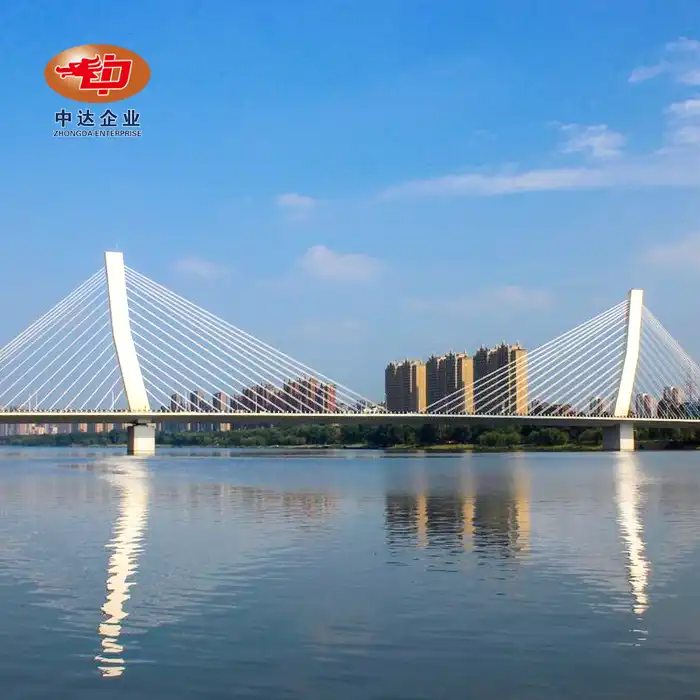
These ideas are put into action in our 18,000-ton Shenyang Dongta Cross-Hunhe River Bridge project. The building is held up by cables and is made of orthotropic steel deck box girders. It spans 340 meters across a major waterway and has eight lines of traffic. During the winter, when concrete work would have stopped, construction continued. Even though conditions were tough, bold project plans were kept. The streamlined box shape can handle wind speeds of more than 30 meters per second in the region without any problems with aerodynamic instability.
Similar performance traits made it possible for the Jingha Expressway to grow, even though the current road layout required ramps to be tightly bent. For traditional beam designs, the cross-section would have had to be too deep, or the supports in the middle would have been in the way of the necessary clearance. Our variable-depth box girders gave the building the torsional stiffness it needed while keeping the depths within accepted limits. This solved the geometric problems that were threatening the project's ability to go forward.
Procurement Considerations for Steel Box Girders
Evaluating Manufacturer Capabilities and Certifications
For buying to go well, suppliers must first be carefully evaluated based on their professional skills rather than just their prices. Manufacturing accuracy has a direct effect on how well structures are put together in the field and how well they work in the end. Our 120,000-square-meter building has CNC ultra-thick plate cutting equipment that keeps limits of ±0.2mm. This ensures accurate measurements that avoid costly changes in the field. The quality of the welds on automated welding lines is always the same and meets the standards of the AWS D1.5 Bridge Welding Code. There are written processes for every type of joint configuration.
International certifications are a neutral way to check the quality of management processes and professional know-how. Shenyang Zhongda has EN 1090 structural steelwork accreditation and AWS welding certifications, as well as ISO 9001 quality management, ISO 14001 environmental management, and ISO 45001 workplace safety certificates. These certificates show that quality control is done in a planned way, rather than just relying on inspectors being careful. Our Class I Steel Structure Professional Contracting Qualification proves that we can handle difficult, big projects that meet Chinese standards while also working with customers from other countries to supply the high-quality steel box girder.
Customization Options and Engineering Support
Infrastructure projects don't usually fit into normal lists because each site has its own geometric restrictions, loading conditions, and operating needs. Because of this, we offer a wide range of customization options that work with BIM-based design integration to make sure that steel fabrication meets the unique needs of each project from the very beginning of the idea phase. Variable cross-section designs make the best use of material distribution by putting steel exactly where structural analysis shows it will be under the most stress and lowering cross-sections in areas that aren't under much load.
The engineering team works together on more than just geometry. They also work on specific needs like earthquake detailing for high-risk areas, fatigue-resistant connection details for high-traffic bridges, and thermal expansion provisions for areas with extreme temperature ranges. Our expert team helps with all stages of the project, from making shop drawings to advising on the order of manufacturing, designing the erection process, and checking on the performance after the job is done. With this all-around method, ties with suppliers go from being transactional to being real engineering partnerships.
Logistics and Delivery Reliability
Logistics for transportation have a big effect on project plans and costs for big structural parts. Regulations for road shipping usually limit measurements to about 3.5 meters in width and height, which limits the sizes of sections that can be shipped. We get around these problems by strategically segmenting our products and sending them in pieces that are easy to move and are made for quick field joining. Field connections that are welded or bolted get the same strict engineering and quality control as fabrications that are made in a shop. This makes sure that the structure stays strong throughout the entire span that is put together.
Custom-designed dunnage, protective wrapping, and transportation frames are all part of our secure packing systems. These keep items safe during travel and handling. Flexible delivery schedule can work with the limitations of the project, such as limited site access, limited staging area available, and the need for a certain order of building. The 60,000-ton yearly production capacity makes sure that there is enough industrial output to meet tight project deadlines while still upholding quality standards. Our 70% client retention rate shows that we consistently deliver, which is why skilled infrastructure workers keep coming back to us.
Conclusion
Traditional girders and box girders are different in more ways than just their shapes. They have different structural behavior, performance capabilities, and lifetime value propositions. While regular I-beams and truss girders work well for many tasks, the steel box girder is required for difficult building projects because it is more rigid, can span more distance, and is easier to build. When it comes to long-span bridges, curved lines, and fast building, the enclosed cross-section has clear benefits that traditional options can't match. When procurement pros and engineers understand these differences, they can better match structural solutions to the needs of a project, which improves both the instant results of building and the long-term performance of operations. Box girder technology will continue to be a key part of fixing tomorrow's building problems as the need for infrastructure grows for longer spans, faster construction, and better durability.
FAQ
What makes box girders superior to I-beams for bridge construction?
The closed cross-section has 10 to 20 times more torsional stiffness than open I-beam sections. This keeps the bridge from turning under eccentric loads and lets it have bent shapes that would not be possible with regular beams. In modern infrastructure, where horizontal bends, wide deck widths, and concerns about appearance require performance above and beyond what standard beams can provide, this rigidity is very important.
How do steel box girders compare to concrete alternatives in lifecycle costs?
Even though the starting cost of the materials is higher, the speed with which steel box girder components can be installed cuts the time it takes to build by 50%, which saves a lot of money on finance and traffic disruption costs. The lighter weight makes it possible for supports to be smaller and for earthquake forces to be lower, which saves money all over the structure. Steel is often the more cost-effective choice for spans over 80 meters because it has a normal 50-year service life, needs less upkeep, and can be changed in the future.
What lead times should procurement teams expect for custom box girder orders?
Timelines are greatly affected by how complicated the project is and how much customization is done. Standard setups with few engineering needs usually take 12 to 16 weeks from the time the order is confirmed until it is shipped. It usually takes 20 to 30 weeks for complex projects that need a lot of BIM integration, custom link details, and specific material specs. Our modern production systems and 60,000-ton annual capacity allow us to turn around orders 20–30% faster than the average in the industry. This lets us meet tight project deadlines without lowering quality standards.
Partner with Zhongda: Your Trusted Steel Box Girder Supplier
Infrastructure projects need partners who can provide both excellent planning and precise manufacture. Shenyang Zhongda Steel Structure Engineering Co., Ltd. has been in business for 20 years and uses cutting-edge fabrication technology to help commercial developers, government contractors, energy companies, and industry clients on six countries. Our high-tech steel box girder systems are made with fully welded parts, high-strength Q345D and Q420D materials, different cross-sections that are best for your spans, and two layers of rust protection that are designed to last for thirty years.
Contact us at Ava@zd-steels.com right away to talk about your project needs and find out how our wide range of services can help you get things done faster while still making sure the structure works better than expected. You can look at our full line of products at zd-steels.com, read case studies from important projects, and get to technical tools that will help you make smart procurement choices.
References
Chen, W.F., and Duan, L. (2014). Bridge Engineering Handbook: Superstructure Design. 2nd Edition. CRC Press, Boca Raton.
American Association of State Highway and Transportation Officials (2020). AASHTO LRFD Bridge Design Specifications. 9th Edition. Washington, D.C.
European Committee for Standardization (2006). Eurocode 3: Design of Steel Structures - Part 2: Steel Bridges. EN 1993-2, Brussels.
Taly, N. (2017). Highway Bridge Superstructure Engineering: LRFD Approaches to Design and Analysis. CRC Press, Boca Raton.
American Welding Society (2015). Bridge Welding Code. AWS D1.5/D1.5M, Miami.
Troitsky, M.S. (1987). Orthotropic Bridges: Theory and Design. 2nd Edition. James F. Lincoln Arc Welding Foundation, Cleveland.
YOU MAY LIKE
_副本_1754364944578.jpg "Box Girder Beam Bridge")