What is the Purpose of a Box Girder?
2026-05-14 13:53:50






In modern infrastructure, a box girder is an important structural element that is made to hold huge loads and fight complex forces that would weaken other systems. The hollow rectangular or trapezoidal cross-section of the steel box girder makes it great at spreading weight evenly across lengths and being very resistant to bending moments and rotational stress. Engineers have to change how they build bridges, tunnel frames, and elevated transport systems because of this closed-section geometry. Unlike traditional open-section beams, the enclosed design makes a structural shell that handles forces from all directions very well. This makes it the best choice for projects that need to be strong and look good at the same time.
Understanding Steel Box Girders and Their Core Purpose
The Fundamental Design Philosophy
Parts of modern structures need to be able to do more than just hold weight. The steel box girder meets this need thanks to its clever hollow design, which makes it a torsionally rigid structure that can span lengths that would be hard for regular I-beams. In our 20 years of manufacturing, we've seen that clients are becoming more and more aware of how this design philosophy solves problems in the real world. For example, curved highway interchanges need torsional strength, long river crossings need minimal deflection, and quick construction timelines need prefabricated solutions.
At Zhongda, we use Q345D steel (minimum yield strength 345MPa) for the main parts of our box girders and Q420D for the important joints where stress builds up. This material requirement isn't made up on the spot; it comes from decades of field performance data that show this mix gives the best strength-to-weight ratio while still being able to be welded. The fully welded construction gets rid of the need for mechanical connections, which can break down over time in structures that are moved and unloaded over and over again, like bridges.
Why the Closed Section Matters?
The twisting constant is hundreds of times higher in sealed shapes than in open ones. If a bridge deck bends horizontally or gets uneven loads from traffic, regular I-beams will twist unless they are heavily braced. This bending can't happen with the box design, so you don't need expensive cross-bracing systems. This also makes the assembly process easier. Our engineering team found that this means the structures are about 20% lighter than similar I-beam assemblies with full bracing. This has a direct effect on the cost of the base and how well they respond to earthquakes.
In addition, the room inside is useful for reasons other than building. With this one design choice, you can create protected walkways for inspection workers, utility lines for electricity and drainage systems, and shielded areas that make corrosion protection last longer. This feature is very useful for government companies working on public transit projects because it lets them do repairs without closing lanes or causing traffic problems.
Load Distribution and Span Capabilities
Box girders are great at spreading loads that are packed along and across their length and width. When big trucks cross a bridge, the weight goes through the top flange and onto the webs. It then spreads out along the bottom flange. This three-dimensional load path stops overstressing in one place. We make girders with varying cross-sections and depths that range from 1.25 meters to 8 meters. This lets engineers place materials most efficiently where bending moments are highest while lowering depth at supports to meet clearance needs.
Our manufacturing skills for steel box girder allow us to make single spans that are up to 420 meters long. This is possible because the high-strength steel handles both positive and negative bending moments very well. This feature is very helpful for rail transit builders who are building raised guideways because it means they don't have to use as many support beams in crowded urban areas or sensitive wetland areas.
Advantages of Steel Box Girders Over Alternative Structural Systems
Before making specific comparisons, it's helpful to know what the performance range of box girders is. This makes their value offer clearer. Every project has limits, such as a limited budget, a tight plan, rules about the environment, and operating needs. The following benefits regularly deal with these problems and are backed up by measurable data from real-world applications.
Superior Strength-to-Weight Performance
Concrete box girders are strong, but they put a lot of weight on the supports. A normal concrete span could weigh 2.5 times more than a steel span of the same length. This means that bigger pier foundations and more work to clean up the dirt are needed. Even when the price of steel per cubic meter is higher than the price of concrete per cubic meter, EPC companies who manage design-build contracts find that steel box girder systems lower the cost of the substructure by 15 to 25 percent.
We've worked with clients on projects where seismic concerns were the main factor in the planning. Less mass directly lowers seismic forces, which makes it possible to build more cost-effective foundations in areas with a lot of earthquakes. When a power plant builder used our system to build a coal conveyor bridge in an area with moderate earthquakes, the amount of base concrete needed was cut by 30%.
Accelerated Construction Timelines
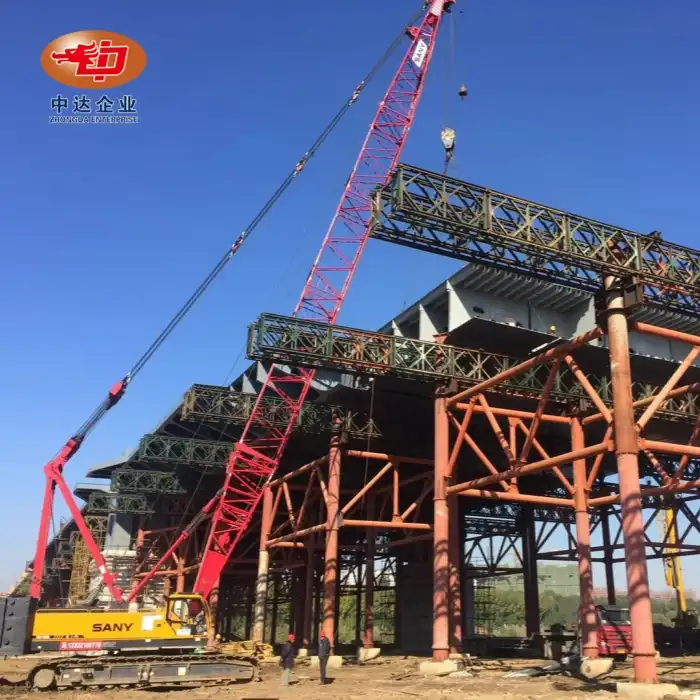
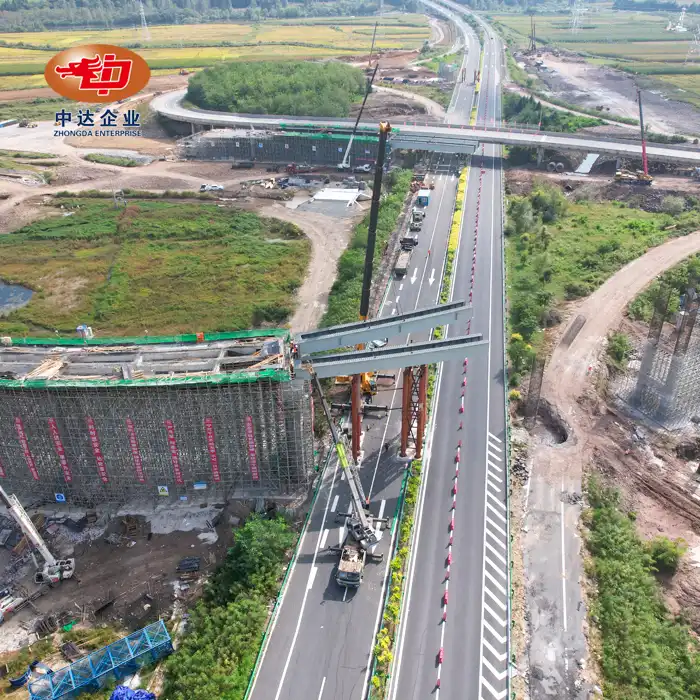
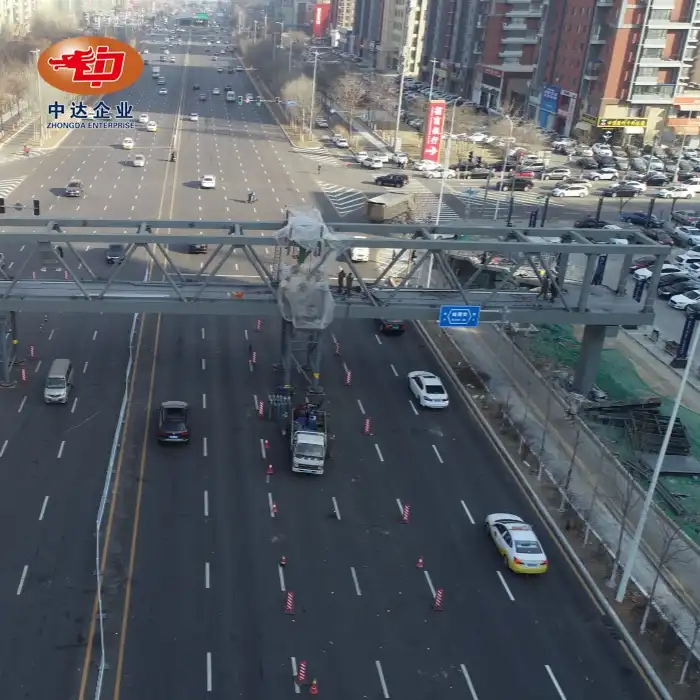
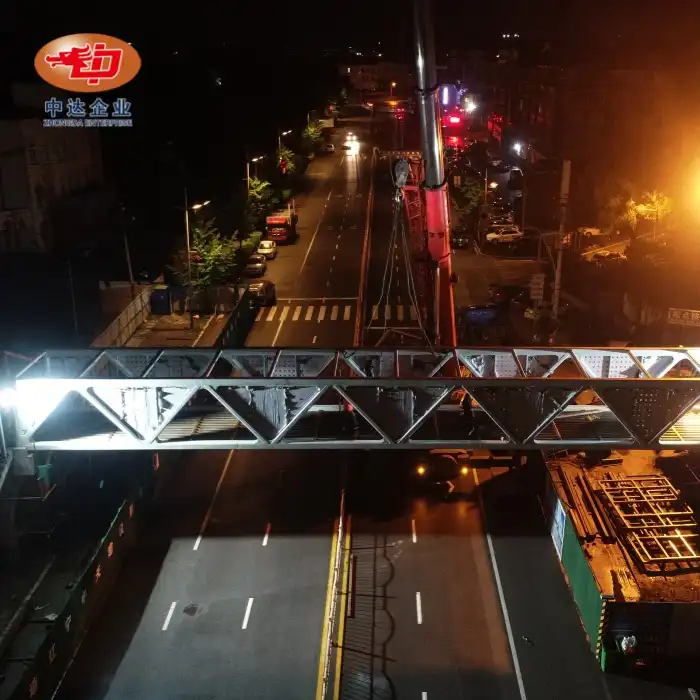
Prefabrication changes the way projects are built. Our factory makes girder pieces that are 12 to 30 meters long in a controlled setting. This lets us get weld quality and size tolerances that aren't possible in the field. As more people put pressure on highway departments to keep traffic jams to a minimum, they are increasingly choosing Accelerated Bridge Construction (ABC) methods. With these, we send whole bridge pieces to be put in place during weekend bans.
This method was shown by the Shenyang Dongta Cross-Hunhe River Bridge. We built 18,000 tons of box girder pieces off-site, which made the building process on-site 50% faster than usual. The contractor avoided closing lanes for long periods of time during a big city's busiest traffic season. This kept the economy from losing so much money on traffic that it would have been worth the extra money paid for prefabrication.
Lifecycle Cost Advantages
The initial cost of buying something is only a small part of the total cost of ownership. We use two-layer anti-corrosion systems: either hot-dip galvanizing with epoxy coatings or zinc-rich primer with polyurethane topcoats. These systems are designed to last at least 30 years in C4 corrosive conditions, like seaside or industrial settings. Maintenance managers figure that if a bridge doesn't have to be painted twice over its lifetime, it will save hundreds of thousands of dollars in direct costs and an unknown amount of money in "soft costs" like traffic management and user delays.
This is an important feature for commercial building developers who are building transportation hubs with raised truck ramps. Their buildings are open 24 hours a day, seven days a week, which makes repair shutdowns very expensive. When you specify box girders with advanced coatings, maintenance goes from being a constant operating headache to routine checks that require little help.
Steel Box Girder Manufacturing Excellence and Quality Assurance
Quality in manufacturing of steel box girder directly affects success in the field. We have invested in vertically integrated skills that cover everything from buying raw materials to applying the final finish. This way, we can be sure that every step of the production process meets or goes beyond international standards. When reviewing providers, people who work in procurement need to know about these steps so they can tell the difference between real capabilities and marketing claims.
Material Selection and Traceability
At the start of every job, mill papers are used to check the chemical make-up and mechanical qualities. Our main material, Q345D steel, is tested for toughness at -20°C to make sure it's good for use in cold places. We keep full records of everything that happens: each plate is given a unique number that connects it to its specific heat at the mill, our records of arriving inspections, and its final place in the building that was built. During project reviews, regulatory bodies and third-party inspectors often look over this paperwork.
When projects ask for weathering steel types that don't need to be sprayed, we get materials that meet ASTM A709 Grade 50W or similar standards. The protective patina is made of copper, chromium, and nickel that are mixed in a controlled way. Companies that build conveyor supports in rural areas like this standard because it saves them money on painting costs in places where temporary enclosures and environmental controls are needed for coating application.
Precision Fabrication Technology
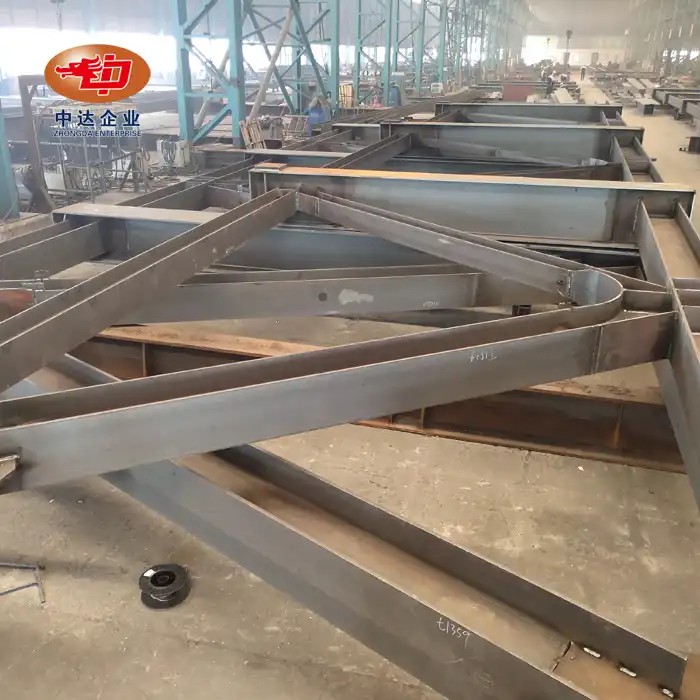
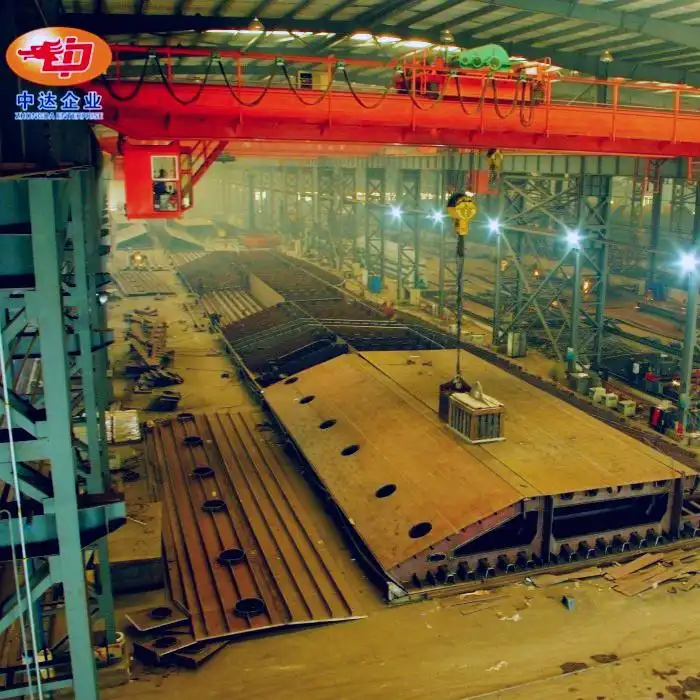
Our 120,000-square-meter building has CNC ultra-thick plate cutting tools that can cut 150mm-thick materials with ±0.2mm accuracy. This accuracy is very important when making parts with different depths because the web plates have to move easily between them so that stress doesn't build up in one place. Automated submerged arc welding (SAW) lines make full-penetration welds that are always the same, and ultrasound and radiographic tests make sure the stability of the steel box girder.
We use Building Information Modeling (BIM) processes that get 3D models accepted by engineers and make machine control files right away. This digital thread gets rid of the transcription mistakes that used to happen a lot in manufacturing shops that used 2D models. Airport building companies that coordinate between the architectural, structural, and MEP trades really value this feature because our manufactured parts fit perfectly on-site within the coordinated model.
Certification and Standards Compliance
Our system for managing quality is certified by ISO 9001, our system for managing the environment is certified by ISO 14001, and our system for managing workplace health and safety is certified by ISO 45001. For structural steelwork, we have EN 1090 performance class EXC3 certification, AWS D1.5 certification for bridge welding, and a Class I Steel Structure Professional Contracting Qualification that is accepted all over China. These certificates are needed by international clients to meet their own insurance and compliance standards.
As part of their qualifications to bid on public-private partnership projects, industrial park owners have to show that their suppliers follow the rules. We offer approved paperwork packages that make this process easier and lessen the amount of work that needs to be done on the back end while the proposal is being made.
Strategic Procurement Considerations for B2B Clients
Technical needs, business terms, and risk management must all be balanced for buying to go well. We've helped buying teams at global EPC firms, regional companies, and owner-operators, so we know what problems people face and what works best in a variety of business settings.
Pricing Structures and Cost Drivers
Steel box girder prices depend on a number of factors, including the cost of the raw materials (which are usually linked to reported steel prices), the difficulty of the construction (variable sections cost more than rectangular designs), the coating requirements, and the handling of delivery. We have clear price models that show how these things affect the rates we give. When clients give us firm 12-month forecasts, our production planning can improve runs based on the volume commitments across multi-phase projects.
When building a petrochemical plant, workers who are putting together pipe racks and equipment platforms can save money by buying multiple structures at once. This way of doing things lets us plan production runs more efficiently, which cuts down on setup costs and gives clients the money they save. When compared to buying things one at a time, packaged purchases have been shown to save 8–12% on costs.
International Logistics and Delivery Coordination
Heavy-haul trucks, train flatcars, or ocean freight can be used to ship box girder segments, based on where the project is located and the size of the segments. We work with freight forwarders who know how to handle oversize goods, customs paperwork, route surveys for road transport, and lift studies for final placing. Our packaging uses steel bands, weatherproof wrapping, and wooden dunnage to protect finished surfaces during multi-modal shipping.
Port facility developers know a lot about these logistics because a lot of their projects involve shipping things straight to building sites by water. We've sent pieces by boat to islands and remote coastal areas that didn't have road access, showing how flexible things can be when you plan ahead.
Building Long-Term Partnerships
Our 70% client return rate shows that we focus on building relationships. When there aren't enough slots, repeat clients get priority scheduling, dedicated engineering help for value-engineering projects, and simplified business terms that get rid of the need to negotiate over and over again. This consistency is very helpful for renewable energy developers who are building multiple wind farm entry roads or solar field support structures. Lessons learned in the early stages directly improve later deliveries.
We give each client an account manager who learns about their review processes, preferred paperwork, and technical standards. This historical knowledge speeds up every following transaction, which lowers the administrative problems that come up with working with vendors who are not in the same company.
Conclusion
Box girders are an example of how engineering has changed over time to meet the needs of modern infrastructure. They do this by carefully combining material science, structural physics, and building methods. Their purpose goes beyond just bearing weight; it also includes torsional resistance, building efficiency, ease of upkeep, and long-term value. When procurement professionals choose these systems, they work with makers that combine technical skill with business dependability, which makes the project more likely to succeed.
Zhongda's two decades serving global infrastructure markets have taught us that successful projects rest on three pillars: engineering excellence that optimizes performance, manufacturing precision that ensures quality, and collaborative partnerships that align incentives. We've delivered solutions from Arctic Russia to tropical Vietnam, accumulating expertise across climate zones and regulatory frameworks.
The enclosed geometry, high-strength materials, advanced coatings, and prefabrication capabilities discussed throughout this exploration converge to create steel box girder systems that meet the demands of 21st-century infrastructure. Whether your project involves urban transit, energy infrastructure, industrial facilities, or transportation networks, understanding box girder fundamentals positions you to make procurement decisions delivering optimal long-term value.
FAQ
What load capacity advantages do box girders offer compared to I-beam alternatives?
Because of their better section qualities, steel box girder assemblies can usually hold 40 to 60 percent more weight per unit of load than similar I-beam assemblies. The closed part has higher torsional stiffness (often 500 times higher), so there is no need for extra weighty bracing on the sides. Our Q345D/Q420D material specs make sure that the yield strength is high enough for spans of up to 420 meters, which is much longer than what an I-beam can handle.
How extensively can box girders be customized for specific bridge designs?
Customization options include variable cross-sections (depths from 1.25m to 8m), curved webs for weight reduction, composite deck integration, and weathering steel standards are some of the ways that the structure can be customized. We use BIM-based design integration, which lets clients choose physical factors that work with the site's restrictions. Our engineering team does value-engineering research to find ways to customize products that meet performance needs and lower costs.
Which certifications verify steel box girder supplier credibility?
Certifications in ISO 9001 quality management, EN 1090 structural steelwork performance, and AWS D1.5 bridge welding are the bare minimum that serious infrastructure providers need to meet. Regional professional contracting skills and project-specific third-party review approvals are also proof of ability. For due research purposes, we suggest asking for example projects with times of completion that can be checked and owner contacts.
Partner with Zhongda for Your Next Steel Box Girder Project
When your infrastructure project demands structural excellence that delivers on time and within budget, Zhongda provides the manufacturing capability and engineering support that transform concepts into reality. Our track record in building bridges, factories, and transportation systems shows that we can consistently do a good job even when things get tough. As a provider of widely approved steel box girder systems, we use cutting-edge fabrication technology and strict quality control to make sure that every part meets the highest standards.
Our technical team is ready to look over your project needs, give you thorough quotes, and come up with unique solutions that will work best for your application. We have the skills and resources to help you with any job, whether it's a long-span bridge, an elevated transit guideway, or an industrial support structure. Contact Ava@zd-steels.com right away to talk about how our steel box girder systems can help you reach your infrastructure goals and provide measurable lifetime value.
References
Chen, W. F., & Duan, L. (2014). Bridge Engineering Handbook: Construction and Maintenance (2nd ed.). CRC Press.
Troitsky, M. S. (1987). Orthotropic Bridges: Theory and Design (2nd ed.). James F. Lincoln Arc Welding Foundation.
American Association of State Highway and Transportation Officials. (2020). AASHTO LRFD Bridge Design Specifications (9th ed.). AASHTO.
European Committee for Standardization. (2006). Eurocode 3: Design of Steel Structures – Part 2: Steel Bridges. CEN.
Barker, M. G., & Puckett, J. A. (2013). Design of Highway Bridges: An LRFD Approach (3rd ed.). John Wiley & Sons.
Xanthakos, P. P. (1994). Theory and Design of Bridges. John Wiley & Sons.
YOU MAY LIKE
_副本_1762409954420_1788229249106.jpg "steel column design")