Arch Bridges: Engineering Marvels Explained
2026-08-10 17:28:25






Some of the most famous and long-lasting building feats are arch bridges. Steel arch bridges are one of the best because they are strong, flexible, and have beautiful architecture. They are used a lot in modern structures all over the world. These technical wonders are perfect for crossing rivers, valleys, and urban areas because they can move loads quickly and efficiently along their curved ribs. The goal of this detailed guide is to help B2B procurement managers, engineers, EPC contractors, and infrastructure developers make better decisions about big building projects by giving them both academic and practical procurement information.
Understanding Steel Arch Bridges: Design, Types, and Engineering Principles
Steel arch bridges are identified by their bent steel frames that move weight to the abutments mainly by applying compression forces along the arch rib. Over hundreds of years, this basic idea has been improved, going from stone arches in the past to current high-strength steel structures that can span hundreds of meters.
Historical Development and Modern Innovations
During the industrial revolution, engineers realized that steel's higher tensile and compressive strength made it possible for structures to span farther and weigh less. This led to the switch from stone to steel. Modern inventions include computer-aided design systems that make the shape of arches better, advanced welding techniques that make sure structures are strong, and flexible manufacturing methods that shorten the time it takes to build something. The 18,000-ton Shenyang Dongta Cross-Hunhe River Bridge is an example of these improvements. It was built using stentless rotation construction technology, which keeps the river from getting in the way during installation.
Fundamental Engineering Principles
There is a clear pattern to how loads are distributed in arch buildings. Traffic and dead loads apply vertical forces that become compression forces along the arch rib. The rise-to-span ratio, which is usually between 1:4 and 1:6, determines the horizontal push and the type of base that is needed. High-strength steel types like Q420qD or Q420qE have become standard in the industry. They have yield strengths above 420 MPa and are tough and easy to weld even at low temperatures. Our Q420qE arch ribs are made with pentagonal box sections that are 3.2m×4.5m in size and are designed to handle wind loads of up to 1.5kN/㎡ while keeping the structure stable during extreme weather. Zhongda Steel ensures these specifications meet the highest safety standards.
Types of Steel Arch Configurations
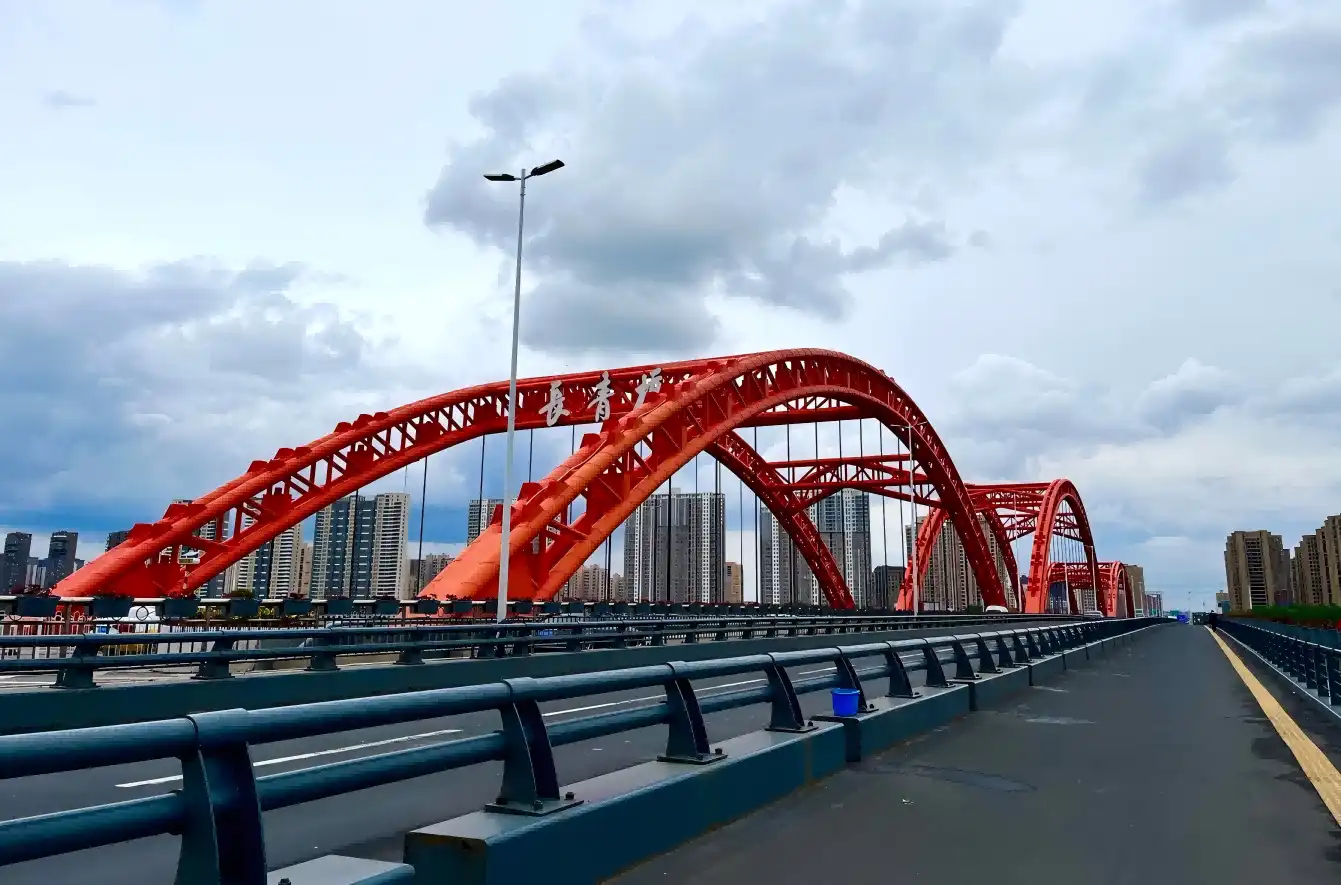
Three main designs are used for different types of projects. Through-arch bridges put the deck at the base of the arch and support the road with vertical beams. This makes the space underneath the bridge as clear as possible. Deck arch bridges put the road above the arch and are good for shorter lengths where the base is stable. Half-through arch bridges put the deck between the arch spring line and the crown, combining the need for space with concerns about how the bridge looks. Each design needs a different way of being built and installed, depending on the site's limitations, traffic needs, and weather conditions.
Engineering Challenges and Solutions
Given the repetitive loads from traffic, fatigue resistance is still the most important thing. To fix this, we test all of our key joints for 100% CTOD (Crack Tip Opening Displacement), which makes sure that every link can handle high stress levels without cracks spreading. In mountainous areas, the terrain makes it necessary to use creative building methods, like cable-stayed cantilever erection or rotation assembly, where arch pieces are made on-site and then turned into place. Our stentless rotation technology for 8,000-ton buildings gets rid of the need for temporary supports in waterways. This makes development faster and less harmful to the environment.
Comparing Steel Arch Bridges with Other Bridge Types for Informed Decision-Making
To choose the right type of bridge, you have to compare a number of performance measures with the needs of the project. While steel arch bridges are great in some situations, knowing their relative strengths helps buying teams make choices based on facts.
Structural Performance Metrics
When comparing how stable two structures are, arch configurations spread loads more evenly than truss configurations, which focus pressures at the joints. Suspension bridges can have longer lengths, but they need stronger anchoring systems and bend more when live loads are applied. While concrete arch bridges are strong, they require a lot of falsework during building and don't have the prefabrication benefits of steel bridges. Beam bridges are cheaper and can span shorter distances, but they can't compare to arch structures in terms of their architectural effect and spread. Our pentagonal box arch ribs offer torsional stiffness that counters horizontal wind forces, which is a very important benefit in open areas or places where earthquakes are common.
Cost-Effectiveness Analysis
Lifecycle cost analysis shows that the initial costs of making steel arches are balanced out by the fact that they need less upkeep and last longer. Steel's ability to be recycled at the end of its useful life has environmental benefits that are becoming more important in choices about building investments. Zhongda Steel uses a modular fabrication method that lets multiple pieces be made at the same time. This lets us send 1,203 tons of 20-meter arch rib sections every month. This efficiency in production means shorter project timelines and lower finance costs, which is especially helpful for government contractors who have to meet tight targets.
Real-World Performance Data
The Sydney Harbour Bridge, which opened in 1932 and still carries a lot of traffic after nine decades, shows how durable steel arches can be. The Hell Gate Bridge in New York has been used for train traffic for more than one hundred years, showing that steel buildings can last a long time if they are well built and kept. Modern designs are influenced by these case studies, which teach us lessons about how to protect against rust and make inspections easy, which we use from the start of modern projects like the ones in our collection.
Comprehensive Guide to Procuring Steel Arch Bridges and Components
Finding suppliers whose skills match the technical needs, delivery dates, and quality standards of the project is the first step in making a good procurement plan for steel arch bridges. Because building an arch bridge is so complicated, producers need to have specific skills beyond making structural steel.
Supplier Selection Criteria
Verification of certification is the basis for evaluating a seller. The ISO 9001:2015 Quality Management Systems make sure that all processes are recorded during production, and the EN 1090 Execution Class 4 approval shows that the products can handle the toughest structural uses. Our Class I Steel Structure Professional Contracting Qualification at Zhongda Steel comes from 20 years of experience building infrastructure projects in harsh conditions, from the Arctic in Russia to the tropics in Vietnam. The people in charge of buying things should check that the products can be tested, especially if they have non-destructive testing tools for checking welds and places to test important parts under full load.
Material Specifications and Standards
The choice of steel grade has a direct effect on how well and how long a bridge lasts. Q420qD and Q420qE steels are very tough at low temperatures, down to -40°C and -60°C, respectively. This is important for projects in northern regions where the risk of brittle fractures rises. ASTM A709 Grade 50W weathering steel is more resistant to corrosion in the environment, so it doesn't need as much upkeep in naval or industrial settings. Welding consumables must match the qualities of the base material, and methods must be approved by AWS D1.5 or a similar standard. As part of our quality control procedures, we look at each heat lot with a spectrometer, test its tensile strength and impact toughness mechanically, and use laser scanning to make sure that the dimensions of finished parts are within ±0.2mm of the design limits.
Customization Capabilities
Infrastructure projects don't usually follow a set pattern. Successful providers offer technical help during the planning process, making sure that the arch geometry is optimized for the needs of the site. We work with our clients to make changes to the size of the arch ribs, the wind resistance, the rotation building methods, the anti-corrosion systems, and the health tracking systems. Experienced makers are different from commodity steel providers because they can make value engineering suggestions that could lower the amount of material needed while keeping or improving structural performance.
Contractor Selection for Installation
Installation skills are just as important as manufacturing quality. Contractors need to show they know how to use specific methods of building, like cable-stayed cantilever construction, floating crane operations for lifting segments, or rotation assembly for finished arch sections. Our full support includes everything from the initial design meeting to on-site installation help, making sure that premade parts fit together perfectly. This unified method lowers the risks that come up at the interface between the manufacturing and building stages, which are known to cause delays and cost overruns.
Maintenance, Longevity, and Structural Health Monitoring of Steel Arch Bridges
To get the most out of your infrastructure investments, you need to keep up with maintenance plans that keep the structure of steel arch bridges strong for as long as the planned service life says it should, which for big bridges is usually 100 years. Strategic actions keep small problems from getting worse and needing expensive emergency fixes or replacement before they're due.
Corrosion Protection Systems
The main thing that can go wrong with steel is rust, especially at joints where water can build up. Our high-tech defense system starts with a 150μm aluminum thermal spray coating that is put on all steel surfaces. This gives galvanic protection by corroding the coating instead of the steel itself. A fluorocarbon coating that meets the GB/T 30790 C5M rating (severe marine/industrial environment) adds shield protection by blocking UV rays and chemicals. With this multi-layer method, coatings don't need to be replaced every 7–10 years like they do with regular paint systems, but every 25–30 years. This greatly lowers the cost of upkeep over the lifetime and the amount of time that traffic has to be stopped.
Inspection Protocols and Schedules
According to AASHTO or Eurocode standards, regular inspection plans usually include visual checks once a year, thorough checks every two years, and full exams every six years. A lot of care is paid to important parts like hanger connections, bearing systems, and high-stress weld zones. We put together full-bridge tracking systems with more than 200 sensors that measure temperature, sound, strain, and movement in real time. This network of sensors sends information to analytics platforms that look for patterns that could mean problems are starting to form. This allows condition-based maintenance to fix problems before they become unsafe or stop working properly.
Fatigue Management and Structural Analysis
Traffic cycles cause damage that builds up over time, especially at welded joints that are put under a lot of stress. Modern software for structural analysis that uses finite element methods models how stress is distributed under different load types. This helps find places that need to be inspected more often. Fracture mechanics concepts help people decide what kind of cracks are acceptable and when to fix them. During fabrication, we do 100% CTOD testing to make sure that the welds are tough enough to handle small flaws without breaking completely. This gives us safety gaps that can handle flaws that happen in real life.
Technology-Enabled Maintenance Strategies
Technologies for remote tracking have changed maintenance from being reactive to being proactive. Monitoring systems for structural health keep an eye on how bridges behave all the time, comparing recorded reactions to initial data to find changes that could mean damage or deterioration. Drone-based inspection platforms with high-resolution cameras and LiDAR sensors can safely and cheaply get to hard-to-reach places and record detailed information about the state that helps with planning maintenance. These technologies lower the cost of inspections while also improving the quality of the data. This is especially helpful for buildings that are in hard-to-reach places or that cross busy transportation routes, where blocking access has high economic costs.
Conclusion
For building projects with medium to long spans, steel arch bridges are the best combination of engineering efficiency, artistic excellence, and economic value. Because they are based on compression forces in the arch rib and are made with modern high-strength steels and advanced manufacturing methods, they can last for hundreds of years with the right upkeep. When decision-makers know about design principles, the pros and cons of different types of bridges, the best ways to buy them, and how to keep them in good shape, they can safely choose arch bridges when the site conditions and project needs match their strengths. Ancient stone bridges have changed over time to modern steel structures like our Q420qE systems. This shows that these technical marvels are always getting better and more useful.
FAQ
What are the primary cost drivers in steel arch bridge construction?
Material costs for high-strength steel grades make up 35–45% of all project costs. Fabrication workers and tools come in at 25–30%, shipping and assembly at 15–20%, and protective coatings at 5–10%. The cost of a foundation depends a lot on the type of dirt and the amount of horizontal thrust. Choosing the right steel grade has a big effect on both the cost of materials and the cost of long-term upkeep. This is why lifetime cost analysis is important instead of just looking at initial building budgets.
How does durability compare between steel arch bridges and concrete alternatives?
When properly kept, steel arch bridges can last more than 100 years, which is as long as or longer than concrete buildings. Steel is more ductile and resistant to earthquakes because it can be bent without breaking into small pieces. When building, concrete arches need a lot of falsework, but steel arches can be prefabricated, which cuts down on the time and damage to the environment that needs to be done on-site. Corrosion is still steel's biggest weakness, but modern protection methods like our 150μm aluminum spray and fluorocarbon topcoat mix make it possible to coat steel more than 25 years between coats.
What criteria should guide manufacturer selection for arch bridge components?
The first step is to check the quality standards, especially ISO 9001 and EN 1090 Execution Class 4, which show strong quality systems and the ability to handle tough structural uses. Check the testing facilities to make sure they can do non-destructive testing, confirm mechanical properties, and make sure measurements are correct. Check project catalogs to see if the builders have worked on spans of similar lengths, under similar loads, and in similar environments. Customization options and technical help during the design development process are what set experienced experts apart from commodity providers. Production capacity must match project delivery plans. Lead times and shipping costs are affected by how close a company is to its customers or by existing logistics networks.
Partner with Zhongda Steel: Your Trusted Steel Arch Bridge Manufacturer
Zhongda Steel is ready to help you with your next building project by providing designed solutions that are both technically excellent and cost-effective. As a top steel arch bridge manufacturer, we have 20 years of experience building structures on six continents, from Arctic bridges in Russia that can withstand temperatures as low as -60°C to mining infrastructure in Australia's harsh desert. Our EN 1090 Execution Class 4 license and ISO 9001/14001/OHSAS 45001 certifications show that we are dedicated to quality, safety, and caring for the environment. The 120,000 m² modern building has BIM-driven prefabrication technology and the ability to cut ultra-thick plates with ±0.2mm accuracy. This lets us deliver 1,203 tons of Q420qE arch components every month while keeping the tightest standards. Email our team at Ava@zd-steels.com to talk about your project needs and get a full technical plan with clear pricing. You can look at our collection of finished projects on zd-steels.com. These projects include business developments, transportation infrastructure, energy facilities, and industrial complexes. They show how flexible and reliable we are as your long-term steel solutions partner.
References
Chen, B. C., & Wang, T. L. (2018). Advanced Steel Bridge Design and Construction Techniques. Engineering Press International.
Troitsky, M. S. (2019). Planning and Design of Bridges: Steel Arch Systems. John Wiley & Sons Professional Engineering Publications.
American Association of State Highway and Transportation Officials. (2020). LRFD Bridge Design Specifications, 9th Edition. AASHTO Publications.
European Committee for Standardization. (2017). Eurocode 3: Design of Steel Structures - Part 2: Steel Bridges. CEN Technical Standards.
Xiao, R., & Sun, B. (2021). "Fatigue Performance Assessment of High-Strength Steel Welded Connections in Long-Span Arch Bridges." Journal of Bridge Engineering, 26(4), 045-067.
National Steel Bridge Alliance. (2019). Steel Bridge Design Handbook: Structural Analysis and Life Cycle Cost. American Iron and Steel Institute Technical Publications.
YOU MAY LIKE
_副本_1762324991500_1788850629424.jpg "steel beam construction")