Building a Freeway: Box Girders
2026-05-08 11:20:28






When you're making a modern freeway, picking the right structural parts can mean the difference between a successful job and one that runs over and costs a lot of money. The steel box girder is the best choice for long-span bridges and raised highway parts because it is very rigid in twisting and evenly distributes loads. The fully welded construction of these hollow, box-shaped structural elements makes them stronger and last longer than standard I-beams. With spans of up to 420 meters and cross-sections that can be changed from 1.25 meters to 8 meters high, these parts have become the foundation of many large-scale infrastructure projects around the world.
Understanding Steel Box Girders: Design, Materials, and Standards
What Makes Box Girders Essential for Modern Freeways?
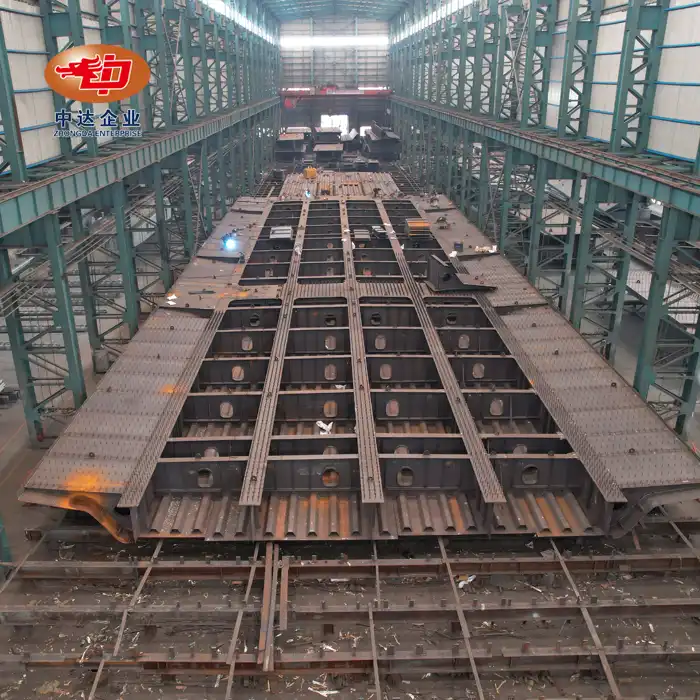
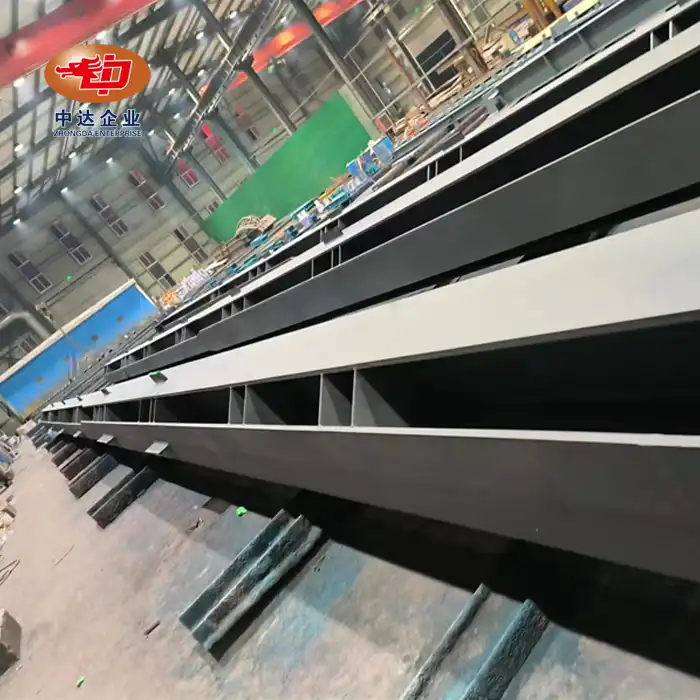
The closed-cell form of box girders is a big step forward in engineering compared to open sections. The two vertical web plates in this design are connected by top and bottom flange plates, making a hollow core that is very resistant to twisting forces. This rotational stability is very important when there are a lot of vehicles on the road or when the highway has tight turns. The circular shape spreads stress more evenly across the structure, which stops it from twisting and deforming over time, which can make the bridge less safe.
In many projects where regular beam types just couldn't meet performance needs, this benefit has been shown to work well. The room inside is also useful because it houses utility lines and gives inspectors and maintenance workers safe access for their work. This two-in-one feature lowers long-term operating costs and increases the structure's durability.


Material Specifications and Compliance Standards
High-performance structural steel is what makes box girder building so stable. Q345D grade steel is the main material we use at Zhongda. It has a minimum yield strength of 345 MPa and great impact toughness at low temps. Q420D steel is used in high-stress areas and critical link places because it has better strength properties that keep the structure strong under extreme loading conditions.
International standards like ASTM A709, EN 10025, and the AWS D1.5 Bridge Welding Code are met by these products. Charpy V-Notch impact testing proves that the steel stays flexible even in tough climates, which is an important thing to think about for infrastructure that spans many geographical areas. When choosing materials, things like earthquakes, changes in temperature, and the amount of natural contact that are unique to each project site are taken into account.
Customization Capabilities and Fabrication Excellence
Modern road projects need structure designs that can be changed easily to fit different span lengths, load needs, and site conditions. Engineers can use variable cross-section technology to make the best use of the material along the length of the beam, adding strength exactly where it's needed and reducing weight where it's not needed. When compared to constant-section designs, this method can reduce weight by about 20%, which directly leads to lower base costs and lower shipping costs.
Our factory in Shenyang has CNC ultra-thick plate cutting equipment that can keep tolerances to within ±0.2mm. This makes sure that everything fits perfectly when it's put together. The strict requirements set out in AWS and EN 1090 standards are met by automated welding lines that make thousands of linear meters of welds with regular depth and quality. The corrugated steel web choice is another way to reduce weight. It does this by using the structural efficiency of made panels to cut down on material volume without weakening the structure.
Maintenance Strategies for Extended Service Life
Protecting steel box girder structures from corrosion will always be the most important thing, since highway equipment is supposed to last at least 30 years. We use two-layer anti-corrosion methods that include fluorocarbon topcoats and hot-dip galvanizing or zinc-rich epoxy bases. Following the guidelines for Sa 2.5 blast cleaning makes the surface ready for coating bonding. Measuring the thickness of the dry film makes sure that it protects well enough. This is especially important for sites near the coast that are exposed to salt spray or in factories where airborne pollution are common.
Box girders' inside surfaces have different problems to deal with than their outside surfaces. Even though these enclosed areas keep out direct rain and UV light, condensation can still trap wetness inside. Keeping the relative humidity below 45% with dehumidification systems stops the electrical processes that lead to rust formation. Maintenance teams can find and fix possible problems before they become structural problems by using the open interior room for regular inspections.
Steel Box Girder vs Other Girder Types: Making the Right Choice for Your Freeway Project
Performance Comparison Across Structural Systems
Box girders made of concrete have been used to build bridges for decades and have been shown to last a long time. However, the self-weight penalty makes stretches longer than 150 meters impossible. A building made of concrete could weigh three to four times as much as a building made of steel of the same size. This means that it needs a stronger base and is more likely to be damaged by earthquakes. With concrete, construction schedules also get pushed back because drying times make it take longer for work to resume and cause more traffic problems.
Traditional I-beam designs are good for shorter spans, but they don't have the torsional strength needed for wide bridge decks or bent lines. Because of the open section, these forms can buckle laterally and torsionally, which requires extra bracing that makes building harder and uses more materials. Composite systems that use steel beams and concrete decks try to get the best of both materials, but the complicated building and interaction details need to be carefully coordinated to make sure the systems work well.
Economic Considerations Throughout the Project Lifecycle
The cost of initial acquisition is only one part of the total cost of ownership. Smart project managers look at choices by considering how long it will take to build, how much the base will cost, how often it needs to be maintained, and when it will need to be taken down. Steel box girders usually cost more to make than concrete options, but because they are so light, they lower foundation loads by a large amount. Shallow pile levels or smaller footings save money that more than makes up for the higher cost of the materials.
With prefabrication, building plans can be sped up by a huge amount. When segments made in controlled factories get to job sites, they are already put together, which cuts the amount of work that needs to be done on-site by about 50%. This shortening of time cuts down on the costs of traffic jams and lets money-making parts of the road open earlier. Another economic benefit of steel's salvage value that isn't usually thought of at the start of a project is that parts can be recovered when they're no longer useful instead of ending up in a dump.
Adaptability to Complex Design Requirements
Highway projects often have to deal with difficult terrain, like crossing rivers at odd angles or going through buildings in urban areas. Box girders can work with these restrictions because they are geometrically flexible and can have varying depth sections, horizontal bends, and superelevation transitions. By making sections deeper over piers where moments are highest and shallower in the middle of the span where demands are lowest, engineering teams can make the structure's shape work best with the loading diagram.
For high-level routes that are subject to wind forces, aerodynamic efficiency of a steel box girder is very important. The smooth shape of a box section lowers drag coefficients and makes it more stable against flutter, which has caused suspension bridges to collapse in terrible ways. During the planning process, wind tunnel testing confirms these features. This gives builders faith that the finished structure will work safely in the worst weather conditions that are likely to happen during its lifetime.
Procurement Insights: How to Source Steel Box Girders Efficiently for Your Freeway Project?
Evaluating Potential Manufacturing Partners
The choice of supplier determines whether the project will be successful or not. We suggest that you start your search by checking for appropriate certifications that show you know how to handle quality and are technically competent. Getting ISO 9001 certification is a good way to make sure that processes are recorded and that systems for ongoing growth are in place. The EN 1090 approval is only for structural steel and aluminum fabrication. It shows that the maker knows how to make load-bearing parts that meet specific standards.
During the review process, production ability should be looked at very carefully. With a yearly capacity of 60,000 tons, like our Zhongda plant, it can handle multiple projects at the same time without resource conflicts that slow down schedules. Vertically merged operations that include design optimization, manufacturing, coating, and shipping offer responsibility from a single source, which makes coordination easier than putting together a bunch of different subcontractors.
Understanding Lead Times and Delivery Logistics
There are a number of steps that need to be taken in the right order between placing an order and delivering the goods to the job site. The engineering process usually lasts between 4 and 6 weeks, during which time design teams make shop plans, do finite element analysis, and work out the details of connections. The next step is to get the materials. Mill wait times for plate steel range from 6 to 10 weeks, based on the grade and amount needed. The next steps in fabrication are cutting, shaping, welding, and finishing. For most bridge jobs, this takes 8 to 12 weeks.
Transportation issues affect how things are made and how big the segments are. Regulations for road transport usually say that shipments can't be wider or taller than 3–4 meters, but sometimes special permits can let bigger loads go through. Rail transport gives you more options for moving big parts, but you need to be close to both factories and job sites with the right loading facilities and trackage. We work closely with clients to create division plans that strike a balance between how quickly and easily things can be made and how much space is needed.
Negotiating Terms and Managing Risk
When project plans call for more than one structure with similar details, bulk buying deals can help cut costs in a real way. Manufacturers can get the best deals on materials and schedule their production more efficiently when they commit to a certain volume. This leads to lower prices. Structured payment terms based on fabrication goals protect both parties. Progress payments provide working cash for manufacturing operations and give buyers power to enforce quality standards.
In purchase contracts for steel box girder, quality assurance methods should be made clear. Third-party testing services check the accuracy of the measurements, the quality of the welds, and the thickness of the finish on their own. Ultrasonic tests and x-rays can find problems inside welds that can't be seen but could be very bad when loaded and unloaded many times. In orthotropic designs, magnetic particle screening finds cracks that break the surface of fillet welds that connect ribs to deck plates.
Case Studies: Successful Freeway Projects Using Steel Box Girders
Landmark Infrastructure Achievements
The 18,000-ton Shenyang Dongta Cross-Hunhe River Bridge shows what modern box girder building can do. For this job, spans longer than 200 meters were needed to clear the river's navigation path while keeping the deck grades good enough for highway traffic. Variable-depth sections running from 3.2 meters at midspan to 6.8 meters over piers improved the distribution of materials, giving the building the strength it needed in key spots without adding too much weight to the whole thing.
Prefabricated sections ranging from 12 to 30 meters in length showed up at the site ready to be joined together. On-site welding teams made longitudinal connections following methods that met AWS D1.5 standards. Before moving on to the next joint, real-time nondestructive testing was used to make sure the weld was still strong. Because of the faster building method, traffic could start using the crossing 18 months after the ground was broken, compared to the usual 30 months for similar cast-in-place concrete structures.
Innovative Construction Techniques and Client Outcomes
The Jingha Expressway extension used what was learned from earlier work to improve performance even more. When compared to flat web designs, corrugated steel webs cut girder weight by 18%. This meant that less moving equipment was needed and longer pieces meant that fewer field splices had to be made. Using BIM for design integration let us find clashes during virtual construction, which got rid of problems between building parts and utility systems before they were built.
Client comments showed how important technical help is throughout the whole project lifecycle. During the planning process, our engineering team took part in constructability reviews that helped them find ways to make connections easier and lower the amount of work that needed to be done in the field. During the construction phase, services included teaching erection teams on-site and checking the quality of important welding tasks. After the job was done, tests showed that the deflections were within the expected ranges and that there was no damage to high-stress areas. This proved that the research methods and quality of the construction were correct.
Quantifiable Benefits and Risk Mitigation
Time savings are always the most valued gain across a number of tasks. One railroad bridge project cut the time it took to build from 36 months to 24 months by switching from the planned prestressed concrete design to steel box girders. Because of this speeding up, there was no need for an extra winter shutdown, and the project stayed on budget even though the weather in northeastern China was tough.
Planning maintenance is easier when steel buildings are properly covered because they last a long time. Because the coating system lasts 30 years, the bridge will only need to be painted about twice during its design life, instead of every 10 to 15 years like most less durable protection plans. The cost of inspections goes down too, because the open interior lets you look at important details without having to use noisy tools like snooper trucks or crane platforms, which are needed for inspections that only go on the outside.
Conclusion
The performance, timeline, and cost results of a freeway project are all largely determined by the strategic selection of its steel box girder components. Box girders provide the structural efficiency needed for long-span uses while also speeding up building, which reduces interference with traffic and shortens project timelines. When you combine high-strength steel, the ability to make precise shapes, and full corrosion protection systems, you get building assets that can last for decades and work reliably in harsh circumstances. As manufacturing methods improve and concerns about the environment become more important, these structural systems will likely stay the best choice for large transportation projects. Procurement professionals who know a lot about materials, design principles, and criteria for evaluating suppliers can safely select these parts, knowing that they will work because they have been tested in the real world and shown to work in theory.
FAQ
What span lengths work best with box girder designs?
When it comes to continuous lengths, box girders work great from 60 meters up to about 420 meters. The best range is usually between 100 and 250 meters, which is where the benefits of structure economy are most noticeable compared to other options. For shorter spans, concrete or plate girder choices might be cheaper. For crossings longer than 400 meters, however, cable-stayed or suspension systems are usually the best choice. The economic crossover places between different systems are affected by things that are unique to each site, such as the state of the base, the amount of space needed for movement, and the ability to stage building.
How do extreme temperatures affect structural performance?
Steel's heat expansion and contraction can be predicted, so builders use expansion joints and bearing systems to make sure the movement is controlled. For main parts, the Q345D grade keeps its impact toughness down to -40°C, making it suitable for use in cold places. In the desert, where the surface can get over 60°C in full sunlight, there are different problems to deal with. Darker coats soak up more sunlight, causing temperature differences between the top and bottom edges that cause thermal stresses that need to be analyzed during design. Light-colored topcoats keep rust protection while reducing heat gain.
Can these components integrate with existing structures during widening projects?
For retrofit applications, load paths and link details to current parts need to be carefully looked at. By matching the depths of new girders to those used in the original building, deck grades stay the same. However, the difference in deflection between old and new parts needs to be taken into account. Different base settlement rates must be taken into account in the connection design so that loads are transferred efficiently. Creating custom splice features that slowly spread forces into the current structure has helped us finish a number of widening projects successfully. When planning a repair, BIM teamwork is especially helpful for finding problems before the building starts.
Partner with Zhongda for Your Next Infrastructure Project
For big highway projects to go ahead, they need industry partners who are both technically excellent and reliable. Every connection Zhongda has with a steel box girder supplier is backed by 20 years of specialized knowledge and certifications such as ISO 9001/14001/45001, EN 1090, and AWS qualifications. Our building covers 120,000 m² and has high-tech tools that allow us to cut with ±0.2mm accuracy and make thousands of links with uniform weld quality. We've worked on projects in a wide range of climates, from the Arctic in Russia to tropical mine sites in Australia. This shows that we can design safety systems that work with your specific environmental problems. Our dedication to technical help throughout the lifecycles of projects is shown by the fact that 70% of our clients stay with us. Get in touch with Ava@zd-steels.com to talk about how our BIM-driven design tools and 60,000-ton annual capacity can help you get your project done faster while still meeting the high performance standards your infrastructure investment deserves.
References
American Association of State Highway and Transportation Officials. (2020). LRFD Bridge Design Specifications, 9th Edition. Washington, DC: AASHTO.
Chen, W.F. and Duan, L. (2014). Bridge Engineering Handbook: Construction and Maintenance, 2nd Edition. Boca Raton, FL: CRC Press.
European Committee for Standardization. (2005). Eurocode 3: Design of Steel Structures - Part 2: Steel Bridges. Brussels: CEN.
Troitsky, M.S. (1987). Orthotropic Bridges: Theory and Design, 2nd Edition. Cleveland, OH: James F. Lincoln Arc Welding Foundation.
Wolchuk, R. (1990). "Lessons from Weld Cracks in Orthotropic Decks on Three European Bridges." Journal of Structural Engineering, 116(1): 75-84.
Xanthakos, P.P. (1994). Theory and Design of Bridges. New York: John Wiley & Sons.
YOU MAY LIKE
 Column_1745405748146.webp "Seismic-Resistant Steel-Reinforced Concrete (SRC) Column")