Lessons From History - the Steel Box Girder Story
2026-04-21 15:46:22






The history of steel box girders is a part that has changed the field of building engineering. These hollow, rectangular or trapezoidal structural sections changed the way bridges were built by fixing important problems that older designs had, like being too heavy, not having enough torsional stiffness, and being prone to fatigue. Steel box girders, which became popular in the middle of the 20th century, had high strength-to-weight ratios and aerodynamic shapes that made it possible to build lengths that were thought to be impossible before. Because they are enclosed, they evenly spread loads and prevent twisting forces. This is why they are essential for modern long-span bridges, curved interchanges, and buildings in seismic zones. This historical trip from experimental prototypes to today's precision-engineered solutions can teach procurement workers how to deal with the complicated needs of infrastructure.
Understanding Steel Box Girders – Definition and Evolution
What Makes Box Girders Structurally Unique?
A steel box girder is made up of four main parts. The two vertical web plates are joined together by top and bottom flange plates, which create a closed hollow piece. This arrangement is very different from regular I-beams or open parts. The enclosed shape makes a structure that is torsionally stiff and can handle eccentric loads without bending. When cars drive on curved highway ramps or wind acts unevenly on bridge decks, this rotational stiffness stops the structures from bending in dangerous ways that could weaken them.
The load-bearing system depends on stress being spread out well. The top flange has the most compressive forces, the bottom flange has the most tension forces, and the shear forces move through the webs. This even distribution of stress lets engineers place materials in the best way, cutting down on weight while keeping strength. In modern forms, orthotropic steel decks are often used. The top flange acts as both the bridge deck surface and the top flange, which makes the whole thing even more efficient.


Historical Milestones in Box Girder Development
People first started to play around with hollow steel sections in the 1930s, but big steps forward were made after 1950, when welding technology got better. When it was finished in 1966, the Severn Bridge in the UK showed how curved steel box girders can help with aerodynamics in suspension bridges. Its success led to changes in designs all over the world, showing that properly designed steel box girder sections could survive high winds that had destroyed other types of bridges.
Core Design Principles for Modern Applications
Modern steel box girder engineering combines a number of performance factors. Load capacity estimates take into account environmental forces (like wind and earthquakes), living loads (like traffic and repair equipment), and dynamic effects (like vibration and impact). Engineers can use advanced finite element analysis to model complex stress patterns and find possible fatigue hot spots before the manufacturing process starts.
Resistance to corrosion is still very important for life. The enclosed inner environment has its own problems. For example, condensation can build up in protected areas, speeding up corrosion if it is not controlled. Modern methods include dehumidification systems that keep the relative humidity below 45%, coatings on the inside that make inspections easier, and placing entry hatches in the right places for upkeep. At Shenyang Zhongda, we deal with these issues by using two types of anti-corrosion treatments: galvanizing and spraying. This makes sure that our products last more than 30 years, even in tough sea settings.
The choice of material for steel box girder has a direct effect on efficiency. For main load-bearing parts, high-strength structural steels like Q345D (yield strength ≥345 MPa) are used as the base. Q420D is used in important link zones that need to be extra tough. These materials are put through a lot of tests to make sure they can handle being hit. This is especially important in cold places where brittleness at low temperatures could put people in danger. Charpy V-Notch tests must be done at temperatures that are similar to what they will be in service, as required by our buying standards. This ensures reliable performance in a wide range of settings.
Solving Construction Challenges with Steel Box Girders
Overcoming Traditional Girder Limitations
For decades, concrete box girders were the most common type of bridge frame, but their weight makes problems worse. A standard concrete span creates large dead loads that need bigger supports, heavier pier structures, and more falsework to be put up during building. Cracking from shrinking, changes in temperature, and overloading is still a problem that needs to be fixed. To fix these cracks in remote areas or over rivers, expensive access tools and long delays in traffic are needed.
I-girders and truss setups are both options, but they each come with their own set of problems. Because open I-sections aren't rigid in the torso, they can't be used for curved lines or wide deck layouts. Truss systems have a lot of surface area that can get weathered, so they need to be painted often, which raises the cost of ownership over time. Their complicated shape makes checking harder and could hide fatigue cracks that are starting to form until failure is near.
These problems can be easily solved with steel box girders. When compared to similar truss designs, their closed shape reduces the amount of open surface area by about 40%, making areas less likely to rust. The smooth exterior makes inspection and upkeep easier, and the room inside keeps power and communication lines out of the weather. Weight benefits are huge: a 100-meter-long steel box girder usually weighs 60% less than a similar concrete option. This means that foundation requirements are cut in half, and buildings can be built in places where heavy structures aren't allowed because of the soil.
Performance in Demanding Environments
Extreme problems happen in seismic zones, where the flexibility and strength-to-weight ratios of structures are very important. During earthquakes, lateral loads that are equivalent to mass are created by inertial forces that can break down heavy, rigid buildings. The fact that steel box girders are light means that they can withstand smaller earthquake forces, and the fact that the material is flexible means that they can bend without breaking in a big way. This behavior was very helpful for projects like the Akashi Kaikyo Bridge in Japan, where earthquake design factors affected every part of the steel framework.
Long-span uses are controlled by aerodynamic stability. In the worst cases, wind that moves around a bridge deck can cause movements through vortex shedding or flutter, a self-excited vibration that destroyed the first Tacoma Narrows Bridge in 1940. Streamlined steel box shapes keep vortices from forming and lower the drag coefficients. When tested in a wind lab with refined shapes, properly built steel box girder sections stay stable at wind speeds over 200 km/h, which is important for crossing exposed coastlines or high mountain passes.
Real-World Success Stories
These ideas are shown in action by our work on the 18,000-ton Shenyang Dongta Cross-Hunhe River Bridge. For the job, the structure had to be able to hold six lanes of traffic over a 420-meter main span and survive harsh winters with temperatures below -30°C. For traditional concrete building, huge piers would have had to be built, which would have slowed down the flow of the river and made the construction schedule too long.
We designed steel box girders with varying cross-sections that can be as low as 1.25 meters at mid-span and as high as 8 meters at pier places. This optimization cut the weight of the structure by 20% compared to options with steady depth, which directly saved money on the foundation. Prefabricating 12–30-meter sections in our climate-controlled building made sure that the quality of the welds would not be affected by the weather. Using high-strength bolted connections for on-site assembly sped up construction by 50% compared to cast-in-place concrete methods. The project was finished ahead of time, showing how improved steel box girder technology can turn big ideas into working structures.
We used the same basic ideas when building the Jingha Expressway extension and many railroad bridges over rough terrain. Each job confirmed what we've learned from the past: thorough engineering analysis, careful fabrication quality, and proactive corrosion management all work together to make buildings that will last for generations.
Evaluating Steel Box Girders Compared to Other Girders – Decision-Making Insights
Cost-Effectiveness Analysis
The initial costs of materials for steel box girders are usually higher than those for concrete options. This is because the price of steel changes with the global product markets, while the price of concrete materials stays pretty stable. But the economics of the whole project show something different. Foundation costs usually make up 25 to 35 percent of bridge budgets. The lighter steel superstructure cuts this by a large amount. With steel box girders, a 150-meter span that needs four concrete piers might only need two. This would save millions of dollars on foundation costs.
The length of construction affects project budgets through secondary costs like managing traffic, renting equipment, contractor overhead, and lost opportunities caused by delayed facility openings. When prefabricated steel pieces get to the job site, they are ready to be put together. Instead of months of formwork, concrete placement, and drying, they only need to be lifted and connected. Because steel is faster than concrete, projects that would take three building seasons to finish may only take one, saving money that makes up for the higher cost of materials.
Lifecycle costs often work in favor of steel. Decks made of concrete need to be resurfaced, expansion joints need to be replaced, and cracks need to be fixed on a regular basis. Steel box girders need upkeep for their rust systems but not for the ways that concrete breaks down. When properly maintained, steel can keep its structural strength forever. The 100-year-old Forth Bridge in Scotland, which is not a steel box girder, is an example of how long steel can last when properly kept. The whole-life costs are lower because our double-layer protection systems lessen the number of upkeep tasks and the number of inspections that need to be done.
Lifespan and Maintenance Requirements
The quality of the material has a big effect on how long it lasts. We only use Q345D and Q420D steels that meet strict limits on their chemical makeup and mechanical properties. It is easy to weld these types, and they stay tough even at low temperatures, so they don't break easily like older buildings did. Ultrasonic testing and radiographic checking of all main welds find internal flaws before they are put together, which stops possible failure points from happening.
Exposure to the environment determines how to protect yourself. Marine environments with salty air speed up rusting. Industrial areas add sulfur chemicals, and the Arctic adds freeze-thaw cycles. Customized answers are needed for each situation. For coastal jobs, we use zinc-rich epoxy primers and then fluorocarbon topcoats to make a dry film thickness of more than 300 microns. This multi-layer method offers barrier protection with extra zinc that corrodes faster than the steel below.
The places inside of steel box girders need extra care. Moisture that gets in through deck expansion joints can build up and cause continuous dampness that can damage even the strongest finishes. We use drainage systems with weep holes and entry ports that are placed in a way that allows for regular inspections. Some more advanced designs include constant dehumidification equipment that keeps the inside of the structure at a temperature and humidity level that completely stops rusting. This creates a controlled environment inside the structure.
Environmental Impact Considerations
Steel is earth friendly because it can be recycled. When it's no longer needed, steel box girder steel still has a lot of worth as scrap and goes into the circular economy instead of dumps. About 98% of structural steel is recovered when modern buildings are torn down. This process uses only 30% of the energy needed to make new steel. This is very different from concrete, which usually ends up as low-value waste or a hassle to get rid of.
The amount of energy used in manufacturing should be thought about. The methods used to make steel use a lot of energy, but new electric arc furnace technology that uses recovered feedstock greatly lowers carbon footprints. Our factory in Shenyang has methods for recovering energy and planning output so that waste is kept to a minimum. BIM-driven design integration makes sure that manufactured parts fit perfectly, so there is no waste of material that happens when buildings are changed in the field.
The effects on a construction site are better for manufactured steel. Long-term noise, dust, and chemical waste are caused by casting concrete. Communities near building zones have to deal with these problems for a long time. Installing steel segments is quick and doesn't cause much damage to the environment—cranes move prefabricated sections into place during short closing times, and normalcy is restored in hours instead of months. This smaller building impact is especially useful in cities, where keeping things as quiet as possible has big economic and social benefits.
Procurement and Fabrication of Steel Box Girders – What Buyers Need to Know
Critical Procurement Factors
Price changes in the structural steel market are caused by the cost of raw materials, the difficulty of making the steel, and how the competitors are positioned. Instead of just looking at per-ton prices, buyers would be better off knowing these other factors. Complex shapes that need a lot of welding, exact dimensional control, and specialized testing come with higher prices that are justified by the value they provide. It is not cost-effective to settle for lower manufacturing quality because mistakes or early fails will make the costs go up exponentially.
Lead times depend on the size and complexity of the job and the manufacturer's current workload. It might take 12 to 16 weeks to ship standard steel box girder sections with standard details. It could take 20 to 28 weeks for highly customizable designs with varying cross-sections, orthotropic decks, or specialized connection details. Early involvement of suppliers in the design process lets makers give advice on how the design can be built. This can lead to simpler features that save money and time without sacrificing performance.
Buying in bulk has benefits that go beyond unit price. When makers combine orders, they can plan their production runs more quickly, get better deals on raw materials, and make the most of their specialized equipment. Buyers who want to build more than one bridge over a period of years should look into framework agreements that set price structures, quality standards, and delivery processes that make it easier to complete each project. These kinds of partnerships build institutional knowledge, which means that over time, suppliers who know their clients' individual needs and preferences can give them better answers.
Manufacturer Credentials and Quality Assurance
ISO 9001 certification is a basic way to make sure that quality control systems are working for steel box girder, but building projects need more proof. EN 1090 certification is only for people who can make things out of solid steel and aluminum. To get it, you have to show that you know how to weld, track materials, and keep accurate measurements. AWS (American Welding Society) approval verifies welding techniques and welder skills, which is important for making sure connections are strong and safe for the structure.
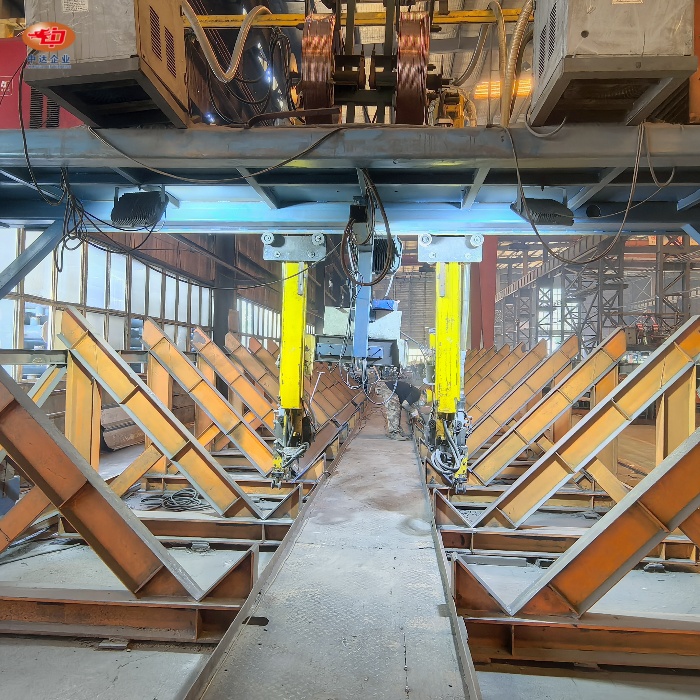
Site checks show what potential documentation doesn't fully show. Walking through a fabrication center shows the real workings of the industry, including the state and level of technology of the equipment, the level of skill and organization in the cleaning standards, and how quality control is carried out. Visitors to our 120,000 square meter facility in Shenyang can see CNC ultra-thick plate cutting with ±0.2mm accuracy, automated welding lines with consistent penetration and bead profiles, and full NDT stations where every important weld is checked with ultrasound and radiographic examination.
A third-party review gives you clear proof. Hiring independent inspectors who are familiar with international standards (AASHTO, Eurocode 3, JIS) to watch important parts of the production process—testing of materials upon receipt, checking dimensions, inspecting welds, preparing the surface, and applying coatings—documents compliance and finds problems before they are shipped. This investment usually amounts to less than 1% of the total value of the procurement. However, it greatly lowers the chance of getting goods that don't meet requirements, which can cause projects to be delayed and costs to rise due to extra work.
Customization and Strategic Ordering
Different cross-section shapes make the best use of materials for each span and load situation. By making the girder deeper near the piers, where the bending moments are strongest, and thinner toward the middle of the span, where they weaken, the weight can be cut without affecting the capacity. This method needs advanced manufacturing skills. The BIM integration at our facility makes it possible to accurately model complicated geometries, automatically creating cutting patterns and assembly processes that turn digital designs into physical parts with little error.
Options with corrugated webs save even more weight. If you use thin perforated plates instead of flat webs, you can keep the same bending capacity while cutting the mass by 15 to 20 percent. The corrugations act as stiffeners, keeping the web from buckling, which would need stronger plates or more stiffening ribs to fix. This technology works especially well for long-span uses because it minimizes self-weight, which has benefits all over the structure.
The design of the connections has a big effect on how well the field assembly works. Bolted splices make it easy to join segments quickly without the need for special permits or weather limits that make welding hard. High-strength friction-grip bolts make full-strength connections by clamping force instead of shear resistance. This makes it easier to check and disassemble in the future if changes need to be made. We work with our clients' engineering teams to find the best places for splices while taking into account shipping issues and field assembly procedures to keep installation times and costs as low as possible.
Conclusion
Steel box girders have a long history that can teach us many things, from their early days as a hopeful new technology to their more recent, more successful applications. For something to be successful, it needs to be carefully analyzed, carefully fabricated, actively managed for rust, and thought of in terms of a whole lifetime that puts long-term performance above minimizing initial costs. Older types of bridges had problems like being too heavy, not being stiff enough in the torsional direction, and being prone to fatigue and rust. Modern steel box girders solve these problems. Because they have been tested and shown to work well in seismic zones, long spans, and tough environments, modern structures can't work without them. When procurement professionals work with makers who show technical know-how, attention to quality, and environmentally friendly practices, their projects are more likely to be successful over many years of reliable service.
FAQ
How do load capacities compare with concrete box girders?
Because steel is stronger than other materials, steel box girders can usually hold more weight. A properly built steel box can hold the same amount of weight as a concrete box while weighing 50–60% less. This means that foundation needs and seismic forces are reduced by the same amount.
What lead times should procurement teams anticipate?
Standard steel box girder projects take 16 to 20 weeks to complete, which includes improving the planning, getting the materials, building, inspecting, and finishing. Complex designs with moving parts or unique features can take up to 28 weeks, so it's important to start working with suppliers early on.
Can box girders be customized for unique bridge geometries?
Of course. Designs with variable cross-sections can handle changing load needs along lengths. Adjustable heights from 1.25 meters to 8 meters make the best use of material spread, and 20% less weight is lost through flexible webs. During the planning process, our engineering team works together to improve shapes that meet certain performance goals.
Partner with Zhongda for Steel Box Girder Excellence
Shenyang Zhongda Steel Structure Engineering can help you with your infrastructure problems because they have been experts in their field for 20 years. Our ISO 9001/14001/45001 and EN 1090 approved manufacturing makes steel box girders that are designed to work well, built precisely, and covered to last a long time. We've worked on important projects on six continents, from Arctic bridges that have to withstand temperatures of -60°C to tropical ports that have to deal with sea rust. This shows that we can adapt to your needs. Our 60,000-ton annual capacity, BIM-driven customization options, and ±0.2mm CNC accuracy make sure that the parts you need for your project are made to the tightest standards and on time. Get in touch with our engineering team at Ava@zd-steels.com to talk about your needs with a reputable steel box girder maker that is dedicated to making your plans a reality.
References
Chen, W.F. and Duan, L. (2014). Bridge Engineering Handbook: Superstructure Design, Second Edition. CRC Press, Boca Raton.
Troitsky, M.S. (1990). Prestressed Steel Bridges: Theory and Design. Van Nostrand Reinhold, New York.
Miki, C. and Tateishi, K. (2006). Fatigue Damage in Orthotropic Steel Bridge Decks and Retrofit Works. International Journal of Steel Structures, Volume 6, Number 4.
Wolchuk, R. (1999). Steel Plate Deck Bridges: Their History and Current Trends. Journal of Structural Engineering, ASCE, Volume 125, Issue 4.
Heins, C.P. and Firmage, D.A. (1979). Design of Modern Steel Highway Bridges. John Wiley & Sons, New York.
British Standards Institution (2006). Eurocode 3: Design of Steel Structures - Part 2: Steel Bridges. BSI Standards Publication, London.
YOU MAY LIKE