China Customized Sustainable Steel Stadium Solutions
2026-03-30 14:18:58






China's custom sustainable steel stadium solutions are the future of modern sports facilities because they combine cutting edge engineering with care for the environment. These new systems use environmentally friendly production methods and high-strength building materials to make venues that work better than international standards. A steel stadium made by Chinese experts has unbeatable durability, design freedom, and cost-effectiveness, and it has very little impact on the environment over its entire lifecycle. These solutions offer the best of both technical excellence and environmental responsibility for building sports facilities around the world, at a time when demand for environmentally friendly building grows.
Understanding Sustainable Steel Stadium Solutions
Modern sports infrastructure is made of steel because it is very durable, can be designed in many ways, and is good for the environment. When it comes to a number of important factors, steel venues perform better than standard materials like concrete, wood, and aluminum. The material's natural strength-to-weight ratio makes it possible for large clear spans and creative building designs that improve the viewing experience for spectators while making construction easier.
Sustainability in modern stadium building goes beyond choosing the right materials and includes the whole span of the building. Cutting down on carbon emissions starts in the factory with better ways to make steel, and it continues in the building industry with more efficient methods. Because steel can be recycled in its entirety, stadium parts will still be valuable after decades of use. This supports the circular economy ideas that modern buying pros put a high value on.


Modern steel stadium solutions use high-tech finishes to protect the steel and flexible building principles that can be changed to fit the needs of each client. Hot-dip galvanizing methods that meet ISO 1461 standards give structures great protection to rust, so they stay strong in all kinds of weather. Protective systems like these make care a lot easier and help buildings last longer—50 years or more with little work.
Customization options let you add culture elements, features that are special to the climate, and future growth options to the original design framework. Modular building methods make it possible to precisely change to site limitations, capacity needs, and transfer needs after the event. This adaptability is especially helpful for business and government developers who have to deal with complicated stakeholder needs and changing project specs.
Designing and Building Customized Steel Stadiums in China
China's method to building steel stadiums blends cutting-edge architectural ideas with strong engineering principles. From coming up with the initial idea to finishing the construction, sustainability is thought about throughout the whole planning process. This makes sure that the building performs at its best for the environment without sacrificing its structural integrity or aesthetic appeal. Advanced Building Information Modeling (BIM) technologies allow exact coordination of parts and clash spotting before the production process starts.
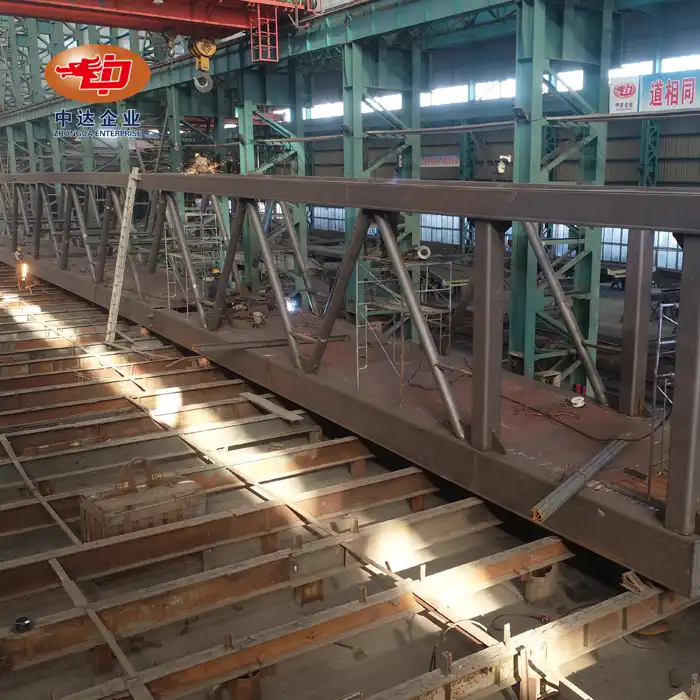
In order to make things, they have state-of-the-art factories with 100-ton bridge cranes and precise manufacturing tools that can cut through very thick plates with 0.2mm accuracy. With these advanced manufacturing systems, it's possible to make unique structural parts that meet the exact needs of a project while keeping quality standards high throughout big production runs.
Prefabrication techniques cut down on the time needed for building on-site by a large amount while also improving safety and quality control. Making structural parts in a controlled workplace setting gets rid of delays caused by bad weather and makes sure that the quality of the welding is always the same through automated processes. When compared to traditional concrete methods, this method usually cuts down on overall building times by 40%. This makes it possible to finish projects faster for events that need to happen on time.
At every step of production, quality assurance methods include testing all of the materials, making sure the dimensions are correct, and checking the surface treatment. Certifications like ISO 9001, ISO 14001, and OHSAS 45001 show that a company is committed to making high-quality products and being good to the world. These quality systems make sure that every part meets foreign standards like AISC compliance rules and EN 1090.
Comparing Steel Stadiums with Other Materials: Why Choose Steel?
Steel stadiums always do better than stadiums made of other materials when it comes to cost, structural stability, speed of building, and environmental impact. Lifecycle cost studies show that these buildings have big benefits over concrete ones, like needing less upkeep and lasting longer. Steel is stronger than other materials, so it can be used to make longer gaps with fewer support beams. This makes more room useful and improves sight lines throughout the venue.
Construction timing benefits are especially clear on big projects, where steel's prefabrication skills really shine. While concrete stadiums usually take 24 to 36 months to finish, steel stadiums can be mostly finished in 12 to 18 months. This speeding up is very important for projects that are based on events and have set due dates for finishing. It also lets business developments start making money earlier.
Environmental benefits last throughout a material's lifetime, from lower carbon emissions during production to the ability to be recycled completely at the end of its useful life. Modern ways of making steel use 75% less energy than old ways of doing things. This is a big improvement in economy. Because the material can be recycled, stadium parts will always have economic worth. This supports policies that government agencies are adopting more and more, which encourage sustainable buying.
Acoustic performance is another big benefit. Steel buildings are better at transmitting sound, which makes the experience better for spectators. During the planning process, the material's vibration properties can be fine-tuned to create the best sound settings for different types of events. Additionally, steel's light weight lowers the need for foundations and allows building to happen on places that weren't ideal before because of difficult soil conditions.
Procurement Guide: Sourcing Customized Steel Stadium Solutions from China
For procurement to go well, possible Chinese partners must be carefully evaluated based on their track records in customization, environmental practices, and quality management systems that have been approved. Leading makers have a wide range of skills, such as in-house design services, cutting-edge production equipment, and a track record of successfully completing projects across borders. Technical skills, quality certifications, and examples from similar large-scale building projects should be emphasized as part of the evaluation process.
Communication methods are very important for successful foreign buying. For example, the best Chinese suppliers offer project management teams that speak English and all the paperwork in forms that are accepted around the world. These support systems make sure that specifications are interpreted clearly and that there aren't too many mistakes that could slow down projects or lower the quality of the results.
Understanding the specs for materials and the rules for construction is important for getting the best results on a project while also following the rules set by the local building code. Chinese makers usually use steel that is approved by ASTM A992 and comes with full mill test certificates that make it easy to track down the material. It is possible to get REI 120 ratings with advanced covering systems that include intumescent fire protection while still allowing architects to work with complex shapes.
Regulatory compliance includes a number of different foreign standards, such as EN 1090 for markets in Europe and AISC rules for projects in North America. Dual certification makes foreign bids easier and makes sure that quality is the same no matter where the project is located. This standardization is especially helpful for international companies and government bodies that are in charge of projects in more than one country.
Maintaining and Future-Proofing Steel Stadiums for Sustainability
For steel stadiums to keep working well over time, they need preventative maintenance plans and regular structural checks. Modern protective coating systems cut down on upkeep times by a large amount and make inspections easier by showing how the coating is doing visually. With preventive maintenance plans, major repairs are usually only needed every 15 to 20 years, which is a big savings compared to other materials.
Structure tracking technologies let you keep an eye on important parts of a building without stopping its operations. These systems keep track of how well structures are doing over time and give early warnings of possible problems. Monitoring programs gather information that helps make maintenance choices based on facts and improves inspection plans by using real-life usage patterns instead of guesses based on theory.
Strategies for "future-proofing" include plans for new technologies like green energy systems, smart building controls, and better services for spectators. Steel buildings are very adaptable and can be easily updated with solar panels, wind turbines, and energy systems that are built right into the building. Because the material is so strong, it can easily handle extra loads from new technologies in the future without the need for structure support.
The circular economy guides end-of-life planning by making sure that parts are designed in a way that makes them easy to take apart and use again. The natural ability of steel to be recycled means that structure parts keep their value over many uses. This method fits with changing environmental rules and gives building owners and operators long-term financial rewards.
Conclusion
China's customized sustainable steel stadium solutions offer unmatched benefits for modern sports infrastructure development through their advanced production skills, commitment to environmental responsibility, and track record of success in a wide range of global projects. When you combine cutting-edge design technologies with precise manufacturing systems and full quality assurance, you get partners you can trust to build world-class places on time and on budget, no matter how strict your requirements are. These solutions make it possible to build buildings that meet the performance needs of today while also being able to change to new technologies and environmental standards in the future.
FAQ
What makes Chinese steel stadium solutions more sustainable than alternatives?
Chinese companies that make steel stadiums use modern ways of making them that cut carbon emissions by up to 30% compared to old ways. Steel parts can be recycled over and over again, which supports the idea of a circular economy. Also, efficient prefabrication methods cut down on building waste. Modern sealing methods make structures last longer, up to 50 years or more, with little to no upkeep.
How do customization capabilities address specific project requirements?
Manufacturers with advanced facilities that have precise cutting and making tools can make parts that are exactly what architects and engineers need. Integrating BIM allows for complicated shapes and site-specific changes to be made while keeping the structure's integrity. Modular design principles make it possible to increase capacity and add on to the original structure in the future.
What quality assurance measures ensure international standard compliance?
With complete quality control systems, manufacturing sites keep their ISO 9001, ISO 14001, and OHSAS 45001 certifications. All steel parts are made from materials that are approved by ASTM A992 and come with full mill test reports. Compliance with EN 1090 and AISC makes sure that buildings are compatible with foreign building rules and streamlines the buying process around the world.
Partner with Zhongda for Your Next Steel Stadium Project
Because Zhongda has been an excellent engineering company for 20 years and has a 120,000 m² factory, we are the best steel stadium source for difficult building projects. Our production facilities are ISO-certified and include 100-ton bridge cranes and precise fabrication systems. We offer unique solutions that go above and beyond international standards while keeping prices and lead times low. Get in touch with Ava@zd-steels.com to talk about how our years of experience building sustainable steel stadiums can help you make your idea come true through creative design and quality manufacturing.
References
International Association of Steel Construction. "Sustainable Steel Structures in Sports Facility Development." Steel Construction Research Quarterly, 2023.
Zhang, Wei et al. "Lifecycle Assessment of Steel Stadium Construction: Environmental Impact Analysis." Journal of Sustainable Infrastructure Engineering, 2024.
Global Sports Facility Management Institute. "Comparative Analysis of Stadium Construction Materials: Performance and Sustainability Metrics." Infrastructure Development Review, 2023.
Chen, Liu and Wang, Ming. "Prefabrication Technologies in Large-Scale Steel Structure Manufacturing." Advanced Construction Methods International, 2024.
European Committee for Steel Construction. "Steel Stadium Design Guidelines: Structural Performance and Environmental Considerations." Technical Report ES-2023-15.
American Institute of Steel Construction. "Seismic Design Considerations for Steel Sports Facilities." AISC Design Guide 34, 2023 Edition.
YOU MAY LIKE
_副本_1762324991500_1788850629424.jpg "steel beam construction")
_1746242570299.webp "Large-Diameter Tunnel Boring Machine")