Corrosion Protection for Bridge Steel Structure in Coastal Areas
2026-07-01 16:37:20






To keep seaside bridge steel structures safe, it's important to come up with complete plans that take into account things like salt spray, high humidity, and constant exposure to the sea. Without the right corrosion protection measures, steel suspension bridges and other marine structures will break down faster. Advanced protection technologies, such as special coats, dehumidification systems, and precision-engineered parts, can make things last a lot longer and cost a lot less to maintain. Infrastructure builders, government workers, and engineering firms that work in marine settings need to know about these safety measures because the stability of structures has a direct effect on public safety and the long-term success of projects.
Understanding Corrosion Challenges for Bridge Steel Structures in Coastal Areas
The Marine Environment's Impact on Steel Infrastructure
The harsh conditions along the coast make them especially dangerous for steel bridges. Ocean spray releases chloride particles into the air that land on the surfaces of structures. This starts electrochemical processes that weaken the steel. The Federal Highway Administration has found that coastal bridges can have five to ten times more rust than buildings that are built inland. Steel surfaces stay wet when the humidity is high, and changes in temperature cause condensation cycles that speed up the rusting process. When these external factors come together, they cause pitting corrosion, which is damage that goes deep into steel parts, and crevice corrosion at connection places where water builds up.
Economic and Safety Consequences
Higher operational costs are a direct result of inadequate rust protection. The ASCE says that about 30 to 40 percent of all bridge upkeep costs in coastal states are spent on repairs linked to corrosion. Not only does structural degradation cost money, it also presents major safety risks. Even though the I-35W Mississippi River Bridge collapsed in 2007, it showed how rust can damage important load-bearing parts. Coastal bridge failures in Southeast Asia and Europe have made it even more important to use strong rust protection methods from the beginning of the building process.
Identifying Vulnerable Components
Some parts of structures are more likely to rust than others. Pay close attention to the main wires, suspension parts, bearing systems, and connection places between structural pieces. The insides of box girders often hold on to water and salt, making rust zones that are hard to see. Understanding these weak spots helps designers and builders come up with good security plans during the design and building stages, making sure that all parts of the structure are fully covered.
Principles of Effective Corrosion Protection for Steel Bridge Structures
Material Selection and Protective Coatings
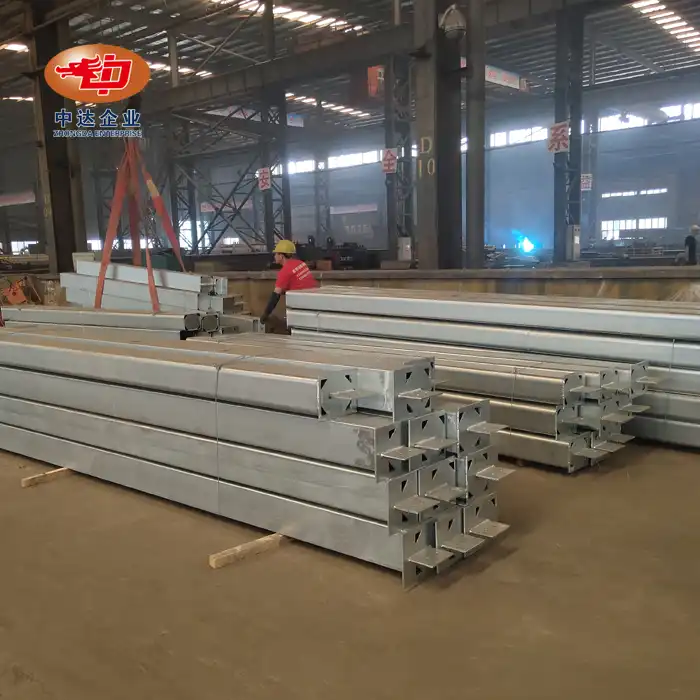
Specifications for the material are the first step in modern rust defense. Foundational safety comes from high-strength steel metals that are better at resisting corrosion. Copper, chromium, and nickel in weathering steel combine to make an oxide layer that stops further rusting. Protective covering methods add more layers of defense. When hot-dip galvanizing is done, zinc coats are put on the steel, and they degrade before the steel underneath does. Coating methods that use epoxy make walls that keep water and chlorides out. Multi-coat systems that use zinc-rich bases, epoxy middle coats, and polyurethane topcoats provide complete protection that is good for harsh sea conditions.
Design Considerations for Corrosion Resistance
Corrosion efficiency is greatly affected by the shape of the structure. When you have good drainage, water doesn't stay on flat surfaces or inside of holes. Open patterns let air move, which keeps humidity from building up. Inspection points that are easy to get to let you find corrosion early on during regular upkeep. Details about connections that keep cracks and water traps to a minimum lower the number of places where rusting can start. When these design concepts are used during the building stages, the bridge steel structure becomes naturally resistant to corrosion, which makes long-term upkeep easier.
Maintenance Protocols and Inspection Schedules
Even buildings that are well protected need to be maintained over time. Inspections that are planned ahead of time find paint failures, surface rust, and early stages of rusting before they cause damage to the structure. Ultrasound thickness measuring, electromagnetic inspection, and eye examination are all non-destructive testing methods that can find hidden damage. Depending on the level of exposure and the importance of the structure, maintenance times can be anywhere from once a year for visual checks to full reviews every three to five years. Preventative maintenance that extends the life of coatings and fixes small problems stops major structure changes from needing to be made.
Innovative Solutions and Technologies in Coastal Bridge Corrosion Protection
Advanced Coating Technologies
New developments in coatings work much better than older methods. Nanoparticles are added to nano-enhanced coatings to make thicker barrier films that stick better and bend better. Zinc coats that have been changed with polymers offer both galvanic protection and organic barrier qualities. In marine settings, these advanced systems have service lives of more than 25 to 30 years, while regular coats only last 10 to 15 years. Tests in the lab and data from real-world use show that they are successful at blocking chloride entry and UV damage.
Prefabrication Advantages for Corrosion Protection
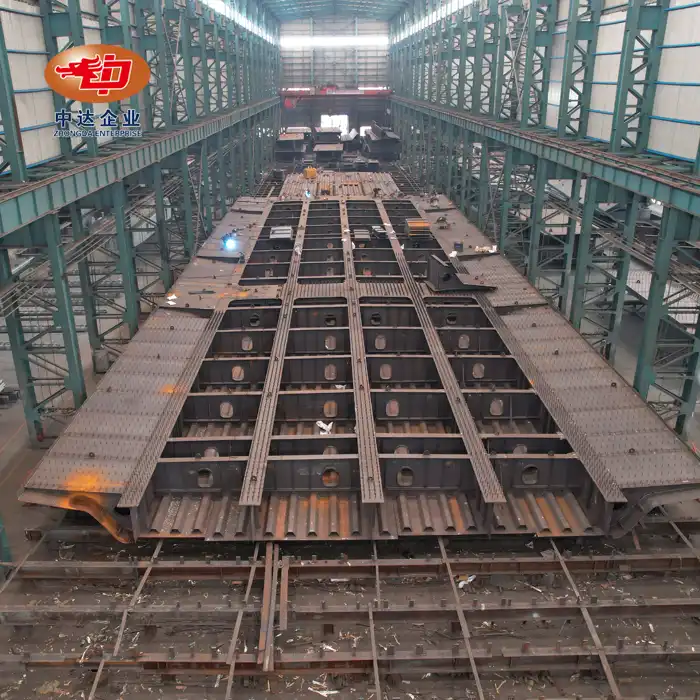
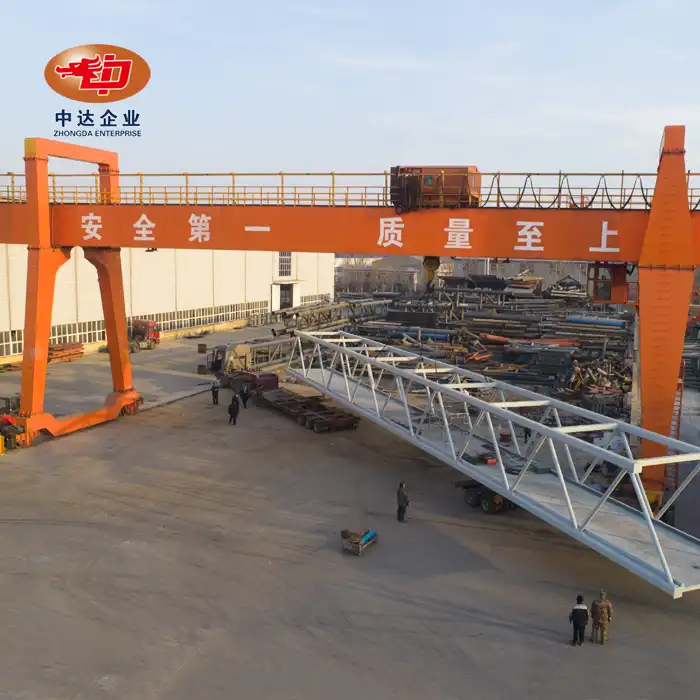
When it comes to rust protection, Zhongda's prefabrication method is better than field-applied solutions. Controlled workplace settings make it possible to apply coatings in the best way possible, with the right temperature, humidity, and surface preparation standards. Our 120,000 m² facility uses safety devices that are of the same high standard in every part. We coat every inch of the 12-meter steel box girder sections we make, even the inside parts that are hard to get to during building in the field. With a production capacity of 800 tons per month, we meet shipping dates and make sure that every part meets strict rust protection standards.

Dehumidification and Active Protection Systems
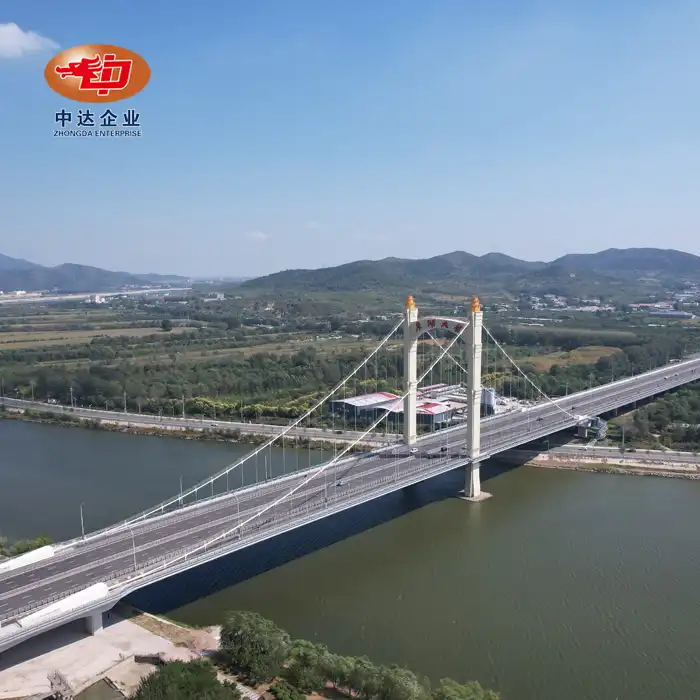
New active defense systems attack rust from different directions. Main cable dehumidification technology, which we use in the designs of our suspended bridges, keeps sealed cable systems dry all the time. Moving dry air around inside wire wrapping stops condensation from forming, which gets rid of the wetness that corrosion processes need. Our S-Type galvanized steel wire wrapping tape protects in two ways: it acts as a physical shield against the elements and also protects the steel underneath from corrosion. This mixture, which has been tested to meet FHWA-NHI-07-096 standards, greatly increases the service life of main cables compared to other safety methods.
Material Innovation in High-Strength Components
Our PPWS (Prefabricated Parallel Wire Strands) main lines are made from 5.2mm wire that has a tensile strength of 1770MPa and are made with corrosion-resistant metals from the base material up. The prefabrication method makes sure that the wires are treated consistently, and protective coatings can't be put on field-spun cables. Before being sent out, each strand goes through strict quality control in our building. This ensures that the rust protection is complete. This way of making things has worked well for more than 60 important projects, like bridges that are 300 to 2000 meters long and have to withstand harsh shoreline and sea environments.
Comparing Steel Bridge Structures with Other Materials in Coastal Environments
Steel Versus Concrete in Marine Settings
Steel vs. concrete is a common argument about what kind of material should be used for coastal bridges. Steel has a great strength-to-weight ratio, which means it can support longer spans with fewer piers. This is especially useful for deep-water bridges and navigation routes. Steel is good for the earth because it can be recycled, and structure parts still have value after they've been used. But the bridge steel structure needs full systems to protect it from rust. Even though concrete is naturally resistant to chloride, it can break down when chloride gets into the support, when alkali reacts with the rock, and when temperatures change quickly. Recent failures of coastal bridges made of both materials show that neither is naturally better than the other. Long-term success depends on good planning and security.
Prefabricated Steel Advantages
There are clear benefits to using prefabricated steel parts instead of cast-in-place building. Factory fabrication allows for exact control of dimensions; our 3D laser scanning makes sure that the placement of cable clamps is accurate to within ±2mm, which is important for load distribution and structural performance. Controlled coating application, easy access for inspections, and less work in the field all help to keep quality variation to a minimum. Construction times are cut down by a lot; flexible assembly cuts down on-site work from months to weeks, which protects the environment during construction. These benefits are especially important in marine settings, where field conditions make it harder to keep an eye on quality and shortening the time it takes to build something lowers the risk of the project.
Sustainability Considerations
The environment is having a bigger effect on the choices of materials. Because structural steel keeps its qualities after multiple recycling processes, it has less embodied carbon than materials that are made from scratch. Modern rust protection systems don't use harmful chromate chemicals anymore; instead, they use safer options that are better for the environment. Our -60°C weathering steel technology, which was created for use on Russian Arctic bridges, shows how steel can be used in harsh settings while still meeting environmental standards. Life-cycle studies that look at production, shipping, building, upkeep, and disposal at the end of their useful life are increasingly favoring steel structures that are properly secured for coastal uses.
Procurement Considerations for Corrosion-Protected Bridge Steel Structures
Supplier Evaluation Criteria
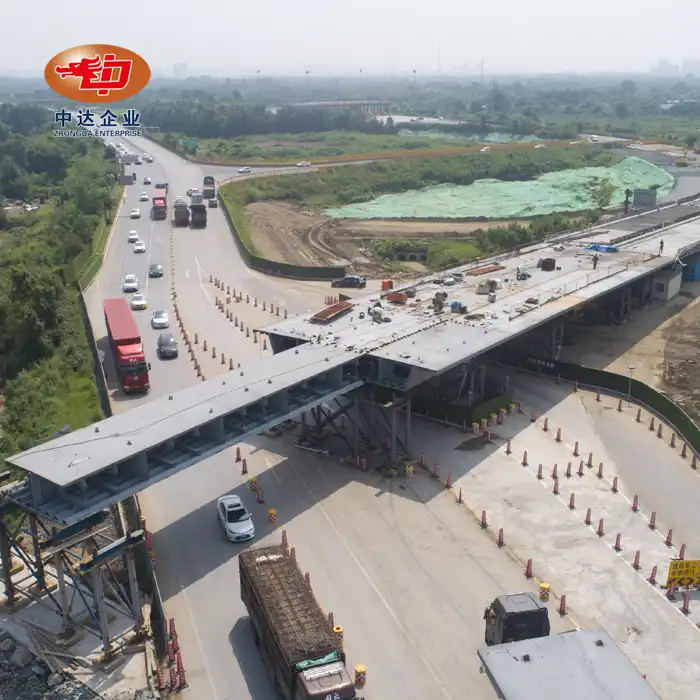
When looking for a good provider, you need to look at more than just price. Getting certified shows that you follow quality standards. For example, ISO 9001, 14001, and 45001 certifications prove that you have quality management, environmental duty, and safety systems for workers. AWS and JIS compliance shows that you know how to weld and make structural steelwork that meets European standards. EN 1090 approval shows that you can make structural steelwork that meets European standards. Proven knowledge with coastal projects gives you faith that you understand the problems that the sea environment faces. The 18,000-ton Shenyang Dongta Cross-Hunhe River Bridge is in our portfolio, as well as parts for Australian mining infrastructure that is subject to coastal conditions and foreign projects in Vietnam and other Southeast Asian coastal areas, all of which rely on durable bridge steel structure expertise.
Understanding Cost Components
Clear knowledge of costs helps people make good choices about what to buy. The prices of materials include types of steel that don't rust, high-strength wire materials, and new finishing systems. The costs of fabrication include precise machining, welding, assembly, and quality control. Our advanced CNC equipment for ultra-thick plate cutting and 3-axis drills makes sure that the dimensions are correct while keeping waste to a minimum. Putting on coatings, especially multi-layer systems that take longer to cure, adds a lot of value. Logistics for parts that are too big or too small need special treatment and transport. Our 20–30% shorter lead times come from better production planning and the fact that we can make 60,000 tons of steel every year. This directly leads to lower project financing costs and earlier income generation for infrastructure investments.
Customization and Engineering Support
The problems that come up with coastal bridge projects are unique and need custom answers. Specifications for wind resistance depend on the exposure. The fact that our buildings are designed for 12-level wind resistance shows that we have a deep knowledge of the aerodynamic needs of coastal areas that are exposed. Because of the way the land is formed, coastal areas that are busy on tectonic plates need special link features and damping systems. Our BIM-driven prefabrication method lets multiple people work together on the design, which improves the structure's performance while keeping it easy to build. Engineering support includes help with design, suggestions for value engineering, and planning the order of building, all of which make sure the project runs smoothly.
After-Sales Support and Long-Term Partnership
Coastal infrastructure is an investment that lasts for decades, and ties with suppliers last long after the first delivery. Full help after the sale includes thorough maintenance plans, training on inspections, coating repair processes, and planning for the replacement of parts. Our 70% client return rate shows that we are committed to long-term partnerships rather than one-time deals. Technical support for coating upkeep, structural tracking, and performance improvement helps clients get the most out of their infrastructure over its entire life. Government contractors and infrastructure developers who are in charge of multiple coastal projects find this ongoing cooperation especially helpful. Standardized methods and tried-and-true solutions lower risk and speed up project delivery.
Conclusion
Coastal bridges need advanced rust protection that includes material science, coating technology, well-thought-out design, and regular upkeep. Salt spray, humidity, and the sea atmosphere make for harsh conditions where poor security speeds up wear and tear, poses safety risks, and raises the cost of ownership over a product's lifetime. Modern solutions like advanced coatings, dehumidification systems, premade parts, and precision building make it possible for structures to last for decades with only minor upkeep needed. Choosing between steel and concrete relies on the needs of the project. The bridge steel structure is stronger, can span farther, and lasts longer if it is properly protected. To be successful at procurement, you need to work with qualified sellers who can show they have technical knowledge, quality certifications, experience with coastal projects, and a willingness to provide long-term support.
FAQ
What is the expected service life of corrosion-protected coastal bridges?
Coastal bridge steel buildings can last 75 to 100 years if they are built and kept correctly. Advanced coating systems protect structures for 25 to 30 years before they need to be re-coated. Dehumidification systems and good construction also make structures last longer. Service life relies on the quality of the safety at the start, how often it is maintained, and how bad the exposure is. In our projects, we use protection systems that are designed to work at a century-scale level and have regular upkeep times.
How do corrosion protection costs compare to long-term savings?
Comprehensive corrosion protection raises the initial cost of building by about 15–25%, but lowers the total cost of ownership by 40–60% through longer coating life, less frequent upkeep, and fewer structure fixes. Economic research always shows a good return on investment within the first ten years, and the savings keep adding up over the life of the structure.
Can existing coastal bridges be retrofitted with advanced protection systems?
Retrofitting may or may not be possible depending on the state and layout of the current structure. Access issues and weather controls make it hard to prepare the surface and apply coatings to buildings that are already there. Cable dehumidification systems can be added to suspension bridges that are already in place, though the level of difficulty varies. A trained engineer's evaluation finds the best retrofit methods for each building, taking into account cost, disturbance, and performance growth.
Partner with Zhongda for Superior Coastal Bridge Steel Structure Solutions
We at Zhongda Steel have been making high-quality bridge steel structures for 20 years and use the latest corrosion protection technology. This makes us the go-to company for building bridges in harsh coastal areas. When you combine our two-layer security systems—main cable dehumidification and S-Type galvanized wrapping—with PPWS wires that have a tensile strength of 1770MPa, you get unbeatable durability for spans up to 2000 meters. Before leaving our 120,000 m² building, every part has to pass strict ISO-certified quality control and meet FHWA-NHI-07-096 standards. Contact our team at Ava@zd-steels.com to talk about your coastal infrastructure project needs and find out how our precise manufacturing, performance on more than 60 major projects, and full technical support can help you get the most out of your bridge investment so it lasts for decades.
References
Federal Highway Administration. (2012). Corrosion Costs and Prevention Strategies in Highway Bridges. U.S. Department of Transportation, Washington, DC.
American Society of Civil Engineers. (2017). Infrastructure Report Card: Bridges – Corrosion Management in Coastal Regions. ASCE Publications.
Koch, G., Varney, J., Thompson, N., et al. (2016). International Measures of Prevention, Application, and Economics of Corrosion Technologies Study. NACE International, Houston, TX.
Kogler, R., Hirt, M., and Mensinger, M. (2018). Corrosion Protection of Steel Bridges: Design, Maintenance and Innovative Solutions. Structural Engineering International, Volume 28, Issue 3.
Zhang, W., Chen, S., and Liu, Y. (2019). Advanced Coating Systems for Marine Bridge Structures: Performance Evaluation and Service Life Prediction. Journal of Bridge Engineering, Volume 24, Number 6.
Transportation Research Board. (2013). Prefabricated Bridge Elements and Systems in Coastal Environments: Corrosion Protection and Performance. National Academies Press, Washington, DC.
YOU MAY LIKE
_副本_1756187900835.jpg "steel column")