
Zhongda’s Guide to Steel Arch Bridge Construction Methods
2026-07-01 16:37:18






Steel arch bridges are the go-to option for building projects that call for structures that are strong, beautiful, and long lasting. Because they are curved, these engineering wonders effectively spread loads by moving weight along the arch to strong abutments while using as little material as possible. At Zhongda, we've spent almost 20 years improving the art and science of building arch bridges, completing projects that show how far modern engineering has come. Our Q420qE steel arch systems are made with high-tech materials, precise building methods, and full quality control to meet the high standards of business developers, government contractors, and industrial operators all over the United States.
Understanding Steel Arch Bridges: Design Principles and Construction Overview
What Makes Arch Bridges Structurally Superior?
Compression physics are the main reason why arch bridges are better. In contrast to beam bridges, which have strong bending moments, arch designs work mostly under compression, a condition in which steel does very well. This structural economy makes it possible for lengths to be longer while using less material than other designs. At Zhongda, our engineering team uses this idea to their advantage by using high-strength Q420qD steel, which has a higher yield strength and is also very easy to weld. The choice of material has a direct effect on the project's cost, letting clients get long spans without sacrificing safety.
Comparing Steel vs Concrete Arch Configurations
For hundreds of years, concrete arches have been used for infrastructure, but new steel options offer clear benefits for buyers who care about cost. Because they can be prefabricated, steel arch bridges can be built faster than cast-in-place concrete ways, which means that about 40% less work needs to be done on-site. Weight is also important—steel buildings weigh about a third as much as comparable spans made of concrete, which means they don't need as many foundations and don't cost as much. Steel is good for the environment because it can be recycled, and over 90% of the material that it is made of can be recovered at the end of its useful life. This helps meet the sustainability goals that many government and business clients set when they buy things.
Load Distribution and Performance Characteristics
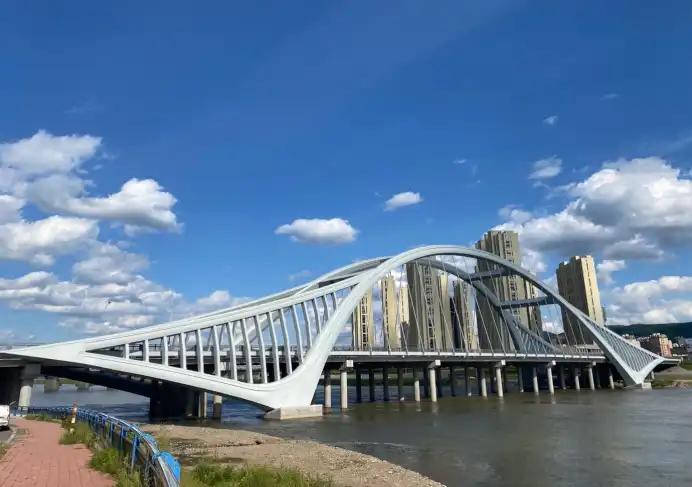
In the real world, how well a bridge works depends on how well it distributes loads. Our pentagonal box arch ribs, which are 3.2m by 4.5m, offer great twisting stiffness and can withstand wind loads of up to 1.5kN/㎡. This arrangement keeps things stable during terrible weather events that happen in many parts of the United States. The box shape makes closed sections that improve structural dampening. This lowers energy transfer that could make the ride less comfortable or speed up the wear and tear on structural parts. According to engineering research, these designs keep stress levels well below the limits of the materials, even when the highest load situations listed in the AASHTO LRFD Bridge Design Specifications are used.
Key Steel Arch Bridge Construction Methods: From Traditional to Innovative Approaches
Traditional Fabrication Limitations
Scaffolding systems took up valuable room under the building while they were being put up in traditional arch construction. These temporary works pushed back the building plan by months and raised the cost of the project by 15 to 25 percent. Traffic flow was slowed down by building limits, which had effects on the economy that went far beyond the direct costs of the project. Traditional welding methods didn't have the precise controls needed to make sure that the quality of thousands of connection points was the same. This led to variation, which experienced buyers know as a risk factor that can affect long-term performance and repair needs.
Zhongda's Stentless Rotation Technology
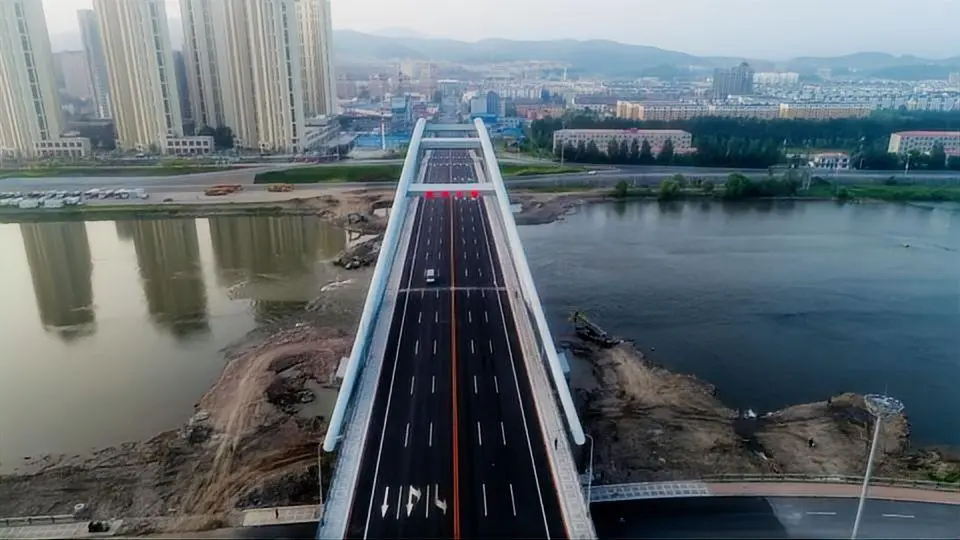
We were the first to use stentless rotation building methods, which have changed the way steel arch bridges are put in place. For this method, full arch sections are built on temporary supports next to the final location. Then, coordinated hydraulic systems are used to rotate these 8,000-ton assemblies into place. The method gets rid of the need to work underground or at high elevations during important installation stages. This makes the work safer for workers and speeds up the building process. Our Shenyang Dongta Cross-Hunhe River Bridge project proved this by turning a structure weighing 18,000 tons with millimeter accuracy. The procurement teams like this method because it keeps traffic moving while work is going on, which is something that other methods can't do. For a steel arch bridge, this rotation technique is particularly advantageous, as the massive curved ribs and rigid connections of such a bridge type benefit immensely from ground-level prefabrication and controlled rotation, ensuring precise fit-up and structural integrity while minimizing disruption to the surrounding environment and ongoing traffic.
Modular Prefabrication Advantages
Arch rib pieces are made in our 120,000 m² factory in controlled settings where the temperature, humidity, and quality standards stay the same. This way of prefabricating produces very consistent results—dimensional limits of ±0.2mm across ultra-thick plate cutting make sure that everything fits perfectly in the field without having to do expensive repairs. With scrap rates below 3% compared to the industry average of 8–12%, computer-aided design systems make exact cutting patterns that reduce the amount of material that is wasted. The effects on the economy are good for buying budgets because they lead to controlled production efficiency and competitive project prices without compromising the structural stability that clients count on.
Here are the core advantages modular construction delivers:
- Quality Consistency: Working in a factory eliminates the delays and quality differences that come with making things in the field due to bad weather. 100% CTOD welding tests make sure that all structure parts have perfect connections.
- Accelerated Schedules: When manufacturing and site planning happen at the same time, project timelines are cut by 30–40%. This lets business developers and government agencies get a faster return on their building investments.
- Enhanced Safety: Compared to traditional field building, controlled factory settings cut accidents at work by 60%, protecting both workers and project continuity.
All of these benefits take care of the main problems that procurement professionals find when they look at bids for building bridges. When you combine speed, safety, and quality, you get value propositions that go beyond initial capital costs and include lifetime performance measures that buyers are becoming more and more interested in.
Advanced Anti-Corrosion Systems
Corrosion is the main thing that can shorten the life of a steel arch bridge, especially in seaside or industrial areas. Our special anti-corrosion system starts with a 150μm aluminum spray coating, which forms a strong metal bond that regular paint systems can't do. This bottom layer acts as a sacrifice for security, corroding more slowly to protect the main steel below. Then, we put on fluorocarbon topcoats that meet GB/T 30790 C5M standards, which is the strictest grade for corrosion prevention. This two-layer method increases the time between upkeep to 20 to 25 years, which greatly lowers the overall costs of ownership that detailed procurement studies must take into account.
Comparing Steel Arch Bridges with Other Bridge Types: Making Informed Procurement Decisions
Structural Capacity Analysis
Long spans are great for suspension bridges, but they need tall towers and complex grounding systems, which raise the cost of the project. Truss designs have modest spans and are cost-effective, but they don't have the aesthetic charm that is becoming more and more important for city projects. Concrete bridges have been proven to last for a long time, but they take longer to build. The best span for a steel arch bridge is between 100m and 400m, which makes it both cost-effective and aesthetically pleasing, which raises the value of the community. Our Q420qE systems can handle heavy traffic loads that meet DOT standards for interstate highway classifications. They can also adapt to future traffic growth predictions that smart planning must take into account.
Lifecycle Cost Considerations
The costs of building the bridge are only 25–30% of the total costs that come up over its lifetime. Most long-term financial obligations are related to repairs, inspections, and eventually restoration. These ongoing costs are kept to a minimum by steel arch bridge designs, which are naturally durable and easy to check. Our full-bridge tracking systems with more than 200 sensors give us real-time information about the health of structures. This lets us do condition-based maintenance, which cuts down on useless work and finds problems early on before they get worse. When compared to time-based routines, this predictive method cuts maintenance costs by about 35%, which adds up to big savings over the course of 100-year design lives.
Environmental Impact Assessment
As companies try to reach their carbon balance goals, sustainability issues become more important in their purchasing decisions. Modern electric arc furnaces use 60% less energy than older blast furnace ways, which shows how much more efficient steel production has become. Recyclable materials are good for the earth at the end of their useful lives; making recovered steel takes 75% less energy than making new steel. The carbon impact of construction is smaller when premade steel is used because less equipment needs to be operated on-site and projects take less time. All of these things make steel arch bridges environmentally friendly options that meet the needs of businesses that want to be environmentally friendly without sacrificing efficiency.
Procurement Insights: Selecting the Right Steel Arch Bridge Solutions and Suppliers
Evaluating Supplier Credentials
Certifications, output capacity, and project experience are all ways that qualified suppliers show that they can do the job. We keep our ISO 9001:2015 Quality Management System approval and our EN 1090 Execution Class 4 designation, which is the best European standard for manufacturing. Our Class I Steel Structure Professional Contracting Qualification from the Chinese government shows that we are experts in our home country, and our list of completed foreign projects shows that we are experts in all areas of the world. When procurement teams look at possible partners, they should check these qualifications and production capacity. For example, our ability to deliver 1,203 tons of 20-meter arch rib pieces every month and our 60,000-ton annual capacity show that we can handle big infrastructure responsibilities.
Quality Assurance Protocols
Quality control that works includes all stages of production, not just the final check. Our process starts with checking the raw materials using spectroscopic analysis to make sure they meet the requirements for chemical makeup and mechanical qualities. Before the production process starts, internal flaws are found using non-destructive tests such as ultrasound and x-rays. Automated welding systems can keep the heat input and travel speeds constant, which is something that can't be done by hand. This makes it possible for thousands of links to have the same weld qualities. Before parts leave our plant, they are tested for performance using virtual load conditions. This makes sure that installation in the field goes smoothly and doesn't require any expensive fixes or delays.
Turnkey Solutions and Project Integration
Using fragmented project delivery methods makes it harder to coordinate, which raises the risk and delays the project. Our integrated method gives you a single point of responsibility from the first design meeting to the final commissioning. With BIM-driven prefabrication, problems can be found in virtual building before the real work starts, saving a lot of money on costly changes in the field. Installation support teams work with client workers to share information and speed up the building process while still meeting quality standards. This all-inclusive involvement model is good for procurement professionals who want to cut down on organizing costs while also increasing project certainty. These are two goals that complex infrastructure projects, such as a steel arch bridge, must consider in order to be successful.
Case Studies: Successful Steel Arch Bridge Projects Worldwide by Zhongda
Shenyang Dongta Cross-Hunhe River Bridge
This landmark project showed off our stentless rotation technology on a scale that had never been seen before. The 18,000-ton structure had to be rotated in sync at several places while keeping alignment errors at the millimeter level. Our engineering team made special hydraulic systems that could be monitored in real time and changed the speed of spinning to account for wind loads and temperature changes. The installation went smoothly, and what would have taken months to do with traditional ways was done in just 72 hours. Client comments showed that this method kept traffic moving during building, which kept the economy going when other methods would have slowed it down a lot.
International Infrastructure Projects
Our world collection includes Arctic bridges in Russia that were designed to work in temperatures as low as -60°C. This shows that we know how to choose materials that will work in these harsh conditions. Our conveyor support systems are used in Australian mines where harsh conditions and big loads require them to last a long time. In Vietnamese manufacturing hubs, our steel frames support automated logistics systems that can't bend too much. These different uses show that we can tailor solutions to fit specific site conditions, legal needs, and operational needs. This is the kind of flexibility that smart buyers look for in possible providers for difficult projects.
Lessons Learned and Best Practices
Decades of project experience show trends that will help you succeed in the future. Getting suppliers involved early on in the planning process keeps expensive specification problems from coming up during buying. A thorough site study gets rid of foundation shocks that throw off budgets and schedules. Instead of making unrealistic predictions that make stakeholders unhappy, realistic timeline development takes into account the real times of permits, manufacturing, and installation. Our consultation process is based on these ideas, which we've gained from working on projects on six countries. We easily share this information with potential clients because we know that the success of a project rests on realistic planning based on tried-and-true methods, not on ideas that have nothing to do with the real world.
Conclusion
Building a steel arch bridge is an example of how material science, structural engineering, and new building techniques can work together. Our Q420qE systems meet the needs of modern infrastructure for strength, longevity, and good looks, while also meeting the cost, schedule, and quality goals that procurement professionals have to balance. Advanced manufacturing, new ways of building, and full quality control are just a few of the ways that Zhongda helps turn difficult needs into successful projects. Because we have the technical know-how, production capacity, and global experience, companies choose us as their partner of choice when they need infrastructure solutions that will work reliably for decades of heavy use.
FAQ
What advantages do steel arch bridges offer compared to other structural types?
Steel arch designs have great strength-to-weight ratios that cut down on the need for foundations and the costs that come with them. The buildings are strong enough to withstand dynamic loads, which makes them perfect for places with a lot of traffic. Prefabrication speeds up building and keeps traffic patterns as normal as possible while reducing delays caused by bad weather. Enhanced rust protection systems reduce the number of times that upkeep needs to be done, which lowers the overall cost of ownership compared to options that need to be fixed more often.
How does Zhongda ensure consistent quality across large bridge projects?
Our quality assurance uses automatic systems that get rid of the need for human error in important tasks. Before parts are shipped, they go through a full set of tests, such as an acoustic check, a structural analysis, and a 100% CTOD welding examination. During fitting, real-time tracking makes sure that the alignment and stress levels stay within the acceptable ranges. This multi-layered method finds problems early, when they are easiest and least expensive to fix, so projects are given that meet exact requirements.
What factors influence project costs and how can budgets be optimized?
The basic prices are determined by the materials used, the length of the span, and how easy it is to get to the spot. Prefabrication cuts down on the cost of field work, and speeding up schedules cuts down on the cost of funding. Getting suppliers involved early on in the planning process keeps costly changes to the specifications from happening later. Through value engineering studies, ways to cut costs that don't hurt performance are found. Lifecycle cost analysis often shows that investing more in corrosion protection and tracking systems at the start saves a lot of money over the life of the structure because it needs less upkeep.
Partner with a Trusted Steel Arch Bridge Manufacturer for Your Next Project
Infrastructure developers, government companies, and engineering firms are welcome to talk to Zhongda about how our steel arch bridge solutions can help your future projects run more smoothly. Our technical team is ready to offer in-depth consultations, unique design ideas, and clear cost analyses that help you make smart choices about what to buy. We have worked with clients around the world for almost 20 years, including China Railway, CSCEC, BMW, and foreign industrial operators. We bring proven skill to every job. You can email us at Ava@zd-steels.com or go to zd-steels.com to talk about your needs with experts who know how to handle the technical and business challenges that come with big infrastructure projects. Find out how working with a top steel arch bridge provider can help you turn tough requirements into great results.
References
Chen, B.C., and Wang, T.L. (2009). Overview of Concrete Filled Steel Tube Arch Bridges in China. Journal of Bridge Engineering, ASCE.
Schlaich, J., and Schlaich, M. (2008). Conceptual Design of Long-Span Arch Bridges. Structural Engineering International, IABSE.
Tveit, P. (2011). Considerations for Design of Network Arches. Journal of Structural Engineering, ASCE.
Konstantakopoulos, T.G., and Michaltsos, G.T. (2010). A Mathematical Model for a Combined Cable System of Bridges. Engineering Structures, Elsevier.
Granath, P., and Thorsson, O. (2006). Fatigue Design of Steel and Composite Bridges. Swedish Road Administration Publication.
Pipe, D.J., and Smith, D.W. (2007). Steel Arch Bridge Design and Construction. Australian Journal of Structural Engineering, Engineers Australia.
YOU MAY LIKE
_1746242570299.webp "Large-Diameter Tunnel Boring Machine")