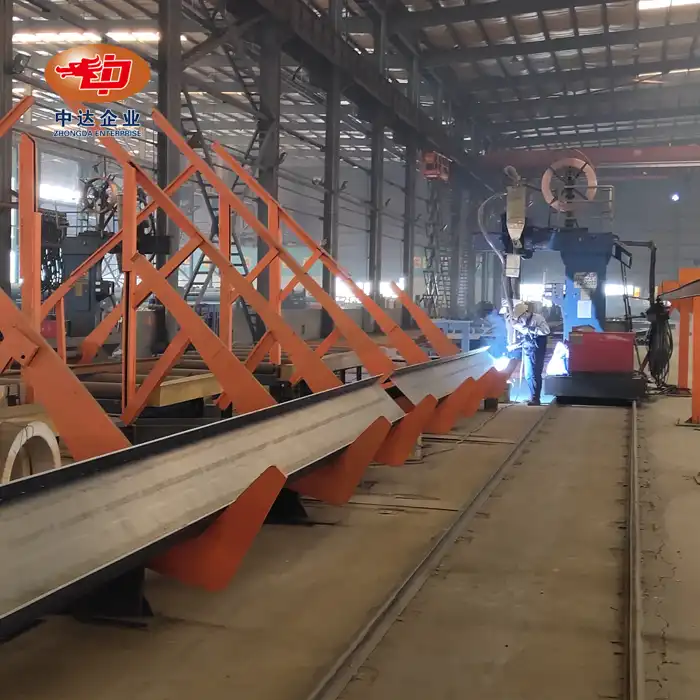
Steel Truss Girder: High Load Capacity & Light Weight
2026-08-05 16:18:52






A steel truss girder is an engineered structural component featuring a distinctive triangulated framework that delivers exceptional load-bearing strength while maintaining remarkably low self-weight. Unlike solid beam configurations, these pre-fabricated assemblies distribute stress efficiently through interconnected members, enabling spans exceeding 50 meters without intermediate supports. This design principle addresses critical construction challenges: reducing foundation loads by up to 40% compared to concrete alternatives, accelerating installation timelines through modular assembly, and providing unobstructed interior spaces essential for warehouses, manufacturing plants, and transportation infrastructure. Within the B2B landscape, specifying these systems translates into measurable capital savings, faster project delivery, and operational flexibility across demanding industrial applications.
Understanding Steel Truss Girders – Definitions, Types, and Design Principles
What Distinguishes Truss Girders from Conventional Beams
The main change is how the structures behave. I-beams normally fight loads by bending in a solid cross-section. But steel truss girders change bending moments into axial forces (tension and compression) within each member. This idea lets you concentrate materials where stresses are highest, getting rid of steel that isn't needed in areas with low pressures. The shape makes a depth-to-span ratio that is usually between 1:10 and 1:15, which is best for making the structure stiff while keeping the weight low. This speed is appreciated by engineering teams when they are planning buildings that need to have enough room for overhead cranes or when they are trying to find the best way to store things vertically under structural systems.
Common Truss Configurations and Their Applications
Different graphic designs are better for different types of loads and building needs. The Warren truss, which is made up of equal-sided rectangles, is great for spreading loads evenly across bridge decks and building roofs. Pratt trusses put diagonals in tension and vertical members in compression. This makes them a cost-effective choice for business buildings and transit stops with reasonable spans. Howe configurations flip this arrangement around, which is helpful for places where big loads are concentrated, like on platforms for industrial equipment or supports for mine conveyors. To choose the right design, you have to look at load lines, span lengths, and how hard it is to make. During the planning process, our engineering team at Zhongda looks at these factors and makes sure they are in line with the AISC 360 and EN 1993 standards, which set the rules for member sizes and connection details.
Design Principles Governing Structural Integrity
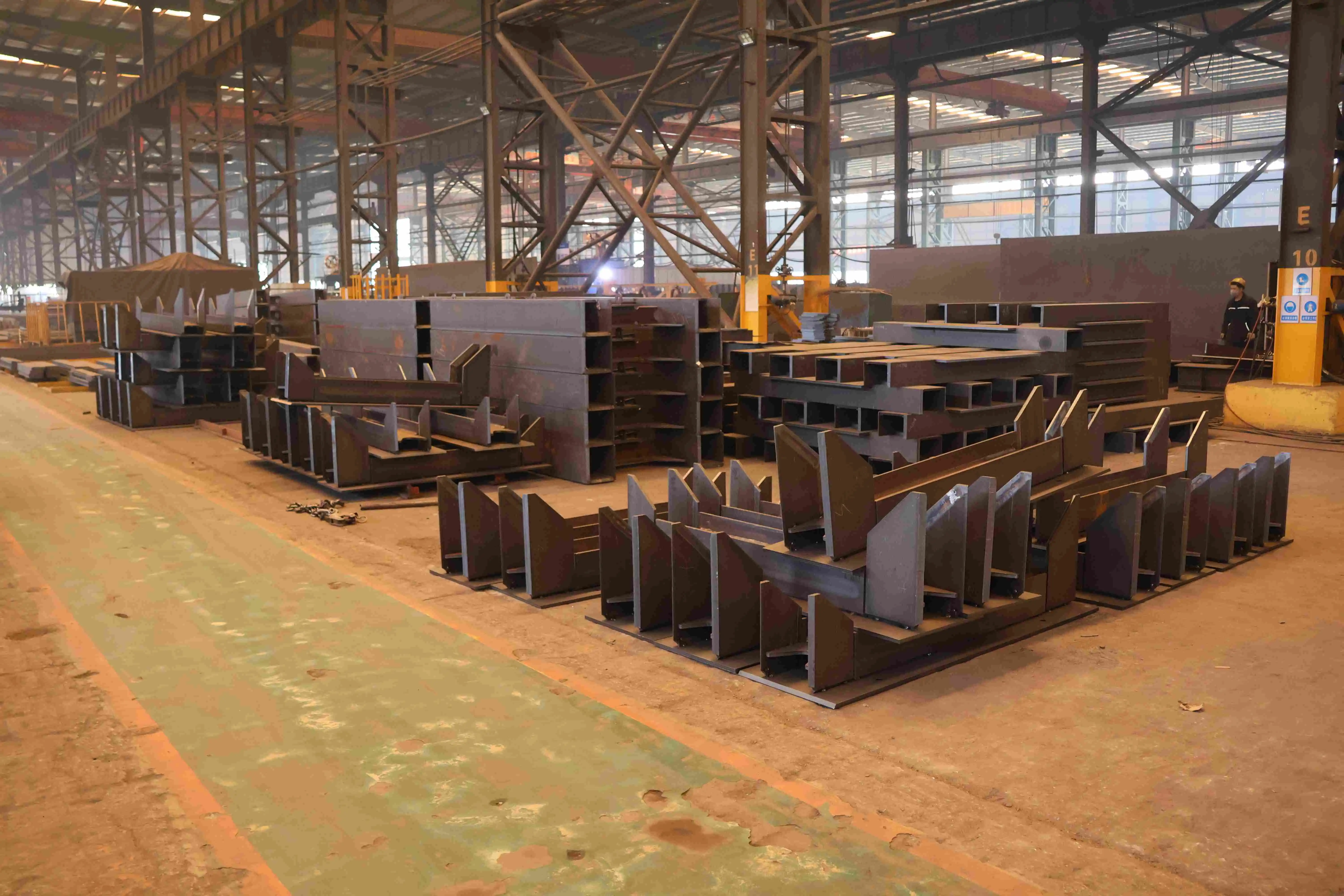
Triangulation is still the most important part of steel truss girder efficiency. Each triangle is a rigid block that doesn't bend. Loads are transferred through parts that are pin-connected or welded. Chord members, which are the horizontal elements at the top and bottom, mostly stop bending moments from turning into axial forces, while web members keep the structure from buckling. Some important things to think about when designing something are the member slenderness ratios, the effects of joint eccentricity, and the need for horizontal support. Modern engineering software uses finite element analysis to model these interactions and make sure they are in line with limits on serviceability and final power. When choosing materials, engineers usually choose high-strength structural steel types like ASTM A572 Grade 50 or S355 alternatives, which have yield strengths of about 345 to 355 MPa. These requirements make sure that the structure will behave in a predictable way when it is subjected to code-required mixtures of loads, such as dead loads, live loads, wind pressures, and earthquake actions.
Advantages of Steel Truss Girders in Industrial Applications
When procurement managers look at building systems, structural efficiency is what they care about most. The benefits go beyond the initial prices of materials; they affect the overall cost of the job in a number of ways.
Weight reduction represents an instant gain. A 30 meter long steel truss girder usually weighs 60 to 70 percent less than a solid plate girder of the same size. This quality affects project costs in a number of ways: foundation systems need less reinforcement, cranes can move parts more easily during assembly, and moving multiple units is easier to plan. Using steel truss girders instead of traditional beams cut the amount of base concrete needed by 38% on a recent cold storage facility job in Minnesota. This directly cut down on costs and building time.
Long-span capability without intermediate columns transforms functional layouts. Distribution centers make the best use of truck paths, factories allow for flexible changes to the layout of production lines, and airport hubs create public areas without columns. We've provided 45-meter-long steel truss girders for car assembly plants that needed clear floor space for overhead crane operations. The depth of these members—about 3 meters—stayed within the acceptable range for the building envelope while passing the L/360 serviceability standards for deflection.
Adaptability to harsh environments distinguishes quality manufacturing. When properly finished with coatings that prevent corrosion, these buildings work well in petroleum plants, seaside ports, and mining operations. This is shown by our -60°C Weathering Steel Anti-corrosion Technology, which was created by working together with people who are developing green energy in the Arctic. A project to place wind turbines in northern Russia needed structural parts that could stay flexible and not break easily at very high temperatures. The performance of these parts was confirmed by Charpy V-notch testing that met the extra standards of ASTM A6.
Because of all of these benefits, infrastructure builders are specifying steel truss girders more and more. The investment pays off when plans are sped up, work hours are cut down during installation, and the structure lasts a long time, requiring few repairs over its lifetime.
How to Calculate Steel Truss Girder Load Capacity – A Practical Guide
Identifying Load Types and Their Impact
A correct capacity estimate starts with making a list of all the forces that the building will have to deal with. The self-weight of structure parts, roofing materials, mechanical systems, and fixed objects are all examples of dead loads. Live loads depend on the usage. For example, warehouse storage may require 125 psf, while equipment platforms need engineering for heavy machines. Environmental loads add to the complexity. For example, wind forces estimated according to ASCE 7 change depending on the type of exposure and the roughness of the ground, while seismic demands change depending on the type of soil at the site and the regional acceleration factors. Dynamic loads, like those from moving cranes or equipment that shakes, require more than just checking the power at rest.
Step-by-Step Calculation Methodology
Matrix analysis tools like SAP2000 or STAAD.Pro are used in modern engineering to describe how steel truss girder behavior is modeled. The process starts with shape information, such as the positions of nodes, the connections between members, and the support conditions. Constitutive relationships are set by the material's qualities, such as its yield strength, elastic modulus, and thermal expansion factors. Load cases are put together according to the rules, using LRFD (Load and Resistance Factor Design) principles to combine factored numbers. The software solves equilibrium equations and shows the forces on members, the movements of joints, and the responses of supports. Then, engineers check each member's bending strength using effective length factors from AISC standards. They also check connections for proper bolt shear, bearing, and weld throat. This process keeps going over and over again until all limit states meet the code requirements with enough safety gaps.
Safety Factors and Material Certification
Resistance factors built into design rules take into account differences in materials, manufacturing errors, and loading risks. For flexural bending, tension members usually use φ = 0.90, while compression elements use the same value. When you add these things together with load amplification (1.2 for dead load and 1.6 for live load in most cases), you get safe gaps that keep things from breaking. It's important to be able to track down materials, and mill test records that list their chemical makeup and mechanical qualities make sure they meet the requirements for each grade. Our ISO 9001-certified quality management system at Zhongda keeps full paperwork chains from buying raw materials to final review, making sure that every part meets the terms of the contract. Our ultra-thick plate cutting accuracy of ±0.2mm supports tight manufacturing limits that are necessary for pre-engineered systems that need to be put together in the field without any changes being made on-site.
Procurement Insights for Steel Truss Girders – Navigating Choices and Suppliers
Evaluating Manufacturer Capabilities
There's more to choosing a manufacturing partner than just looking at prices. Certifications, like ISO 9001 for management processes, ISO 14001 for environmental controls, and OHSAS 45001 for worker safety, show that quality systems work. These standards show how mature a company is and what it does to reduce risk. Technical skills are also important: does the seller have the right lifting tools for big assemblies? Can their welding methods work with materials that have thick sections? Do they keep measurement accuracy control that is checked by a third party? We tell buying teams to ask to see tours of production facilities so they can see things like CNC drilling lines, shot-blast chambers, and paint booths that have a direct effect on the quality of the steel truss girders they buy.
Custom Fabrication and Lead Time Factors
Standard steel truss girders speed up shipping, but special work is needed for complicated tasks. When designing something with complicated shapes, integrating it with other structures, or needing specific link details, engineers need to work together early on. Different manufacturers have different minimum order amounts. Some specialty fabricators can work with samples of just one unit, while high-volume producers are most efficient when they have more than 200 tons of product in stock. Lead times reflect this level of complexity: simple, repeating steel truss girders may be shipped within 6 to 8 weeks, but engineered-to-order parts that require approval drawings, manufacturing, and finishing could take 14 to 16 weeks. When providers are clear about project plans, they can use their production capacity wisely and avoid expensive expediting fees.
Partnering with Established Suppliers
Big names in the industry, like ArcelorMittal and Tata Steel, set standards for the quality of raw materials. Specialized manufacturers, like Zhongda, then turn those materials into precision-engineered steel truss girders. Our 60,000-ton annual capacity serves markets around the world, from Russia's Arctic bridge projects to Australia's mining equipment supports. This shows that we are flexible across climate zones and application sectors. B2B clients trust established providers because they have a history of doing what they say they will do, like case studies, long-term warranty support, and expert service access. When looking at possible partners, you should see if they are ready to help with the design process, make value engineering suggestions, and provide field services to help with installation. These joint traits often set good providers apart from strategic partners who can contribute to the success of a project in ways other than just delivering parts.
Conclusion
The triangulated shape of these steel truss girders has clear benefits: it maximizes load capacity by controlling the behavior of axial members; it reduces weight, which saves money on foundations; and it lets you create flexible internal plans. For proper design, you need to know about the different types of configurations, do an accurate load analysis, and choose qualified production partners who keep their quality systems up to date. Comparing the answer to other options, like solid beams, concrete girders, and different connection methods, helps procurement teams make decisions that balance performance needs with price limits. Lifecycle factors go beyond the original installation and include things like upkeep schedules, methods for stopping corrosion, and making sure that new safety standards are followed. When projects need solid long-span solutions, these engineered assemblies have been used in business, industrial, and building settings around the world.
FAQ
What is the typical service life of a steel truss girder in industrial environments?
When properly built and kept, steel truss girders often last longer than 50 years in modest exposures. Coating quality, environmental harshness, and loading strength are some of the things that affect how long something lasts. Structures in climate-controlled stores don't break down as quickly, but structures near the coast or in chemical processing plants need extra safety and careful upkeep. For crane runway uses, fatigue comes into play—AISC Design Guide 7 says that designs should take stress range and cycle numbers into account; if done right, these designs should be able to last up to 2 million cycles.
Can truss girders be customized for specialized structural demands?
Of course. Engineering analysis takes into account complex shapes, heavy loads, and connecting new buildings to old ones. Customization includes details about the connections, camber specs that account for bending, and material choices that are appropriate for the surroundings. Collaborative design development is helpful for projects that need to deal with earthquake bracing, blast protection, or thermal expansion accommodation. By giving early on specific loading scenarios and architectural limits, fabricators can find the best solutions that meet both functional and cost goals.
How do environmental factors affect truss performance?
Extreme temps can change how flexible a material is. For example, low temperatures make it more likely that it will break easily, which can be dealt with by Charpy tests and grade selection. Members that are limited are put under stress by thermal expansion, which can be controlled by using expansion joints or flexible connections. Corrosive atmospheres speed up section loss if protection coatings are not applied at the same level of intensity as the exposure. Changes in humidity and temperature can cause condensation, which could trap moisture in closed areas. This risk can be reduced by adding air holes and properly sealing the joints. To make sure that energy is dissipated predictably during ground motion, seismic zones need flexible detailing and capacity design principles.
Partner with Zhongda for Superior Steel Truss Girder Solutions
When choosing a steel truss girder manufacturer, you need to be sure of their technical knowledge, the accuracy of their work, and their ability to provide service all over the world. You can trust Zhongda Steel to do a great job on even the most difficult projects for 20 years. Our ISO 9001, 14001, OHSAS 45001, and EN 1090 compliance make sure that every part meets the highest standards of quality around the world. We offer BIM-driven prefabrication accuracy and ultra-thick plate cutting tolerances of ±0.2mm, which means that you don't have to make expensive changes in the field. Our modern fabrication facilities cover 120,000 m² and can handle 60,000 tons per year. Our -60°C Weathering Steel Anti-corrosion Technology has been used to build bridges in the Arctic and in difficult mining settings and has been trusted by leaders in the industry, such as China Railway, CSCEC, and BMW. Whether you're building a business building, an infrastructure project, or an industrial facility, our engineering team works with you from the planning stages to the delivery phase to find the best structural solutions for your site's load conditions and limitations. Contact Ava@zd-steels.com right away to talk about your project needs and get a personalized manufacturing plan backed by world-class engineering.
References
American Institute of Steel Construction. (2016). Specification for Structural Steel Buildings (ANSI/AISC 360-16). Chicago: AISC.
European Committee for Standardization. (2005). Eurocode 3: Design of Steel Structures – Part 1-1: General Rules and Rules for Buildings (EN 1993-1-1). Brussels: CEN.
Salmon, C.G., Johnson, J.E., & Malhas, F.A. (2009). Steel Structures: Design and Behavior (5th ed.). Upper Saddle River: Pearson Prentice Hall.
American Society of Civil Engineers. (2017). Minimum Design Loads and Associated Criteria for Buildings and Other Structures (ASCE/SEI 7-16). Reston: ASCE.
Fisher, J.M., & Kloiber, L.A. (2006). Steel Design Guide 7: Industrial Buildings – Roofs to Anchor Rods (2nd ed.). Chicago: American Institute of Steel Construction.
Geschwindner, L.F. (2011). Unified Design of Steel Structures (2nd ed.). Hoboken: John Wiley & Sons.
YOU MAY LIKE

_副本_1754364944578.jpg "Box Girder Beam Bridge")