What Materials are Used in a Steel Box Girder Bridge?
2026-04-17 08:57:33






When people talk about what a steel box girder bridge is made of, they usually talk about high-performance structural steel, like types ASTM A709 and A572, which have a tensile strength of over 345 MPa and a high resistance to wear. Carefully chosen steel alloys, specialized welding supplies, high-strength bolts, and improved corrosion-resistant coatings are used to make these hollow box-shaped structures. The closed cross-sectional shape requires strict material uniformity to ensure torsional stability and long-span capability. This makes material choice a key factor in how well the bridge works, how long it lasts, and how safe it is.
Overview of Steel Box Girder Bridge Materials
Primary Structural Steel Specifications
Any steel box girder bridge system is held together by its main structural steel, which is picked for its mechanical qualities that balance strength, weldability, and longevity in harsh environments. In this area, high-strength low-alloy steels are most common. In North American markets, ASTM A709 Grade 50W and Grade HPS 70W are the standards for the business. These metals have yield strengths of 345 MPa and 485 MPa, but they still have the ductility needed to absorb seismic loads and the resistance to wear that is needed for heavy traffic loads that happen over and over again. European standards are similar to these, with EN 10025 S355 and S460 types that offer similar performance qualities that are good for global infrastructure projects.
Different types of weathering steel need extra attention in this material group. These special metals, which are identified by the "W" suffix in ASTM terminology, create a protective patina when they are exposed to the air. This is a stable rust layer that stops further rusting from happening. This feature is very helpful for lowering long-term upkeep costs because it means that the steel doesn't needs to be painted as often, which is a problem with regular steel in outdoor settings. The copper, chromium, and nickel alloying additions that make this self-protecting behavior possible need careful draining design to keep water from building up inside the sealed box section, which would speed up internal corrosion instead of slowing it down.


Secondary Components and Connection Hardware
Box girder systems are held together by a lot of different parts, not just the main plate material that forms the flanges and webs. When putting together modules in the field, high-strength nuts that meet ASTM A325 or A490 standards are used to connect them. These fasteners are put through strict tests to make sure their tensile strengths are higher than 830 MPa. This makes sure that parts keep their preload integrity under dynamic loading situations. Design theory determines whether to use bearing-type or slip-critical connections. Slip-critical assemblies provide better fatigue performance at connection surfaces.
Another important thing to think about when it comes to materials is welding tools, especially since making box girders requires thick-section welding. Low-hydrogen electrodes that match or slightly exceed the strength of the base metal stop hydrogen-assisted cracking in heavy parts. Flux-cored arc welding wires make high-deposition-rate industrial welding easier. At Zhongda, we follow the AWS D1.5 Bridge Welding Code guidelines for all of our manufacturing. To check the quality of every weld, we use non-destructive testing methods like ultrasound examination and magnetic particle inspection. This strict method makes sure that the link areas, which are usually the weakest parts of welded structures, have the same level of reliability as or better than the performance of the base material.
Advanced Protective Coating Systems
New and improved protective coating systems greatly increase the useful life of materials, which makes choosing the right covering as important as choosing the right base metal. Modern three-coat systems usually have zinc-rich epoxy primers that protect against cathodic damage, middle epoxy layers that keep water out, and polyurethane topcoats that are stable in UV light and keep the color. The total thickness of the dry film is usually between 250 and 300 micrometers, and it is measured to provide C5-I or C5-M corrosive environment protection according to ISO 12944 standards. These levels are right for industrial settings and sea coastal zones, respectively.
Zhongda's own anti-corrosion technology for steel box girder bridge uses dehumidification systems inside sealed box sections to keep the relative humidity below 40%, which gets rid of the water that oxidation processes need. This new method works with coating systems on the outside, and it stops internal rust problems that older methods of protection that only work on the outside can't fix. When you combine modern coatings on the outside with temperature control inside, you get a complete plan for protecting materials that makes the expected service life longer than what is usually thought for bridges.
Essential Properties and Advantages of Steel in Box Girder Bridges
Mechanical Performance Characteristics
There are more mechanical qualities of structural steel than just tensile strength numbers that make it suitable for use in a steel box girder bridge. Charpy V-notch impact testing measures fracture hardness. This makes sure that the material stays flexible at low service temperatures, stopping brittle fractures that could be very dangerous. ASTM A709 standards require minimum impact energy values at certain temperatures. For example, at -51°C, Zone 3 standards expect 27 joules of energy. This cold-temperature performance is very important for bridges that serve northern regions or high-altitude places where temperature changes can damage materials.
Another important performance measure is fatigue resistance. During their design life, box girder structures are loaded and unloaded millions of times. Stress builds up at welding details, which can be where cracks start. High-performance steel types have improved grain structures and managed alloying that stop fatigue cracks from spreading, which makes the part safe to use for longer. The material qualities and design details—such as smooth weld profiles, ground flush connections, and smart placement of stiffeners—work together to achieve a fatigue life goal of more than 100 years under normal traffic loading conditions.
Comparative Material Advantages
Because structural steel is stronger than most other materials of the same weight, it has real benefits in building. A 150-meter-long steel box girder might weigh only a fifth as much as a similar prestressed concrete option. This would greatly reduce the weight on the base and the cost of the substructure. This low weight also makes it easier to move prefabricated segments and lets cranes on construction sites handle bigger modular units, which speeds up the building process and keeps traffic from getting backed up during bridge repair projects.
When engineering teams compare different materials for middle and long-span bridges, steel box girders always show strong performance advantages in a number of areas. While concrete box girders are cheap for spans under 100 meters, they have trouble with self-weight penalties as spans get longer, which means they need bigger cross-sections that make base needs even higher. Steel is stronger than concrete, so it can have greater span-to-depth ratios—often up to 25:1—than concrete. This means that the bridge has less of an effect on the environment and there is more space under the deck.
Another area where steel systems do really well is construction speed. When the prefabricated steel box pieces get to the job site, they come with perfectly made connection details that make assembly quick and easy. Launching gantries or heavy-lift cranes can be used for this. When accelerated bridge building methods are used, projects can often raise more than 800 tons of bridges every month. Zhongda has shown this speed in a number of important installations. Because of this speed benefit, concrete casting companies don't have to close as many lanes for as long, which lowers the costs of managing traffic and the damage to the local economy.
A less visible but just as important material benefit is that maintenance can be done easily. The hollow inside of steel box girders can hold constant lighting, air ducts, and walkways. This turns a solid mass of concrete that would be impossible to reach into a place that can be inspected. Engineers can look at the inside of things directly, find the first signs of rust, and fix them before they cause damage to the structure. This makes the lifecycle management more reliable, so asset owners can use condition-based maintenance instead of conservative time-based intervention plans that might waste resources or miss problems as they happen.
Common Construction Methods and Material Integration
Precision Fabrication Processes
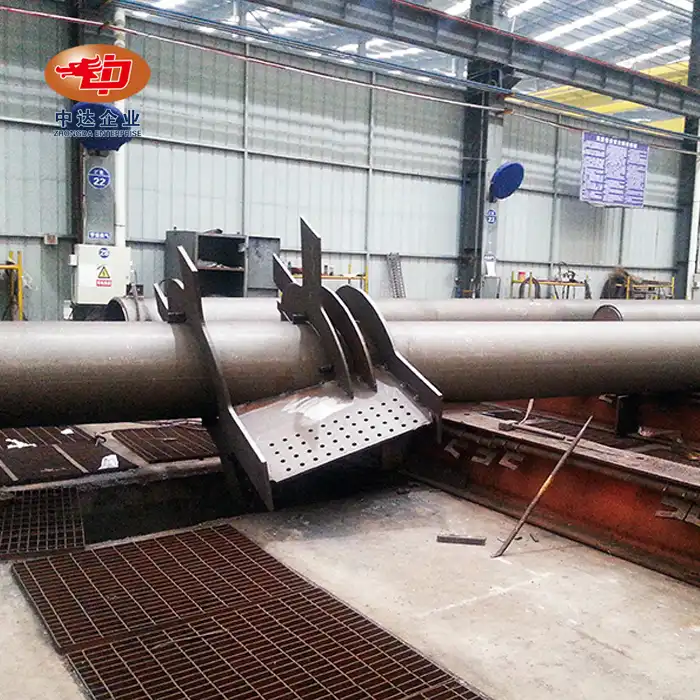
Ultra-thick plate cutting is the first step in making steel box girder bridge parts. CNC plasma or oxy-fuel torches cut complex shapes out of steel plates that are 12 mm to over 100 mm thick. Cutting tolerances at Zhongda are within ±0.2mm, which means that flange plates, web plates, and stiffener elements fit perfectly during assembly without needing too many fitting changes that could lower the quality of the joint. This level of accuracy is very important when parts that were built over many months have to fit together properly when they are put together in the field, hundreds of kilometers from where they were made.
Plate forming processes take flat plates and shape them into the curved or angled curves that make up box design. Smaller stiffeners and link plates are shaped by press brakes, while large web plates and top flanges are shaped by multi-point press systems or incremental bending tools. It's important to pay close attention to residual stress management during forming operations because too much cold working can weaken the material or cause geometric flaws that spread to later stages of manufacturing. During these shaping steps, controlled forming processes and stress-relieving heat treatments keep the material's qualities within the limits set by the specifications.
The most important part of the manufacturing process is assembly welding, which joins individual plates together to make solid units. High-quality lengthwise seam welds can be made between flanges and webs using automated submerged arc welding. For more complicated three-dimensional intersections at stiffener connections and internal diaphragm attachments, semi-automatic flux-cored arc welding is used. Welding process standards, which were created after a lot of qualification testing, list factors such as preheat temperatures, interpass temperatures, and post-weld cooling rates. These are all set up to keep the weld metal and heat-affected zones from cracking and reach the desired mechanical properties.
Field Assembly and Erection Strategies
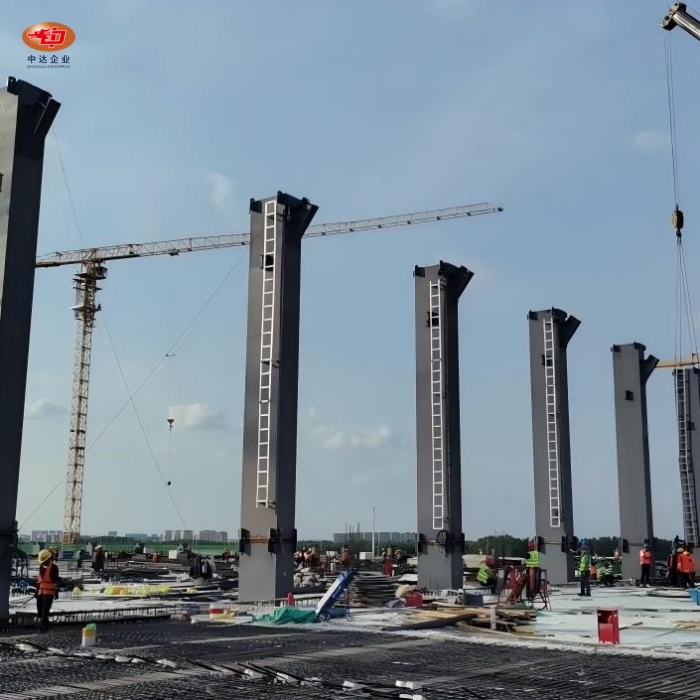
Due to transportation issues, most box girder bridges arrive at the site in separate modules that need to be joined together in the field. Segment lengths are usually between 12 and 30 meters, which is a good compromise between how easy it is to carry and how many field joints need to be put together. Field splicing is mostly done with high-strength bolted links that use slip-critical joints. In these joints, shear forces are carried by friction between faying surfaces instead of bolt shear or bearing against plate edges. This way of thinking about connections is better at withstanding wear than bearing connections, which is important for joints that will be loaded with traffic over and over again during the structure's lifetime.
One installation method that works especially well for box girder building is incremental launching. Using hydraulic jacks and low-friction sliding bearings, segments that were put together behind the foundation move over temporary supports one at a time. This method gets rid of the need for a lot of falsework under the bridge, which is helpful when crossing deep slopes, busy roads, or rivers that are important for the environment. When launching, it's very important that the material uniformity across segments is maintained, since differences in strength between segments could cause stress patterns that are hard to predict when the cantilevered nose slowly moves across each span.
Crane-based construction is an alternative method that is best for shorter spans or when heavy-lifting equipment can be put in place without blocking entry to the site. Mobile cranes or special gantry systems place pre-assembled box pieces directly onto fixed bearings. This lets multi-span bridges be installed in separate lifting operations. To make sure that temporary rigging loads don't put too much stress on girder parts that were built for normal loading patterns instead of point lifting forces, this method calls for a thorough lifting analysis. Zhongda's engineering team does full lifting studies and creates unique lifting lug designs to make sure that everything is handled safely, from the shop floor to the final placing.
Maintenance and Longevity: Protecting Your Steel Box Girder Bridge
Corrosion Management Strategies
Environmental exposure is the main thing that can shorten the life of a steel box girder bridge. Corrosion processes weaken sections over time and can start stress cracks at corroded details. A multilayered defense system against rust is made up of protective coatings, environmental controls, and checking routines. Coatings on the outside of steel surfaces keep out moisture and air that are needed for oxidation processes. They work as the first barrier. When choosing a coating, it's important to think about how it will be exposed to different environments. For example, coatings need to be made differently for industrial settings that are full of sulfur compounds compared to salt spray environments at sea or calm country areas.
Corrosion inside sealed box parts creates special problems that can't be seen from the outside. Moisture getting in through weak joint seals or condensation building up on inside surfaces can cause corrosion even if the outside coats are still in good shape. Zhongda's dehumidification systems protect against this weakness by automatically controlling the amount of moisture in the air and keeping the temperature inside below the 60% relative humidity level that starts active rusting. These systems have humidity monitors that set off operation cycles, desiccant dryers or refrigeration-based dehumidifiers, and air movement fans that move conditioned air around the box cross-section.
Cathodic protection is another way to stop rusting that can be used in some situations. Installing sacrificial anodes or impressed current systems can protect parts of box girder piers that are underwater or that are exposed to salty water used for deicing. Cathodic protection isn't used as often on bridge superstructures as it is on naval buildings or pipes, but it should be thought about for bridges in very corrosive places where the performance of the coating system alone might not be enough to reach the service life goals. The electrical infrastructure needed for impressed current systems makes things more complicated, but they lower the rate of corrosion in a way that can be measured by doing yearly tracking studies.
Inspection Programs and Structural Health Monitoring
Most bridge maintenance programs start with eye checks every two years. Trained inspectors write down information about the state of the coating, where sections are missing, and any new cracks or connections that are breaking down. Steel box girders make these checks easier because they can be accessed from the inside, letting workers look directly at parts of buildings that would be hidden in concrete ones. With permanent lights and ventilation in the box area, what used to be confined space entries can be turned into regular walkthrough checks. This makes a full structural assessment much cheaper and easier to set up.
Modern inspection technologies add quantitative information about the state of a structure to visible inspections. Ultrasonic thickness gauging checks how much section capacity is left in rusted areas. This helps decide whether localized corrosion needs to be fixed right away or can be watched over time through subsequent inspection rounds. Magnetic particle and dye penetrant testing find cracks that break the surface that can't be seen by hand. Phased-array ultrasound and radiographic testing, on the other hand, find breaks in the base material or welds that are below the surface. Engineers can use these nondestructive testing methods to see how structures really are instead of just making safe guesses about how fast they will break down.
Using firmly placed strain gauges, accelerometers, and displacement sensors to track how bridges respond to traffic loads and environmental effects, structural health monitoring systems give continuous performance data between regular checks. Data analytics find changes in the way a structure acts that could mean damage is starting, which leads to more in-depth inspections of areas with strange reaction patterns. While the cost of installation makes it hard to use on many structures, strategically tracking important or unique structures gives asset managers real-time information about their health, which helps them plan maintenance better and stay within their budget. Zhongda works with experts in tracking systems to build in fixing holes for sensors during the building process. This makes adding these systems to finished structures easier after the fact.
Conclusion
The choice of material has a big impact on the performance of a steel box girder bridge, affecting its structural capacity, ability to be built, lifetime costs, and expected service life. High-strength low-alloy steels have the mechanical properties—tensile strength, fracture toughness, and fatigue resistance—that are needed for long-span buildings to be stable. Advanced coating systems and weather controls keep these materials from breaking down due to corrosion. Precision in fabrication, strict quality control, and technical know-how are all very important when turning raw steel into finished bridge parts. This requires agreements with manufacturers who can show they can do everything from planning to production to long-term support. When procurement workers and engineering teams understand these basic material concepts and supply chain issues, they can make choices that balance the needs of the current project with the expected service for decades.
FAQ
What steel grades are most commonly used in steel box girder bridges?
steel box girder bridge units are usually made of high-strength low-alloy steels. In North America, ASTM A709 Grade 50W and Grade HPS 70W are the requirements. These standards give yield strengths of 345 MPa and 485 MPa, and the weathering steel chemistry makes the steel more resistant to rust. EN 10025 S355 and S460 grades are used in European markets and are the same. The type of material used varies on the length of the span, the loads that it will be under, and its exposure to the environment. Longer spans and harsher regions tend to favor higher-strength grades that require smaller sections.
How does the choice of materials affect the cost and durability of the bridge?
Choosing the right materials affects many aspects of a project's costs over its entire life. Higher-strength steels require more expensive raw materials, but they also need less total weight and base loads, which could make up for the higher starting material costs. If you choose weathering steel, you won't have to pay for coating upkeep over the life of the building, but you have to be careful when designing the drains. Corrosion-resistant metals and advanced coating systems are investments that pay off in the long run by greatly extending service life. This lowers lifetime costs by delaying repairs and reducing traffic delays caused by maintenance work.
Can steel box girders be customized for specific project requirements?
Steel manufacturing methods naturally allow for a lot of customization, since every bridge project has its own geometry, loading conditions, and environmental concerns. CNC cutting and computer-controlled making equipment can turn project-specific plans into parts that can be made without having to buy the tools needed to shape concrete. Cross-section sizes, steel grades, stiffener shapes, connection details, and covering standards can be changed to fit structural needs, the look of the building, and the owner's tastes. Zhongda's engineering team works together on all aspects of design development, providing value engineering advice that makes designs more efficient for production while still meeting performance standards and making sure they are in line with the project's codes, whether they are AASHTO, Eurocode, or other international standards.
Partner with Zhongda: Your Trusted Steel Box Girder Bridge Manufacturer
Zhongda Steel has been specializing in building projects for 20 years and can combine advanced manufacturing skills with unwavering quality promises. Our 60,000-ton annual manufacturing capacity can handle projects ranging from urban overpasses to super-long-span crosses up to 2,000 meters long. We can do this with the help of our 50-ton crane capacity and ultra-thick plate cutting that can achieve ±0.2mm accuracy. We offer full turnkey solutions, from optimizing designs using BIM to putting them together for the first time. Our services are backed by ISO 9001/14001/45001 and EN 1090 certifications that meet international standards. Our steel box girder bridge designs have been used for important projects all over the world, from harsh environments in the Arctic to tropical Southeast Asia. Our clients include China Railway, CSCEC, and international companies. Get in touch with our engineering team at Ava@zd-steels.com to talk about your unique needs and find out how our proven knowledge, competitive delivery times, and full OEM/ODM skills can help your project succeed. You can look at our portfolio at zd-steels.com and start working with a supplier that is dedicated to building greatness and making a difference around the world.
References
American Association of State Highway and Transportation Officials, AASHTO LRFD Bridge Design Specifications, 9th Edition, Washington DC, 2020.
Chen, W.F. and Duan, L., Bridge Engineering Handbook: Superstructure Design, CRC Press, Boca Raton, 2014.
European Committee for Standardization, EN 1993-2: Eurocode 3 - Design of Steel Structures - Part 2: Steel Bridges, Brussels, 2006.
Taly, N., Design of Modern Highway Bridges, McGraw-Hill Professional, New York, 1998.
Troitsky, M.S., Orthotropic Bridges: Theory and Design, James F. Lincoln Arc Welding Foundation, Cleveland, 1987.
Xanthakos, P.P., Theory and Design of Bridges, John Wiley & Sons, New York, 1994.
_副本_1762409954420_1788229249106.jpg "steel column design")
_副本_1753431734739.webp "Steel Structure Exhibition Building")
_1754030104098.png "Light Poles")
_副本_1754465368115.jpg "Lattice Column")