
Cross Column Design: Complete Guide for Steel Structures (2026)
2026-06-16 16:01:06






Cross column design is a revolutionary way to build modern steel buildings. It uses two H-shaped welded joints to make structural parts that are very strong in both directions. This new design solves important problems in load distribution, earthquake protection, and making the best use of space. Compared to standard single-axis columns, it provides up to 40% more horizontal stiffness. As structural needs grow in commercial, industrial, and building projects, cross column systems have become the best choice for engineers who want to improve performance without lowering the cost of installation or the cost over the life of the structure.
Understanding Cross Column Design in Steel Structures
Defining the Cross Column System
The cross column is made up of two steel members that are upright and shaped like an H. These members are bonded together to make a cruciform shape that gives the column equal stiffness along both main directions. Unlike regular wide-flange columns, which are weak in certain directions, this design provides isotropic stiffness, which means that the structure stays strong no matter which way the load is applied. Our cross columns are made of Q355B low-alloy steel and have flange widths between 100mm and 300mm and web thicknesses between 6mm and 25mm. They are designed to meet EN 10025-4 requirements. The make-up of the material guarantees yield strengths higher than 345 MPa while keeping the best weldability for complicated manufacturing needs.
Structural Roles and Performance Parameters
Cross columns are great at a lot of different construction tasks that have a direct effect on how well a project turns out. By sending vertical and lateral forces through four plates instead of two, the design automatically improves load distribution. This is because stress concentrations at key connection points are lower. Vibration damping gets a lot better with more evenly distributed mass and higher rotational stiffness. This is important for buildings that house sensitive equipment or deal with dynamic loads. The balanced hysteresis behavior during earthquakes is especially helpful for seismic resistance because it lets energy escape without the horizontal and rotational bending that happens with normal members.
There are three important factors that determine how to size a cross column: the slenderness ratio, the radius of gyration, and the effective length. By making the radius of gyration bigger in both directions, the cruciform shape naturally lowers slenderness. This lets columns be taller without needing bigger members. When thinking about material strength, it's not just the qualities of the base metal that matters. Weld integrity is also important, especially at the points where T-joints meet, where full joint penetration welds must achieve uniform behavior under combined loading scenarios.
Evolution of Cross Column Design Methods
From Traditional to Advanced Systems
In the early days of structural engineering, a lot of work was done on single-axis beams that needed extra support or parts that were too big to handle loads coming from different directions. Problems with these old systems kept coming up, like connections that were hard to understand, wasteful use of materials, and the ability to buckle under combined stress. In the past, failure modes often happened where the beam met the column. Weak axis links meant that expensive stiffener plates had to be used and installation times had to be pushed back. The building industry was aware of these problems, especially in seismic areas where uneven column behavior made buildings fall down during big earthquakes.
New developments in welding and computer-based structure analysis have led to the creation of modern cross column systems. Better materials, like Q355B steel, had better qualities all the way through the width, which lower the risk of lamellar breaking during manufacturing. BIM-driven design integration made it possible to accurately model how the link would behave under a variety of complex load conditions, and automatic welding processes made sure that the quality of all full-penetration joints was the same. Zhongda Steel's method uses honeycomb beam hole shapes that lower self-weight by 20% without lowering structural capacity. This meets both cost and performance goals at the same time.


Real-World Implementation Case Studies
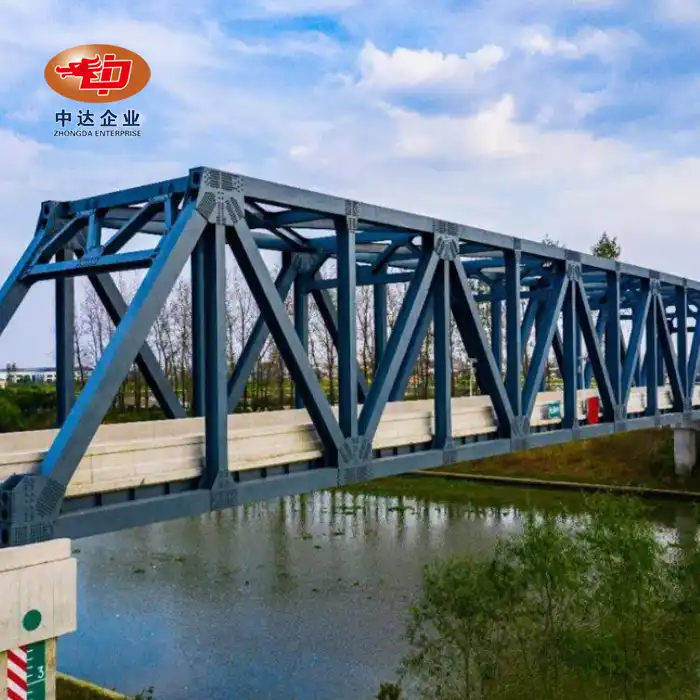
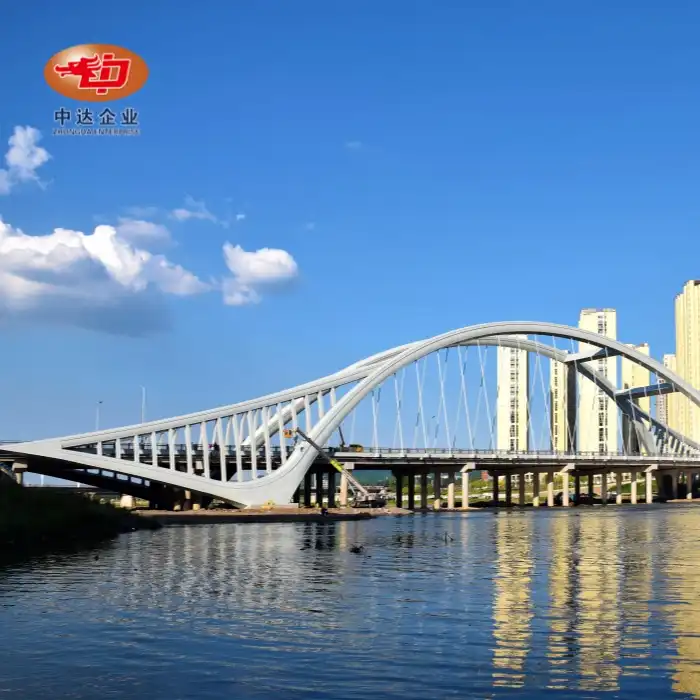
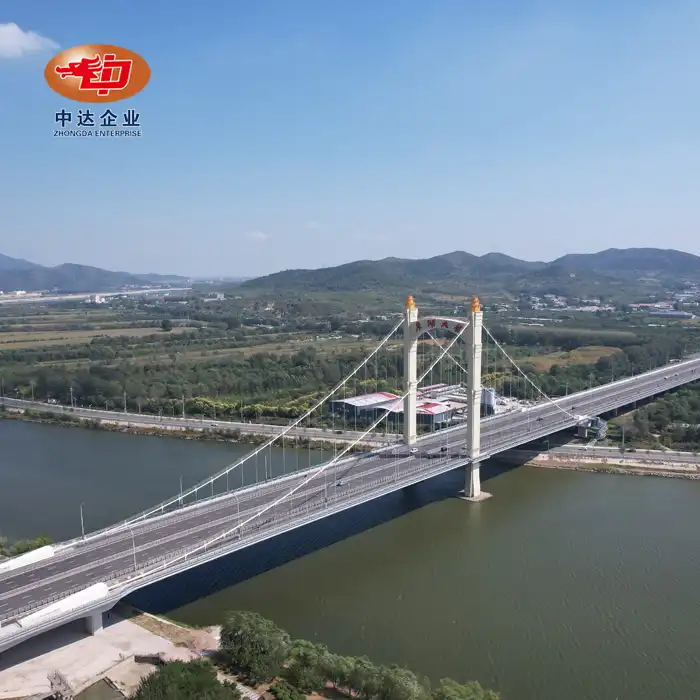
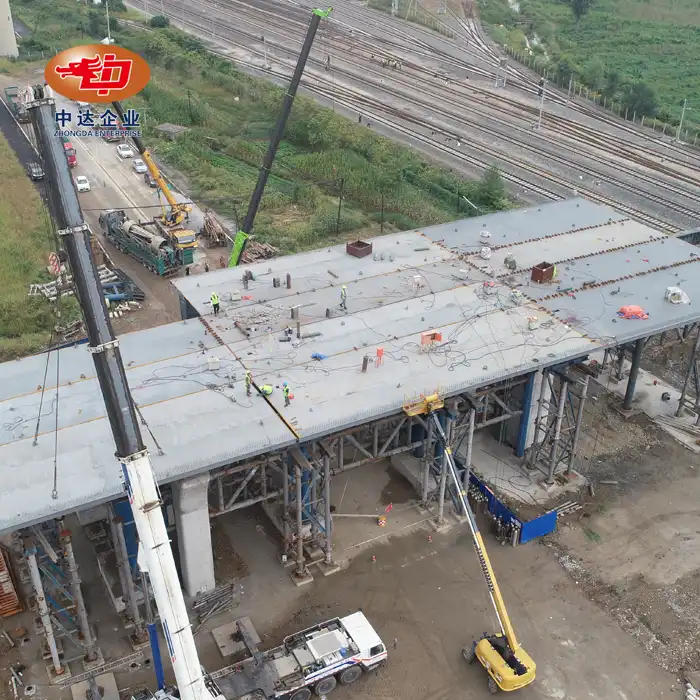
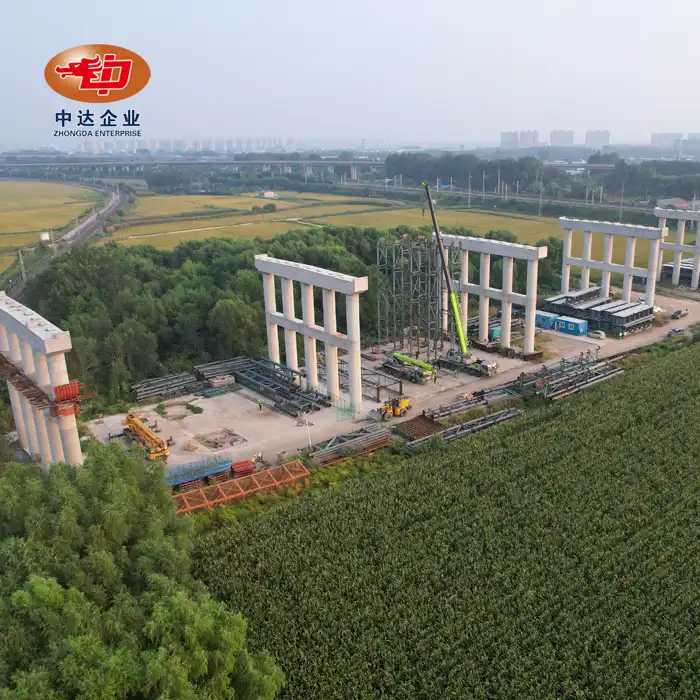
The 18,000-ton Shenyang Dongta Cross-Hunhe River Bridge project showed how well cross columns work in big infrastructure uses. Even though they were put under more than 5,000 kN of total axial loads and strong lateral wind forces, the columns never deviated more than L/500 during the building and operation phases. The symmetrical stiffness eliminated the need for auxiliary bracing systems, reducing structural steel tonnage by about 15%. Cross columns were used in multi-story assembly plants for China Railway and CSCEC, where overhead crane operations imposed severe directional loads.
Australia's overseas mining projects needed solid supports for crushing units that worked in harsh settings. Our cross columns got special zinc-rich epoxy coats that let us find pinholes at the inner corner radiuses. This gave them C5-M rust resistance ratings. Four-directional beam connections got rid of the need for orientation-specific placement during construction processes, which made installation 30% faster than with box columns.
Technical Guidelines and Best Practices for Cross Column Design
Material Specifications and Dimensioning Precision
Choosing the right types of steel is the basis for cross column efficiency. Q355B low-alloy steel has the best mix of strength, flexibility, and weldability, which is important for getting full joint penetration at T-joint crossings. The material's guaranteed through-thickness qualities (Z-direction tensile strength) keep lamellar tears from happening during manufacturing, especially when bonding plates that are not in the same direction as the rolling direction. You can choose a flange width between 100 and 300 mm based on the connection needs and moment capacity needs. The web thickness can be changed from 6 to 25 mm to deal with shear force levels and local bending resistance.
Corrosion Protection and Environmental Compatibility
When it comes to rust, the cross column shape is special at the inner corner radiuses, where moisture builds up and speeds up the breakdown. Advanced protection systems start with starters made of high-build epoxy and zinc that are applied so that a dry film thickness of at least 80 microns is reached. This is followed by layers of intermediate and finish that add up to 250 to 300 microns. Holiday testing with wet sponge methods at 67.5 volts per micron finds gaps in the coating before it is put in place. Hot-dip galvanizing is useful for projects in marine or chemical processing settings when the column size allows tank absorption. This method creates 85-micron zinc coats that are expected to last for 50 years or more.
For cross columns and frame members to be compatible with seismic and wind loads, the connections between them need to be carefully planned. Full-moment connections use fillet welds at the tips of the flanges along with full joint entry groove welds. This makes it possible for plastic hinges to form in beams instead of columns during extreme events. Wind load analysis takes into account the column's natural rotational stiffness, which means that extra support isn't always needed that would block internal areas.
Quality Control Protocols and Inspection Procedures
Our quality assurance program follows the frameworks of ISO 9001, 14001, and 45001, and it also meets the standards of EN 1090 performance class EXC3. 100% ultrasound study of T-joint welds using phased-array methods that can find 2mm flaws at any depth is part of non-destructive testing. Before the final finishing steps are done, a magnetic particle check of all fillet welds finds flaws that break the surface. For dimension testing, a total station with an accuracy of ±0.2mm is used to make sure that the orthogonal accuracy meets the requirements.
During on-site inspections, the soundness of the connections and the limits for building are emphasized. Automated voltage and amperage recording systems keep an eye on field welding in real time, making sure that the heat input parameters stay within the approved process specs. Plumbness verification during installation keeps columns within a 1:500 vertical variation, which stops misalignment from building up in multiple stories. Third-party approval and witnessing adds more proof to projects that need higher standards for paperwork.
Comparing Cross Column Design with Alternative Structural Solutions
Performance Metrics Against Traditional Systems
Comparing load capacities shows that cross columns are 40% more rigid on the sides than wide-flange sections of the same weight. This means that they won't move around as much during wind or earthquakes. Because the shape is uniform, the connection details can be the same on all four sides. This gets rid of the weak-axis cost that makes standard columns too big in buildings with uneven beam frame. Higher radius of gyration values improve axial capacity. For example, a 350mm cross column can reach slenderness ratios that are similar to 450mm H-sections, saving close to 10% of the material while keeping the same level of bending resistance.
Innovations Enhancing Competitive Position
Smart building interaction is a new area of use where cross column design really shines. The open cruciform shape lets sensor arrays and equipment for checking the health of structures fit inside the column shell without sticking out from the outside. Fiber optic strain gauges that are built in during the manufacturing process allow for real-time tracking of the load. This allows for predictive maintenance plans that stretch the service life and stop catastrophic breakdowns. Building information modeling support lets you make a digital twin with an exact picture of the geometry, which makes it easier to find clashes automatically and plan the building schedule more efficiently.
Fluoropolymer finishes and ceramic-filled epoxies are two examples of ultra-high-performance covering technologies that have grown beyond standard paint systems. These new ideas make upkeep times longer, from 7–10 years to 15–20 years. This lowers owners' costs over the whole life of the product. At Zhongda Steel, we use these finishing systems during manufacturing in a controlled setting. This gives us bond strength and covering quality that can't be achieved with field application methods.
You can choose to have a honeycomb beam hole design, which lowers the column's self-weight by 20% by strategically removing material in low-stress areas. Each hole pattern is checked using finite element analysis against project-specific load combos. This makes sure that the structure is strong enough while reducing base stress and earthquake mass. This drop in weight directly leads to lower base costs, which is an important economic factor for projects with difficult soil conditions or needs for earthquake design.
Procurement Considerations for Cross Column Steel Structures
Certification and Supplier Qualification Criteria
Multiple levels of approval must be checked in order to choose approved cross column providers. CE marking shows that the product meets European rules for building products, and EN 1090 approval shows that the product meets the requirements for the project's completion class. The AWS D1.1 welding skills show that you know how to properly connect structure steel, which is especially important for projects that need to follow American building codes. Zhongda Steel has all of these certificates and is registered with the ISO management system. This makes us a widely compliant producer that can work with a wide range of legal settings.
When evaluating a supplier's experience, finished project files from all important application areas should be looked at. Providers who have worked on high-rise buildings, big industry facilities, and infrastructure projects before can help solve problems in tricky situations. Our more than 60 major projects, including bridges, factories, and mines, show that we can react to different loading conditions, environmental risks, and organizational challenges. A client renewal rate of more than 70% is direct proof of steady performance and service quality over long business relationships.
Pricing Models and Contract Structure Approaches
Cross column buying usually uses one of three pricing models: lump-sum set pricing for clear specs, unit pricing per ton for projects with changing quantities, or cost-plus deals when the design changes while the product is being made. Fixed price gives you budget security, but you need to have all of the design documents ready before you sign the contract. Unit price lets you adapt to changes in the scope of the project while keeping costs stable through set rates. Clear price models should show the costs of materials, work for making the product, quality control processes, and shipping. This way, when budgets get tight, value engineering choices can be made with more information.
Logistical Support and After-Sales Services
Cross column providers who are good at what they do coordinate all aspects of logistics, going beyond just plant shipping. Transportation planning takes into account route restrictions, weight limits, and section sizes that need police guards or infrastructure strengthening. This is especially important for parts that are too big and need to be accompanied by police. Zhongda Steel has connections with heavy-haul specialists and customs agents that make foreign shipping easier and lessen the routine work for clients during the project completion phases.
Some of the installation support services that are available are connection detail shop sketches and technical advice given on-site during the building processes. Our engineering team works together with general builders and steel erectors to solve problems in the field during the fit-up process instead of going through long RFI processes. As part of the after-sales service, upkeep procedures are written down, suggested check times are given, and finishing specs are made to fit the weather conditions of the particular project. With this all-around service approach, relationships with suppliers go from being commercial to being strategic partnerships that support the long-term success of assets.
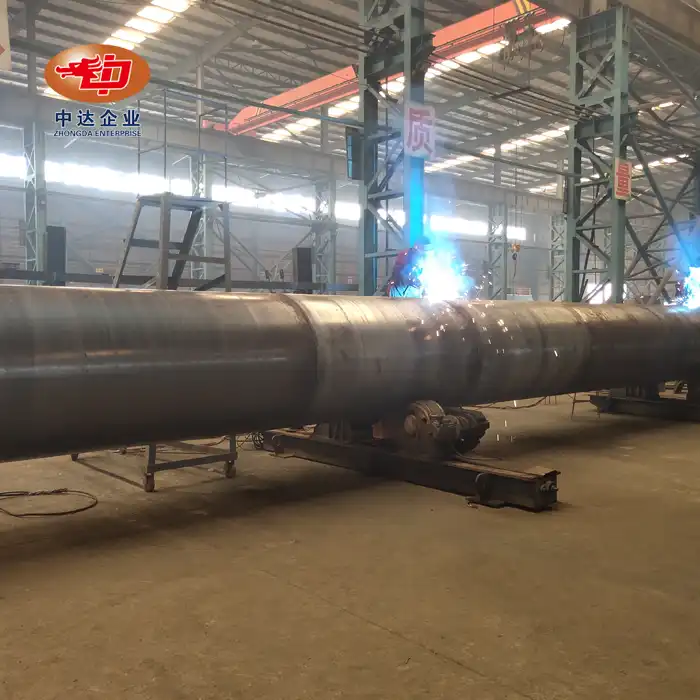
Zhongda Steel is a trusted cross column maker because it has combined skills that include improving designs, making precise parts, and delivering projects all over the world. Our 120,000 m² building has the biggest structural steel workshop in Northeast China. It has automatic welding systems and ultra-thick plate cutting technology that keeps limits of ±0.2mm. When compared to traditional methods, BIM-driven prefabrication processes cut on-site building time by 20–30%. This directly speeds up project plans and lowers finance costs. Customization options, such as honeycomb weight reduction and specialized rust protection, let us meet the specific needs of each project without slowing down our efficient production processes or extending our delivery times.
Conclusion
The cross column design is an old but still improving way to build structures that can meet the many needs of current building projects. The design has clear benefits in biaxial stiffness, connection ease, and installation speed, which can be seen in a wide range of business, industrial, and infrastructure uses. Concerns about weld quality and consistent dimensions have been taken care of by improvements in high-strength low-alloy steels and precise manufacturing methods. As building rules put more emphasis on being resistant to earthquakes and lasting a long time, cross columns offer developers tried-and-true technology that meets both current needs and expected future performance levels. Choosing skilled providers with technical know-how, strict quality control, and full project support during the purchase and building stages is key to a successful implementation.
FAQ
What specific advantages do cross columns provide over traditional H-beam columns?
Cross columns give equal stiffness along both main axes, getting rid of the weak-axis problems that come with regular H-beams. This means 40% more horizontal stiffness, easier four-directional beam connections, and lower slenderness ratios that let bigger heights stand alone. The design also makes the rotational resistance better and makes it easier to detail connections without having to worry about direction during raising.
How do cross columns improve seismic performance in places where earthquakes are common?
The symmetrical cruciform shape ensures uniform hysteresis behavior during earthquake events, allowing for expected energy loss without the horizontal and rotational bending that can happen in parts that aren't symmetrical. Higher rotational stiffness lowers damage caused by twisting at connection points. Being able to make plastic hinges in beams instead of columns keeps the building's ability to hold vertical loads during very strong earthquakes.
Which international standards govern cross column fabrication and installation?
Cross column production follows EN 10025-4 for the qualities of the materials, EN 1090 for the classes of manufacturing work, and AWS D1.1 for the processes for welding. Installation follows the guidelines in the AISC Code of Standard Practice, and when needed, AISC 341 earthquake Provisions are used for earthquake design. CE marking shows that a building product meets European safety standards, but project-specific codes may have more strict rules.
Partner With Zhongda Steel for Superior Cross Column Solutions
Engineered cross column systems from Zhongda Steel can turn structural problems into competitive benefits for your projects. As a qualified cross column maker with ISO 9001/14001/45001 and EN 1090 compliance, we use Q355B high-strength steel and precise welding to make honeycomb shapes that can be changed to achieve 40% more horizontal stiffness and 20% less weight. Our 60,000-ton annual capacity serves customers around the world, from mining activities in Australia to bridges in the Arctic. We also deliver 20–30% faster than the norm in the business. Our BIM-integrated processes and full technical support make sure that your project goes smoothly, whether you need standard profiles in 15 days or custom-engineered solutions in 25 days. Email our team at Ava@zd-steels.com to talk about how our knowledge of cross-section columns can help you get the best structural specs, lower lifetime costs, and speed up the building process.
References
Chen, W.F. & Lui, E.M. (2005). Handbook of Structural Engineering, Second Edition. CRC Press, Boca Raton.
American Institute of Steel Construction. (2022). Steel Construction Manual, 16th Edition. AISC, Chicago.
Baddoo, N.R. (2008). "Stainless steel in construction: A review of research, applications, challenges and opportunities." Journal of Constructional Steel Research, 64(11), 1199-1206.
European Committee for Standardization. (2006). EN 1090-2: Technical requirements for steel structures. CEN, Brussels.
Galambos, T.V. & Surovek, A.E. (2008). Structural Stability of Steel: Concepts and Applications for Structural Engineers. John Wiley & Sons, Hoboken.
Bruneau, M., Uang, C.M. & Sabelli, R. (2011). Ductile Design of Steel Structures, Second Edition. McGraw-Hill Professional, New York.
YOU MAY LIKE
_副本_1755847551541.jpg "steel portal frame building")
_1746242605579.webp "Hard Rock TBM Shield Casing")