How Zhongda Ensures Weld Quality in Steel Box Girder Production
2026-07-17 16:46:53






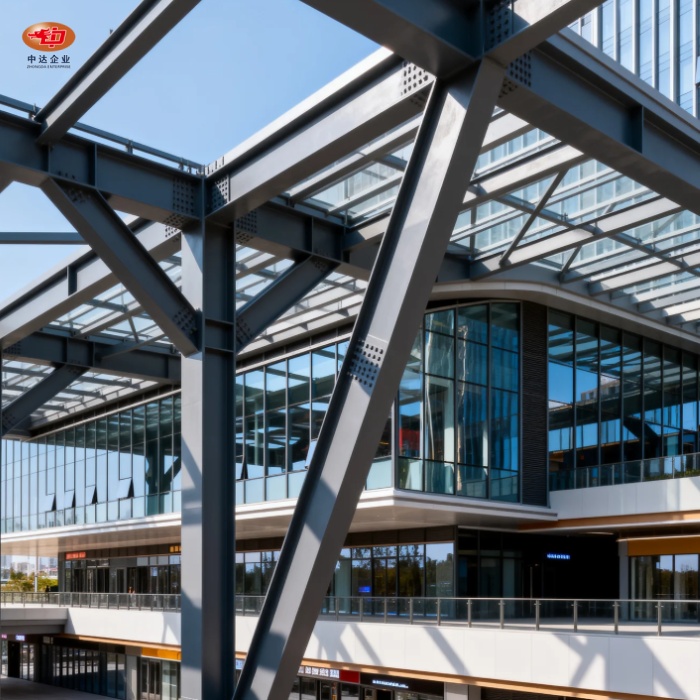
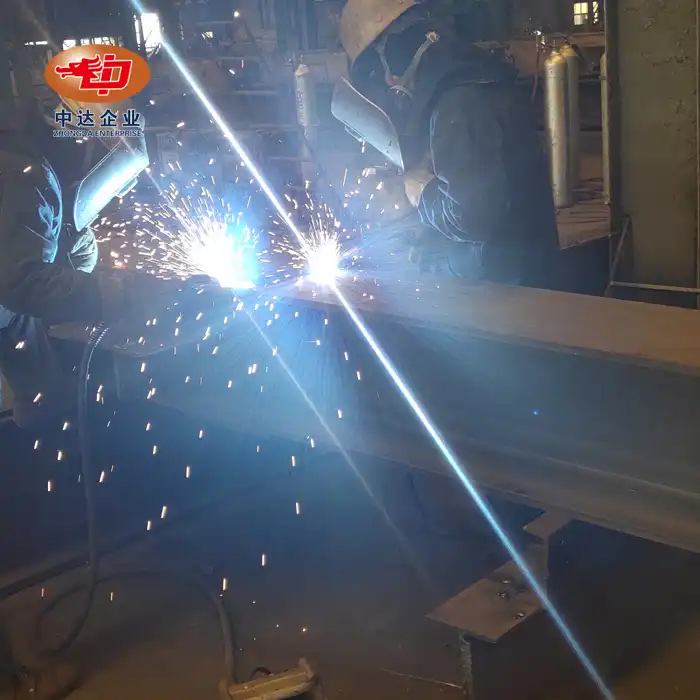
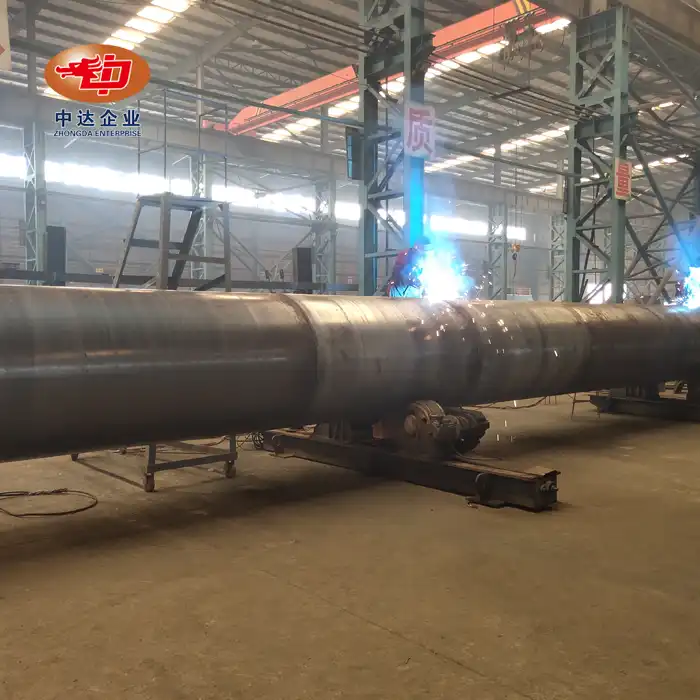
Making sure the quality of the welds in steel box girders needs structured rules that go over every step of the process. At Zhongda, we use a full quality assurance system that includes cutting-edge welding technologies, strict testing procedures, and ongoing process improvement. Our method uses skilled craftsmanship along with automatic robotic welding systems. We use Q345D and Q420D high-strength steels and accurate TIG, MIG, and SAW methods. Each fully welded box section goes through several stages of non-destructive testing, such as ultrasonic and radiographic checking, to make sure that long-span bridges and other important building projects have strong structures.
Understanding the Challenges in Weld Quality for Steel Box Girders
The quality of the weld directly affects the safety of the structure in infrastructure and bridge building projects. Welded box sections are hard to make because of their complicated shape, which requires specialized knowledge and strict quality control.
Common Welding Defects That Compromise Structural Integrity
Cracks are the worst kind of welding flaw. They can be caused by thermal stress during cooling or hydrogen embrittlement in the area that was heated. Under cyclic loads, these cracks can spread, putting the whole system at risk of not being stable. When gas gets caught in weld metal that is hardening, it creates holes that lower the cross-sectional area and load-bearing capacity. Incomplete fusion happens when the base metal doesn't melt all the way and connect with the filler material. This leaves surfaces that aren't fully bonded open to breaking apart when stressed. When shielding isn't done right, slag particles bring brittle nonmetallic contaminants into the weld material.
Material and Environmental Factors Affecting Weld Quality
Controlling the amount of heat that goes into high-strength structural steels like Q345D is very important to keep the grain growth in the heat-affected zone from getting too big, which makes the steel less tough. For thick plate sections, it's important to pay extra attention to preheating and managing the temperature between passes so that the metal doesn't cool too quickly and harden or crack. Conditions in the environment during manufacturing have a big effect on the results. For example, humidity adds hydrogen to welds, wind changes the spread of shielding gases, and low temperatures make thermal gradients bigger.
Why Procurement Professionals Must Prioritize Weld Quality Verification?
For a project to succeed, it's important to choose sources who can prove their welding quality. Poor weld quality causes expensive repairs, delays in the project, and the possibility of catastrophic structure breakdowns. Bridge parts that span 420 meters must stay strong even after decades of use, changing loads, and exposure to the elements. When buying teams know about these problems, they can judge manufacturers based on their past work instead of just their quotes.
Zhongda's Systematic Approach to Ensuring Weld Quality
Since our company began in 2004, we've created a complete quality management system that turns problems with welding into measured gains in performance. Our 120,000 m² building in the Shenyang Economic-Technological Development Zone has high-tech tools for making bonded structures that don't have any flaws.
Standards-Driven Quality Management Systems
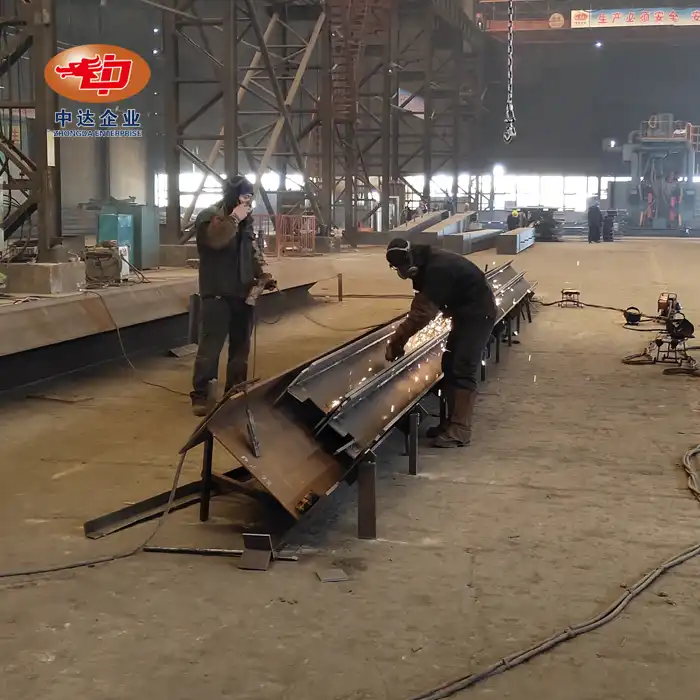
We keep our ISO 9001, EN 1090, AWS, and JIS certifications up to date, which makes sure we follow international welding standards, and this rigorous system is especially essential for a steel box girder, where closed-section welds must withstand complex fatigue and stress cycles over decades. Our quality control system keeps track of all the steps in the process and records them all, from receiving the raw materials to the final review. Real-time data collection lets process deviations be found right away, before they affect the quality of the result. Each welder has up-to-date certifications for certain processes and materials, and they are regularly recertified to show that they are still competent.
Real-Time Monitoring and Defect Prevention Protocols
Automated welding systems use arc tracking technology to find changes in power and current that could mean there are problems. When factors move outside of certain limits, operators get instant tips that let them fix the problem. We use statistical process control to find systematic problems before they lead to rejectable work by looking at data trends across production batches. This proactive method lowers the number of mistakes and raises the level of uniformity in the process.
Case Study: Shenyang Dongta Cross-Hunhe River Bridge Success
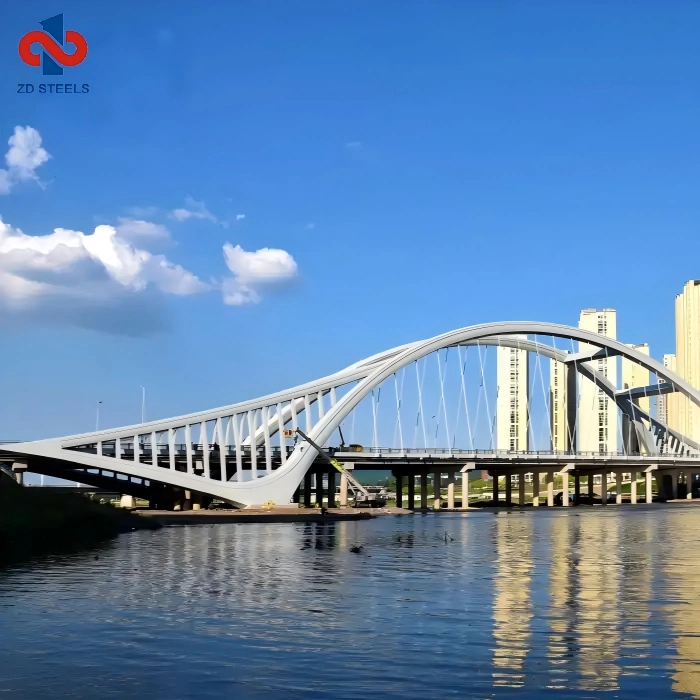
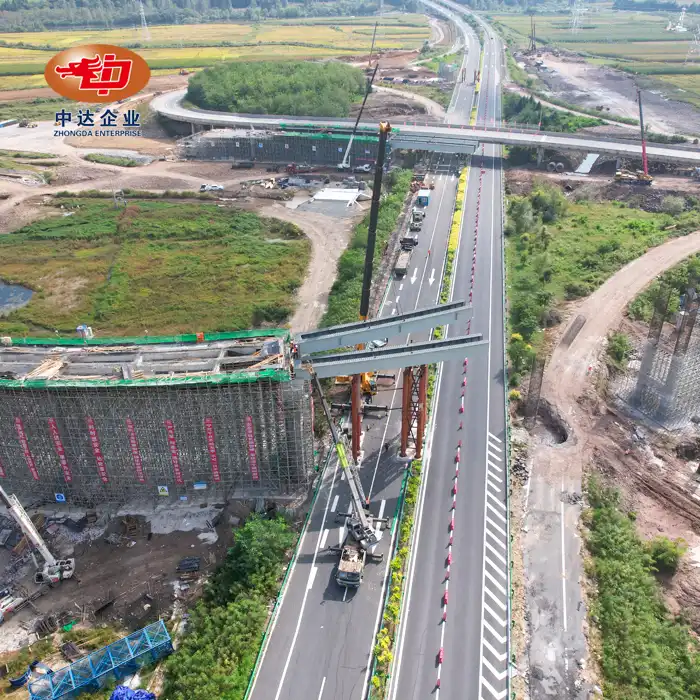
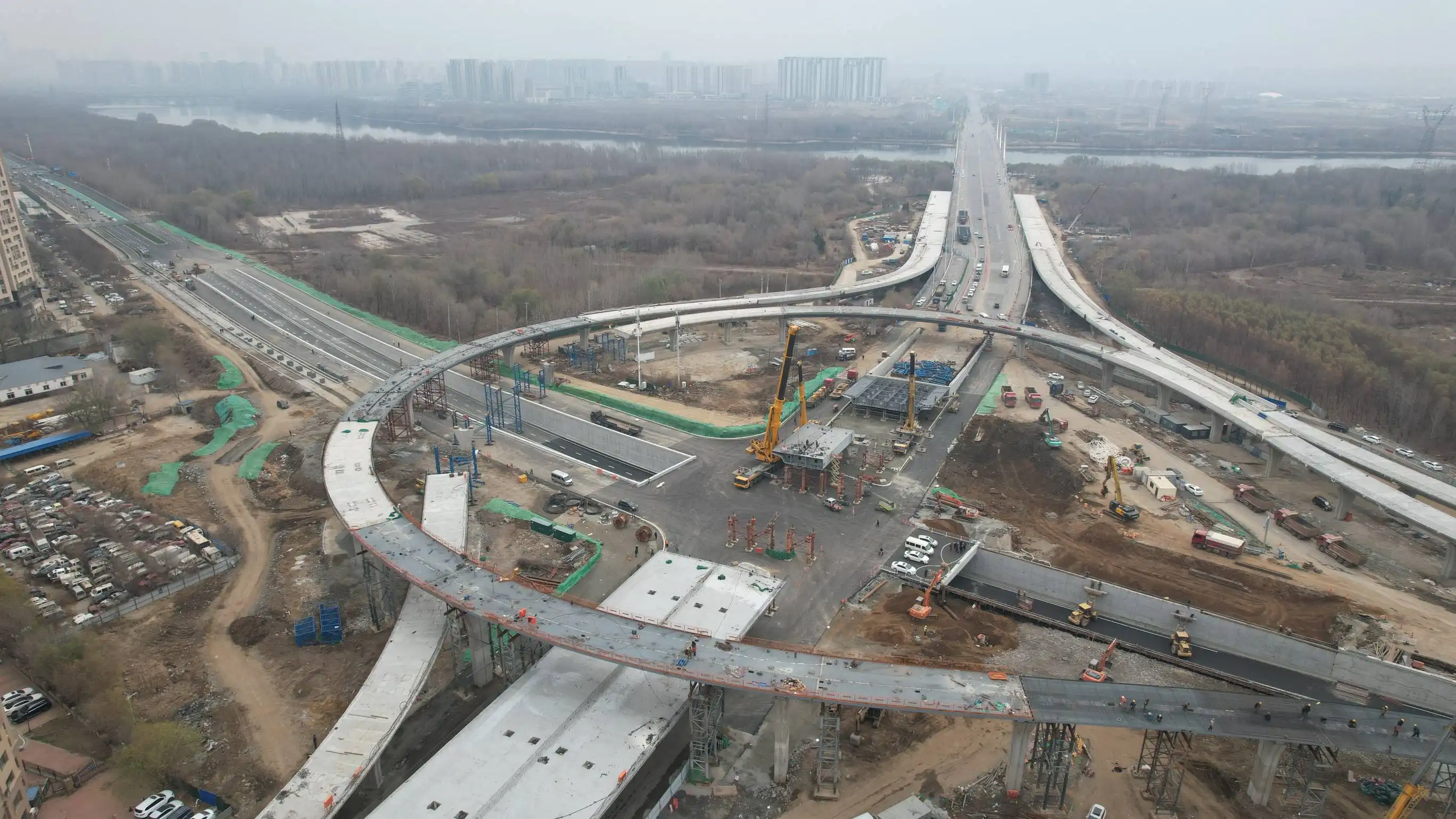
Through systematic weld quality control, we were able to show that our 18,000-ton steel frame for the Shenyang Dongta Cross-Hunhe River Bridge had better quality. Ultrasonic testing showed that 99.7% of main welds were accepted on the first try, which is a lot higher than the average for the business. The job was finished 30% earlier than planned, in part because there wasn't much that needed to be fixed. Strong quality controls on this iconic building show how they can help clients with complicated infrastructure projects at the project level.

Core Technologies and Techniques Zhongda Utilizes in Welding
When you combine traditional welding skills with cutting-edge robotics, you get the accuracy you need for important structural uses. We put most of our money into technologies that directly improve the quality of our welds and the speed of our production.
Advanced Automated Welding Systems
Robotic welding cells make longitudinal lines on girder flanges and webs over and over again. They keep the movement speed, torch angle, and heat input the same throughout the whole production run. CNC-controlled crane systems place parts with an accuracy of ±0.2mm, making sure the joints fit correctly before welding starts. With automated flux-cored arc welding, thick-section joints can get high deposition rates while still having great mechanical qualities. Multi-axis positioning tools gives you the best working angles, so you don't have to do as much tough overhead welding that lowers the quality.
Specialized Welding Processes for High-Strength Steels
Gas tungsten arc welding (TIG) makes root passes that are of high quality and has great penetration control for important parts that need full-penetration welds. Gas metal arc welding (MIG) can be used on a wide range of thicknesses and places, combining the need for speed with quality. Using granular flux to make clean, slag-free welds, submerged arc welding (SAW) is the best way to make long, straight lines on thick plates. Instead of using one-size-fits-all methods, we choose processes that work with the unique joint configurations and performance needs.
Pre-Weld Preparation and Post-Weld Treatment Excellence
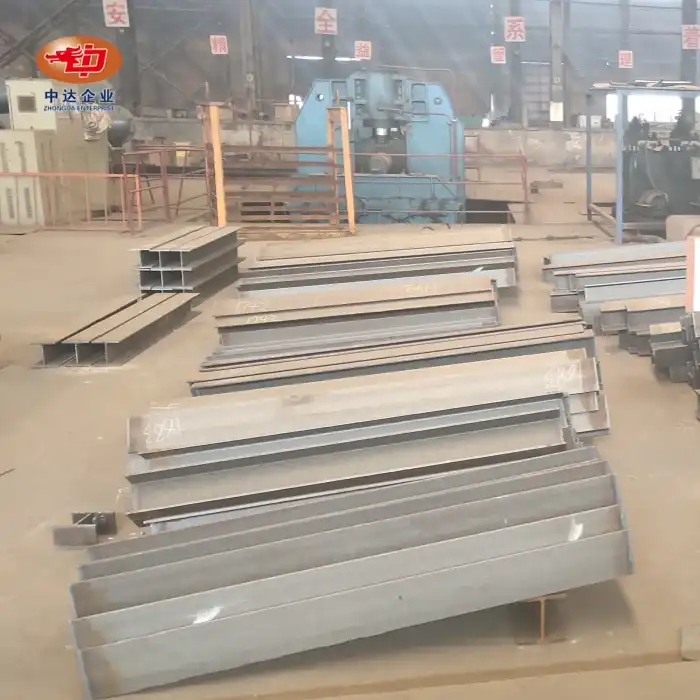
Surface preparation uses grit blasting to get rid of mill scale, rust, and other contaminants, which is a critical first step for any steel box girder to ensure proper weld penetration and coating adhesion in its confined interior compartments. This meets cleaning standards and stops porosity and partial fusion. Joint beveling is done according to engineering standards that are best for full entry and the right shape of the fusion. Before the arc starts, preheating methods bring the base metal to a certain temperature. This lowers the risk of thermal differences and hydrogen cracking. Post-weld heat treatment reduces leftover stresses and softens microstructures, making finished products stronger and more stable in their dimensions.
Non-Destructive Testing Integration
Ultrasonic testing tools look at all of the important welds and find internal breaks that can't be seen with the naked eye. Radiographic inspection keeps lasting records of the quality of the weld for project files and to meet regulatory requirements. Magnetic particle testing finds cracks in ferromagnetic materials that break through the surface. Dye penetrant analysis shows small surface cracks on parts that aren't magnetized. Digital recording systems connect test results to specific lots of products, making it easy to find things quickly during quality checks.
Benefits of Superior Weld Quality in Steel Box Girders for B2B Clients
Investing in better weld quality pays off over the course of a project's lifecycle. The best way to minimize the total cost of ownership is to make purchases based on proven welding skills instead of just the initial price.
Enhanced Structural Safety and Load Capacity
When welds are free of flaws, they reach their full design strength, which makes sure that buildings work as planned under the most extreme loading circumstances. This dependability is especially important for bridges that carry heavy business traffic or railroad loads that are often overloaded. Our fully welded box sections are more stiff in a torsional direction than I-beam designs, which means that loads are spread out more evenly across structural parts. For long-span uses, parts made with Q345D main pieces and Q420D joint supports have the best strength-to-weight ratios.
Reduced Lifetime Maintenance and Operating Costs
High-quality welds stop fatigue cracks from starting, which is the main way that cyclically heavy bridge systems fail. Good rust protection starts with sound welds that don't have any cracks or other flaws that let water in and speed up the deterioration process. Our two-step anti-corrosion process, which includes galvanizing or multi-layer coating methods, makes the service life longer than 30 years and reduces the need for upkeep. When compared to buildings that need to be fixed up often, projects that don't need fixes too soon save a lot of money.
Customization Flexibility Meeting Unique Project Specifications
Different span lengths and loading situations can be accommodated by designs with variable cross-sections and beam heights ranging from 1.25m to 8m. Optimizing the corrugated steel web cuts the structure's weight by 20% without dropping its strength. This means that less base is needed and the cost of shipping is lower. With a maximum single-span span of 420 meters, bold bridge designs are now possible that would have needed more than one pier before. Our BIM-based design integration makes sure that produced parts fit perfectly when they are put together in the field, which avoids having to make expensive changes in the field.
Accelerated Project Timelines Through Prefabrication
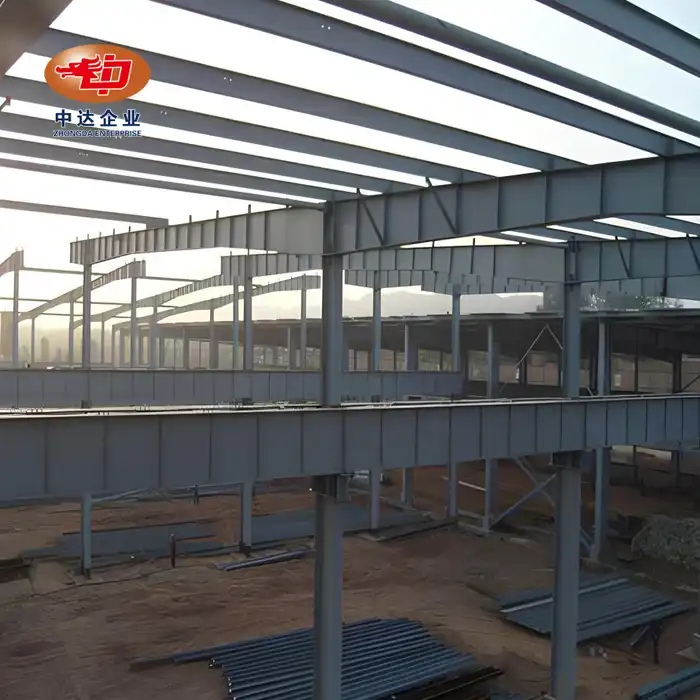
When it comes to quality, fabrication conditions managed in a factory are better than field welding conditions subject to weather and entry issues, a difference that becomes especially pronounced for a steel box girder with its complex internal stiffeners and demanding fatigue details. Prefabricated 12–30m pieces arrive at building sites ready to be put together quickly, which cuts the amount of work that needs to be done on-site by about 50%. This speeding up works especially well for projects that have to work within limited weather windows or face fines for traffic disruptions. Our 60,000-ton yearly production capacity lets us work on multiple projects at the same time without affecting supply times.
Procurement Considerations for High-Quality Steel Box Girders from Zhongda
To choose the right fabrication partner, you need to look at more than just their producing ability. Knowing the important selection factors helps procurement teams find sellers who can meet the strict needs of a project.
Certification and Standards Compliance Verification
International standards like ISO 9001, 14001, and 45001 show that quality management is organized and takes into account more than just product quality. It also includes safety and the environment. The EN 1090 certification covers the specific standards for making structural steel that are required for projects in Europe and are becoming more and more common around the world. AWS welding certifications show that you follow the rules set by the American Welding Society, which are accepted in most places in North America. Our Class I Steel Structure Professional Contracting Qualification lets us handle the whole job, from planning to building.
Welding Process Transparency and Traceability
Complete welding process specs list all the factors that need to be considered, such as the filler materials, heat intake ranges, preheat requirements, and treatments that need to be done after the welding is done. Welder training records show that each craftsman has shown they can do the jobs they are given. Material test results link the chemical make-up and mechanical features of steel to specific heat numbers. This makes it easy to look into problems quickly if they come up. Every production lot's test results are written down in inspection records, which are used as quality proof throughout project files.
Customization Support and Technical Collaboration
Our tech team works with clients to come up with the best ways to make things that match performance and ease of production. Technical support is available throughout the duration of a project and helps with questions about assembly in the field and problems with cooperation. We give you full shop plans and erection instructions that make the building process go more smoothly. This relationship strategy is different from transactional suppliers, who only do what it takes to complete orders.
Logistics and Delivery Reliability
Using special cradles and protected covers to package finished parts safely keeps them from getting damaged during transport. Flexible delivery schedule works with phased building plans and just-in-time delivery needs, which cuts down on the amount of storage needed on-site. Our transportation team works with freight forwarders who know how to handle problems with permits and routes for oversized structural steel packages. Our 70% customer return rate shows that customers are happy with the general quality of our service.
Conclusion
In order to make steel box girders with better weld quality, new technologies, strict quality controls, and specialized knowledge must be carefully combined and used together. At Zhongda, we take a complete approach to problems, from choosing the right materials to doing the final inspection. This makes sure that important building projects have strong structures. Our quality systems are written down, we have foreign certifications, and we have a track record of successful projects. This gives procurement teams faith in choosing a reliable fabrication partner. Better weld quality has real benefits, such as higher safety, longer service life, lower upkeep costs, and faster building. These benefits make it important to carefully evaluate suppliers based on their proven capabilities rather than just their initial price.
FAQ
What international welding standards does Zhongda follow?
We follow the quality control methods set by the American Welding Society (AWS), the European Standard EN 1090 for structural steel, the Japanese Standard JIS, and the International Organization for Standardization (ISO) 9001. The qualifications our welders have are specific to the materials and methods they work with, and they are renewed on a regular basis to make sure they are still qualified.
How can I verify weld quality before placing large orders?
Potential clients are free to come to our site for pre-production checks to see how we weld, look over quality paperwork, and see how tests are done. You can make sample parts that show exactly what welding needs to be done for your job. Third-party inspection agencies may look over our processes and finished work before we approve it for shipment.
What are typical lead times for customized bridge girder projects?
Lead times depend on the size and complexity of the job, as well as the current production plans. Standard designs usually need 8 to 12 weeks from the time the order is confirmed until they are ready to ship. It could take 12 to 16 weeks for complex unique jobs with specific needs. During the quotation creation process, our project management team gives you thorough schedules that show you the most important tasks and delivery goals.
Partner with a Trusted Steel Box Girder Manufacturer
Welding experts at Zhongda are happy to show procurement managers, engineers, and project creators how well we can make steel box girders. Our expert team is ready to talk with you about the unique needs of your project and come up with custom solutions that improve performance, cost, and delivery times. We provide the dependability that your infrastructure projects need as a top steel box girder provider with a track record in foreign markets. You can email our sales team at Ava@zd-steels.com to get full quotes, technical details, and help with your project. Find out how our 20 years of experience in making can help your next bridge or building project through better welds and a responsive relationship.
References
American Welding Society. (2020). Structural Welding Code – Steel: AWS D1.1/D1.1M. Miami: American Welding Society.
European Committee for Standardization. (2018). Execution of Steel Structures and Aluminum Structures - Part 2: Technical Requirements for Steel Structures: EN 1090-2. Brussels: CEN.
Cui, C., Zhang, Q., Bao, Y., & Han, P. (2019). Fatigue Performance and Evaluation of Welded Joints in Steel Truss Bridges. Journal of Constructional Steel Research, 148, 450-456.
Dexter, R. J., & Ocel, J. M. (2013). Manual for Repair and Retrofit of Fatigue Cracks in Steel Bridges. Washington: Federal Highway Administration.
Miki, C., & Tateishi, K. (2017). Fatigue Design of Steel Bridges Considering Weld Quality and Inspection. Steel Construction, 10(3), 213-221.
Zhang, Y. H., & Shen, Z. Y. (2016). Quality Control and Testing Methods for Welded Steel Box Girders in Long-Span Bridges. Advanced Materials Research, 1065-1069, 1824-1829.
YOU MAY LIKE