Steel Structure Bridges: Exploring 3 Classification
2026-07-17 16:46:51






The bridge steel structure is still the best choice for modern building projects that need strength, flexibility, and long-term dependability. These engineering wonders use advanced metalworking and complex design principles to build bridge steel structures over rivers, mountains, and roads that carry millions of tons of traffic every year. Procurement managers, EPC contractors, and civil engineering companies that want to get the most out of their building projects need to know how bridge steel structures are classified. Suspension, truss, and modular systems are the three main types. Each one solves a different technical problem, such as high wind resistance along the coast or quick setup for important transportation projects.
Understanding Steel Structure Bridges: An Overview
A bridge steel structure is a complex load-bearing system made up of built steel parts that safely move loads from vehicles and the environment across gaps. Bridge steel structures have a better strength-to-weight ratio than standard reinforced concrete options. This means they can span farther with less foundation work. This building method solves important problems in the industry: it cuts down on project timelines by 30–50% by allowing production to happen off-site; it allows construction in difficult terrains where mixing concrete would not be possible; and it gives designers more freedom to meet complex geometric needs.
Steel is better for building bridge steel structures in more ways than just how well it holds up. Today's steel metals have weathering qualities that create protective oxide layers. This makes repair processes a lot shorter. Steel's flexibility is especially useful in seismic zones because it can take the energy of an earthquake without breaking in a big way. More and more, business and government developers are choosing steel solutions for projects that need to be built in stages and where traffic must continue while the solutions are installed. Because the material can be recycled over and over again, it meets sustainability requirements that are now popular in buying public assets.
Classification understanding has a direct effect on how well a job turns out. Choosing a suspension design when a truss system would do saves money that could be used for other things. On the other hand, not predicting the needed span or the loads in the surroundings leads to safety risks and expensive repairs. When procurement professionals know these differences, they can choose more reliable suppliers, negotiate better, and make sure that technical requirements and financial limits are met. This foundation gives teams the skills they need to confidently and clearly analyze technical ideas.
The 3 Classifications of Steel Structure Bridges
Suspension Bridge Systems: Conquering Super-Long Spans
Tensile cable systems hold up the deck construction of suspension bridge steel structures, which allows for span lengths that have never been seen before. This makes them essential for crossing wide rivers and deep valleys. The main cables, which are made up of thousands of high-strength steel lines, hang from tall pylons. Vertical suspender cables support the weight of the deck. This design effectively moves weight through tension instead of compression, which makes it possible for lengths that would not be possible with other types of structures.
Our suspension bridge steel structure options at Shenyang Zhongda Steel Structure Engineering Co., Ltd. use PPWS (Prefabricated Parallel Wire Strands) with 5.2mm wire thickness and 1770MPa tensile strength. The main spans can be anywhere from 300 to 2000 meters. Controlling vibrations caused by wind is the technical task in these projects. Our deck designs are more aerodynamic and have streamlined cross-sections that reduce vortex loss. The structure system can withstand 12-level wind speeds thanks to strategic damping mechanisms and rotational stiffness optimization.
Quality in suspension systems is defined by how precisely they are made. When we place wire clamps, we use 3D laser scanning technology to get positioning accuracy of within ±2mm at hundreds of connection points. This accuracy stops random load distribution that could wear out cables too quickly. The main worry for these long-span buildings is how long they will last, so the dual-layer corrosion protection system combines main cable dehumidification with S-Type galvanized steel wire wrapping tape. All plans are in line with the FHWA-NHI-07-096 U.S. Suspension Bridge Design Specifications, which means they will be approved by American officials.
Common uses include crossing large rivers as part of port development projects, connecting highways in hilly areas, and building landmarks for business centers. Power plant builders and petrochemical sites near the coast really like the long-span feature because it gets rid of the need for mid-channel foundations in marine environments that are sensitive. Using 12-meter steel box girder parts that are made at a rate of 800 tons per month, the modular building method makes it possible to plan projects accurately, even when they are very big.
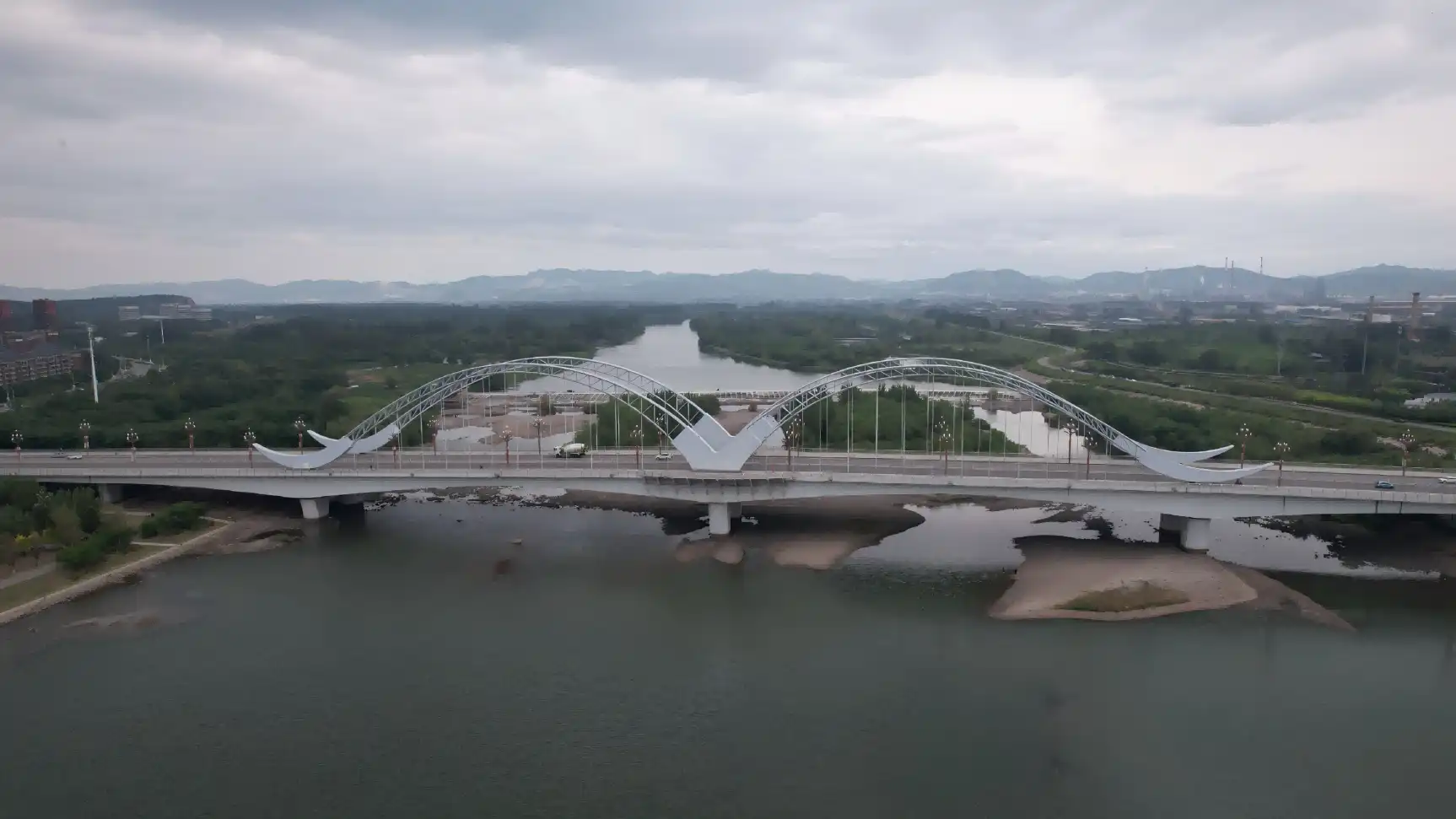
Truss Bridge Structures: Making the Best Use of Load Distribution
Truss bridge steel structures have triangulated structure patterns with straight steel members forming rigid geometric units. This makes for a very effective way to distribute stress. Because triangles can't change shape without changing member lengths, the triangular shape keeps the structure from deforming under load. Because of this principle, truss designs can span modest lengths (usually 50 to 500 meters) with less steel than other systems. This makes them a good choice for highway overpasses and railroad bridge steel structures from an economic point of view.
The beautiful thing about truss engineering is how tension and compression forces are split up between the different sections. Usually, the top chords are compressed and the bottom chords are stretched. The system is kept stable by lateral and vertical members. Because of this skill, engineers can choose the best steel type and cross-section for each part, reducing waste and costs. Warren, Pratt, and Howe trusses are all standard designs. Each has its own benefits for different types of loads and width needs.
Truss systems are often used in industrial settings for material handling bridge steel structures in manufacturing buildings, mining operations that need structures to support conveyors, and transport facilities that need roads that are higher off the ground. The open framework lets natural air flow through, which is good for places that process chemicals, and it also lets utilities run through the structure's depth. EPC workers like how easy it is to make things because shop drawings can be directly translated into production routines without having to go through a lot of complicated steps.
Most of the time, bolted connections are used for assembly. This makes checking easier and allows for staged building that keeps operations running smoothly. When it comes to petrochemical plants, where air pollutants speed up oxidation, uncovered structure parts do need more active corrosion protection than protected systems. Modern protective coatings and regular inspection routines take care of this upkeep issue well, and because the original steel amount was decreased, lifetime costs stay competitive.
Modular Steel Bridge Systems: Rapid Deployment Solutions
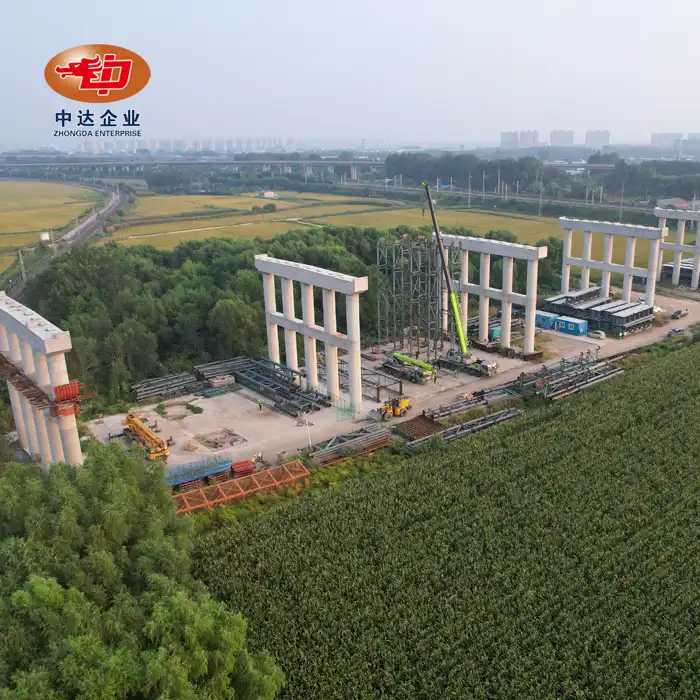
Modern engineering has come up with modular bridge steel structures, which are made up of standard parts that can be put together without joining in the field. Crews put these systems together in days instead of months using pre-engineered pieces that come with deck walls, guardrails, and connection hardware. This method works especially well for projects that need temporary entry during building, emergency replacements after structures fail, and growing logistics networks where practical delays cost a lot of money.
Because modular design is based on standardization, performance traits can be predicted and confirmed through thorough factory testing. Each part comes to the job site with approved load values and dimensional tolerances, so there are no more unknowns that come with field manufacturing. Logistics for shipping and storing are made easier because similar units stack well and can be rearranged to make different span lengths. This adaptability is liked by military supply operations, emergency response teams, and mining companies that work in remote areas where normal building materials are hard to come by.
The technical specs for modular systems put a lot of emphasis on how well the connections work and how well the deck surfaces work. Composite materials are used in modern designs for deck walls because they are lighter and better at resisting slips and chemicals. The bridge steel structure framework usually uses weathering steel types that don't need to be painted in many places, which further lowers the cost of upkeep over the course of the structure's life. Overhead spans are usually between 10 and 80 meters long, and they can hold big equipment like military vehicles and mine trucks.
When looking at certain situations, economic research shows clear benefits. When deadlines for projects include penalties for finishing late, the guaranteed speed of installation of modular systems saves income streams. Infrastructure builders who are growing e-commerce distribution networks can plan bridge steel structure installations to happen at different times so that capital isn't sitting idle. Because they can be used again and again, they are also attractive to contractors, who keep bridge steel structure stocks to rent to project clients. This way, capital assets can bring in regular income.
Key Principles and Components in Steel Bridge Structure Design
Load-Bearing Requirements and Stress Distribution
The first step in designing a bridge steel structure is to carefully look at all the possible loads that could affect it. These loads include dead loads (the structure's own weight), live loads (traffic), natural loads (such as wind, earthquakes, and weather), and impact factors. Engineers use impact line analysis to find the places where loads cause the most stress along a span. They then adjust the proportions of the structure pieces to keep stresses below the allowed limits while still meeting safety standards. Load and Resistance Factor Design (LRFD) is a modern method that uses different safety factors for different types of loads based on how statistically variable they are.
Different types of bridge steel structures have very different ways of distributing stress. In suspension bridge steel structures, the main wires carry most of the stress, and the decks' main job is to stop local bending between the suspenders. Truss systems separate axial forces into separate parts that are only under strain or compression. By knowing these trends, engineers can place materials in the best way possible, using high-strength steel where stresses are highest and cheaper types where demand allows. Our engineering team does finite element modeling for complicated shapes to make sure that load predictions are correct before the manufacturing process starts.
Connection design is the important part where theory analysis meets real-world building. To keep localized yielding from happening, bolted connections must spread forces across multiple fasteners. Tough rules control the bolt spacing, edge lengths, and plate thicknesses. To make sure that welded joints reach full strength without any flaws, they need to be welded by qualified professionals using qualified methods. We keep our AWS (American Welding Society) certifications up to date and test important welds without damaging them by using ultrasonic and x-ray analysis.
Fatigue analysis takes into account the fact that bridge steel structures are loaded and unloaded millions of times over the course of the bridge steel structure service life. Fatigue performance is controlled by stress bands rather than peak loads, and connection details are especially likely to start cracks. Modern designs use smooth shifts, avoid sudden changes in sections, and include features that are resistant to fatigue, which have been proven by decades of study. For high-traffic areas where fatigue determines member size, our design team uses AASHTO fatigue groups and cycles counting analysis.
Critical Structural Components and Fabrication Standards
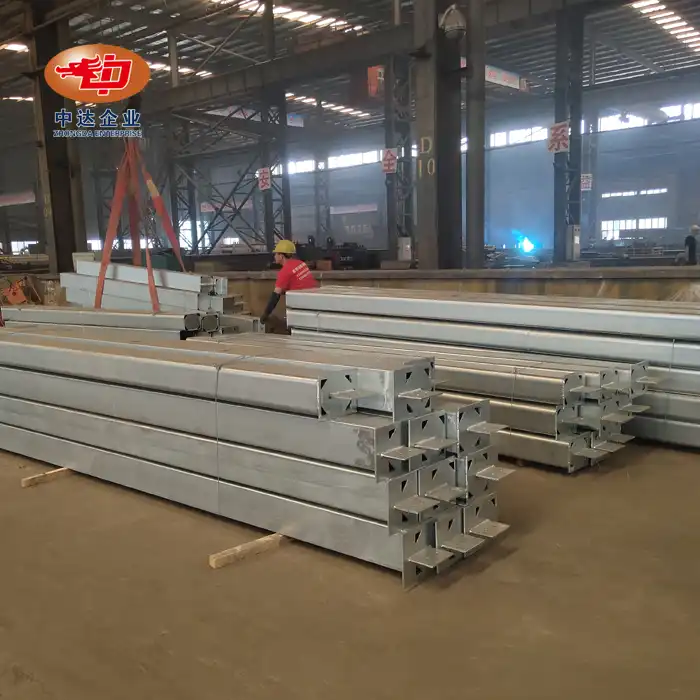
The main horizontal parts that carry deck loads to supports are girders. Box girders are very stiff when it comes to twisting, which is good for bent bridge steel structures and wide decks. Plate girders, on the other hand, are easier to build for straight spans. Our steel box girder pieces are 12 meters long, which makes them easier to move and reduces the number of field splices that need to be done. Internal stiffeners keep the web from breaking under shear loads. Stability analysis determines the spacing and width of the stiffeners.
Deck systems go from being simple structure parts to being the place where cars feel the ride quality. Through ribs riveted to deck plates, orthotropic steel decks combine the wearing surface with the structural deck. This makes systems that are light and great for long spans. Composite decks use shear studs to connect steel bars with concrete, making a single action that combines the strength of steel and the flexibility of concrete. Surface treatments, such as epoxy coats and polymer layers, keep water out and keep the surface from slipping.
Bearings, expansion joints, and anchor systems are all types of connection gear that can handle changes in temperature while moving loads. Elastomeric bearings let things move and rotate by stretching and contracting rubber. They don't need any upkeep for as long as they're working. Deck damage from changes in length with the seasons can be avoided with expansion joints. Modular systems can handle moves of more than 1000 mm in very long bridge steel structures. These parts come to job places already put together, which makes installation easier and makes sure they meet performance standards.
When protecting against corrosion, systems need to be able to adapt to the area they are in. The S-Type galvanizing steel wire wrapping we use for support cables acts as a physical barrier against water getting in. This is in addition to internal dehumidification systems that keep the integrity of the cable strands. Multi-layer covering systems are put on the main parts of the structure. Zinc-rich starters protect against galvanic corrosion, epoxy intermediates make sure the layers stick together, and polyurethane topcoats stop UV damage. Controlled oxidation that forms safe patinas on weathering bridge steel structure applications gets rid of all coatings.
Conclusion
The technical, economic, and practical success of a project depends on how well the suspension, truss, or modular bridge steel structure categories are chosen. Supporting systems make it possible to span lengths that weren't possible before, truss configurations make the best use of materials for medium-sized gaps, and modular methods speed up setup when time is of the essence. When procurement managers, civil engineers, and infrastructure makers understand these differences, they can come up with ideas that work with the site conditions, the budget, and the performance needs. Bridge steel structure is the best material for tough jobs in harsh settings, from the Arctic to tropical beaches, because it has a high strength-to-weight ratio, is resistant to earthquakes, and is cost-effective over its entire life. By working with skilled makers who can do both advanced manufacturing and full technical support, you can turn your complicated infrastructure ideas into working realities.
FAQ
What factors most significantly influence steel bridge lifespan?
Corrosion protection quality and link wear resistance are the main factors that determine how long a bridge steel structure will last. With regular upkeep, coating systems or weathering bridge steel structure choices that are properly chosen can make something last longer than 100 years. When connection details are made using fatigue-resistant principles, repeated stress doesn't cause cracks to start. The level of environmental exposure determines the strength of the defense system. This includes marine environments, the use of deicing salt, and industry pollutants. Regular inspections let you find problems with the finish or connections early on, which leads to proactive maintenance that saves you a lot of money on repairs. Design details that keep moisture out of traps and allow for drains make corrosion much less likely, even if protection systems are already in place.
How does corrosion protection impact long-term maintenance costs?
Compared to basic systems, comprehensive initial safety cuts down on lifecycle maintenance by 40 to 60%. Our bridge steel structure wire systems use a two-layer method that combines dehumidification with physical walls to stop internal corrosion that can't be seen from the outside. Longevity of bonding depends on how well the coating is applied, which includes preparing the surface to near-white blast standards and using controlled application conditions. Premium protection systems raise the starting costs of a project by 3–5%, but the longer upkeep intervals and smaller scopes of repairs save a lot of money in the long run. When used in the right conditions, weathering bridge steel structure applications don't need any coating upkeep at all, but the starting cost of the materials goes up a little.
Why do modular steel bridges suit rapid construction requirements?
Standardized parts allow manufacturing to happen off-site at the same time as site preparation, which cuts total plans by 40–60%. Bolted connections get rid of the need for weather-dependent welding and lower the need for skilled workers at remote places. Factory quality control and load rates that have already been approved keep outdoor delays from being caused by rejected parts. The fact that it can be used again means that companies or government agencies can keep an eye on the inventory, which lets emergency operations happen within days of disasters or structural failures. Installing things in a predictable order and not needing a lot of special tools makes building easier in tough handling situations where normal methods can't be used.
Partner with Zhongda for Superior Bridge Steel Structure Solutions
Shenyang Zhongda Steel Structure Engineering Co., Ltd. makes bridge steel structures that are the best in the world. They have been doing this for 20 years and have completed many successful projects around the world. Our ISO 9001/14001/45001-certified plant can handle 60,000 tons of cargo every year and uses modern CNC technology to make precise parts with ±0.2mm tolerances. Whether your project needs 2000-meter suspension bridge steel structures, optimized truss systems for industrial use, or rapid-deployment flexible solutions, our expert team can help you with everything, from improving the design to putting it up for the first time. We are a reliable provider of bridge steel structures to China Railway, CSCEC, and foreign infrastructure builders. We give your important projects the quality, dependability, and certainty of schedule they need. You can email our engineering team at Ava@zd-steels.com or visit zd-steels.com to talk about your needs and get full technical plans that are made to fit your infrastructure goals.
References
American Association of State Highway and Transportation Officials. (2020). AASHTO LRFD Bridge Design Specifications. Washington, DC: AASHTO.
Chen, W.F., & Duan, L. (2014). Bridge Engineering Handbook: Construction and Maintenance. Boca Raton: CRC Press.
Federal Highway Administration. (2012). Steel Bridge Design Handbook: Structural Behavior of Steel. Publication No. FHWA-IF-12-052. Washington, DC: U.S. Department of Transportation.
Kulicki, J.M., Prucz, Z., Sorgenfrei, D., Mertz, D.R., & Young, W. (2007). Guidelines for Evaluating Corrosion Effects in Existing Steel Bridges. NCHRP Report 333. Washington, DC: Transportation Research Board.
Troitsky, M.S. (1994). Planning and Design of Bridges. New York: John Wiley & Sons.
Xanthakos, P.P. (1994). Theory and Design of Bridges. New York: John Wiley & Sons.
YOU MAY LIKE