Power Plant Steel Structure Fabrication: Quality Control Tips
2026-07-15 14:15:59






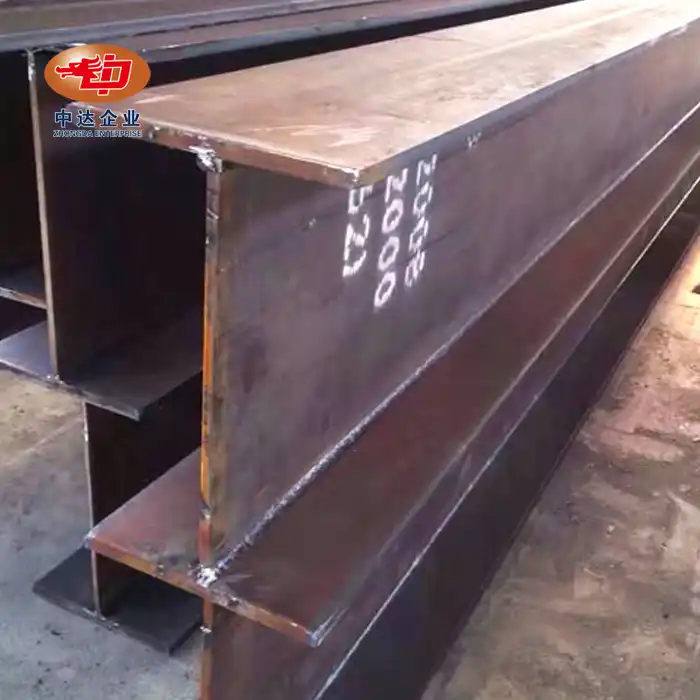
Energy workers who want to know more about power plant steel structure construction should know that quality control isn't just a checkpoint; it's part of every step, from choosing the materials to putting them together in the end. Strong quality control stops disastrous fails, increases the useful life of an asset beyond 50 years, and makes sure it meets strict international standards such as AISC 360 and EN 1090. For turbine halls that support 400-ton overhead cranes or boiler suspension frames that have to handle high temperature changes, careful construction backed by strict testing procedures protects your investment and keeps your business running.
Understanding Quality Control Challenges in Power Plant Steel Structure Fabrication
Identifying Common Fabrication Defects
Fabrication flaws show up in a number of important ways that hurt the performance of the structure. Warping happens when leftover forces from welding or bad heat treatment bend parts too far from their original shape. When connection points aren't lined up correctly, load quirks happen that weren't thought of in the original engineering formulas. Welding flaws, such as porosity, partial penetration, and slag spots, weaken the joint and make it easier for cracks to start when the load is applied and removed over and over again.
Root Causes Behind Quality Failures
The worst quality problem that can be avoided is material variation. When steel chemistry isn't the same as stated grades like Q355B or ASTM A572 Gr.50, mechanical qualities like yield strength and impact toughness don't meet the expectations set by the designer. Welding methods that don't go through the right quality tests make parts whose performance is hard to predict. Mistakes in bolting, like using the wrong force values or fastener grades that don't match, can cause the link to fail under service loads.
These risks are made worse by gaps in supplier management. During audits or failure investigations, it is impossible to prove material conformance without verifiable tracking paperwork that connects each steel plate and structural section to its mill test certificate.
International Standards Framework
Following well-known rules sets the standard for quality. ISO 9001 sets the standards for quality management systems, and ISO 14001 talks about how to make things without hurting the earth. ASTM standards spell out the requirements for materials and the ways they should be tested. The European EN 1090 license covers the building standards for steel structures, and AWS D1.1 sets the rules for how to weld structures. The projects we've done for international clients show how these models work together to make audit trails that go from receiving raw materials to the final inspection.
Adding quality checkpoints from purchase to installation turns compliance from a paper practice into a real-world operation. Spectroscopic research is used to check the chemical makeup of mill certificates. At several steps of the manufacturing process, total station surveys are used for dimension checks. Critical welds are checked for quality with non-destructive tests before a protection coating is applied. This multi-level method finds deviations early, when it's still cost-effective to fix them.
Critical Quality Control Measures for Power Plant Steel Structures
Material Certification and Testing Protocols
Material testing is the first step in building any structure, and for a power plant steel structure, this stage is especially critical due to the high-temperature, high-pressure, and cyclic loading conditions these buildings endure. Mill test papers give you the basics, but testing in a separate lab proves that the product is compliant. The chemical makeup study confirms that the carbon equivalent values are below the levels needed to make the metal weldable without any problems with preheating. The yield strength, tensile strength, elongation, and Charpy V-notch impact values are measured mechanically at certain temperatures.
Impact testing at -20°C or lower is required for uses in the energy industry where brittleness at low service temperatures is a risk. For our Arctic bridge projects in Russia, we needed steel types that could stay flexible at -60°C, which we proved through special test programs. For tough jobs, normal requirements now include high-strength low-alloy steel types that are both structurally sound and very tough.
Welding and Bolting Inspection Methods
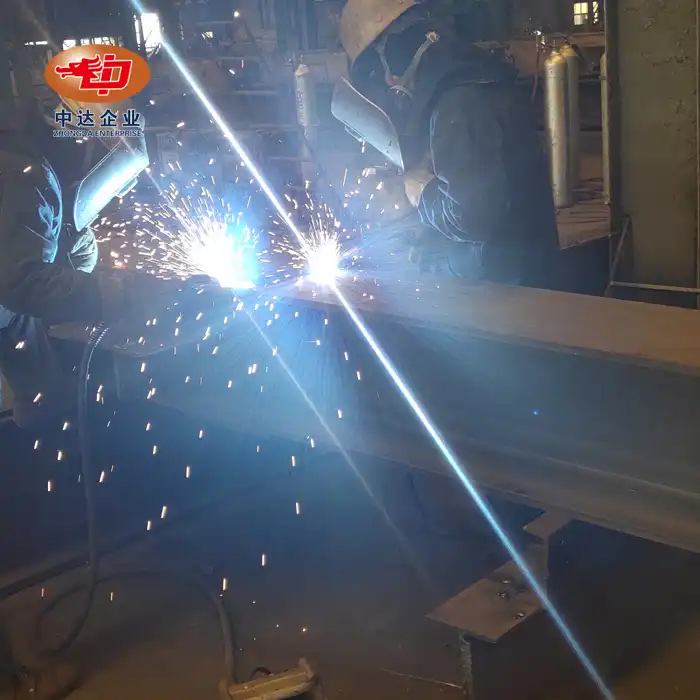
The quality of the weld has a direct effect on how reliable the structure is when dynamic loads are applied by the engine. Ultrasonic tests can go through welded metal to find cracks inside that can't be seen from the outside. Radiographic testing creates lasting film records that show if a weld is sound for important connections. Magnetic particle testing finds cracks that break the surface of ferromagnetic materials, and dye penetrant analysis finds cracks in metals that are not magnetic.
To get the holding forces you need from high-strength friction-grip bolts, you need torque wrenches that are measured and a set way of tightening them. We use turn-of-nut methods for large-diameter bolts when it's not possible to measure force directly. It is possible to see with load indicator nuts that the right preload has been reached, which makes lasting records of the installation.
Dimensional Accuracy and Geometric Verification
Tight measurement limits are needed to make sure that everything fits correctly during site assembly. 3D laser scanning records the shape of things as they were built so that they can be compared to design models. This finds any differences before the parts leave the manufacturing plant. With total station surveys, you can be sure that the column's verticality, beam curvature, and connection point locations are all within ±2mm of each other. This level of accuracy keeps costly delays and repairs in the field from happening when multi-ton parts don't line up during crane lifts.
Coordinating the design, manufacturing, and building teams using BIM has changed the way that dimensional quality control is done. Before actual manufacturing starts, digital twins make it possible to find clashes and do tolerance stackup analysis. This proactive method got rid of fit-up problems on our most recent substation job, where equipment positioning limits only let us make small changes.
Load-Bearing Capacity Validation
Structure testing makes sure that assembled parts can handle the loads that were planned for them. Proof loading puts measured forces on connection parts to make sure they work in certain ways. Stress distributions and bending patterns can be predicted using finite element analysis models that have been fine-tuned with real-world material qualities. Using a strain gauge during trial loads gives us real-world data that backs up our analysis estimates.
These validation steps show buying teams that the structure's ability meets practical needs in a clear way. When replacing a turbine means upgrading the crane runway beams, load testing makes sure that the new structure can handle more weight without putting too much stress on the current supports.
Advanced Corrosion Protection and Maintenance Strategies
Environmental Challenge Assessment
In power plants, structural steel is exposed to harsh conditions that speed up rusting, making a power plant steel structure uniquely vulnerable compared to conventional buildings. Coastal sites have to deal with salty air, so they need C5-M marine-grade protection devices. When sulfur compounds and nitrogen fumes are heated, they form acidic condensate that damages protective layers. At the suspension points of boilers in combined-cycle plants, the temperature can change from room temperature to over 500°C, so they need special thermal barrier systems.
Figuring out the unique corrosive processes at your place will help you choose the best protection approach. Working with petroleum plant owners showed us that the high level of hydrogen sulfide in the process streams meant that normal industrial finishes couldn't be used. Instead, they needed epoxy coatings that were very resistant to chemicals.
Protective Coating Systems
Multi-layer covering methods protect structures in more than one way, which makes them last longer. Preparing the surface with a Sa 2.5 near-white metal blast clean makes the anchor shape that is needed for the covering to stick. Inorganic zinc-rich primers guard against galvanic corrosion and make it easy to weld for touch-ups after field connections. When micaceous iron oxide flakes are mixed into epoxy intermediate coats, they form barrier layers that stop the flow of air and wetness. Polyurethane topcoats don't break down when exposed to UV light, so they keep their look for decades.
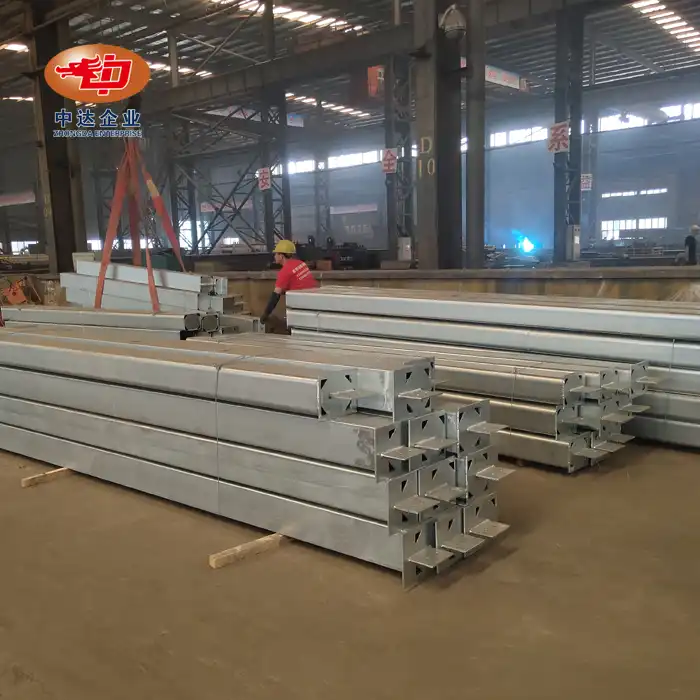
Hot-dip galvanizing protects small parts and gear for connections very well. The zinc covering is metallurgically linked and can withstand wear and tear from handling. It also resists corrosion without any upkeep. We recommend galvanized links for open-air condenser support structures that are hard to get to for paint upkeep.
Using magnetic scales to check the thickness of the coating makes sure that the dry film thickness is the same on all surfaces. Pull-off adhesive testing according to ISO 4624 makes sure that the mechanical bond is strong before the structures are put to use. These quality checks make sure that the safety system will work the way it's supposed to and won't need to be serviced too soon.
Predictive Maintenance Technologies
Putting sensor networks inside buildings lets you check their health and see what repairs they need before they break. Corrosion tracking probes keep track of the rate of damage in real time, which means that check plans are based on real conditions instead of random times. Strain gauges find patterns of load transfer that show when a link is becoming loose or a member is damaged. Accelerometers pick up shaking patterns that mean bearing wear in nearby equipment is sending forces into the building.
IoT connection puts together sensor data into screens that show trends in the health of buildings. Predictive algorithms let you know when parts are getting close to maintenance limits, so you can schedule repairs during downtime instead of having to shut down quickly. By switching from reactive to predictive maintenance, we've cut our clients' unexpected downtime by more than 30% and made assets last longer.
Protocols for regular inspections go along with automatic tracking. Visual scans done every two years keep track of the state of the coating and show where repairs need to be done. Ultrasonic thickness gauging measures how much a part is losing due to rust, which is used to figure out how much life is left. These methods work together to keep structures reliable while lowering the cost of upkeep.
Supplier and Process Selection for Reliable Fabrication Outcomes
Evaluating Fabrication Partners
Choosing the right manufacturing partner has a big effect on how the project turns out. Verification of certifications shows that the quality management system is mature. For example, ISO 9001 certification shows that processes are recorded, and EN 1090 execution class certification shows that the company can handle complex structural steelwork. Track records in the energy field show that the company has dealt with similar technology problems and performance standards before.
A production capacity estimate makes sure that providers can meet the deadlines for the project without using too many of their resources, which is especially vital for a power plant steel structure where delays in fabrication can cascade into extended turbine outages and lost revenue. During visits of the facility, equipment skills such as plate cutting accuracy, welding automation levels, and inspection infrastructure are shown. Fabrication shops with CNC plasma cutting systems that can achieve tolerances of ±0.2mm produce parts that need very little field adjustment. With real-time quality tracking and automated welding stations, thousands of links have the same joint properties.
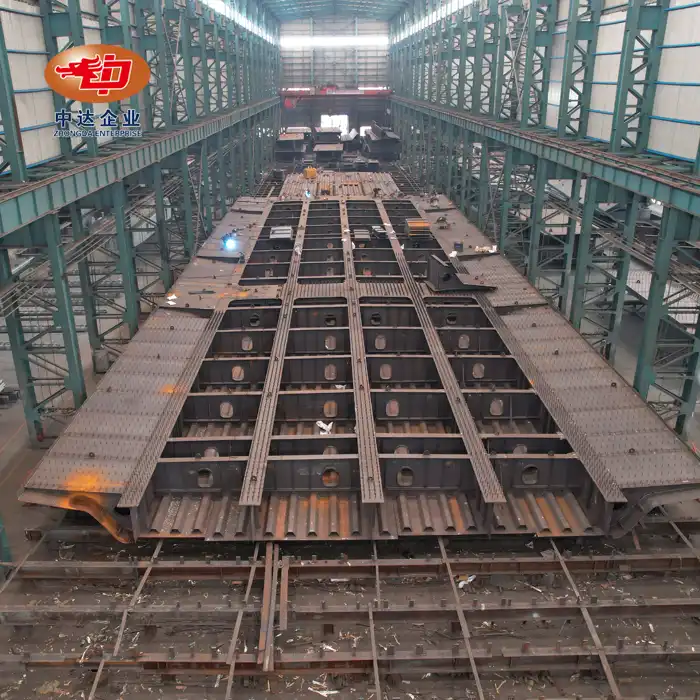
At Zhongda, our 120,000 m² building with a 60,000-ton yearly capacity shows the size needed for big energy projects. Over 100 engineers with advanced technical backgrounds work on custom applications and bring their own unique skills to the table. We can build complicated turbine hall frames and boiler suspension structures that meet the strictest requirements because we invest in both infrastructure and human capital.
Transparent Pricing and Schedule Commitments
During buying, trust is built when price systems are clear and reflect the real scope needs. It is clear what products are included when there are detailed material takeoffs that show the amount of steel by grade, the amount of welding by process, and the area coated by standard. When you have itemized prices for planning, fabrication, protective systems, inspection, and shipping, you can compare the values of different offers.
Accountability is created by a clear schedule with clear goals for design approval, material procurement, fabrication finish, and delivery. Critical path discovery shows which tasks need to be attended to in order to keep general schedules on track. We send weekly progress reports with photos that show the progress of production. This lets project teams plan activities that get the site ready.
Modular Versus Conventional Fabrication Approaches
Modular manufacturing has big benefits for places that are far away or very busy. Pre-assembling big pieces in a controlled shop environment improves quality and cuts down on work that needs to be done in the field. In tough working conditions, transportation and crane handling become the limiting factors instead of output. Modular techniques cut the time needed for construction on-site by 20–30% compared to stick-building methods, which speeds up the time it takes to start making money.
When transportation issues make it impossible to move big units or when site-specific changes need to be made, conventional methods still have benefits. Hybrid strategies balance efficiency and flexibility by making standard parts in the shop and customizing their assembly in the field.
Continuous growth methods used by quality management systems make sure that lessons learned are used to improve the process. Regular internal checks find ways to improve speed and cut down on mistakes. Third-party certification audits show that documented processes are the same as what is actually done. This gives clients faith in the quality of performance that will be consistent.
Conclusion
Quality control in power plant steel structures combines material science, manufacturing discipline, and inspection thoroughness into systems that make sure the steel will last for decades. From material verification to predictive maintenance, the tactics listed have been shown to protect capital assets and improve operating efficiency. As energy infrastructure changes to include more green sources and more energy-efficient upgrades, the quality of the structure stays the same, making production safe and reliable. Prioritizing producers with proven quality systems, relevant licenses, and clear processes in procurement choices adds value that goes far beyond original cost considerations and includes performance over the lifecycle and operating consistency.
FAQ
What steel grades are most suitable for power plant structures?
Some high-strength low-alloy types, like Q355B, Q355C, or ASTM A572 Gr.50, have great yield strength (≥355 MPa), weldability, and hardness. When the carbon equivalent number is less than 0.45%, field welding can happen without any problems with preheating. Impact testing at temperatures that are expected to be used in service shows that the material is flexible under normal use.
How often should corrosion protection systems be inspected?
How often you inspect relies on how much you are exposed to the surroundings. In coastal or chemical process areas, visual scans should be done once a year and thorough ultrasonic thickness measurements should be done every three years. Inlands with good conditions may be able to go from every two years to every five years for a full review. Instead of setting fixed times, predictive tracking systems let you schedule based on conditions.
Which certifications validate fabricator quality?
Getting certified as an ISO 9001 quality management system shows that your processes are documented and that you have a mindset of ongoing growth. The EN 1090 execution class license proves that the company can handle complicated structural steelwork. AWS approved welding inspector qualifications show that a person is qualified. A project-specific third-party inspection makes sure that the terms of the deal are being followed.
Partner with Zhongda for Precision Power Plant Steel Structure Solutions
Zhongda has twenty years of specialized experience building important energy infrastructure where quality is the key to operating success. Our EN 1090 certificate and ISO 9001, 14001, and OHSAS 45001 certifications show that we follow a structured quality management process that meets international standards. Advanced BIM processes and ultra-precision cutting technology (±0.2mm tolerance) make sure that parts fit ideally when they are put together on-site, so costly changes don't have to be made in the field.
Our unique -60°C Weathering Steel Anti-corrosion Technology makes structures last longer in the harshest conditions, from sites in the Arctic to those on the coast of warm countries. We know what strict requirements power plants need because we've completed projects for China Railway, CSCEC, and energy companies from around the world. Email our engineering team at Ava@zd-steels.com to talk about how our certified fabrication methods can help your power plant steel structure project be as reliable as it needs to be. As a reliable maker that combines new ideas with strict quality control, we make your exact specs come true through precision engineering.
References
American Institute of Steel Construction. (2016). Specification for Structural Steel Buildings (AISC 360-16). Chicago: AISC.
British Standards Institution. (2018). Execution of Steel Structures and Aluminium Structures - Part 2: Technical Requirements for Steel Structures (EN 1090-2). London: BSI Standards.
American Welding Society. (2020). Structural Welding Code - Steel (AWS D1.1/D1.1M). Miami: AWS.
ASTM International. (2019). Standard Specification for High-Strength Low-Alloy Columbium-Vanadium Structural Steel (ASTM A572). West Conshohocken: ASTM.
International Organization for Standardization. (2015). Quality Management Systems - Requirements (ISO 9001:2015). Geneva: ISO.
National Association of Corrosion Engineers. (2017). Protective Coating Systems for Structural Steel in Corrosive Environments. Houston: NACE International.
YOU MAY LIKE
_副本_1754277943321.jpg "Exhibition Hall Building Steel Structure")