Steel Truss Bridges: Our Enterprise’s Engineering Strength Drives Modern Infrastructure Excellence
2026-06-13 16:52:21






When building infrastructure needs structures that are both strong over time and carefully engineered, steel truss bridges are the best choice. These complicated frames turn difficult load requirements into safe ways to get across rivers, hills, and rough territory. We at Zhongda Steel have built our name on providing truss bridge systems that not only meet requirements but also go above and beyond them. These systems serve important transportation networks around the world and are strong enough to handle big loads and environmental problems.
Understanding Steel Truss Bridges: Design, Components, and Advantages
The Fundamental Architecture of Load Distribution
The beautiful physics behind a steel truss bridge is that the loads are spread out by connecting trapezoid units that work well together. Each part of the structure does a specific job. For example, the top and bottom chords stop bending moments, and the lateral and vertical web members handle shear forces. Critical connection places, called gusset plates, move loads between parts, making a single system that sends forces to the base efficiently. Because of this physical economy, truss designs are still chosen for lengths where traditional beam bridges are either not possible or too expensive.
Common Truss Configurations and Their Applications
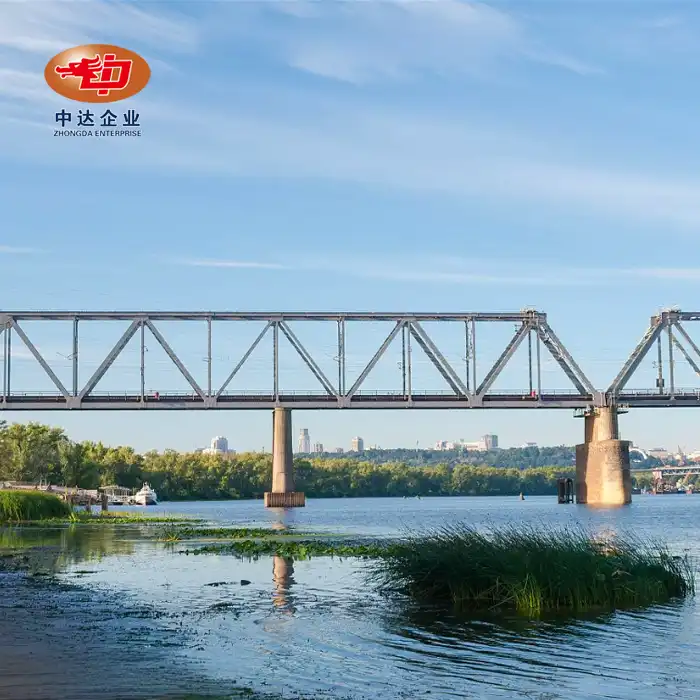
Warren truss designs use alternate diagonal members to make a pattern of equal-sided triangles, which is a very efficient use of material for medium-span uses. Tension and compression forces are automatically balanced by the shape, which makes it perfect for highway bridges 40 to 100 meters long. Pratt truss systems, on the other hand, put vertical members under tension and lateral members under compression. This makes the best use of steel because tension members can be lighter than compression elements. This design works especially well for train uses that need to handle big loads over and over again with regular stress patterns.
Zhongda's Standard steel truss bridges come in both Warren and Pratt configurations, and lengths can be changed from 30 to 150 meters. We choose the right type of truss based on the length of the span, the expected traffic loads, the climate, and the ease of building. Our engineering team uses thorough finite element analysis to find the best sizes for members and make sure that each part works well with the whole structure.
Inherent Advantages That Define Modern Infrastructure
Steel truss systems have an amazing strength-to-weight ratio that can't be beat by solid frame options. This trait lowers the need for foundations and shipping costs, which are very important when building in rural areas or areas with difficult natural conditions. Our bridges are made of ASTM A709 Gr.50 steel that has Z35 Z-direction features. This type of steel is designed to keep lamellar layers from tearing when it is welded and to work well under situations of multiaxial stress.
Durability is more than just choosing the right materials. Our three-layer anti-corrosion protection system—160μm thermal spray zinc, epoxy mica iron intermediate coat, and polyurethane topcoat—makes a wall that is stronger than the requirements set by ISO 12944 Category C5-Marine. This security makes sure that the product will work for decades in coastal areas, chemically-rich industrial areas, and places where the temperature changes a lot. We can make parts in a controlled workshop environment using prefabrication. Here, precise cutting (±0.2mm tolerance on ultra-thick plates), automatic welding, and careful checking always result in better quality than options made in the field.


Engineering Principles and Construction Process Behind Steel Truss Bridges
Structural Integrity Through Proven Standards
We make sure that every steel truss bridge we build follows all international safety rules, such as the AASHTO LRFD Bridge Design Specifications and the Eurocodes. These standards control everything, from choosing the right materials and designing connections to making sure they are strong enough to withstand stress and earthquakes. When figuring out how to distribute loads, engineers take into account natural forces (like wind, earthquakes, and heat expansion), live loads (like traffic), dead loads (like the bridge's own weight), and impact factors. Our BIM-driven design process makes detailed 3D models that find possible interferences before manufacturing starts. This keeps you from having to make expensive changes in the field and makes sure that the assembly goes smoothly.
The engineering team does a load rate study to make sure that the capacity meets the standards of Highway-I Level, which means it can hold up to 100 tons of vehicle weight. This grade makes sure that it works with big pieces of construction equipment, emergency vehicles, and large freight, which are important factors for clients in the mining, energy infrastructure, and industrial building industries.
Staged Construction: From Design to Deployment
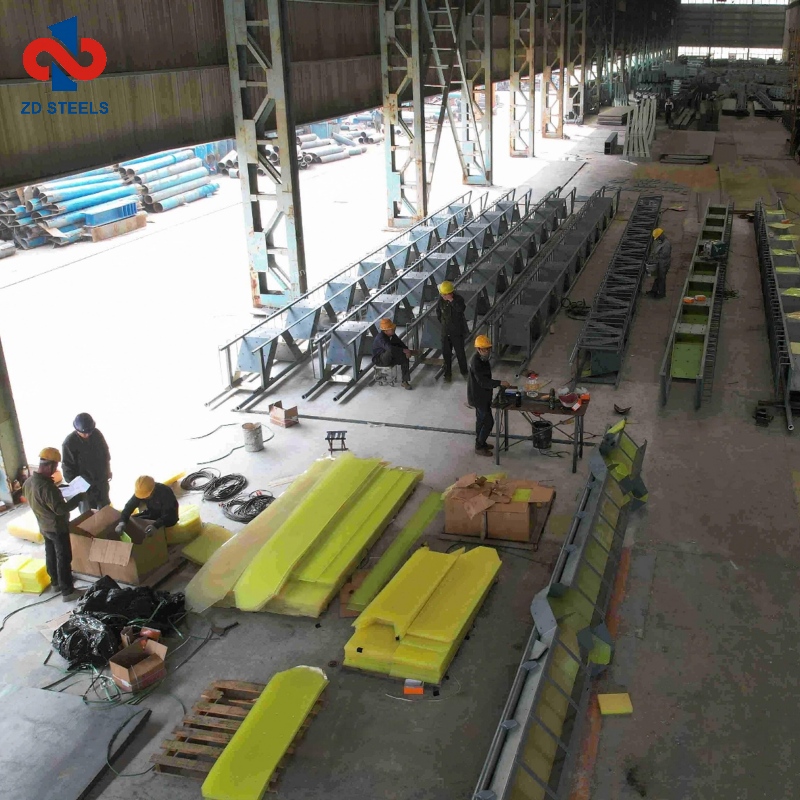
Before we start making something, we have joint design talks with clients. During these meetings, the client's needs are turned into detailed engineering sketches. Our 120,000 m² building has CNC cutting stations, automatic welding lines, and climate-controlled assembly bays where the work is done. Before the surface is prepared and a finish is applied, the dimensions of each part are checked.
Full-node screening with Magnetic Particle Testing (MT) and Ultrasonic Testing (UT) is part of quality assurance processes. MT finds surface and near-surface breaks in welding joints, which are the places where stress is building up the most. UT checks the internal soundness of thick-section parts to make sure there are no underground holes that could weaken the structure. These non-destructive testing methods provide proof that each link meets the standards of the AWS D1.5 Bridge Welding Code.
Our flexible design theory is used in transportation operations. When parts arrive at the building site, they are already put together into pieces that are easy to handle. This cuts down on the need for on-site workers and speeds up the installation process. Our emergency bridge that can be detached can span 200 meters in 48 hours, which has been very useful for responding to disasters and meeting pressing industry entry needs.
Maintenance Protocols That Extend Service Life
Long-term investments in infrastructure are protected by proactive repair plans. Checking the stability of connections, the state of coatings, and the orientation of structures should be done every two years. Finding small amounts of rust or stress cracks early on lets you make focused fixes before problems get worse and cost a lot to fix.
This dedication to lasting a long time is shown by our work on the Shenyang Dongta Cross-Hunhe River Bridge. This 18,000-ton building was designed with full lifecycle planning in mind, including ways to get to it for inspections and worn areas that can be replaced. Since installation, routine tracking has kept performance at its best, proving that our technical method and choice of materials were correct.
Comparing Steel Truss Bridges with Alternative Bridge Types: Making Informed Decisions
Performance Benchmarking Across Bridge Categories
When choosing a bridge, people have to think about how efficient the structure is, how long it will take to build, how much it will cost to maintain over its entire life. Fireproof and low-maintenance, concrete bridges need a lot of formwork, time to cure, and heavy moving tools while they are being built. While suspension bridges are a good way to cross very long distances, they require huge anchorages and specialized rope systems that are only cost-effective for crossing very long distances.
Steel truss bridge designs are ideal because they can span lengths beyond 50 meters, where beam bridges are unworkable, and they don't have to deal with the complexity and cost of cable-supported systems. Material economy directly leads to base savings—a steel truss bridge weighs 40–60% less than a concrete version, which greatly lowers the costs of building the piers and abutments.
Prefabrication Versus Field Construction
Prefabricated truss systems are clearly better than options that are made on-site. Fabrication in a factory doesn't depend on the weather, so the standard is always the same and the plan is always predictable. Skilled welders work in situations that are best for their bodies and with the right tools, which can't be done on mobile field platforms. When every part goes through recorded inspection stations before it is shipped, quality control is done all at once instead of just a few at a time.
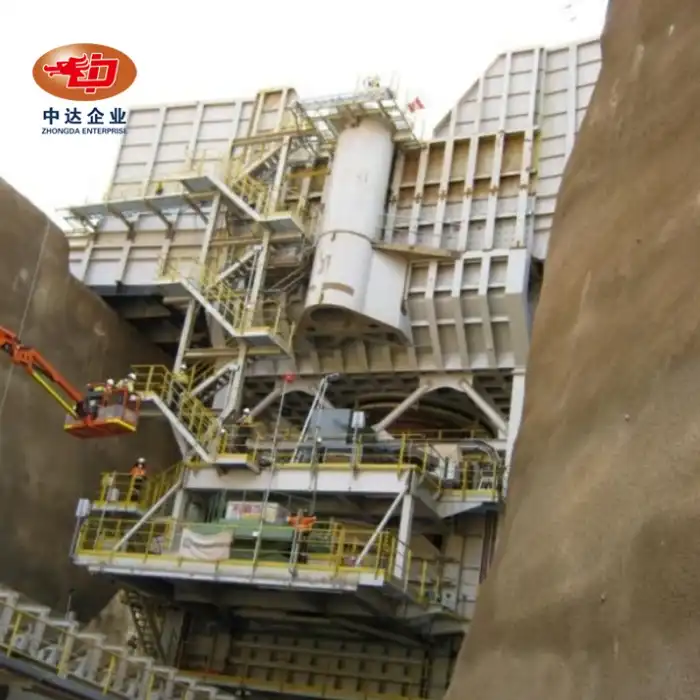
These benefits were made clear to us when we supplied bridge parts to Australian mining companies. Access to a remote spot limits the supply of tools and skilled workers. When prefabricated modules were delivered, they were ready to be bolted together. This cut the building schedule by 60% compared to traditional methods and got rid of worries about the quality of the welding in the field, where temperatures could change quickly and there was a lot of dust.
Engineering Adaptations for Specialized Requirements
Pay close attention to wear resistance and bending control in heavy-load situations. To make the structure stiffer and less likely to bend under heavy loads, our engineering team defines deeper truss sections and tighter panel spacing. We pay extra attention to the details of connections, which is why we use high-strength friction-grip bolts or full-penetration welds at key points to make sure connections never become the weaker link.
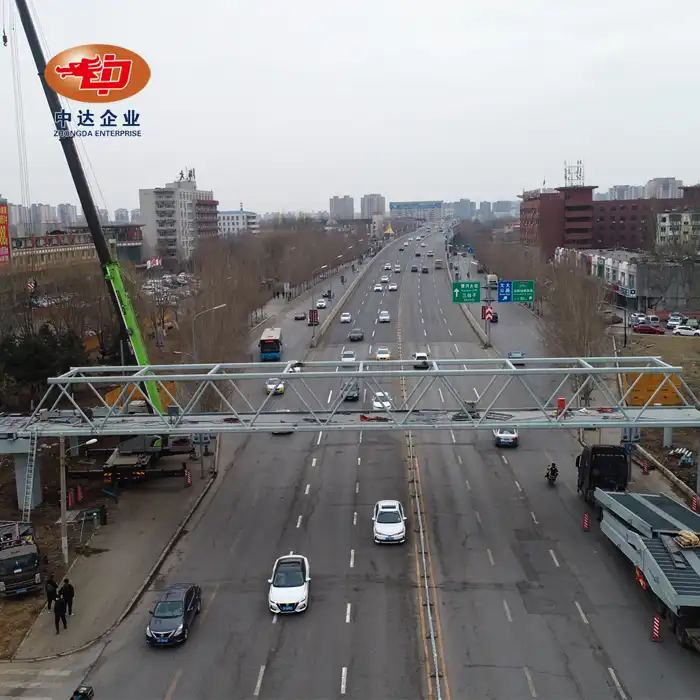
The Jingha Expressway Expansion project showed that we could build a lot of unique truss bridges in a short amount of time. Each building was designed to fit the specifics of the site, taking into account the current road lines and clearance needs. Standardized link details for all bridges made it easier to make them, while technical differences took into account different span lengths and support conditions at each site.
Procurement and Supply Chain Insights: Partnering with a Trusted Steel Truss Bridge Manufacturer
Essential Criteria for Supplier Selection
When choosing a steel truss bridge maker, you need to look at their professional skills, quality systems, and track records for completing projects. Organizations that are certified to follow ISO 9001 (quality management), ISO 14001 (environmental management), and ISO 45001 (occupational health and safety) show they are dedicated to continuous improvement. Getting EN 1090 approval proves that you know how to fabricate steel, which is a must for structure uses.
Lead times and production ability have a direct effect on project plans. Facilities with specific bridge manufacturing lines, enough materials on hand, and established relationships with steel mills can keep to their schedules even when the market is unstable. Ask possible providers if they can help with engineering. For example, can they do structure math, help with link design, and provide building engineering services? Full expert help sets makers who work with you to complete a project apart from those who just sell goods.
Zhongda's Manufacturing Strengths and Custom Capabilities
Zhongda Steel has grown into a widely recognized leader in precision steel solutions since it was founded in 2004 and has its main office in the Shenyang Economic-Technological Development Zone. Our 60,000-ton-per-year production ability helps a lot of different areas, from building bridges in the Arctic in Russia to mining infrastructure in Australia and industrial sites in Vietnam. We now have a better knowledge of how different markets have different design rules, environmental problems, and transportation issues.
Our special -60°C Weathering Steel Anti-corrosion Technology keeps buildings flexible and resistant to rust in very cold weather. This is very important for uses in northern climates where regular steels become rigid. BIM-based design integration lets clients see what the finished buildings will look like, find problems that might happen with current infrastructure, and plan the best way to build things before they start.
Comprehensive Project Support Services
In addition to making, we also provide full installation services that include planning transportation, overseeing assembly on-site, and checking the quality of the work. Our project managers are the only people you need to talk to about your project. This makes conversation easier and makes sure that everyone stays on the same page during the delivery and installation phases.
Engineering consulting goes beyond just designing something. We help with coordinating the base interface, engineering temporary works during building phases, and load testing methods to make sure that the performance as-built fits the performance assumptions made during design. After-sales support includes training for client staff on how to do upkeep, inspection service programs, and quick response times for any performance issues that come up during the service life.
Future Trends and Innovation in Steel Truss Bridges
Advanced Materials and Protective Systems
New materials are helping the area of bridge building keep moving forward. When compared to regular structural steels, High-Performance Steel (HPS) types are stronger, easier to weld, and less likely to break. Because of these features, designers can choose smaller members without losing safety limits. This lowers the cost of materials, makes shipping easier, and lowers the demand on the base.
Coating technology is changing to make it last longer between services and be better for the earth. Our three-layer method already gives great protection, but new nano-ceramic topcoats promise to be even more durable and release even fewer flammable chemical compounds. As these changes happen, we keep a close eye on them and try new materials for performance before adding them to our production requirements.
Smart Infrastructure and Structural Health Monitoring
Adding sensors to bridges turns them from inactive buildings into smart systems that give real-time information about how well they're working. In order to find odd stress conditions before they cause damage, strain gauges keep an eye on how loads are distributed. In the early stages of covering degradation, when repairs are still easy and cheap, corrosion monitors pick them up. Accelerometers record shaking patterns that show changes in the hardness of a structure. This is an early sign of wear cracks or connections coming loose.
When it comes to important infrastructure, where service failures can have big economic effects, this tracking feature is very useful. More and more, highway officials are putting instruments on major bridges. They receive data from these instruments and use it to make check plans more efficient and decide where to spend money on repair for whole networks of bridges.
Sustainable Design and Circular Economy Principles
Modern infrastructure is built with an eye toward the environment in mind. Steel is naturally recyclable because it can be broken down and remade over and over again without losing any of its properties. This is great for the goals of the cycle economy. When a job is over, the truss parts are reused in new building instead of being thrown away.
Our manufacturing methods focus on sustainability by reducing trash and using less energy. Nesting algorithms improve plate cutting designs, which lowers the amount of waste that is made. Welding techniques reduce warping and repair to a minimum, which saves time and energy. These practices are good for the environment and make prices more affordable, showing that sustainability and business growth go hand in hand instead of against each other.
Modular Systems for Rapid Infrastructure Expansion
There are pressing needs for infrastructure, especially in developing countries, because of population growth and economic growth. This need is met by modular steel truss bridge systems, which have standard parts that can be used in a variety of site situations. With pre-engineered parts, the planning process can be done in weeks instead of months, and the structure and safety standards are still met.
This is shown by our concept for a movable emergency bridge. Standardized panels join with quick-coupling systems, so they can be put up by general construction teams that don't have special skills for building bridges. This feature is very helpful during disaster recovery when important entry routes need to be fixed right away or when heavy-haul crossings are needed temporarily during building.
Conclusion
Modern manufacturing techniques and tried-and-true engineering concepts come together in steel truss bridges. Because they can handle a lot of different applications, distribute load efficiently, and be set up quickly, they are essential infrastructure solutions for tough projects all over the world. Zhongda Steel has been improving its products and services for 20 years, making it a reliable partner that can build buildings that are both technically perfect and easy to put together. Our all-around approach, which includes initial design advice, manufacturing, installation support, and lifetime upkeep, makes sure that our clients get building assets that will last for decades and meet strict safety standards and sustainability goals.
FAQ
What factors influence the investment required for a steel truss bridge project?
Several factors affect how much a job costs. The main things that determine the design are the span length and the load capacity. For longer spans and higher loads, the members and links need to be bigger and more complicated. Access to the site affects the prices of shipping and installation; for example, rural areas where cranes can't easily get to the site raise the cost of installation. Material specs affect prices. For example, rusting steel costs more at first, but it doesn't need to be painted over its lifetime, so it saves money in the long run. The level of customization affects the prices of engineering and production; standard designs are cheaper than fully customized ones. We give clear quotes that include all of the costs, so you can make decisions that are in line with your project's budget and performance needs.
How long does fabrication and installation typically require?
Standard steel truss bridge projects that span 50 to 100 meters usually take 8 to 12 weeks to build after the plan is approved. This schedule includes getting the materials, cutting and welding them, treating the surface, checking for quality, and packing them up to ship. How long it takes to install varies on the conditions of the site and how complicated the span is, but most jobs are finished within two to four weeks. Compared to cast-in-place methods, our flexible technique cuts schedules by a large amount. If you have pre-positioned parts on hand, emergency bridge versions can be up and running in 48 hours. This shows that premade steel systems are faster in general.
What maintenance protocols maximize bridge durability and performance?
Visual checks every two years are the basis of repair plans that work. Inspectors check the state of the finish, the strength of the connections, the ease of draining, and the orientation of the structure. Any harm to the layer is fixed right away, which stops water from getting in and starting rust. High-strength bolt connections are checked for torque levels on a regular basis to make sure that preload levels stay correct. Drainage systems need to be cleaned so that water doesn't build up and cause rust in one area. Our anti-corrosion method usually works for 15 to 20 years without any upkeep in regular conditions. Only areas that are physically damaged or are exposed to extreme conditions need to be touched up. We help clients who don't have their own bridge engineers by providing upkeep training and regular inspection services.
Partner with Zhongda: Your Trusted Steel Truss Bridge Supplier for Infrastructure Excellence
Zhongda Steel can help you with your building problems because they have 20 years of experience in this field. As a company that makes steel truss bridges for customers all over the world, we mix precise engineering with efficient production methods to make structures that work successfully in a wide range of situations. Our ISO-certified factory builds bridges that protect important traffic routes, allow for resource mining, and link communities all over the world.
We want project managers, EPC companies, government agencies, and industry owners to look into how our standard and unique truss systems can meet the needs of their projects. Get in touch with our engineering team at Ava@zd-steels.com for technical advice that is specific to your span lengths, load conditions, and site limitations. Visit zd-steels.com to look at our project portfolio, which includes works in a wide range of settings and uses. This shows that we can do a great job no matter how complicated the project is or where it is located.
References
American Association of State Highway and Transportation Officials. LRFD Bridge Design Specifications. Washington, DC: AASHTO, 8th Edition, 2017.
Chen, Wai-Fah and Duan, Lian. Bridge Engineering Handbook: Construction and Maintenance. Boca Raton: CRC Press, 2nd Edition, 2014.
Kulicki, John M., Prucz, Zolan, and Sorgenfrei, David. "Guidelines for Evaluating Corrosion Effects in Existing Steel Bridges." National Cooperative Highway Research Program Report 333, Transportation Research Board, 1990.
Salmon, Charles G., Johnson, John E., and Malhas, Faris A. Steel Structures: Design and Behavior. Upper Saddle River: Pearson Education, 5th Edition, 2009.
Troitsky, M.S. Planning and Design of Bridges. New York: John Wiley & Sons, 1994.
Zhao, Xiao-Ling, Zhang, Lei, and Al-Mahaidi, Riadh. "Innovative Applications of Steel in Infrastructure." Steel Construction: Design and Research, Volume 7, Issue 3, August 2014, pages 156-165.
YOU MAY LIKE