Structural Advantages of Steel Arch Bridge in River Crossings
2026-07-15 14:16:03






When it comes to crossing rivers, the steel arch bridge stands out as a great option that strikes a good mix between technical brilliance and cost-effectiveness. The natural strength of the arch shape is used in these structures to channel loads through compression while steel's amazing tensile qualities are used to make spans that can withstand hard conditions for decades. River environments have their own problems, like changing water levels, unstable soil, and constant attacks from changes in temperature and moisture. But properly designed steel arch bridges can handle these problems with great strength, giving procurement teams a reliable way to connect communities and businesses across waterways.
Understanding Steel Arch Bridges and Their Structural Significance
Building structures for crossing rivers requires more than just normal building methods. The steel arch bridge design meets these needs using a tried-and-true method: the arch converts vertical loads into lateral thrust forces at the base level, making the structure naturally solid with little need for support in the middle.
Core Design Principles for River Applications
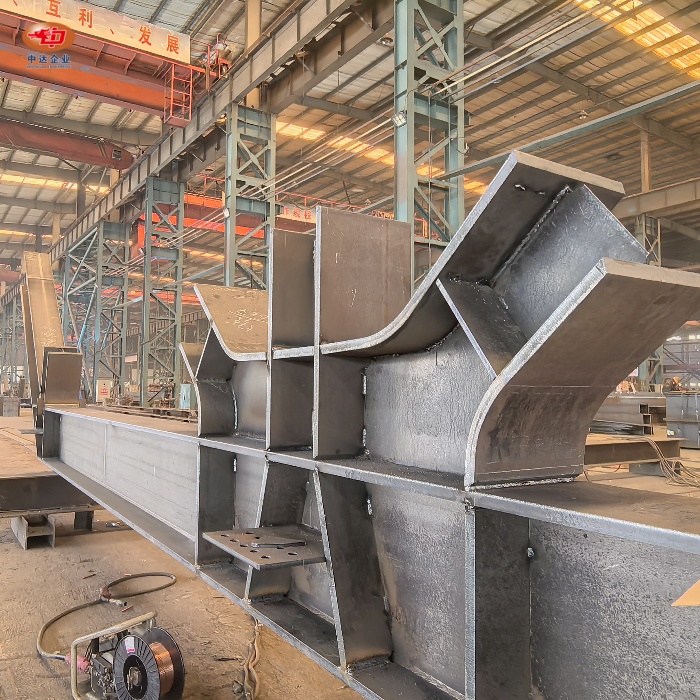
High-strength materials must work together to make the basic structure work. At Shenyang Zhongda Steel, we use Q420qE steel for arch ribs, which are set up in pentagonal box pieces that are 3.2m by 4.5m. In addition to having a good strength-to-weight ratio, this shape provides excellent torsional stiffness. It's not just a matter of meeting technical requirements that high-grade steel must be used; it must also be able to handle dynamic loads like heavy traffic, wind forces of up to 1.5kN/㎡, and the heat expansion cycles that are common in open bridge environments. The makeup of the material makes it very easy to weld. This lets our team do 100% CTOD welding tests throughout the manufacturing process, which guarantees that every joint is structurally sound.
Addressing Environmental and Geotechnical Challenges
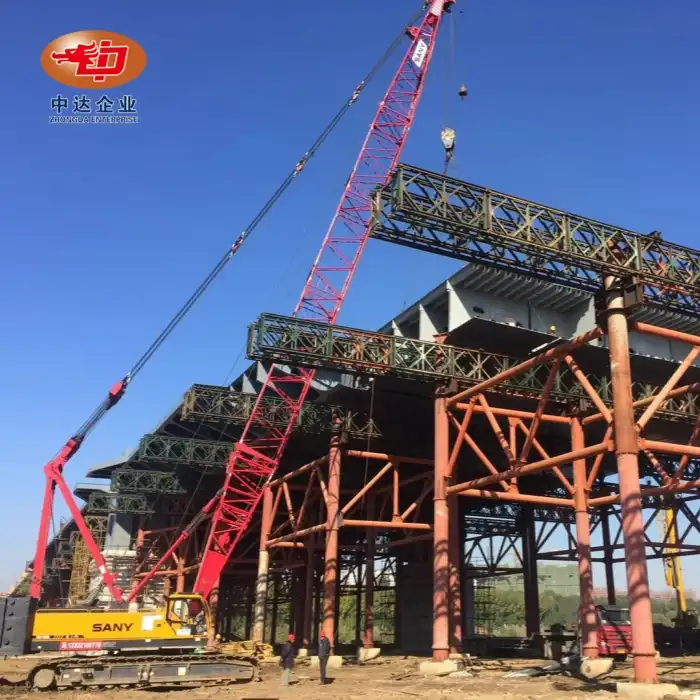
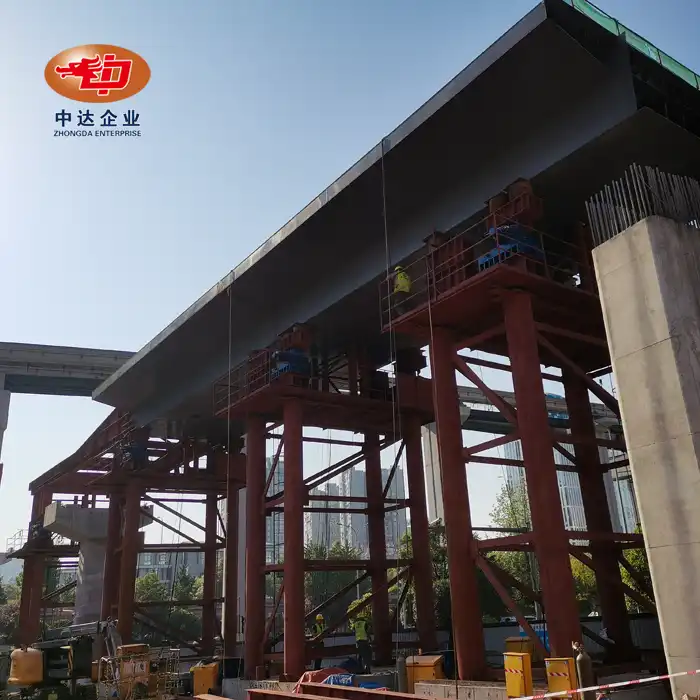
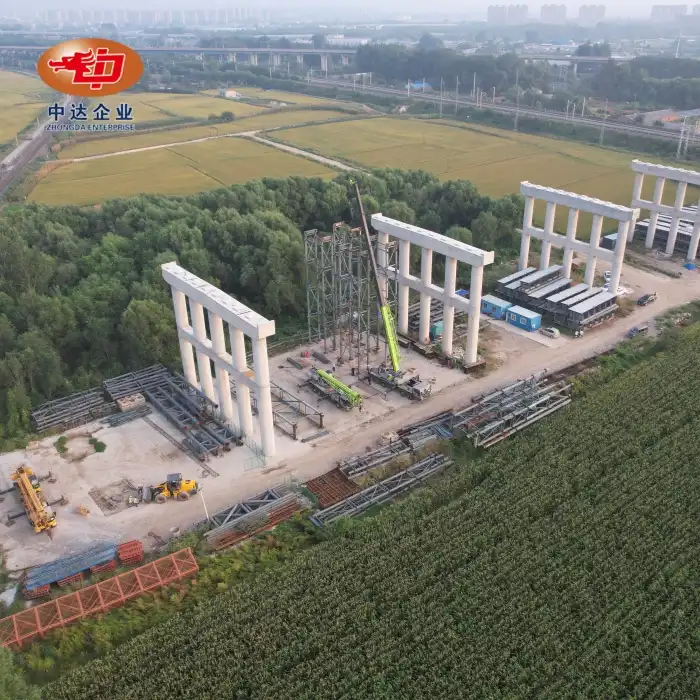
Rivers make it hard for any building to stay standing. Flowing water puts hydrostatic pressure on foundations, and changes in the weather cause the dirt under abutments to expand and contract. Before the final plan is made, our engineering process includes geotechnical studies to map out the different layers of dirt and figure out their bearing capacity. The arch shape naturally spreads thrust forces out over a large area of the foundation zones. This lowers point loads that could cause settlement problems in bases that aren't very stable. We've used advanced building methods, such as stentless rotation techniques, on 8,000-ton projects. These methods let us put together huge sections on riverbanks before rotating them into place. This cuts down on the amount of work that has to be done in water and the damage that it does to aquatic ecosystems.
Key Structural Advantages of Steel Arch Bridges in River Crossings
Investing in river infrastructure needs to be backed up by real performance gains. Steel arch bridges' beautiful architecture often overpowers their useful technical benefits, but procurement officials need numbers to make decisions.
Superior Load Distribution and Span Capabilities
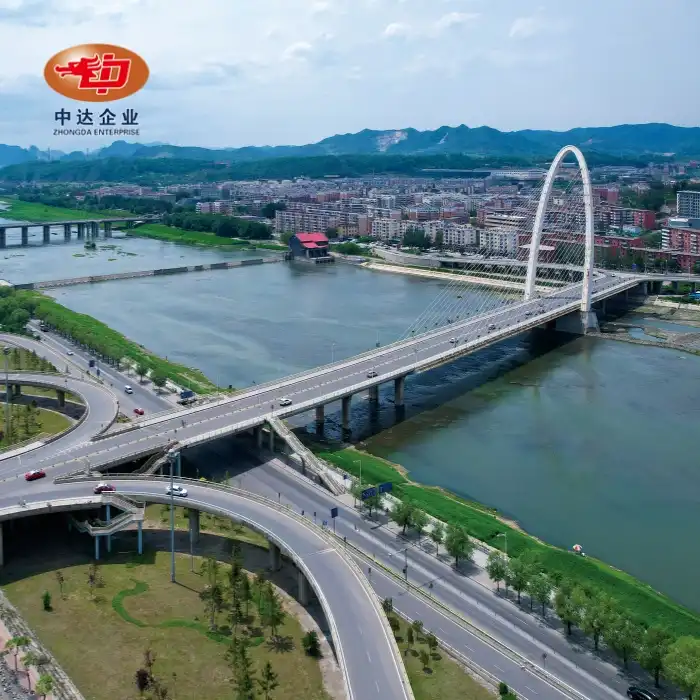
Arch shape naturally makes a load path that works well. Steel arch bridge structures change vertical forces into compressive loads along the curved rib shape, while beam bridges depend on bending resistance. Because of this mechanical advantage, unsupported spans can be longer, which is very important when river width or transit clearance standards don't allow for mid-channel piers. With single-arch designs, our projects often reach spans of more than 200 meters, getting rid of the need for pier supports that mess up river flow patterns and aquatic areas. The spread out weight also lowers stress levels, which helps the fatigue life last longer when traffic loads change.
Durability Under Harsh Environmental Exposure
River bridges are constantly being damaged by nature. Moisture speeds up rust, changes in temperature cause materials to wear out, and the force of falling debris during floods tests how strong a structure is. We've made complete security systems just for these conditions: a 150μm aluminum spray coating acts as the main shield against rust, and then a fluorocarbon topcoat that meets the requirements of GB/T 30790 C5M for marine and industrial atmospheric settings comes next. This two-layer method makes the product last a lot longer than regular paint processes. Another benefit is that steel is naturally flexible. Unlike rigid materials, high-grade structural steel can absorb impact energy through controlled bending instead of catastrophic failure.
Lifecycle Cost Efficiency and Maintenance Benefits
When people talk about budgets, they usually only talk about the beginning costs of building something, not the total cost of ownership. Steel arch bridges are a great deal because they require less upkeep over long periods of time. Our full-bridge monitoring systems have more than 200 sensors that track vibration, strain, and movement in real time. This lets us do preventative maintenance that fixes small problems before they get worse and cost a lot to fix. Because steel construction is flexible, parts can be easily replaced when they wear out. For example, single hangers, deck sections, or bearing systems can be repaired without having to close the whole structure down. Unlike solid concrete options, which are very hard to get to for repairs, this is very different.
Comparing Steel Arch Bridges with Alternative Bridge Types
When choosing a strategic infrastructure, it's important to be fair and compare it to other technologies. Depending on the specifics of the project, each type of bridge has its own benefits.
Structural Performance Across Bridge Configurations
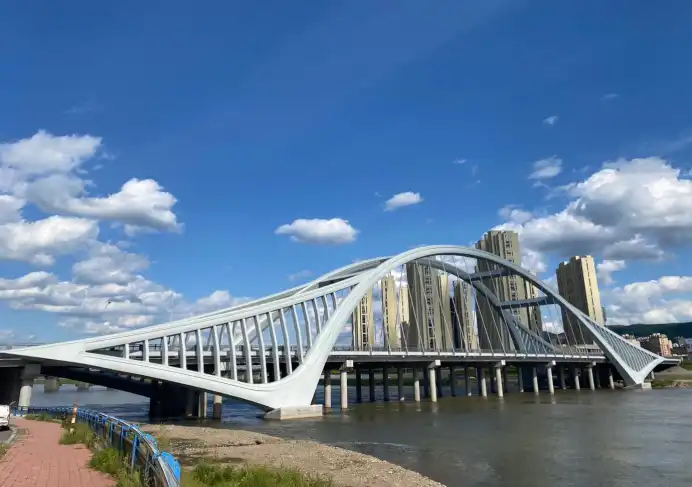
Although concrete arch bridges look nice and have good compression strength, they need a lot of formwork to be built and can't hold as much weight. While suspension bridges can have long lengths, they need big grounding systems and are more likely to oscillate because of wind. Cable-stayed designs add interest to buildings, but they put a lot of weight on the tower supports, which could be a problem in rivers with shifting sediments. Truss bridges save material, but they are hard to maintain because there are so many link places that need to be checked. The steel arch bridge design is a good compromise between a large span and low base requirements. It also has better lateral stiffness than cable-supported options, so it can withstand earthquake and wind forces better.
Economic Considerations and Application Suitability
The prices of materials change with the economic markets, but steel's ability to be recycled keeps its value. When its useful life is over, structural steel can still be recycled about 90% of the time. This creates material recovery value that helps pay for some of the costs of shutdown. The length of time it takes to build something has a big effect on how much it costs. Our prefabrication method provides 20-meter arch rib sections at a monthly capacity of 1,203 tons, which speeds up assembly on-site compared to cast-in-place concrete options that need longer drying times. Labor efficiency directly leads to lower costs when building plans get squished. As part of the suitability analysis, aesthetic needs must also be taken into account. For example, cities and towns often put a lot of value on famous bridges that are both important for traffic and as symbols of the community. The graceful arch shape of these bridges has marketing benefits beyond just engineering measures.
Procurement Insights and Construction Considerations for Steel Arch Bridges
A successful infrastructure purchase goes beyond technical specifications and includes evaluating the capabilities of suppliers and the quality of partnerships that last a lifetime.
Supplier Evaluation and Quality Assurance
When choosing a steel arch bridge maker, you need to look at more than just price quotes. Zhongda Steel has both ISO 9001:2015 approval and EN 1090 Execution Class 4 compliance, which shows that they follow the strict European standards for manufacturing. Our 120,000 m² building has CNC cutting tools that can work with ultra-thick plates and keep tolerances of ±0.2 mm. This level of accuracy removes problems with field-fitting during assembly. Ultrasonic and x-ray inspections of all key welds are part of non-destructive testing methods, and full traceability is provided by paperwork packages. Global project knowledge is very important. For example, our collection includes Arctic bridges in Russia that are used in temperatures as low as -60°C, which shows that we understand how to perform in a wide range of climates.
Custom Engineering and Advanced Design Technologies
Standardized designs rarely work best in certain situations. To make custom solutions, we use BIM-driven design methods that combine geotechnical data, hydraulic models, and traffic forecasts. The Shenyang Dongta Cross-Hunhe River Bridge is a good example of this method. Our engineering team created a special stentless spinning method for the 18,000-ton structure, which got rid of the need for temporary supports that would have made it hard to navigate while the bridge was being built. Computer-aided finite element analysis checks how structures behave under design loads, such as earthquakes, wind storms, and sudden changes in temperature. This computer validation lowers the risk of building and gives procurement teams faith in the estimates of performance.
Installation Support and Maintenance Partnerships
Delivering bridges goes beyond the plant gates. Our technical teams help with installation on-site and work with general builders to solve problems that come up in the field during complicated building projects. As part of post-commissioning help, building owners are taught how to keep an eye on how the system is working and set up maintenance schedules that are appropriate for the area. The value offer is based on partnership rather than transactional supply—infrastructure assets with 100-year design lives need supplier relationships that last decades after the initial building contracts are over.
Case Studies: Successful Steel Arch Bridges in Major River Crossings
Validation in the real world gives theoretical engineering ideas more weight. By looking at major projects, we can learn useful lessons that we can use in future buying decisions.
Iconic Structures and Their Engineering Innovations
The Sydney Harbour Bridge, which opened in 1932, is still a great example of how long-lasting steel arch bridges can be. Even after 90 years of use, the structure can still handle heavy traffic loads with regular upkeep. Its main span of 503 meters showed that arch shapes could be as strong as suspension bridges for long spans. The New York's Hell Gate Bridge is another example of a long-lasting structure. It has been in use since 1916 and carries train loads that are much higher than highway traffic. These historical examples show that steel buildings can last for many generations if they are properly built and kept. This makes the initial investment in capital worthwhile because the assets are used for longer.
Modern Construction Techniques and Project Efficiency
Modern projects use new technologies that engineers in the early 20th century didn't have access to. Prefabrication has changed the way building projects are scheduled. Now, instead of putting structures together rivet-by-rivet on the job site, large parts are made in a controlled workshop and then transported to the site. This efficiency was shown by our Jingha Expressway growth project, which finished a 1,200-meter span building earlier than planned by using modular assembly sequence. Modern welding methods, such as submerged arc and flux-cored processes, make joins that are stronger than the base material. This gets rid of the weak spots that existed in older bonded connections. Computer-controlled manufacturing makes sure of precise geometry, which makes field alignment easier and saves money on repairs and time.
Conclusion
Building facilities for crossing rivers is a big investment that will pay off for many years. The structural benefits of steel arch bridge configuration—efficient load distribution, environmental resilience, and lifetime cost efficiency—make it a strong choice for procurement professionals who need to balance performance needs with budget limitations. The success of a project depends on both the quality of the design and the ability of the seller. This means that choosing the right partner is just as important as the technical specifications. For infrastructure to last for generations, it needs to be carefully planned and built, and it needs to be installed by people who know what they're doing.
FAQ
What makes arch bridges particularly suitable for river crossings?
The arch shape gets rid of the need for middle piers that would get in the way of water flow and make building the base harder in river sediments. This design naturally fights side forces from wind and earthquakes, and it also gives plenty of room for ships to pass under the span.
How does Q420qE steel differ from standard structural grades?
Q420qE is a high-strength low-alloy steel that has a yield strength of 420 MPa, which is a lot higher than most grades. The "qE" name means that the material has better low-temperature impact toughness and through-thickness qualities, which are very important for welded structures that are put through harsh weather and dynamic loading conditions.
What maintenance requirements should owners anticipate?
Modern steel arch bridges with protected coatings and tracking systems usually need to be inspected every two years and get some small repairs done every 10 to 15 years. Major repairs, like renewing the covering, usually happen every 25 to 30 years, but the conditions of external exposure have a big impact on these times.
Partner with a Leading Steel Arch Bridge Supplier for Your Next River Crossing Project
For twenty years, Zhongda Steel has been solving difficult problems with water infrastructure. Our Q420qE steel arch bridge options use cutting-edge materials engineering along with tried-and-true building methods to create structures that meet strict performance standards while also maximizing long-term cost savings. Our team offers full support from the first design meeting to the final completion. They are certified by ISO 9001:2015 and follow EN 1090 guidelines. We know that buying things requires more than just looking at technical specs. You need to have faith in the supplier's skills, the quality of the products they make, and their commitment to a long-term relationship. Email our engineering team at Ava@zd-steels.com to talk about your project needs and find out how our ability to build steel arch bridges can turn your idea for a river crossing into a long-lasting piece of infrastructure.
References
Chen, B., & Wang, T. (2018). Design and Construction of Modern Steel Arch Bridges. Beijing: China Architecture & Building Press.
Structural Engineering Institute. (2020). Guidelines for Steel Arch Bridge Design and Fabrication. Reston, VA: American Society of Civil Engineers.
Menn, C. (2015). Prestressed Concrete and Steel Arch Bridges: Design Theory and Practice. Basel: Birkhäuser Architecture.
Takahashi, Y., & Liu, H. (2019). Advanced Welding Techniques for High-Strength Bridge Steel. Journal of Bridge Engineering, 24(6), 04019042.
Wu, Q., & Zhang, M. (2021). Corrosion Protection Systems for Marine and Industrial Atmospheric Environments. Corrosion Engineering Science and Technology, 56(3), 245-258.
International Association for Bridge and Structural Engineering. (2017). Long-Span Arch Bridges: Structural Behavior and Construction Methods. Zurich: IABSE Publications.
YOU MAY LIKE
_副本_1762409954420_1788229249106.jpg "steel column design")