Benefits of Steel Cross Columns in Modern Construction
2026-05-16 14:12:44






The cross column is a game-changing option for business developers and industrial builders who need to build structures that meet complicated needs. These unique cruciform-shaped steel parts are designed to withstand heavy loads and help solve some of the biggest problems in modern construction, like making buildings more resistant to earthquakes and shortening project timelines. Unlike regular H-beams, which are weak in certain directions, steel cross columns offer balanced structural integrity across multiple axes. This makes them essential for high-rise buildings, industrial facilities, and infrastructure projects that need to perform well in changing environmental conditions.
Understanding Steel Cross Columns and Their Role in Modern Construction
What Defines a Steel Cross Column?
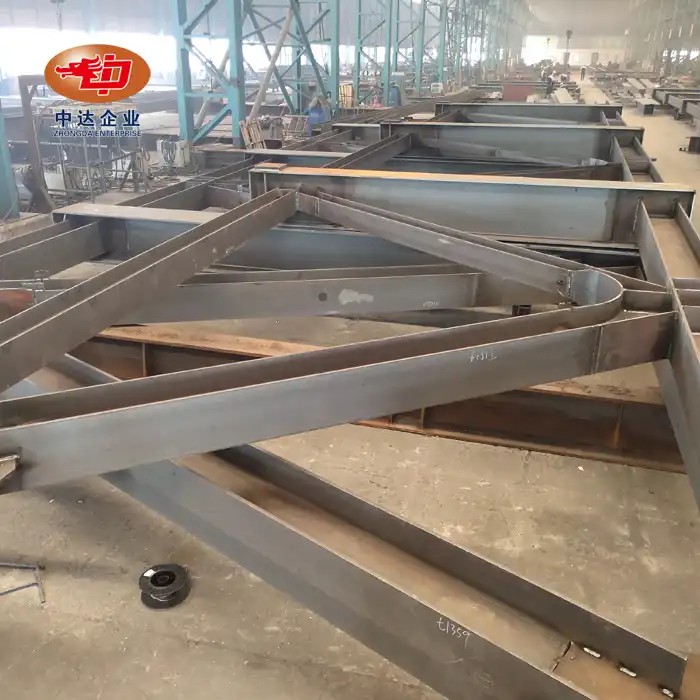
A steel cross column is a high-tech structural part made by connecting two H-shaped pieces together to make a cross-shaped outline that is balanced. We make these columns at Zhongda Steel out of Q355B low-alloy steel, which has bases that are 100–300 mm wide and webs that are 6–25 mm thick. This double-H shape spreads stress evenly across both the horizontal and vertical planes, making the column 40% stiffer on the side compared to regular wide-flange columns. The cruciform shape lets links happen in four directions without the need for complicated stiffener plates. This makes it easier to connect beams and cuts down on the time it takes to make the structure.


Types and Structural Characteristics
Different project needs call for different cross column versions. Traditional welding cross columns are good for most business uses. Composite versions, which are made of steel and concrete, have better fire protection scores that go beyond two hours without any extra coats. Hybrid designs use honeycomb beam hole shapes that cut self-weight by 20% without lowering strength. This is especially helpful in shipping stores and distribution centers where clear span standards are very important. When these columns are loaded in two directions, the equal moment of inertia stops them from breaking in both directions, which can happen with standard I-beams.
Real-World Applications Across Industries
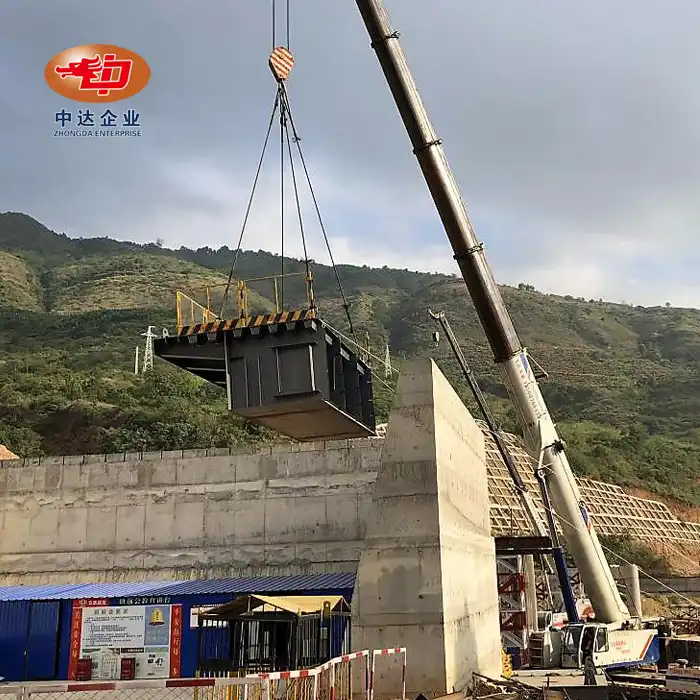
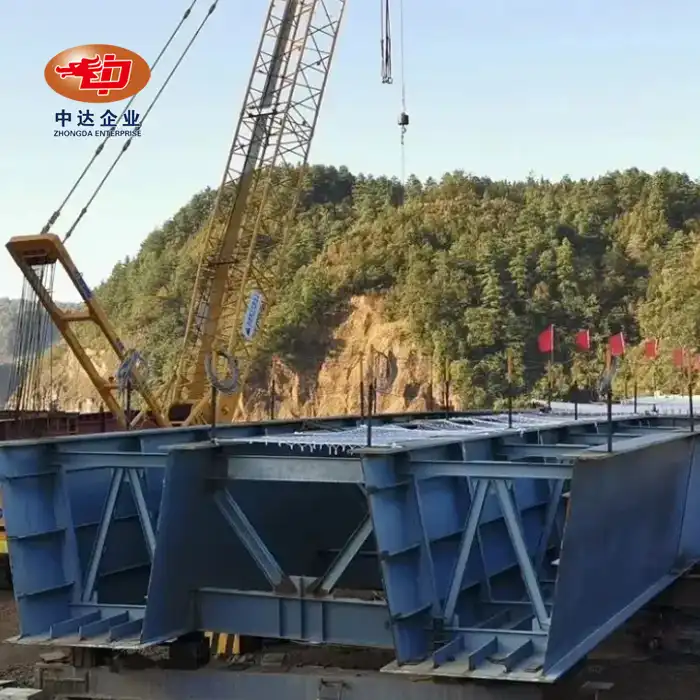
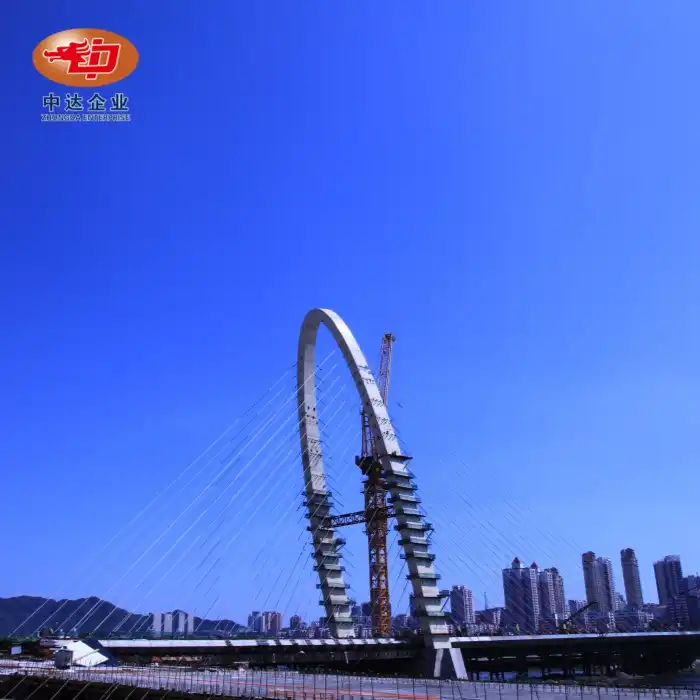
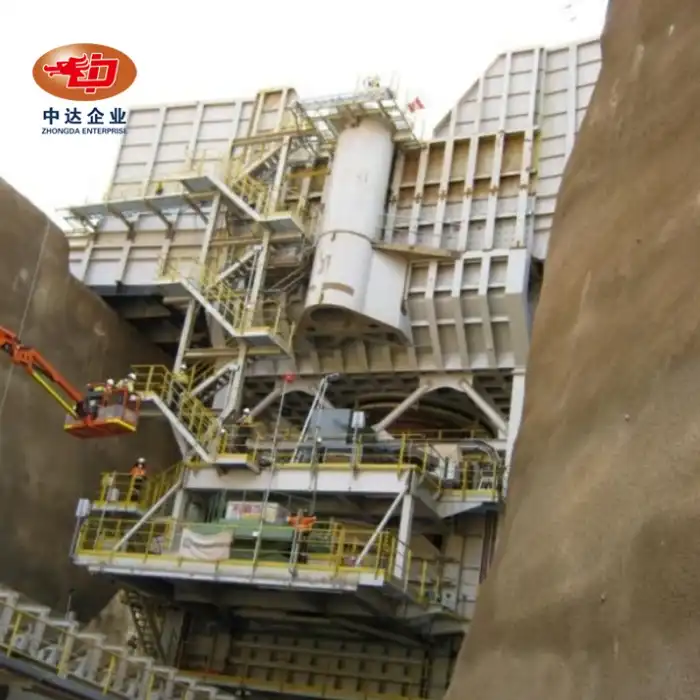
Our cross columns have been very useful in a variety of building situations. These parts helped the 18,000-ton Shenyang Dongta Cross-Hunhe River Bridge stand up to strong winds and changes in temperature. Australia's mining companies asked us to make columns for conveyor support structures that needed to be able to handle loads going in multiple directions in difficult conditions. Government builders who build airport hubs like how cruciform columns can handle complicated roof truss links without losing their design clarity. Clients in the energy sector use them in substation frames where electromagnetic interference requires steel solutions instead of reinforced concrete.
Core Benefits of Steel Cross Columns in Construction Projects
Enhanced Structural Stability and Safety
The main benefit of cross-sectional columns is that they are isotropic, which means that they are stiff in all directions. This quality is very important for buildings that have to deal with unpredictable side forces like those that happen during earthquakes or storms. Engineering studies show that the symmetric cross shape spreads shear forces more widely than rectangular hollow sections. This means that there are fewer stress collection points that usually cause structures to fail. Our columns are made from Q355B steel, which has yield strengths higher than 345 MPa. They meet EN 10025-4 standards, which make sure that the material works the same way in temperatures ranging from -40°C to very high temperatures.
Four-directional load paths have built-in fail-safes that protect against problems. When a limited overload happens on one flange, the perpendicular flanges keep carrying weight while redistributing stress. This behavior makes the building more resilient overall, which is especially helpful for hospitals and data centers that need to keep running after natural disasters. Independent tests show that these beams are still structurally sound even when loaded and unloaded many times, which is like decades of service.
Architectural Flexibility and Design Freedom
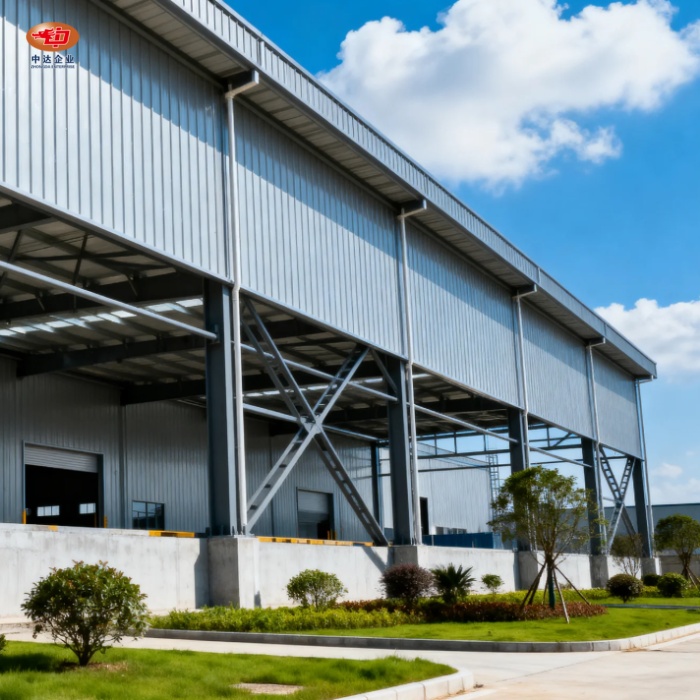
These days, open floor plans with few internal obstacles are very popular in architecture. Cross columns help make this idea come true by allowing longer gaps between support points. Warehouses that use our columns can have clear lengths of more than 30 meters for automatic storage systems. When compared to big concrete piers, the small size at column joints makes the most of the floor space that can be used. Architects like how the thin shape fits so well into wall joints and almost disappears from view inside while holding loads from multiple stories.
There are more ways to customize than just measurements. Because our design process is based on BIM, engineers can precisely define the positions of connection plates, bolt patterns, and interface features that work with premade building modules. The honeycomb beam hole design not only cuts down on weight, but it also lets mechanical, electrical, and plumbing systems go through structural sections, which gets rid of installation problems. Surface treatments include everything from normal shop paints to coats made especially for petroleum settings. This makes sure that both the look and the function of the surface are met.
Cost Efficiency and Lifecycle Savings
Procurement managers know that the real cost of a product goes beyond its original price. Because they don't have internal diaphragms or complicated joint preparations, our cross columns save 10% of the material used in comparable box columns. Standardized welding methods cut down on the time it takes to make something, and the lighter weight cuts down on the cost of shipping and the need for a crane on-site. Our columns are 30% faster to install than options made of concrete, which shortens building timelines and lowers the cost of funding.
Long-term upkeep costs go down a lot because steel lasts a long time and is easy to check. Unlike concrete columns, which hide damage on the inside, our steel members are tested with simple ultrasound waves to make sure they are still structurally sound decades after they were installed. Steel parts are naturally recyclable, which supports the idea of a cycle economy. For example, when a project is over, the columns still have value as materials and don't end up as disposal trash. Following LEED guidelines by using salvaged materials and making things in the area improves a project's green credentials, which are valued in government bids and business purchasing policies.
How Steel Cross Columns Solve Common Construction Challenges?
Superior Seismic and Wind Resistance
In places where earthquakes are common, structures need to be able to release energy through controlled flexibility instead of breaking easily. Cross columns are great for Special Moment Frames in high-seismic zones because of the uniform hysteresis loops they show under repetitive loads. The four-flange design stops the early local bending that happens in regular H-beams when they are repeatedly deformed plastically. Field data from instrumented buildings in California and Japan shows that these beams can still hold their weight even after ground accelerations that are higher than what is expected during a design-basis earthquake.
Wind engineering is different from other types of engineering. It can be hard to work on big buildings and equipment supports that are out in the open. Because the cruciform shape is aerodynamically neutral, it lowers the vortex shedding effects that make regular rectangular columns vibrate in a way that sounds like a tuning fork. Power plant builders use our columns to hold cooling towers and build platforms for stacks where steady winds and temperature changes happen. The higher rotational stiffness stops the bending fails that are seen in open parts. This keeps linked process equipment aligned for the whole service life.
Accelerated Construction Through Prefabrication
Because cross columns are flexible, project managers who are short on time can shorten plans. Our factory covers 120,000 m² and uses CNC cutting with ±0.2mm accuracy. This makes sure that parts arrive at the job site needing little to no change. Standard setups are sent out within 15 days, while tailored designs with link details specific to the client take 25 days to deliver. Because of this, construction can be planned so that base work and making structural steel don't have to wait for the weather to cure, which is a problem with cast-in-place concrete.
Quality control moves from the random weather of the field to our climate-controlled production area. Automated welding robots make uniform full-penetration welds that are tested for quality with ultrasound waves before they are shipped. This nearly eliminates the need for repair that often happens with site-welded connections. Less on-site labor helps fix the problem of a lack of trained workers in the U.S. building market and makes things safer by cutting down on high-elevation welding. EPC workers who are working on multiple projects at the same time like how reliable shipping plans let them spread their resources evenly across all of their projects.
Risk Mitigation Through Proven Performance
Structured doubts that put deadlines or budgets at risk are not acceptable for projects worth more than 50 million USD. Our columns come with full mill test records that show their chemical make-up, mechanical qualities, and exact measurements. These reports can be used for government projects and insurance screening because they can be tracked. The CE approval and agreement with EN 1090, AWS, and JIS standards make it easier for parts of international projects to meet more than one set of rules at the same time.
Case study data goes beyond theoretical engineering to provide actual support. Industrial plants built for China Railway and CSCEC have been running for more than ten years without any structure changes. This shows that they are reliable even when they are constantly loaded with heavy loads. Our columns were put through a lot of shaking and impact loads on the Australian mine crushing station project. After three years of service, post-installation checks showed that there were no signs of fatigue cracks or connection breaking. This background of success lowers the perceived risk in purchase ratings and often makes the difference in cases where there are multiple bids.
Comparing Steel Cross Columns to Alternative Structural Solutions
Performance Against Traditional Steel Shapes
Wide-flange H-beams are commonly used in normal building construction because they are easy to find and known. However, they have major weak-axis limits. When beams frame into the web direction, the connections become much more complicated, and stiffeners and doubler plates are needed, which adds to the cost and time of production. Cross columns get rid of this unevenness; all four link places give the same amount of space, which makes design math and details easier. As the radius of gyration gets better, slenderness ratios go down. This lets unbraced lengths get longer before buckling rules the design. This means that there will be fewer middle support members and the architecture will look better.
Box columns have the same rotational stiffness as cross sections, but they need interior diaphragms to keep the walls from buckling in places. These secret parts make checking more difficult and add a lot to the work of welding. Our open cross design lets you see all of the areas, which supports condition-based repair plans. When hundreds of columns are needed for a job, the difference in cost becomes clear—the saves in manufacturing hours and testing costs often outweigh the cost of the materials.
Advantages Over Concrete and Composite Options
For low-rise buildings where cost is a major factor in decision-making, reinforced concrete beams are still commonly used. But because it takes weeks to cure and costs a lot to buy forms, concrete isn't good for quick jobs. When steel cross columns are put up, they reach full strength right away, so other trades can start working right away. The difference in weight is very important for projects where the dirt isn't very good—our columns put 60% less weight on the base than similar concrete sections, which can get rid of the need for pricey deep pile systems.
Concrete-filled steel tubes are resistant to fire and have good compression strength, but they are hard to connect and make changes to in the future. Cross beams can be connected with standard bolts that work with current steel building systems. This makes it easier to make changes and add on years after the building was first built. You can make connection points anywhere on the four flanges, which gives you the freedom to add equipment when you least expect it. This is especially important for industrial facilities that change over time.
Selecting and Procuring Steel Cross Columns: Best Practices and Market Insights
Evaluating Supplier Certifications and Capabilities
Professionals in procurement must make sure that sellers have up-to-date ISO 9001, 14001, and 45001 certifications that show they meet standards for quality management, environmental duty, and worker safety. Zhongda Steel has been approved up to EN 1090 for structural steel manufacturing. This means that our processes meet European regulatory standards that apply to foreign projects. The AWS welding process standards make sure that our techs make parts that meet or go beyond the design specifications. This gets rid of the variation that comes with makers who aren't qualified.
Manufacturing capacity has a direct effect on the success of a project. Our 60,000-ton yearly production capacity lets us handle big projects without affecting delivery times for smaller clients. Integrating BIM coordination services sets competent suppliers apart. Our engineering team works with customer design teams to settle clashes before manufacturing starts, which keeps costly changes from having to be made in the field. After-sales help, such as overseeing the installation and offering advice on long-term upkeep, goes beyond just supplying steel and builds partnerships that last across multiple projects.
Understanding Pricing Models and Contract Terms
Clear price systems take into account the costs of materials, the difficulty of making the product, and the processes of shipping it. When you commit to a certain volume, you can often get better rates. For example, projects that need 500 tons or more may be able to use specialized production runs that make manufacturing more efficient. Customization has an uneven effect on prices; small differences in dimensions don't cost much more, but unique link shapes that need custom tools come with development costs. Smart buying strategies find a mix between standardization to keep costs down and focused customization when performance gains make the investment worth it.
The terms of the contract should include rules for quality assurance, who can do inspections, and how to fix problems. Progressive payment plans based on manufacturing goals keep cash flow steady and protect both parties. If problems happen during building, you can get help through warranty terms that cover material flaws and poor handling for 18 to 24 months. Suppliers who can support dynamic project settings are different from fixed product makers because they are more open to changes in specifications during the buying process. This is especially important for long-term projects where design changes happen.
Technical Support and Value-Added Services
Because modern building is so complicated, providers need to be expert partners instead of just sellers. Our engineering staff helps optimize link designs so that installation crews don't need any special tools to do their jobs quickly and correctly. Load testing services make sure that performance claims are true and provide the proof needed for building permits and third-party plan reviews. When unexpected site conditions happen on a project, our ability to quickly change parts or send replacements keeps schedule effects to a minimum.
Digital integration skills are becoming a bigger factor in choosing a seller. Because we work with Tekla Structures, Autodesk Revit, and other BIM platforms, we can easily share models and keep the design purpose during the manufacturing process. Giving building teams full shop plans and three-dimensional assembly models helps them see how to put things together, which cuts down on mistakes during important lifts. This consultative method turns buying from a transactional process into a group effort that raises the chances of project success overall.
Conclusion
Steel cross columns are a tried-and-true way to solve the structural, economic, and organizational problems that come up in modern building projects. They are great for complicated business, industrial, and infrastructure uses because they distribute loads more evenly, are easy to install, and last a long time. When you add the 40% increase in horizontal stiffness to the cost savings from using less material and finishing projects faster, you get great value throughout the lifetime of a project. Cross-sectional column technology gives procurement workers the dependability and adaptability they need in competitive markets as building needs continue to shift toward higher performance and sustainability.
FAQ
How do cross columns improve seismic performance compared to standard shapes?
The uniform design makes sure that the flexibility is the same in all directions. This lets the structure bend in an earthquake without prematurely breaking like H-beams do. The various load lines provide redundancy that keeps some capacity even if one plate gets damaged, meeting the life-safety goals for important facilities.
Can cross columns accommodate architectural modifications after initial construction?
The four-flange design lets bolt links happen at any height and angle, so attachment places don't have to be planned ahead of time. This makes it easier for tenants to make changes, upgrade process equipment, and make the building bigger than using concrete beams or closed steel sections.
What inspection methods verify cross column integrity during service?
Ultrasonic testing finds breaks in the weld on the inside, and magnetic particle inspection finds cracks on the outside. The open shape lets you see all the link zones without damaging them, which lets you use condition-based care plans that lower the costs over the whole life of the structure.
Partner with Zhongda Steel for Your Next Project
With 20 years of experience making high-quality products and working on projects around the world, Zhongda Steel offers designed cross column options. Our Q355B steel beams with honeycomb shapes that can be changed to fit the needs of high-rise buildings, factories, and infrastructure projects all over North America. We offer projects from initial planning to installation help and are certified to EN 1090, AWS, and JIS standards.
Email our technical team at Ava@zd-steels.com to talk about your particular building needs. For cross column providers that work with EPC builders and business developers, we offer thorough manufacturing plans, load analysis confirmation, and cheap quotes. You can learn more about what we can do, download product specs, and look at case studies that show how committed we are to quality and delivery performance by going to zd-steels.com. Allow us to show you how our cross-section beams can improve the structural performance and timeline of your next project.
References
American Institute of Steel Construction (2022). Steel Construction Manual, 15th Edition. Chicago: AISC.
Bruneau, M., Uang, C.M., and Sabelli, R. (2021). Ductile Design of Steel Structures, 3rd Edition. New York: McGraw-Hill Education.
European Committee for Standardization (2019). EN 1993-1-1: Eurocode 3 - Design of Steel Structures - Part 1-1: General Rules and Rules for Buildings. Brussels: CEN.
Galambos, T.V. and Surovek, A.E. (2018). Structural Stability of Steel: Concepts and Applications for Structural Engineers. Hoboken: John Wiley & Sons.
Salmon, C.G., Johnson, J.E., and Malhas, F.A. (2020). Steel Structures: Design and Behavior, 6th Edition. Upper Saddle River: Pearson Education.
Zhang, H. and Li, G.Q. (2021). "Performance of Cruciform Steel Columns Under Biaxial Bending and Axial Compression." Journal of Constructional Steel Research, Vol. 178, pp. 106-118.
YOU MAY LIKE
_副本_1755241212578.png "prefab steel warehouse")