
Design of Box Girders - Zhongda
2026-04-15 16:34:18






When you're tasked with designing a bridge that needs to span hundreds of meters, withstand heavy traffic loads, and endure decades of environmental exposure, the choice of structural system becomes critical. The design of box girders, particularly steel box girder systems, represents one of the most reliable and efficient solutions in modern infrastructure engineering. At Zhongda, we've refined our approach to creating these critical structural components through two decades of manufacturing experience, combining advanced metallurgy, precision fabrication, and rigorous quality assurance. Our steel box girder solutions deliver the torsional rigidity, load capacity, and longevity that major infrastructure projects demand—from highway interchanges in the U.S. to railway viaducts across demanding environments worldwide.
Understanding Steel Box Girders: Design Principles and Types
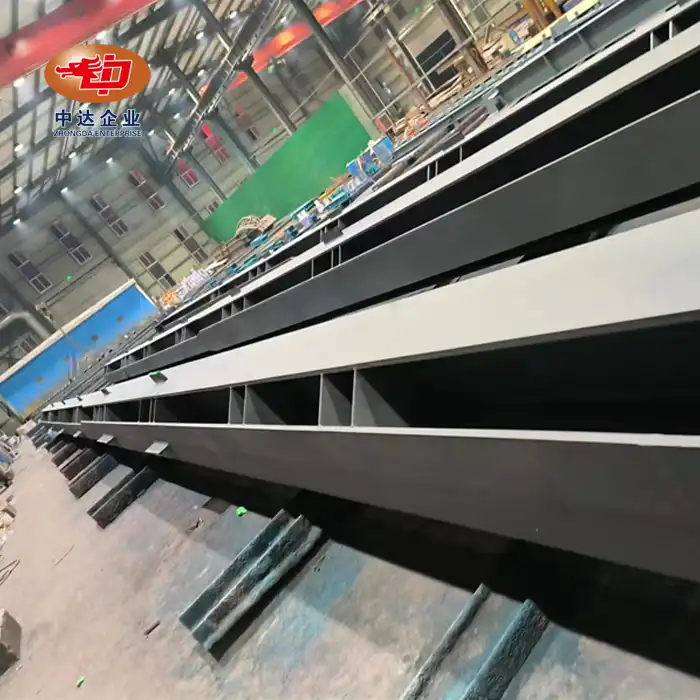
Despite being beautifully simple, the basic idea behind a steel box girder is physically complex. Box girders are different from regular I-beams because they have a fully sealed hollow outline. This is made by welding steel plates into a rectangular or trapezoidal form. This closed shape makes a structure that is very good at fighting torsional forces, which are the twisting loads that cause problems on curved bridges and structures that carry traffic with irregular patterns.
Core Design Principles
Load distribution in box truss systems is based on rules that make the best use of materials. The vertical web plates handle shear forces, while the top and bottom lips mostly stop bending moments. The box design is better because it spreads these loads out over a closed loop. This keeps the loop from warping and buckling to the side, which happens to open parts when they are loaded torsionally. In our projects, we've seen that properly built box sections can have torsional stiffness values that are hundreds of times higher than similar I-beam designs.


Performance and durability are affected by the choice of materials. Our normal specification calls for major parts to be made of Q345D structural steel, which has a yield strength of more than 345 MPa and great toughness at low temperatures. Critical link zones are treated with Q420D steel, which gives them even higher strength gaps where stress builds up. This planned placement of materials improves both the performance of the structure and the cost-effectiveness of the project.
Classification and Configuration Options
Box girders are divided into single-cell and multi-cell types based on the number of spaces inside. For most highway bridges with widths up to about 15 meters, single-cell designs work well. For bigger deck systems or specific loading situations, multi-cell designs are needed. Based on your unique span, width, and traffic needs, our engineering team can help you make this choice.
The difference between open and closed box girders has to do with how the deck is attached. True closed boxes completely seal off the inside, keeping the surfaces inside from the weather and leaving room for utilities or inspection access. These open-top versions still have a lot of use in composite building, where the deck supports the steel part. The top flange comes from the concrete deck pour.
Standards Compliance and Quality Certification
Several building rules must be followed at the same time for international infrastructure projects. Our production methods are in line with the AASHTO LRFD Bridge Design Specifications, which are used all over North America, Eurocode 3 for projects in Europe, and a number of state standards, such as AISC in the US. This ability to comply with multiple standards speeds up the project approval process when working with engineering teams in different regulatory areas.
Quality approval includes more than just making; it also includes validating the design. Our ISO 9001 quality management system controls every step, from the first engineering figures to the final check of the delivery. Our AWS (American Welding Society) compliance makes sure that the quality of our welds meets the highest standards for bridge building, and our EN 1090 certification covers the specifics of how we fabricate structural steel. These certificates aren't just pieces of paper; they're the results of systematic processes that always provide structural trustworthiness.
Advantages and Applications of Steel Box Girders in Modern Infrastructure
Box girder systems were chosen over other structure configurations because they provide measurable performance benefits that directly add value to the project. We've worked with clients who first thought about other choices but chose our steel box girder solutions after weighing the costs and benefits of building them over time.
Superior Structural Performance Characteristics
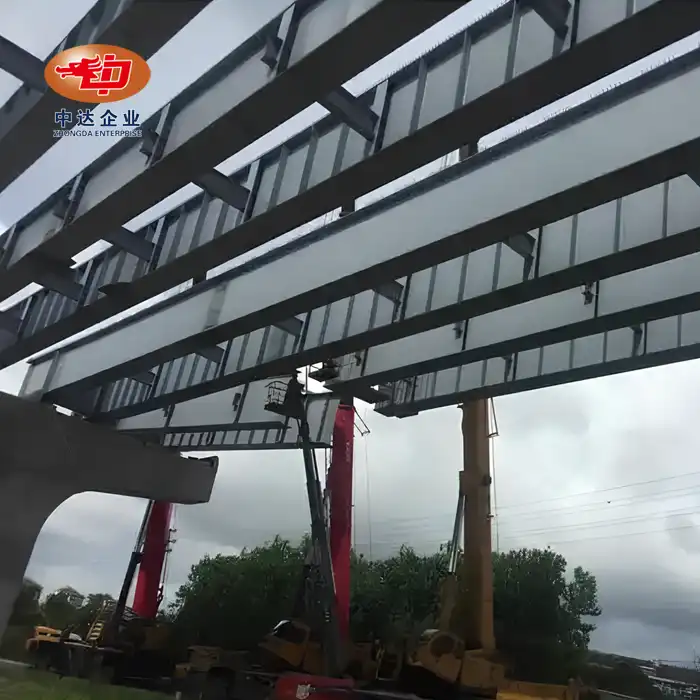
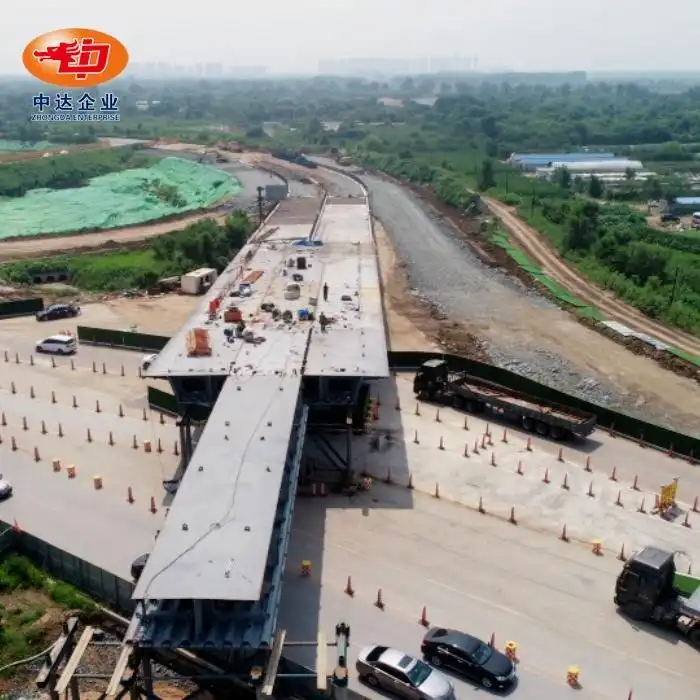
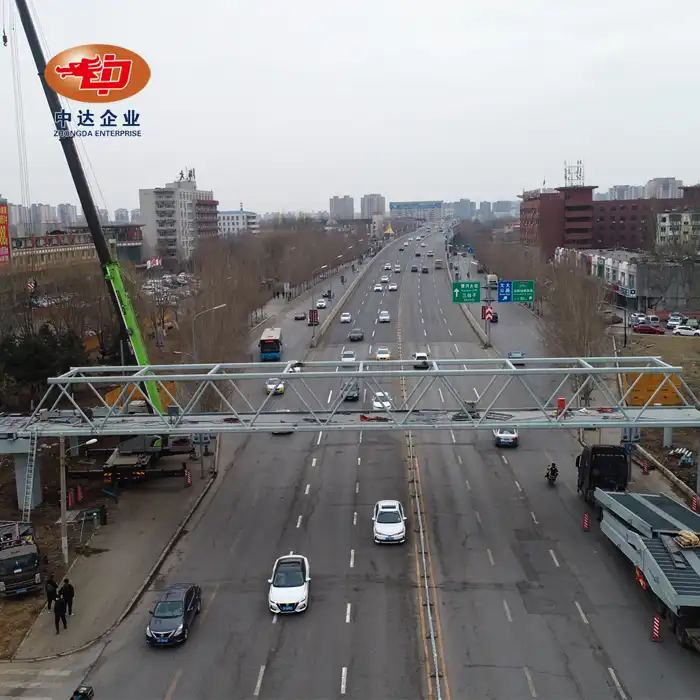
The measure of strength to weight is what really determines how far a bridge can go with a certain piece size. In this case, steel box girders work very well, allowing single spans of more than 400 meters in cable-stayed layouts. This was shown by our 18,000-ton Shenyang Dongta Cross-Hunhe River Bridge project, where the box girder span held a major urban crossing while meeting clearance requirements below.
When the line is bent, like on highway interchanges and urban flyovers, torsional resistance is very important. The closed box shape keeps the cross-section from warping when it's twisted, so there's no need for complicated support systems on the outside. We provided curved box girder pieces with curves as small as 300 meters for the Jingha Expressway growth project. These configurations would not have been possible with standard beam systems.
Fatigue durability is very important for buildings that will be loaded and unloaded millions of times over the course of their working life. When you combine our controlled welding methods that reduce the number of places where defects can start with the smooth stress flow inside welded box sections, you get parts that stay structurally sound even after being loaded over and over again. This property is especially useful for railway bridges, where frequent train passes make the working conditions very tough.
Construction Schedule and Site Impact Advantages
Traditional cast-in-place concrete bridge building can take over a spot for months, which can affect traffic and the surrounding area. This schedule changes because of our prefabrication method. Box girder segments made in our 120,000 m² plant come to the job site ready to be put together quickly. This cuts the time needed for building by about half compared to traditional ways.
The edge in weight affects how much the crane can lift and how much the base can hold. If the superstructures are lighter, you can use smaller cranes to put them up, which could save you a lot of money on transportation costs. Less dead load is good for foundation systems. This is especially helpful in areas with soft soil where expensive deep foundation solutions would be needed because of limited bearing capacity.
Real-World Infrastructure Applications
When it comes to using box girder technology, building long-span bridges is the most difficult task. Box girders are used as the stiffening spine in cable-stayed bridges, and our longest single-span span is 420 meters. A well-designed box section has a smooth, aerodynamic shape that reduces wind loads and stops dangerous vibrations that have caused some bridge failures in the past.
Because they have tight turns and different grades, highway exit ramps are very difficult to drive on. We've provided junction projects with varied cross-section box girders whose beam height changes from 1.25 meters at the piers to 8 meters in the middle of the span. This is done by using moment diagrams to make the best use of material allocation. Our CNC cutting accuracy of ±0.2mm lets us make these modifications, which lets us make designs that are truly optimized instead of forcing standard parts onto non-standard uses.
To keep deflections and vibrations under control, railway viaducts that carry high-speed trains need to be very stiff. Box girder systems naturally provide this stiffness, and our projects that support trains going 350 km/h show that the technology can handle the toughest rail uses. The enclosed part has extra benefits in this case, like safe conduit route for signaling wires and utilities inside the box.
Manufacturing and Construction Process of Steel Box Girders by Zhongda
Our methodical approach to manufacturing starts a long time before we start cutting steel. The production process includes improving the design, making sure the materials are right, carefully assembling the parts, checking the quality, and covering them with a protected layer. Each step is controlled by written instructions that make sure all steel box girder projects are the same.
Raw Material Sourcing and Quality Control
Getting steel plates requires following strict guidelines that are in line with the needs of your project. We only buy Q345D and Q420D material from certified mills that give us full material traceability and mill test reports that show the material's chemical makeup and mechanical qualities. When our new inspection team gets plates that are going to be used in important ways, they test them with ultrasonic waves to make sure they are sound inside before they are used in production.
In welded manufacturing, thickness margins are very important. When we use automatic welding, the plates have to be a certain size, and any changes that are too big or too small can hurt the quality of the join. The thickness of the materials we stock stays within ±0.3mm, which makes it possible for reliable fit-up during assembly.
Precision Cutting and Fabrication Operations
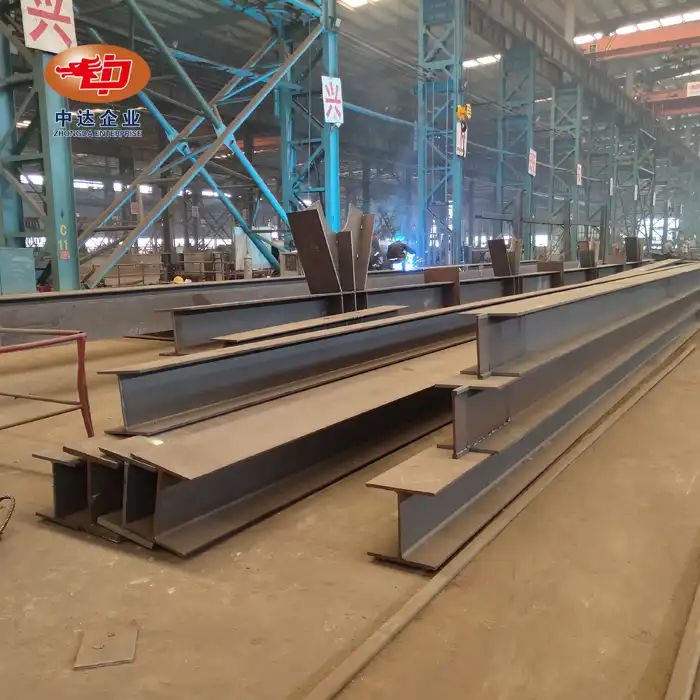
The first step in the manufacturing process is cutting plate parts with CNC plasma and oxy-fuel according to shop plans. Our ultra-thick plate cutting can handle materials up to 150 mm thick and has a precise accuracy of ±0.2 mm. This level of accuracy makes sure that parts line up correctly during assembly without having to be ground and fitted too many times.
A lot of care is paid to getting the edges ready for welding. Bevels and join holes are cut to meet the requirements of AWS D1.5, which makes the best conditions for full penetration welds. Automated beveling equipment keeps the shape of long plate edges the same, so there is no variation like there is when preparation is done by hand.
The next step is subassembly manufacturing, which is where separate plates are joined to make panels. For longitudinal seams, our automatic welding lines use submerged arc welding (SAW), which provides high deposition rates and good joint quality. When compared to hand welding, automatic methods use consistent heat input to reduce distortion. This means that less straightening work needs to be done later.
Assembly and Welding of Box Sections
Specialized assembly supports keep the geometry correct throughout the welding process as they change from flat panels to three-dimensional box sections. We use laser positioning tools to place web plates and flanges and check the sizes before tack welding locks the arrangement in place. This physical control up front stops the accumulation of mistakes that can make a finished part not meet standards.
Full-penetration groove welds connect the plates, making load routes that don't have any stress points. Our welding procedure standards (WPS) have been approved after a lot of testing. They list the parameters that regularly make good welds that meet the required strength and toughness levels. Each welder working on your project has up-to-date certifications that show they are skilled in the processes and roles needed.
Managing distortion during welding is a problem that always comes up when making box girders. As the joint metal cools, the heat from the welding process makes it shrink, which could pull the part out of tolerance. To fight these forces, we use balanced welding processes that move evenly around the outside of the box. Dimensional checks are done at regular intervals while welding so that changes can be made right away, before the distortion becomes part of the structure.
Quality Inspection and Validation
Non-destructive examination (NDE) for steel box girder checks the quality of the weld without hurting the parts. Ultrasonic testing (UT) looks at the whole weld and finds problems inside it like holes or a lack of fusion. Depending on the magnetism of the material, surface flaws are checked with either magnetic particle inspection (MT) or dye penetrant analysis. Based on the project requirements and how important the weld is, our inspection plans say what percentage of the welds need NDE. This percentage is usually between 10% and 100% of the weld length, but it depends on the application.
Verification of measurements makes sure that finished box sections meet geometric limits for dimensions like straightness, twist, and cross-sectional size. Traditional measuring methods are now complemented by laser scanning technology, which creates three-dimensional models that show where plan geometry isn't being followed. This method uses a lot of data to find problems that need to be fixed while leaving some areas open in the shop.
Load testing is sometimes used in addition to calculations to make sure the plan is correct. We've done proof load tests on particular areas where the project requirements said that the capacity had to be physically proven. These tests not only make sure that the structure is sound, but they also give project stakeholders faith in how well it will work in service situations.
Corrosion Protection Application
Before applying a coating, the surface needs to be prepared. Abrasive blasting gets rid of mill scale and makes the base shape that the coating needs to stick. We meet the ISO 8501 standards for cleanliness, which means that the metal surface is almost white, which makes coatings work better.
Our two-layer corrosion protection method starts with a zinc-rich primer that is sprayed until it reaches a certain dry film thickness. This protects against galvanic corrosion at any coating flaws. The next layers are the intermediate and finish, which together make a protection system that is meant to last 30 years or more in moderately corrosive settings. Other ways to protect things from rust are hot-dip galvanizing for smaller parts or weathering steel, where the controlled patina formation prevents corrosion without any upkeep.
Because of limited access, covering the inside of a box can be hard. We bought special spray tools and ventilation systems that allow us to coat the whole inside of the bridge. This protects areas that would be very hard to coat again after the bridge is built. By focusing on internal security right away, a big maintenance hole is closed.
Modular Assembly and Project Customization
Prefabrication units are usually between 12 and 30 meters long, which is the right size to combine the need for easy transportation with the desire to minimize field splices. Longer pieces cut down on field connections and speed up the erection process, but real top limits are set by transportation clearances and weight limits. Our logistics team works with transportation experts to figure out the best section sizes for your site's entry needs.
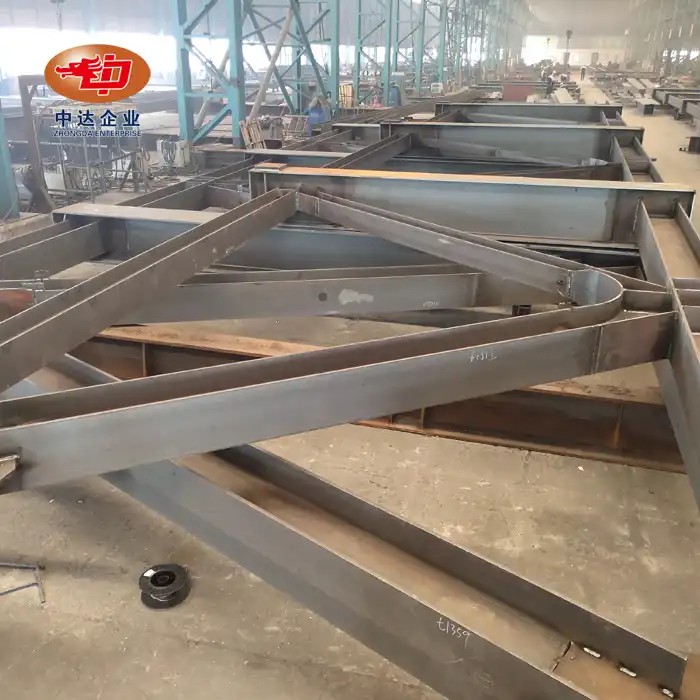
Comprehensive makers are different from simple fabricators because they can do custom construction. For variable cross-section box girders, complex plate shapes are needed to make sure that the flange width and web height change smoothly along the length of the girder based on the moment envelope. Our BIM-integrated design process uses the results of structure analysis to create these complicated geometries. These geometries are then sent directly to our CNC cutting equipment without any human steps for dimensioning that could lead to mistakes.
When compared to flat-web designs, corrugated web technology offers a big weight decrease of up to 20%. This is because the accordion-like web shape resists shear through membrane action instead of bending stiffness. This cuts down on the thickness of the web needed while keeping the shear capacity the same. We've used corrugated web designs for clients who wanted to increase span or decrease base loads, but the unique manufacturing does require a careful cost-benefit analysis.
Conclusion
Box girders are made using a mature technology that is constantly getting better thanks to new engineering ideas and better production methods. These structural systems offer the best torsional rigidity, span capability, and building efficiency for bridges and other high structures that cross roads, rails, and rivers. Modern steel box girder building is more valuable because of advances in material science that lead to higher-strength steel grades, better manufacturing methods that use robotics and precise equipment, and corrosion protection systems that last longer.
To do good buying, you need to look at providers in more than one way, not just by price per unit. Quality assurance depth, expert support skills, output capacity, and a long-term dedication to client success are what set suppliers who consistently offer value apart. As more money is spent on building infrastructure in the US and around the world, there is a greater need for solid structural steel partners. Choosing a provider with a track record of success, a wide range of skills, and a real focus on building partnerships will set up your project for success from the planning stages through the many years it will be in use.
FAQ
What span lengths can steel box girders achieve?
How far a box girder can span relies on how the structure is set up and how well it is supported. Most simple-span uses can reach 80 to 120 meters at a low cost. Continuous multi-span systems, on the other hand, can reach 150 to 200 meters. When box girders are used as the bridge deck in cable-stayed designs, lengths of more than 400 meters are possible. Our longest single-span capability is 420 meters. The exact span that can be used for your project will rely on how much weight it needs to hold, its shape, and how much it costs compared to other options.
How does corrosion protection ensure 30-year service life?
Our two-layer coating method has a zinc-rich base that protects against galvanic corrosion and an epoxy middle layer and a polyurethane topcoat that keeps water out. When applied correctly and with the right dry film thickness, systems can protect steel in moderately corrosive settings for 15 to 20 years before they need to be touched up for upkeep. At that time, a full recoating extends the security for another repair cycle. There are other options, such as hot-dip galvanizing, which gives a protective zinc layer, or weathering steel standards that make a stable patina.
Partner with Zhongda for Your Next Infrastructure Project
For important infrastructure, you need a steel box girder provider that can do both advanced manufacturing and real engineering relationship. Zhongda has been building bridges for 20 years, can handle 60,000 tons per year, and has all the quality certifications needed to meet ISO 9001, EN 1090, and AWS requirements. Our work on projects for China Railway, CSCEC, BMW, and other foreign clients on three continents shows that we can adapt to a wide range of situations, from mining activities in the tropics to those in the Arctic.
Get in touch with our engineering team at Ava@zd-steels.com to talk about your bridge project needs and find out how our steel box girder options can help with structure, quality of construction, and long-term value. As an experienced steel box girder manufacturer that works with building agencies, business developers, and EPC contractors, we can turn your project ideas into real things, backed by our full warranties and ongoing technical support.
References
American Association of State Highway and Transportation Officials. AASHTO LRFD Bridge Design Specifications, 9th Edition. Washington, DC: AASHTO, 2020.
Chen, Wai-Fah and Lian Duan. Bridge Engineering Handbook: Superstructure Design, 2nd Edition. Boca Raton: CRC Press, 2014.
European Committee for Standardization. Eurocode 3: Design of Steel Structures - Part 1-1: General Rules and Rules for Buildings. Brussels: CEN, 2005.
Nakai, Hitoshi and Chai H. Yoo. Analysis and Design of Curved Steel Bridges. New York: McGraw-Hill Professional, 1988.
Troitsky, M.S. Prestressed Steel Bridges: Theory and Design. New York: Van Nostrand Reinhold, 1990.
Wolchuk, Roman and Robert N. Bruce. Manual for Design and Construction of Orthotropic Steel Plate Deck Bridges. Reston: American Society of Civil Engineers, 199
YOU MAY LIKE
_1746242605579.webp "Hard Rock TBM Shield Casing")